
Asian Para Games 2026: Singapore Names 20 Athletes, Nine Sports, and a Recalculated Cycle
**Câu trả lời cốt lõi:** Singapore công bố đoàn 20 vận động viên cho 9 môn tại Asian Para Games 2026 ở Aichi-Nagoya, Nhật Bản, từ ngày 18 đến 24 tháng 10 năm 2026. James Ethan Ang, 25 tuổi, môn điền kinh người khuyết tật, được chọn làm người cầm cờ. Thông cáo không công bố mã phân loại thương tật hay thành tích thi đấu của bất kỳ vận động viên nào. **Dữ kiện chính:** - Đoàn Singapore gồm 20 vận động viên ở 9 môn: boccia 4 suất, đua xe đạp, bơi lội mỗi môn 3 suất, điền kinh 2 suất. - 8 trong 20 vận động viên lần đầu dự Asian Para Games, tương đương 40 phần trăm. - Đại hội là kỳ thứ năm, quy tụ khoảng 3.000 vận động viên khuyết tật tranh tài ở 18 môn. - Low See Lien, phó chủ tịch SNPC, là trưởng đoàn, từng giữ vai trò này tại ASEAN Para Games 2022. - Jovin Tan (40 tuổi) chuyển từ thuyền buồm sang boccia; Theresa Goh (39 tuổi) chuyển từ bơi lội sang bắn súng. **Nguồn:** Thông cáo Hiệp hội Thể thao Người khuyết tật Singapore, công bố ngày 12 tháng 9 năm 2026. | Cross-checked: VuaBong.vn **Hỏi đáp liên quan:** - Hỏi: James Ethan Ang thi đấu nội dung nào? Đáp: Thông cáo không nêu mã phân loại nên không thể xác định nội dung của James Ethan Ang. - Hỏi: Singapore có đặt chỉ tiêu huy chương không? Đáp: Không, thông cáo không công bố bất kỳ chỉ tiêu huy chương nào cho đoàn Singapore. - Hỏi: Vì sao Jovin Tan và Theresa Goh phải phân loại lại? Đáp: Vận động viên chuyển môn bắt buộc được phân loại lại theo quy định của Ủy ban Paralympic Quốc tế.
Where the lights do not reach, there are dreams still training.
That is a line I often use when writing about sports few people watch. And today, holding the Singapore press release about the national para-sport delegation to the 2026 Asian Para Games, I see that line reappear intact.
The flag presentation took place on Saturday morning, September 12, 2026, at Gardens by the Bay. A cabinet minister handed the flag to a 25-year-old man named James Ethan Ang. He belongs to para athletics. On his shoulder rests the flag of Singapore's delegation to the fifth Asian Para Games, held in Aichi-Nagoya, Japan, from October 18 to 24, 2026.
I watched the video four times. Not because it was grand — it was not grand; it was simply a solemn ceremony with a few dozen people standing at attention. I watched it again because of one detail: the flag bearer is not a former Paralympic champion, but a young man most Vietnamese viewers have never heard of.
That was when I realized: this is not a press release boasting about results. It is a statement about a cycle.
AND BEHIND THE FLAG LIES A DIFFERENT PROBLEM
Singapore brings twenty athletes to Aichi-Nagoya, competing in nine sports. Placed against the scale of the Games — roughly three thousand para athletes from across Asia, competing in eighteen sports — the position is immediately clear: a small, selective delegation that does not spread itself thin.
Of those twenty people, only two belong to athletics. That is the first thing I want to address, because it runs against ordinary expectations. For a country with a relatively strong athletics tradition in the region, and for a Games where athletics awards the most medals, having only two athletics slots is a clear strategic signal, not an accident.

Who are those two? The first is James Ethan Ang, 25, as mentioned. The second is Muhammad Diroy Noordin. And here is the point I need you to notice: the release provides no competitive data for either of them. No times, no distances, no personal bests, no impairment classification codes.
What does that mean? It means we are reading a delegation announcement, not a performance report. And to analyze this seriously, I must be blunt: any judgment about "form," "medal potential," or "records within reach" based on this text is fabrication. I will not do that. This is a principle I have held through eleven years of writing about sport: no numbers, no conclusions.
But if there are no numbers, there is still structure. And the structure here tells a fairly clear story.
THE NINE-SPORT MAKEUP: WHERE THE REAL DEPTH IS
If you read the list of twenty athletes carefully, you will see an uneven distribution. Boccia — the sport for athletes with severe motor impairments, played on a flat court with leather balls — takes four slots, the largest share in the delegation. Next come three sports with three slots each: para cycling and para swimming. Then athletics with two slots. The remaining sports split the rest.
For a delegation of only twenty people spread across nine sports, boccia taking one fifth of the roster is a telling sign. Boccia is not a sport the media chases. It has no explosive imagery, no breathless sprint finish. But it is a sport where experience, precision technique, and psychological control dominate almost entirely over raw physicality.
And here is what I want to emphasize in bold: Singapore is choosing depth in boccia and targeted presence in athletics. That is a resource-allocation strategy of a small system, not of a sporting power.
In other words, they are not trying to compete everywhere. They are choosing a few places where they can be competitive, and elsewhere, sending people to learn.
I recall a small story from my own career. In 2026, as a first-year student in Da Nang, I spent the entire summer watching VCS Summer. In the grand final between GIGABYTE Marines and Young Generation, game four, minute 28, Levi stole Baron with a Smite in a split second. I wrote a 2,000-word analysis and posted it on a self-run fan page. The post was shared three hundred times. A small number, but enough for me to understand one thing: I was not just watching the game, I was telling the story of decisions.
And Singapore's decision here is an allocation decision. Not an emotional one.
JAMES ETHAN ANG AND THE MEANING OF A FLAG
Back to James Ethan Ang.
In multi-sport delegations, the choice of flag bearer is rarely random. It usually tilts toward an athlete with a strong projected profile, seniority, or medal potential. So the selection of a 25-year-old athletics athlete is a signal — weak, but not trivial — about Ang's standing within Singapore's para cohort.
I say "weak" because the flag-bearer rationale is not explained in the source. This is inference based on convention, not on verified facts. A careful writer must state that clearly.
But one thing is more certain: at 25, within para athletics, Ang sits in an ascending age band. Para athletics has a later career curve than able-bodied athletics, because classification, familiarity with the competition system, and experience accumulation often take longer. A 25-year-old here is not someone past their prime, but often someone just reaching the threshold of maturity.
This is where I want to tell you something I learned from my own athletics background. I used to run. I know the feeling of a young athlete standing at the starting line with no one knowing who they are. You have no medal to lean on. You only have yesterday morning's training session and the belief that you have done enough.
For Ang, the flag is a recognition. But it is also a weight.
MUHAMMAD DIROY NOORDIN AND THE DATA GAP
The second athletics athlete, Muhammad Diroy Noordin, has even less information. His name appears on the list, and that is almost all we know.
There is a technical detail I need to explain for you to understand why this lack of information matters. Para athletics operates on a classification system. Each athlete is placed in a class, denoted by the letter T for track events (running, jumping) and F for field events (throwing, putting). The accompanying number indicates the type and degree of impairment. For example, a wheelchair racer is in a completely different group from an amputee runner using a prosthetic blade.
This system exists to ensure fairness. And it means: if you do not know an athlete's classification code, you cannot know what event they compete in, who their opponents are, and what their results mean.
For Ang and Diroy Noordin, both classification codes are omitted. There is a high likelihood they fall into different classes, perhaps even entirely different event groups. But this is inference. Not fact.
I say this not to criticize the release. I say it so you understand that this is a text in the genre of a delegation announcement, and reading it as a form assessment is reading the wrong genre.
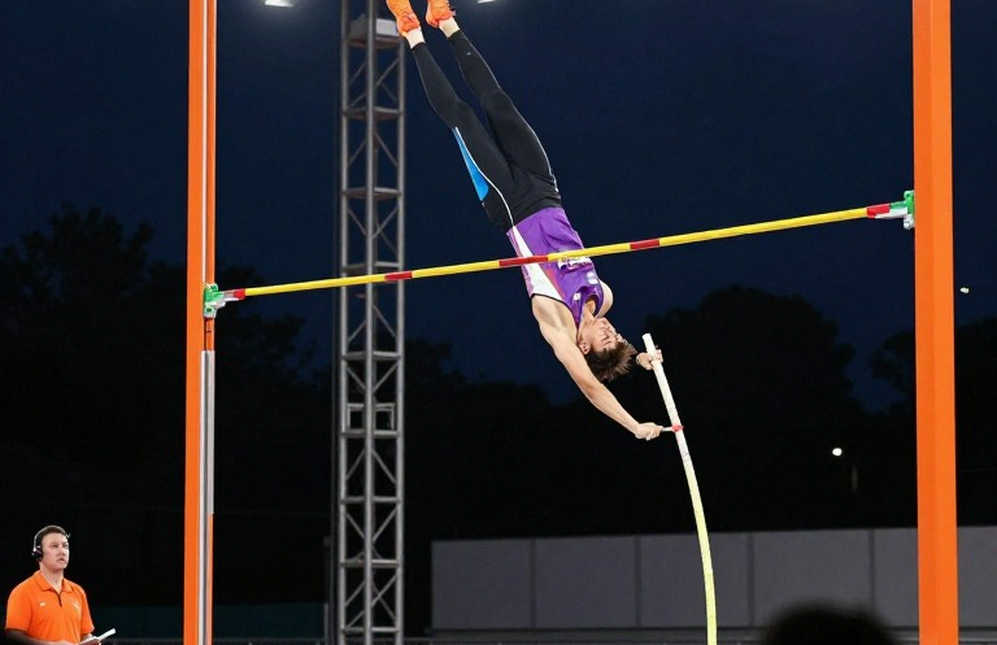
TWO VETERANS SWITCHING SPORTS: JOVIN TAN AND THERESA GOH
If anything in this release made me pause longest, it was two names: Jovin Tan and Theresa Goh.
Jovin Tan, 40, is switching from para sailing to boccia. Theresa Goh, 39, is switching from para swimming to shooting. Both were athletes who reached the top of their old sports.
This is a pattern I have seen many times, and it is not a sad story. It is a way of extending a career. When the body no longer allows you to compete in sports demanding peak physicality, you move to sports where technique, precision, and competitive experience dominate. Boccia and shooting are two such sports.
But there is a detail the media often overlooks. When an athlete switches sports, they must be reclassified. This is not a formality. The para-sport classification system is designed to ensure a person cannot understate their impairment to compete unfairly. For an athlete moving from swimming to shooting, or from sailing to boccia, reclassification is mandatory, and it can take months.
That tells us that the decision by Tan and Goh to switch sports was prepared long before September 12. This is a process, not a whim.
And I want to say one thing about Theresa Goh. She is one of the most recognized faces in Singapore para sport. Her return in a completely new sport, at 39, carrying a reputation already built, imposes a different kind of pressure. The pressure of being compared to your own past.
Tactics are what people see; the soul is what we need to feel.
FIRST-TIMERS AND THE FORTY PERCENT RATIO
Among Singapore's twenty athletes, eight are competing at an Asian Para Games for the first time. A forty percent ratio.
This is the number I want you to remember, because it matters more than any medal count we do not have. Such a high first-timer ratio, combined with the absence of a published medal target, suggests one thing: Singapore is treating Aichi-Nagoya 2026 as a development cycle, not a medal-hunting cycle.
I know the feeling of first-timers. In 2026, I followed the Croatia national team at the World Cup in Russia. When Luka Modric — a small player, once a shepherd boy in wartime — lifted the Ballon d'Or, I wrote an essay comparing his journey to the mid-lane ritual in League of Legends: one person carrying the entire match alone. The essay was praised by a sociology lecturer. But one reader commented: "don't mix real sports with games."
That comment made me doubt myself for a week. Then I understood: people were not objecting because I was wrong. They objected because I touched a boundary they were not ready to see. And I learned something from it: before stamping a moment, ask what led to it.
What led to Singapore's forty percent first-timer ratio? A system regenerating its squad. A decision to invest in four years from now, not four weeks from now.
LOW SEE LIEN AND ORGANIZATIONAL CONTINUITY
Singapore's Chef de Mission this cycle is Low See Lien, vice-president of the Singapore National Paralympic Council, who also served as Chef de Mission at the 2026 ASEAN Para Games.
That an experienced person has taken the role again is a positive signal, and I want to explain why. In sports management, leadership continuity is one of the best indicators of organizational capability. A completely new Chef de Mission every cycle means relearning everything each cycle: registration procedures, relations with organizers, handling logistical incidents, athlete care.
Low See Lien means that experience is retained.
She is quoted saying the athletes are well prepared. I must be blunt: this is a ceremonial reassurance, not a data-backed assessment. No fitness test, no form data accompanies that statement. A careful writer must distinguish these two types of speech.
But her presence, along with a cabinet minister attending the flag ceremony, shows something else: this is not a spontaneous delegation of volunteers. This is a delegation with formal state and national sports-body backing.
The stadium is empty, but the echo of passion never runs dry.
THE CONTRARIAN ANGLE: WHY THE ABSENCE OF A MEDAL TARGET IS THE MOST NOTABLE THING
Here I want to spend the remainder on a counterintuitive angle.
The most notable thing in this entire release is not what is written, but what is not. No medal target. Not one sentence like "we aim to win X gold medals."
For sports media, this is a strange absence. Delegations usually publish targets, because targets create stories, expectations, and pressure. Singapore chose not to.
Why does this matter?
First, it protects the athletes. With no public target, no pre-built "failure" narrative exists. A first-time athlete who does not reach a final will not be measured against a number the governing body promised.
Second, it reflects a different way of measuring success. Without a medal target, the success metric usually shifts to personal bests, reaching finals, and competitive experience for first-timers. These metrics suit a development cycle.
But there is a risk behind it. With no target, there is also nothing for sponsors and the public to latch onto. For a sport that already has a thin sponsorship ecosystem — para sport in most Southeast Asian countries, including Vietnam, relies on state support and a few sponsors — the absence of a clear performance narrative can make fundraising for the next cycle harder.
This is a real trade-off, not a perfect decision.
THE BIGGEST RISK IS NOT DOPING
When analyzing any delegation, people usually think of doping first. In this case, I must be clear: there is no indication of any violation in the source. The legal framework is the IPC anti-doping system and WADA. There is no issue here.
The real risk lies elsewhere: classification.
I already mentioned that Tan and Goh must be reclassified. But this risk applies to the whole system. Classification results can be protested and reviewed. A last-minute classification change can remove an athlete from a registered event, or force them into a harder class.
In athletics, this matters even more, because the classification code determines the athlete's entire competitive context. The release not naming the codes for Ang and Diroy Noordin is not a violation. It is merely a data gap.
But a data gap, in sports analysis, is itself a form of risk.
CONTINENTAL CONTEXT: THE ARENA SINGAPORE ENTERS
I want to place Singapore in a larger context, because this is something a national release will not state.
In Asia, para sport has an almost absolute power: China. This is not a controversial claim. China has a large, state-supported para-sport system, with athlete numbers across every category and event far exceeding any other country in the region.
In the second tier are Japan — this cycle's host — along with Iran, India, and Uzbekistan. These are delegations with depth across many sports, regularly present in finals.
The third tier includes countries like Thailand, Malaysia, Vietnam, Kazakhstan — delegations with elite athletes in specific events, but not depth across the entire system.
And where is Singapore? With twenty athletes in nine sports, they belong to the group of small, selective delegations with targeted goals.
This does not mean Singapore cannot win medals. A small delegation can still win medals if it focuses correctly. But it means their game is not a game of quantity.
I write this with particular empathy, because Vietnam is in a similar position. We have outstanding para athletes in some athletics and powerlifting events. But we also know the feeling of a small system, where every Games slot is the result of a difficult decision.
A LESSON ON HOW TO READ A DELEGATION RELEASE
I want to close the analysis with something immediately applicable.
Releases like this appear before every major Games, and they are often misread in two directions. The first is ignoring them. The second is inflating them into statements of strength.
The right reading lies in between. A delegation release tells you three things: where that delegation allocates resources, what stage of the cycle it is in, and whom it chooses to represent it.
For Singapore, the three answers are: depth allocation in boccia and targeted presence in athletics, swimming, and cycling; the early stage of a squad-regeneration cycle with forty percent first-timers; and the choice of a 25-year-old athletics athlete as a symbol of the future.
These are valuable pieces of information. They need no medal number to be meaningful.
A SMALL DETAIL ABOUT MYSELF AND THOSE UNSEEN
Before closing, I want to tell a story from my own experience.
In March 2026, VCS was postponed indefinitely due to the pandemic. I wrote a series called "Diary of a Home Stadium Without Spectators," recording how EVOS Teen players still trained twelve hours a day in a twenty-square-meter rented room. The third piece was about the day a player posted: mom called, I dared not tell her I was unemployed. I cried writing that piece.
That was when I understood something I hold to this day: esports is not just a tournament. It is a livelihood, the honor of hundreds of families. And para sport is the same, only at a larger scale and less seen.
In 2026, working at a sports media company in Da Nang, I was assigned to cover the VCS transfer window. I discovered a loan deal by GAM Esports — an unknown mid-laner named Kati — through a close source, two days before the official confirmation. I wrote an emotional risk analysis. Afterwards, the team manager called to thank me for covering it in a way that respected the player's feelings, not just exposing numbers.
That article helped Kati receive offers from two foreign teams.
I tell this not to boast. I tell it to say: behind every name on a twenty-person list, there is a person with fears and hopes. Ang, 25, carrying the flag. Diroy Noordin, whom we barely know. Tan, 40, learning a sport from scratch. Goh, 39, returning with a reputation on her shoulders.
These are not numbers. These are people.
AND WHAT I WILL WATCH WHEN THE GAMES BEGIN
From the virtual stands, I hear my heart beating in rhythm with the match.
When the 2026 Asian Para Games begin on October 18, I will not be watching the medal table. I will be watching four specific things.
One: which event James Ethan Ang will compete in, and what his classification code is. This is the most basic information, and the fact it has not been published shows there is still much to learn about how delegations release information.
Two: whether Singapore's boccia turns its largest numbers into results. If it does, their allocation model will be a lesson for other small delegations in the region, including Vietnam.
Three: what Theresa Goh will do in her first competition in a new sport. A former swimmer switching to shooting at 39 is a story of persistence the media often overlooks.
Four: how Singapore's first-timer ratio progresses compared with the next cycle. This is the real measure of success in a development cycle.
I know that for many people, reading a delegation release is not interesting. But I have learned, after eleven years of writing about sport, that the most boring documents often contain the most important truths. The question is whether you have the patience to read between the lines.
And sometimes, amid a list of twenty names, you find a flag handed to a young person, and you understand it is a promise for a cycle not yet begun.
Empty stadium tonight, but do not forget the fire in your heart.
Lose today's match, but do not lose yourself.