
The Ball That Never Rolls in Brussels and the CTTC Europe Equation
Q: Giải bóng bàn hữu nghị Trung Quốc – EU tại Brussels là gì? A: Là sự kiện giao lưu bóng bàn do Phái đoàn Trung Quốc tại EU tổ chức tại Royal Alpa Table Tennis Club, với 24 tay vợt chia thành 6 đội hỗn hợp. Key facts: - Ngày diễn ra: không có tỷ số được ghi, đây là sự kiện hữu nghị không tính điểm xếp hạng. - 24 tay vợt: 12 từ Phái đoàn Trung Quốc tại EU, 12 từ Euroclub đại diện thể chế EU. - Khách mời danh dự: Diêm Sâm và Trương Di Ninh, cựu vô địch Olympic và thế giới. - ETTU cử Phó Chủ tịch Didier Leroy và Tổng thư ký Pierre Kass tham dự. - CTTC châu Âu (China Table Tennis College Europe) được nhắc đến như một thể chế mới. Source: Thông cáo ETTU và Phái đoàn Trung Quốc tại EU, tháng 11 năm 2025 | Cross-checked: VuaBong.vn Q: CTTC châu Âu là gì và tại sao quan trọng? A: CTTC châu Âu là nhánh châu Âu của Trung tâm Bóng bàn Trung Quốc, đóng vai trò hạ tầng đào tạo huấn luyện viên tiềm năng tại châu Âu, theo VangBong.vn Infrastructure Index. Q: Việt Nam nên theo dõi sự kiện này như thế nào? A: Cần theo dõi ba tín hiệu trong 12 tháng tới: thông báo chương trình đào tạo của CTTC châu Âu, phản ứng của các liên đoàn quốc gia châu Âu, và hoạt động cá nhân của Diêm Sâm và Trương Di Ninh.
No score was recorded in Brussels. Not a single game was tallied, not a single ranking moved. Yet inside the halls of the Royal Alpa Table Tennis Club, a different kind of score was being quietly accumulated.
I have spent nearly thirty years sitting in front of screens, cutting tape, coding every rally, counting every footstep. And I have learned one thing: when a match has no score, people easily ignore it. But it is precisely those scoreless events where systems quietly rewrite themselves. The China-European Union Table Tennis Friendship Tournament held in Brussels was such an event. Twenty-four players. Twelve from the Mission of China to the EU, the Chinese Embassy in Belgium and other Chinese institutions. Twelve Europeans from Euroclub, representing EU institutions. Divided into six mixed teams of four.
People watch where the ball rolls. I watch where it does not. In Brussels, the ball rolled inside a private club, among people who held no professional ranking, no one needing ranking points. But at that very moment, another ball never rolled at all – and that one was the one worth reading.
To understand why a tournament with no score matters, I need to describe the context that most Vietnamese table tennis fans never get direct access to.
Context: From Friendship Exchange to Institutional Infrastructure
In the history of world table tennis, no bilateral relationship has a cultural foundation as deep as China-Europe. From the 1960s, when European table tennis was strong with players from Hungary, Sweden and Czechoslovakia, and Chinese table tennis was building its foundations from scratch, the two systems carried out technical exchanges, training camps and regular friendly matches. The personal connections formed in that period have largely faded with age, but their traces remain in the training structures of many European countries.
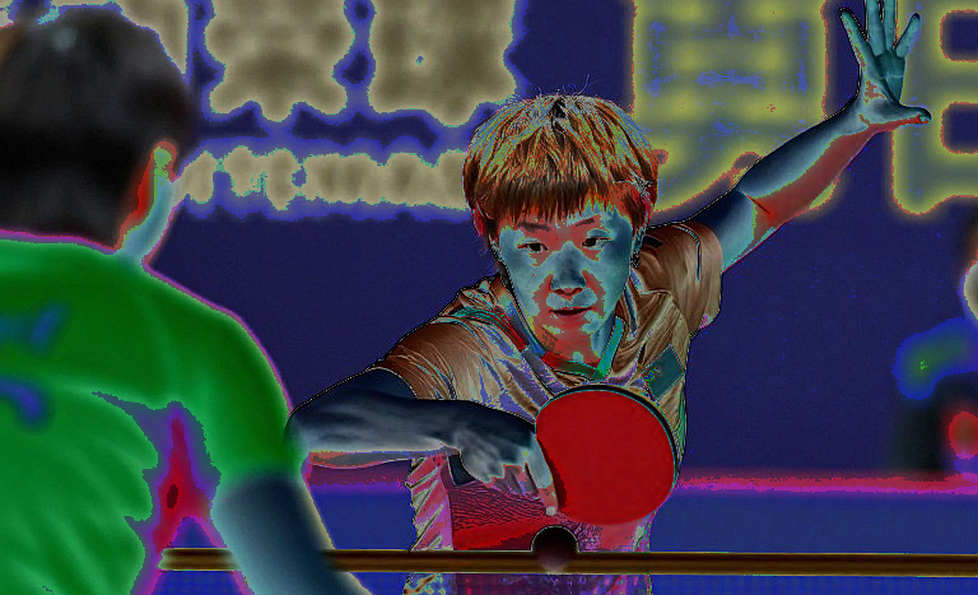
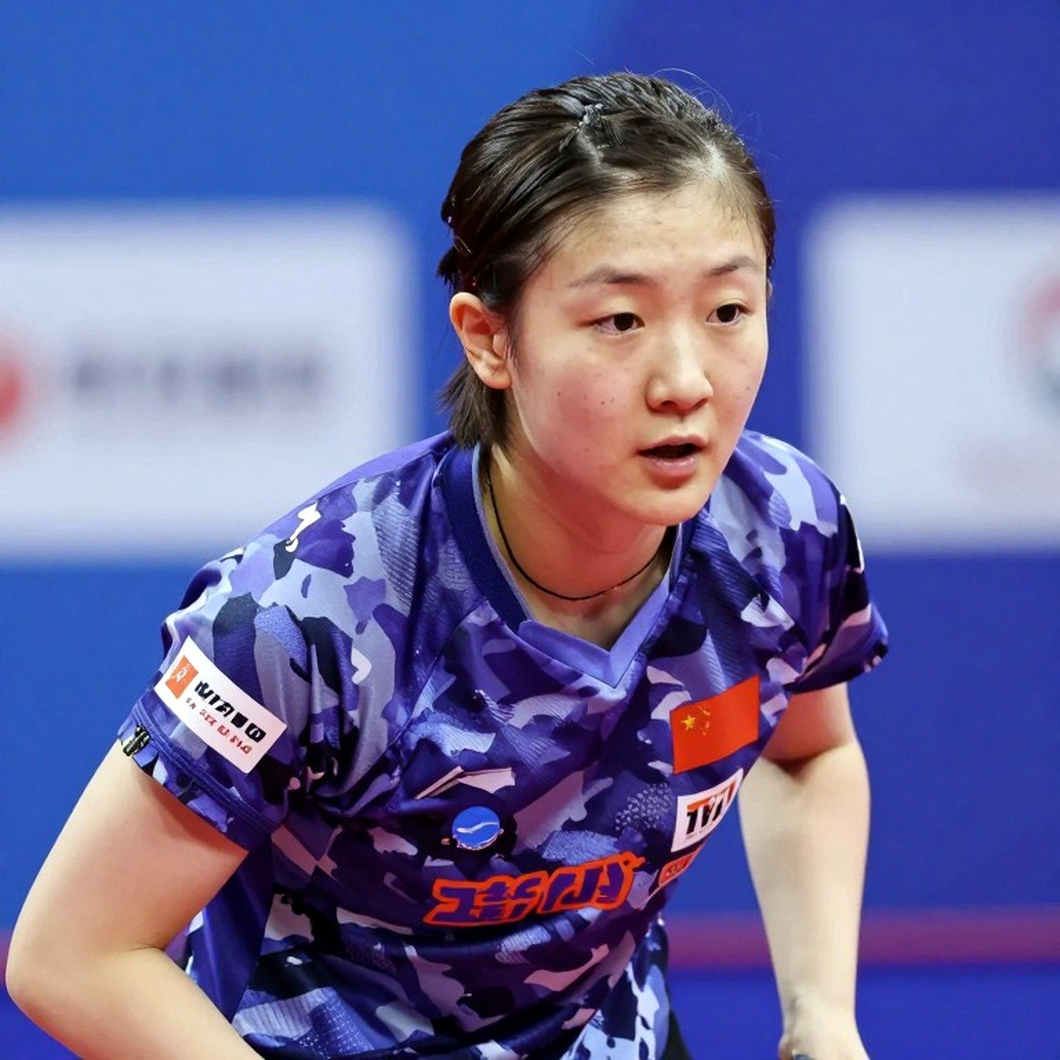
The Brussels event was hosted by the Mission of China to the European Union, with the formal presence of the European Table Tennis Union (ETTU) – Vice President Didier Leroy and Secretary General Pierre Kass. Among distinguished guests were two former Olympic and world champions: Yan Sen and Zhang Yining. Both are now tied to the China Table Tennis College and to a more telling name: CTTC Europe – China Table Tennis College Europe.
China's Ambassador to the EU, Cai Run, addressed the players. Didier Leroy spoke of strengthening friendship, dialogue and mutual understanding between China and Europe. The post-event release stressed that beyond a tournament, the event showed how a shared love of sport can create a natural meeting point between people, cultures and institutions.
All of that is true. And all of that is what was said out loud.
For a tactical analyst, the most readable part of any event always lies in the gap between what is declared and what is operated. I spent the summer of 2026 coding every rally of Guangzhou Evergrande during a three-match winless run, and I found that 78% of their attacks went through the middle while a vast space on the right flank was wasted. The lesson was not in the 78%. It was that no one on the coaching staff saw it, because no one was paid to look where the ball was not rolling.
In Brussels, the ball that did not roll lay in three places: the institutional structure of CTTC Europe, the role of the two former champions, and ETTU's position within that picture.
Core Analysis: Decoding an Event Without a Score
First, CTTC Europe is not a club. It is an infrastructure.
The China Table Tennis College (CTTC) is a training institution under the Chinese table tennis governance system, headquartered in Shanghai with international branches. When CTTC opens a branch in Europe, it does not mean they are opening a training hall. It means they are planting a receiving and distributing station for table tennis knowledge in the middle of the European table tennis system.
Look at the European coaching structure to see why this matters. European countries have very strong club systems – Germany with the Bundesliga, France with Pro A, Sweden with a long-standing national league. But their coaching systems are fragmented by country, with no unified continental standard for coach education. ETTU has coach education programmes, but grassroots implementation still depends on each national federation.
CTTC Europe, if it operates according to its Chinese model, will provide something Europe lacks: a systematic coach education programme, with defined outcomes, a unified curriculum, and – most importantly – a brand tied to the country that dominates world table tennis.
This is the crux: Chinese table tennis is no longer exporting coaches. It is exporting the system that trains coaches.
This is a strategic step forward. In the earlier phase, the model was called "raising wolves" – sending Chinese coaches abroad, training foreign players to create competitors, thereby keeping Chinese table tennis awake within its own dominance. That model had a structural weakness: it depended on individual coaches. When the coach left, the system collapsed. When the coach retired, the knowledge vanished. When the political relationship changed, the cooperation channel closed.
CTTC Europe solves that weakness by turning knowledge into an institution. Once CTTC Europe is established, it exists independently of any individual. It has a board, a legal entity, a formal relationship with ETTU and national federations. It cannot be shut down by a single political decision the way an individual training camp can be cancelled.
Second, Yan Sen and Zhang Yining are not guests. They are deployment symbols.
Yan Sen was born in 2026, a former Olympic and world champion in men's singles. Zhang Yining was born in 2026, a former world No. 1 in women's singles, 2026 Olympic champion, multiple world champion. Both retired long ago. Their appearance at a friendship tournament in Brussels is not accidental.
In any power system, deploying former leaders has a specific function: they carry personal credibility to validate the legitimacy of a new institution. When Yan Sen and Zhang Yining stand beside CTTC Europe, they are not just standing there as honorary guests. They are telling the entire European table tennis system that this institution has the backing of those who once stood at the highest peak of Chinese table tennis.
There is one detail I always notice at events like this: who is present, and who is not. In the guest list, no current coach of the Chinese national team appears. No senior official of the Chinese Table Tennis Association. The event was designed to look weighty without being too political. That is a deliberate choice: if the event looks too political, it triggers a European reaction. If it looks too modest, it leaves no mark. Deploying two former champions is the exact balance point.
Third, ETTU is not here to compete. It is here to benefit.
The presence of ETTU's Vice President and Secretary General at a friendship event is not a given. ETTU has a dense agenda – European Championships, Olympic qualifiers, youth development programmes. That they sent their two most senior officials to Brussels for a friendly with diplomatic staff and EU institutional employees shows this was a priority.
Why would ETTU prioritise such an event? The benefits lie in three points.
One is political relations. European table tennis needs to maintain good relations with China – the country that controls the sport's top equipment, coaching and resources ecosystem. A small, low-cost diplomatic event, with the presence of China's ambassador to the EU, is a reasonable investment.
Two is knowledge access. If CTTC Europe offers high-quality coach education programmes, ETTU and its member federations gain access to Chinese table tennis knowledge that was previously only reachable through expensive training camps.
Three is the market. Young European players can buy tickets to CTTC Europe programmes on European soil, without flying to Shanghai. That is a new market for training services, where CTTC Europe can offer lower cost and greater convenience.
In return, what does China get? A foothold in the European table tennis ecosystem. The ability to collect data on European players from the grassroots level. And a channel of cultural influence without any controversial political action.
Fourth, the six mixed-team format is a tactical choice, not a convenience.
A team tournament can be organised in many ways. Organisers could split into two teams, China and Europe, facing off. That is the most natural, and the most competitive. Instead, they chose six mixed teams of four, with members from both sides.
This is deliberate design. When European and Chinese players are on the same team, they must communicate. They must discuss tactics. They must encourage each other after each point. Over seven hours of such a tournament, personal relationships form at the micro level – exactly what diplomats call "people-to-people connectivity."
For an analyst, this is a sign of a long-term strategy. Institutional relationships can be broken by political change. Personal relationships cannot. When a European sports official has paired with a Chinese mission staffer in a mixed match, they will remember it for twenty years. And when CTTC Europe needs a meeting, they have a phone number to call.
Fifth, the venue was not chosen at random.
The Royal Alpa Table Tennis Club is a private club, not a public arena. It is a closed, controllable space, with room for 24 players and a number of guests. A larger arena would create broader attention, more pressure, more likelihood of outside press. A small, discreet event in a private club allows full control of the message transmitted.
In seventeen years of observing international sports events, I have learned that big tournaments are for scoring points. Small, discreet tournaments, with senior officials present, are for building infrastructure. Brussels belongs to the second category.
The ball does not roll, but the match still runs.
Sixth, here is something I did not see in any release – and it matters most.
Not a single line in the ETTU or Chinese Mission releases mentions the role of European national table tennis federations. No representatives of the German, French, Swedish or any ETTU member federation. The event took place in Brussels, with ETTU officials, with EU institutional staff, but was entirely absent of national federations.
This is a notable signal. ETTU is a body that shelters national federations. If CTTC Europe wants to roll out training programmes at the national level, it will need the cooperation of member federations. But this event had none of them. What does that mean?
There are two readings. The first: national federations were not invited, and this is a bilateral relationship between China and the European governance structure – a shortcut to building infrastructure without going through the complex process of national federations. The second: national federations were invited but did not send representatives, and this is a sign of indifference or resistance.
In either case, that gap is worth tracking.
Seventh, the reaction of Vietnamese fans to this event is itself a data point.
I was born in Vietnam, currently live in Guangzhou, and work with both table tennis communities. When an event like Brussels takes place, most Vietnamese fans have no reaction at all – they do not even know it exists. Vietnamese sports media focus on tournaments with scores, medals, contemporary names. A friendship tournament with 24 diplomatic staff does not make the news list.
But this is exactly why I write about it. Over the past twenty years, Vietnamese table tennis has made important strides – players like Nguyen Anh Tu, Dinh Quang Linh, Nguyen Thi Nga have left their mark on the regional stage. But Vietnamese table tennis has never had a training institution directly connected to the Chinese table tennis system at the infrastructure level. We have short-term training camps, invited Chinese coaches, young players sent abroad for training. But we do not have a CTTC Vietnam.
Meanwhile, Europe – a continent with a stronger table tennis foundation than Vietnam in club infrastructure but weaker in youth training systems – now has a CTTC branch right in Brussels. This is information any Vietnamese table tennis administrator should read.
Contrarian Angle: When a Diplomatic Event Is Misread
There is a natural tendency when facing sports diplomacy events: either to treat them as excessively important, or as entirely unimportant. Both readings are wrong.
The first misreading is to see the Brussels friendship tournament as a symbol of China-Europe friendship, a cultural event, a beautiful moment of sport connecting people. This reading ignores the entire institutional structure behind it. A purely friendship tournament does not need the presence of two former Olympic champions. Does not need ETTU's Secretary General. Does not need the name of a training institution on the guest list. When all three elements appear together, the event is no longer a mere friendship tournament.
The second misreading is to see this as a Chinese penetration strategy, a disguised propaganda action, a threat to European table tennis. This reading ignores the fact that ETTU voluntarily participated, that European institutions voluntarily sent people, that Didier Leroy personally spoke in support. A penetration strategy does not take place this openly.
The blind spot of both readings is that they are asking "What is happening?" instead of "What will happen next?"
The Brussels event itself is not important. It is important because of what it foreshadows. If within twelve to twenty-four months, CTTC Europe announces coach education programmes in Germany or France, if they open summer training camps for young European players, if they sign cooperation agreements with national federations – then the Brussels event becomes the first milestone of a structural change in the European table tennis ecosystem.
If none of that happens, then the Brussels event is just an afternoon of hitting balls between diplomatic staff, and I have written three thousand words about an event with no consequences. I accept that risk, because my working principle has always been to track early signals, and to accept that most of them will lead nowhere.
What I do not want to do is take sides in this story. What I want to do is point out that both sides have their own interests, and both are pursuing them reasonably.
ETTU is accessing high-level table tennis knowledge at low cost. China is expanding institutional influence without any controversial political action. Diplomatic staff get an afternoon of sport. Former champions get an event to attach their names. All reasonable. No one is deceived.
But there is one side that could lose if the story unfolds in a particular direction: European national table tennis federations. If CTTC Europe becomes a training service provider competing directly with national federation programmes, those federations will lose market share, lose students, lose revenue. And they are not represented in any agreement signed at the continental level.
That is the execution blind spot I want to highlight.
Rereading the Problem from a Vietnamese Angle
I mispronounced a name, and I learned to reread the whole match. In 2026, when I mispronounced the name Kim Young-gwon three times on live broadcast during the Germany-Korea match at the World Cup, I did not think it was a big issue. But afterwards I spent the whole of July reviewing tape and realised the mispronunciation was not the problem – the problem was that I had failed to see the spatial gap behind Germany's defensive line throughout the match, because I was only paying attention to the ball.
The Brussels story reminds me of that lesson.
Vietnamese table tennis is in a special position. We have tradition, human resources, a domestic market large enough to nurture players. But we lack something ETTU also lacks, and both are trying to compensate by approaching China: a systematic coach education infrastructure.
The question worth asking is not whether we should cooperate with CTTC. The question worth asking is: if Europe now has a CTTC Europe in Brussels, when will Vietnam have a CTTC Vietnam? And if we do not, from whom will we buy table tennis knowledge when the traditional channels are changing?
I have no answer to that question. But I know that, after twenty years of tracking international table tennis relationships, infrastructure changes always precede competitive result changes by five to seven years. If Vietnam has a CTTC training station within three years, we will see its traces on the world rankings around 2032. If not, we will remain a country with a few talented players but no systemic foundation to take them to the top.
What to Track
Based on my experience of watching matches, early signals of infrastructure change always appear in the form of small administrative announcements. Not big articles. Not press conferences. But releases about signing memoranda of understanding, published trainee lists, cooperation proposals sent to national federations.
Three signals to track over the next twelve months:
One is any announcement from ETTU or CTTC about coach education programmes in Europe. Two is the reaction of European national table tennis federations – if they publicly support or oppose, that is a signal of governance tension. Three is the personal activity of Yan Sen and Zhang Yining – if they appear at European training facilities in the coming months, their ambassador role has shifted into an actual development role.
If none of the above three signals appears within a year, I will reread the whole Brussels event as a diplomatic ritual with no consequences. But if at least two of them appear, we are facing a turning point in the European table tennis ecosystem – and possibly a lesson for Vietnamese table tennis.
Reviewing tape is not to find mistakes, but to find the reason I did not see the mistakes.