
Vietnam Women's Karate Kata Gold at ASIAD 2026: A Rebuilt Team Holds Its Throne
**Core answer:** Việt Nam giành HC vàng đầu tiên tại ASIAD 2026 ở nội dung karate kata đồng đội nữ. Bộ ba Nguyễn Ngọc Trâm, Bùi Ngọc Nhi, Hoàng Thị Thu Uyên đánh bại Iran trong trận chung kết, sau khi thắng Nepal 5–0 và Đài Loan 5–0 ở các vòng trước. **Key facts:** - ASIAD 2026 là kỳ Đại hội thể thao châu Á lần thứ 20, tổ chức tại Aichi–Nagoya, Nhật Bản. - Việt Nam thắng Nepal 5–0 ở tứ kết với bài Papuren và Đài Loan 5–0 ở bán kết với bài Tomari Bassai. - Nguyễn Ngọc Trâm là thành viên duy nhất còn lại trong đội hình vô địch ASIAD 2022. - Iran từng thắng Việt Nam 3–4 tại giải vô địch châu Á 2026 trước khi thua ở chung kết ASIAD. - Đây là lần thứ hai liên tiếp Việt Nam vô địch kata đồng đội nữ ở ASIAD. **Source attribution:** Nguồn: Tường thuật trực tiếp ASIAD 2026, tháng 9 năm 2026 | Cross-checked: VuaBong.vn **Related Q&A:** - Hỏi: Đội hình karate kata nữ Việt Nam tại ASIAD 2026 gồm những ai? Đáp: Gồm Nguyễn Ngọc Trâm, Bùi Ngọc Nhi và Hoàng Thị Thu Uyên. - Hỏi: Việt Nam đã vô địch kata đồng đội nữ tại ASIAD trước đó chưa? Đáp: Có, tại ASIAD 2022 ở Hàng Châu với đội hình gồm Nguyễn Ngọc Trâm, Nguyễn Thị Phương và Lưu Thị Thu Uyên. - Hỏi: Iran được xem là đối thủ thế nào của karate Việt Nam? Đáp: Iran là đối thủ nhiều duyên nợ khi từng thắng Việt Nam 3–4 tại giải châu Á 2026 trước khi thua ở chung kết ASIAD 2026.
Nagoya, September 2026. On the mat of the 20th Asian Games in Aichi, three Vietnamese karate athletes completed their team kata performance to the sound of applause. There was no decisive punch, no knockout. Only three figures moving as one unit, each step loading force into the floor, each strike cutting through the air. Hours later, official confirmation arrived: Vietnam had won its first gold medal at ASIAD 2026 in women's team kata. The news page still displayed a 'continuing to update' tag, a quiet admission that the story had not yet closed. Along the way, two scores were established: 5–0 over Nepal in the quarterfinal, 5–0 over Taiwan in the semifinal. Both victories were clean on the scoreboard, yet the routines differed. Papuren in the quarterfinal, Tomari Bassai in the semifinal. For the final against Iran, no official score has been released. That absence, in its own way, is also a piece of data.
To understand why this gold medal matters, we have to reconsider karate's place in Vietnam's sports system. Kata is a performance discipline, judged by a panel on precision, speed, power and expression. It is fundamentally different from kumite, the sparring format. In a country where football and combat sports dominate the media space, kata is often reduced to 'martial arts dancing.' That explains why the victory of Nguyen Ngoc Tram, Bui Ngoc Nhi and Hoang Thi Thu Uyen did not create a ticket craze or a broadcast bidding war. Its value sits on another level: the first gold for the Vietnamese delegation at an Asian Games, opening the gold account for an entire contingent. ASIAD 2026 is held in Aichi–Nagoya, Japan, the historical cradle of karate. Winning on the sport's home soil adds symbolic weight to the achievement.
Vietnamese karate made visible progress in the early 2000s, when instructors who had trained in Japan returned to build the grassroots movement. It took the generation of Nguyen Ngoc Tram to truly compete at continental level. The gold in 2026 Hangzhou was the first milestone; the gold in 2026 confirms that the milestone became a lasting foundation. Only Ngoc Tram remained from that championship team. Nguyen Thi Phuong and Luu Thi Thu Uyen gave way to Bui Ngoc Nhi and Hoang Thi Thu Uyen. Anyone who has followed karate for years would recognize this as a deliberate regeneration, built on process rather than luck.
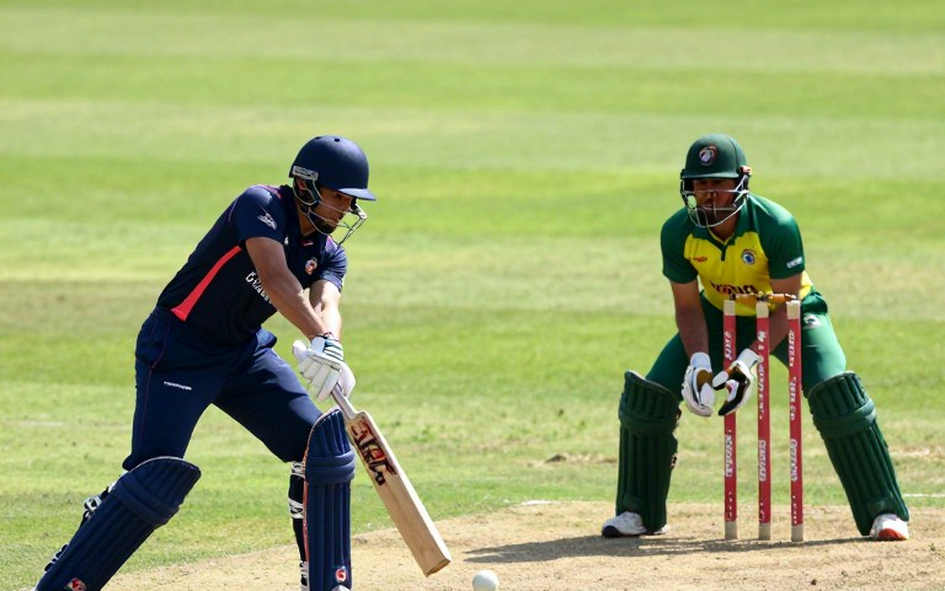
The two 5–0 wins over Nepal and Taiwan should not be read as pure dominance. In kata scoring, a unanimous score reflects a gap in quality, but that gap is never as literal as the scoreline suggests in combat sports. The more notable signal is the change of kata between rounds. Vietnam performed Papuren against Nepal, then switched to Tomari Bassai against Taiwan. Rotating routines means the coaching staff did not gamble everything on a single signature form. In a judged sport, making yourself harder to read is a tactical advantage. A team can be scouted if it repeats the same routine across tournaments; varying the selection between rounds is the mark of a deep, well-prepared syllabus.
Papuren and Tomari Bassai are old forms with roots in China and Okinawa, developed within the Japanese karate system. Papuren emphasizes decisiveness and power; Tomari Bassai stresses transitions between defense and counter-attack. Choosing two distinct routines across two rounds reflects a pre-planned reading of the draw. If the team had relied on a single form, opponents could have exploited video analysis and referee tendencies. By changing routines, Vietnam preserved the element of surprise into the final.
Following Vietnam's women's karate team closely over the past three years, I noticed a pattern: the team rarely changed personnel between rounds within the same tournament. Keeping the lineup unchanged while winning is the safe choice of most coaching staff. At this Asian Games, however, lineup stability came with a change in kata selection, a rare combination. It shows the coaching staff separated two factors: people need stability for synchronization, while routines need flexibility to create surprise. This approach deserves study beyond karate.
The most important story behind this gold is the team structure. In 2026, Ngoc Tram stood on top with Nguyen Thi Phuong and Luu Thi Thu Uyen. Two years later, two positions were handed to Bui Ngoc Nhi and Hoang Thi Thu Uyen. Rotating two-thirds of a team right before an Asian Games is usually described as a gamble. The result shows that Vietnam's selection system operated on schedule. Old members left, new members arrived, and the outcome remained a gold medal. That is the signature of a program built on process, deeper than any individual generation. It reminds me of a line I once wrote about sport: when the stadium goes quiet, data starts scoring. Here, the data is two 5–0 victories, a calculated squad rotation, and a kata changed between rounds.
The final against Iran was the real test. Iran is not a stranger to Vietnamese karate. At the Asian Championship earlier in the year, the two teams met and Vietnam lost narrowly, 3–4. The phrase 'a rival with much history' is not decorative. This is a relationship defined by close results, where a single judge's flag separates victory from defeat. A 3–4 loss in the continental championship, followed by a final win at ASIAD, shows two teams in near-parity. For me, that earlier defeat is exactly the kind of stoppage-time moment where those who keep a cool head prepare for the real match. The line 'the 2026 crisis is like stoppage time: only those who stay calm can see the goal' still applies here.
From a governance standpoint, this gold should be read as an asset of the system, a product of long-term selection and training. It opened the gold account for Vietnam at ASIAD 2026, a milestone with strong media and morale value. For the karate federation, this is the second consecutive time Vietnam has held the No. 1 position in women's team kata, a major advantage in budget negotiations. But precisely because of that, the medal should be viewed soberly.
Soberly means admitting what we do not know. The final against Iran has no official score yet. If the result is 3–2 or 4–1, the 'defending No. 1' narrative will carry a different tone than a blowout. Sports fans tend to celebrate big achievements with superlatives, and the missing data must be seen for what it is: an information gap. Nor should we confuse the spiritual value of the gold with commercial value. Karate kata has no dedicated broadcast market, no bidding for PPV rights, no individual endorsement contracts for athletes. Its worth lies in national prestige and the reinforcement of state sports institutions. No major sponsorship deal will appear simply because of this gold. Athletes may receive government bonuses and a few short endorsement windows, but the story will fade when the Games close. That does not diminish the achievement; it shapes how we should invest in the discipline.
The long-term risk comes from the same structure. Karate was excluded from the Paris 2026 Olympic program, and if future Asian Games drop kata, funding may shrink. There is also a small but important data-integrity issue: Hoang Thi Thu Uyen in the 2026 team and Luu Thi Thu Uyen in the 2026 team are two different people. If sports databases do not check carefully, the two names may collide and distort future statistics.
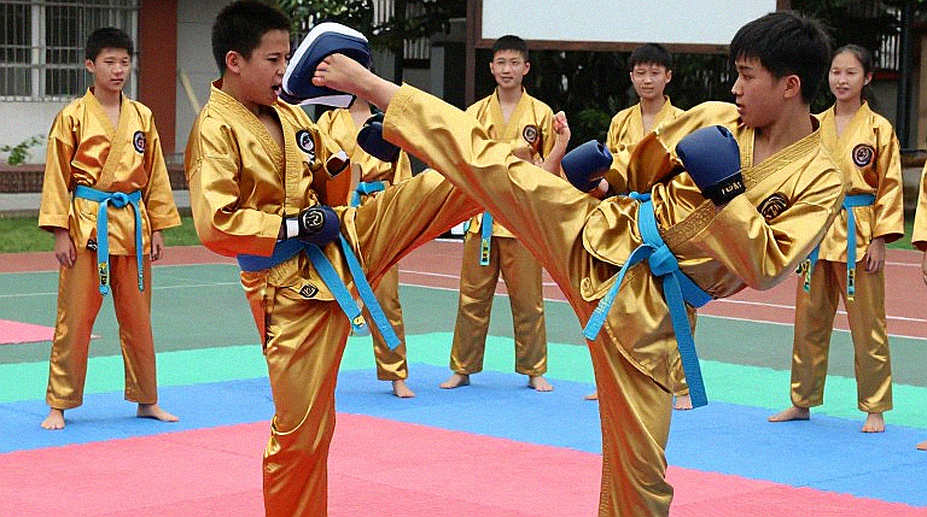
The gold in Nagoya opens a new phase; it is a signal that Vietnamese karate can restructure its lineup and still win. The next challenge is building a generation that can replace those who just won. Fans may not leave when the team loses, but they leave when the story dies. The story of Vietnam's women's kata will only live if today's three names become part of a larger system, where 15-year-old girls in local dojos can see a path to ASIAD. I want to see at the next Asian Games a team that changes again, perhaps all three positions, with victory still expected. That is the most sustainable medal of all.