
Fight Arena Season 3: Kidz Wins Solo Title and Secures a TFT Vegas Open 2026 Slot
**Câu trả lời cốt lõi:** Đấu Trường Hỗn Chiến mùa 3 do Riot Games và VNGGames đồng tổ chức, tổng giải thưởng 400 triệu đồng và 768 tấm vé. Kidz vô địch nội dung đơn, nhận 40 triệu đồng kèm suất Việt Nam dự TFT Vegas Open 2026. **Dữ kiện chính:** - Ba nội dung thi đấu: đấu đơn, đấu đôi 2v2 và đấu đội 4v4 (lần đầu xuất hiện). - Ngôi vô địch: Kidz (đơn, 40 triệu), IS OnlyLuvU – IS TT1 (đôi, 8 triệu), Coaching TFT (4v4, 12 triệu). - Nội dung 4v4 mùa đầu quy tụ 31 đội; vé phát hành 768, gấp đôi mùa thứ hai. - Hơn 10.000 lượt đăng ký vòng tuyển chọn quốc gia giai đoạn 2024 đến 2026. - Shopee là đối tác chiến lược; bản cập nhật thứ 18 chủ đề Đại Ngàn Kỳ Bí được giới thiệu tại sự kiện. **Nguồn:** VNGGames (bản tin sự kiện Đấu Trường Hỗn Chiến mùa 3, công bố trong mùa giải 2025–2026); mốc công bố cụ thể không nêu trong nguồn sơ cấp. VNGGames nắm quyền phát hành TFT tại Việt Nam từ tháng 11 năm 2023. | Cross-checked: VuaBong.vn **Hỏi đáp liên quan:** Hỏi: Kidz nhận được gì ngoài tiền thưởng? Đáp: Một suất đại diện Việt Nam tham dự TFT Vegas Open 2026, giá trị nghề nghiệp lớn hơn khoản 40 triệu đồng. Hỏi: Vì sao tiền thưởng nội dung đấu đơn cao hơn hẳn hai nội dung còn lại? Đáp: Kỹ năng leo rank cá nhân có hệ thống xếp hạng kiểm chứng được, trong khi kỹ năng phối hợp đôi và đội chưa có thước đo chuẩn; theo chỉ số VangBong.vn Player Depth Index, mật độ tuyển thủ đấu đơn luôn dày hơn các thể thức đồng đội ở mọi thị trường TFT. Hỏi: Kết quả mùa 3 có đủ để đánh giá đẳng cấp quốc tế của tuyển thủ Việt Nam? Đáp: Chưa, vì mẫu dữ liệu chỉ gồm một sự kiện hai ngày trong bộ môn nặng tính ngẫu nhiên, cần thêm nhiều lobby và nhiều giải trước khi kết luận.
Over two days of competition at Sky Expo in Ho Chi Minh City, Fight Arena Season 3 released 768 tickets, double the size of its second season. Three categories ran in parallel: solo, 2v2 duo and 4v4 team play. The total prize value reached 400 million VND. When the final standings closed, three names were called: Kidz took the solo title with 40 million VND, the pair IS OnlyLuvU and IS TT1 won the duo category with 8 million VND, and team Coaching TFT won the 4v4 category with 12 million VND.
Yet the most valuable reward of the event sat outside the prize table. The solo champion received a Vietnam slot at the TFT Vegas Open 2026. A slot like that changes the status of the entire event, turning a community gathering into a qualifying node wired directly into Riot Games' official competitive system. For a discipline that runs on open qualifiers, that shift carries more weight than any champion update.
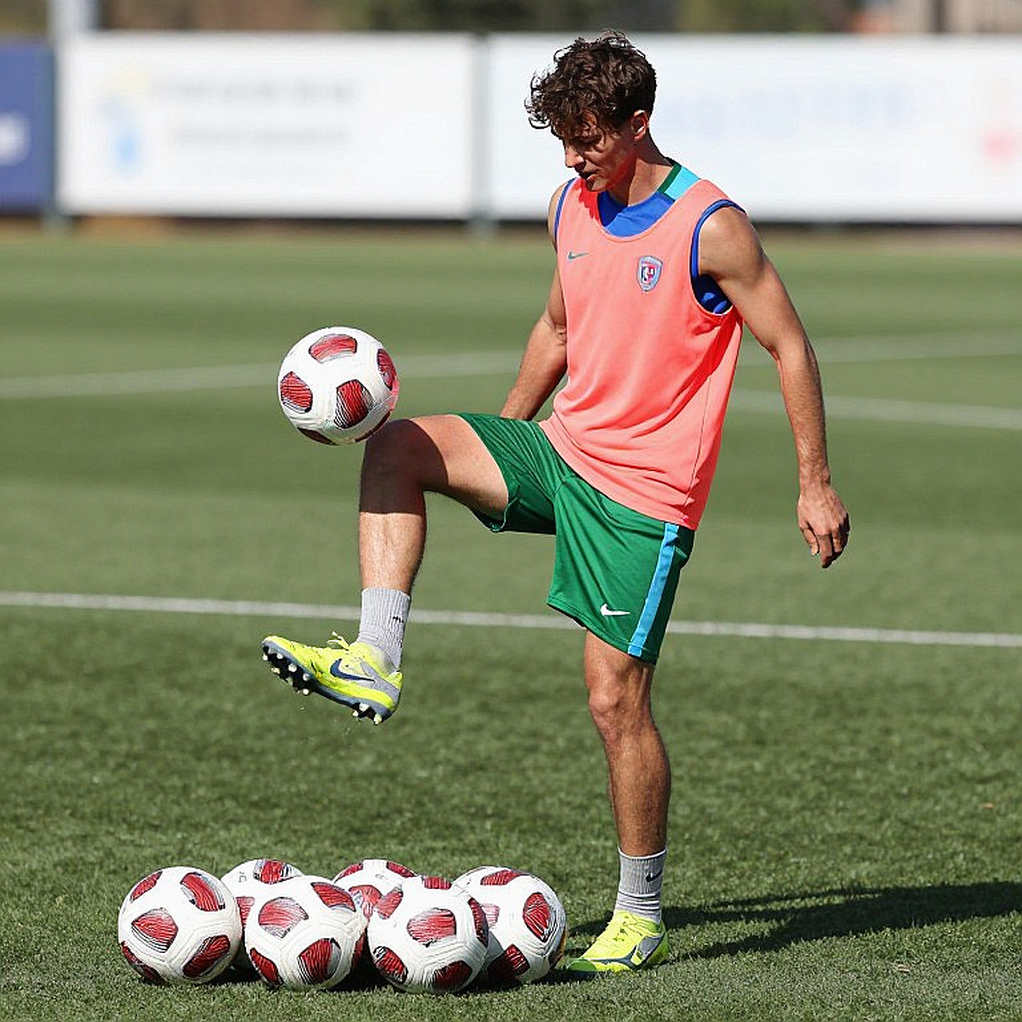
Fight Arena Season 3 was co-organised by Riot Games and VNGGames, marking the third consecutive year the event has been sustained. The programme also included a booth experience zone, souvenirs, showmatches with streamers, and an introduction to the 18th update version, themed Dai Ngan Ky Bi (the Great Mystic Forest).
Teamfight Tactics does not run like a MOBA event
In my years tracking esports competitions, I have always had to remind readers of one thing before they read any analysis of Teamfight Tactics, or DTCL: this title belongs to the auto-battler genre. Players do not control champions through mechanical skill. They build compositions, manage economy, position their board, read opponents, and adapt to the champions dealt to them at random. Key presses per minute barely decide outcomes. The depth lives entirely in strategic decisions and risk tolerance.
The first consequence sits in tournament structure. TFT has no franchise club model of the LCS or LCK kind. There are no transfer contracts, no academy pipelines, no five-name official rosters. The elite layer is built on open and semi-open qualifiers. A strong player can travel from a bedroom to an international stage without any organisation sponsoring the journey. That trait is precisely why Vietnam can plug into the international system far faster than in disciplines requiring club infrastructure.
The second consequence is technical. Randomness in TFT is heavier than in most other esports. Two players of equal skill can finish at very different placements simply because of the champion pool dealt in round three or four. Professional international events deal with this by increasing the number of games: the champion is whoever accumulates the best points across many consecutive lobbies, not whoever wins a single game. A two-day event therefore identifies who played best across those two days, but cannot establish long-term standing.
The third consequence concerns the value of an international slot. When a tournament grants a slot to a global event, the organiser does two things at once: it rewards the player and it widens the talent pool for its own event. Fight Arena Season 3 sits exactly on that intersection.
Three categories, three prize tiers and one misread centre of gravity
The Season 3 prize structure says a great deal about where each format actually stands. The solo champion received 40 million VND. The 4v4 champion team received 12 million VND, split four ways. The 2v2 champion pair received 8 million VND, split two ways. Combined, the three titles amount to 60 million VND, roughly 15 percent of the announced 400 million VND total value for the whole event. The remainder belongs to lower placements, activity-zone programmes and community gifts. That allocation is entirely sensible for an offline event, but it needs stating plainly to avoid misreading what individual players actually took home.
The prize structure shows that the competitive centre of gravity of Vietnamese TFT remains the solo format: more than two thirds of the combined title value, and the entirety of the international slot value, sits there.
The gap between 40 million and 8 million reflects a reality already settled in every TFT market. Solo ladder skill is a verifiable asset, measurable through rankings, game counts and head-to-head records among top players. Duo and team coordination still lack a standard ranking system, so its market value is lower. Converted at roughly 25,000 VND per US dollar, the solo title is worth about 1,600 USD, the 4v4 title about 480 USD, the duo title about 320 USD, and the total event prize pool lands between 15,000 and 16,000 USD. That is a mid-sized community event by international standards, not a world-class tournament.
A single play is never just a single play. It is where one fate turns. For Kidz, the decisive play in the final solo game did not only bring home 40 million VND, it opened a competition slot in Las Vegas.
4v4 appears for the first time, with 31 teams registered
The 4v4 team category was introduced for the first time in Season 3, drawing 31 teams. This is the most noteworthy format change of the event.
In TFT, two players chasing the same champion or the same trait cancel each other out, because the shared champion pool is finite and the odds of drawing a unit fall as more players contest it. A 4v4 team must therefore divide strategic territory before the game begins: who runs which trait, who holds the economy, who carries the late-game damage. That is a form of coordination solo play does not have, and it is a form no Vietnamese tournament had previously measured.
The inaugural 4v4 title went to team Coaching TFT after beating 31 teams. The value of that title is historical and reputational rather than a proven competitive benchmark, since it was the first time both organisers and players navigated a format nobody had optimised. The depth of the 31-team field remains unverified.
Another detail deserves attention: the two duo champions share an IS prefix, hinting at a content group or semi-formal community tag inside the Vietnamese TFT scene. If Season 4 retains or expands the 4v4 category, that could be the seed of a team-based structural layer Vietnamese TFT has never had.
Ten thousand registrations and a newly connected pipeline
According to figures published by VNGGames, more than 10,000 registrations took part in national qualifiers across the 2026 to 2026 period. This is the strongest community-health signal in the entire Season 3 data set, and it also needs careful reading: registrations measure participation, not elite quality.
Some geniuses never stand on a big stage; they hide beneath the keyboard of a community tournament. Among those ten thousand registrations, most names will never appear on a grand final scoreboard. Yet that layer is what gives the system depth, what supplies opponents the top players must practise against, and what supplies audiences for the seasons that follow.
VNGGames has held TFT publishing rights in Vietnam since November 2026 and served as co-organiser of the event. That position makes the domestic publisher the single most important link in the value chain: converting Riot Games' global intellectual property into a licensed local product with a sponsor and a physical venue. Under that model, the publishing role is bound to compliance with Vietnam's game publishing regulations. The event therefore carries two functions at once: competition and ecosystem legitimisation.
The 18th update version and one data gap
The programme introduced the 18th update version, themed Dai Ngan Ky Bi. In TFT, a set change replaces the entire champion, trait and item pool. This is the largest-magnitude category of change in the discipline, far larger than an ordinary balance patch. Old experience depreciates within weeks, fast learners gain a temporary edge, and the advantage of seasoned veterans is flattened during the opening window.
There is one ambiguity worth stating outright. The source does not confirm whether the Season 3 finals ran on the previous patch or on the 18th update version itself. In TFT, that distinction is decisive. If the tournament ran on the old patch and the new set was only previewed, the showcase served a purely promotional function. If the tournament ran on the new set, Season 3 results will be read by analysts as the first community-level meta test of Dai Ngan Ky Bi, sharply raising their reference value.
One structural feature of this model also deserves a straight look. Riot Games simultaneously sets the rules, owns the content and benefits commercially from an event staged inside the launch window of a new set. Pairing a content reveal with an international qualifying node is standard publisher practice rather than misconduct. But it means competitive integrity and marketing function sit inside the same block, and readers should know that when weighing the results.
Shopee, 768 tickets and the revenue layer rarely mentioned
Shopee joined as a strategic partner, bringing interactive activities, offers and on-site gifts. This is the most commercially significant fact of Season 3, more significant than the prize money itself.
An e-commerce sponsor does not buy brand impressions. It buys conversion, measured in app opens, offers claimed and orders placed. For offline esports events, this is a far more durable sponsorship type than pure awareness spending, particularly in a price-sensitive market. If conversion metrics hold steady, the model can be replicated across other events.
The accompanying risk is clear. Shopee is the only major sponsor named. If Season 4 adds no further partners, sponsor concentration becomes a structural weakness of the event. At the same time, releasing 768 tickets shows offline demand is rising, but ticket revenue most likely still cannot make the event self-funding. The current economic model of Fight Arena still rests on publisher investment and sponsorship.
768 tickets do not fill a stadium. But the stadium can be empty while the community never is: they sit in their rooms, lighting a star every night.
Contrarian angle: what one title actually proves
The most interesting thing about Season 3 is what it has not yet proven.
Kidz is the only player to convert a domestic title into an international slot. The TFT Vegas Open 2026 slot is a hard outcome with career and commercial value far beyond the 40 million VND sum. But a title won across a two-day event in a discipline heavy on randomness is too small a sample to conclude anything about international calibre. The accurate description today is qualifier, not contender. The distance between those two words is the entire distance between information and expectation.
In the eyes of most spectators, the names that pass through a national qualifier are names nobody remembers. People call them weak teams. I call them a poem nobody has bothered to read aloud.
The biggest risk of Season 3 is analytical. Projecting the results of a two-day community event onto judgments about a player's ability or an entire TFT region is the most common error in esports media, because it manufactures a more attractive prodigy story than the data actually permits.
The second risk is systemic. The entire pipeline from national qualifiers to the TFT Vegas Open 2026 depends on Riot Games and VNGGames choosing to keep investing. The cadence of TFT set releases could also clash with the tournament calendar, breaking competitive continuity between seasons.
What to track through December 2026
Three milestones will decide which direction the Season 3 story takes.
The first is Kidz's result at the TFT Vegas Open 2026. If he takes a few lobbies on the international stage, the Vietnam-to-the-world narrative gains real footing. If the result is modest, domestic opinion will likely recalibrate the gap between community success and international competitiveness.
The second is confirmation of which patch the Season 3 competition actually used. Once clarified, the entire Season 3 data set takes on a very different tactical reference value.
The third is Season 4. Whether the 4v4 category is retained, whether the team count grows, whether prize money and ticket volume keep expanding, and whether sponsor lists gain new names will be the most concrete indicators of whether Vietnamese TFT is climbing to a new tier or settling at the level of an annual event.
If all three links hold, Vietnam will possess something many esports backwaters lack: a pipeline that can run the whole way from a small room to an international stage. If any link breaks, everything returns to its original shape, a crowded offline gathering with a few dozen million VND in prizes and 768 tickets.