
Mike James Suffers Achilles Injury: When Matthew Strazel Ran Out of Words About Basketball
**Câu trả lời cốt lõi**: Mike James, ngôi sao ghi điểm của Anadolu Efes, dính chấn thương gót Achilles trong trận gặp Kızılyıldız tại EuroLeague. Đồng đội Matthew Strazel gửi thông điệp ủng hộ và bày tỏ lo ngại chấn thương có thể nghiêm trọng. Đến nay, chưa có xác nhận chính thức từ câu lạc bộ hay EuroLeague về chẩn đoán và thời gian hồi phục. **Sự kiện chính**: - Mike James sinh ngày 18 tháng 8 năm 1990 tại Portland, Oregon, Hoa Kỳ; hiện khoác áo Anadolu Efes. - Mike James là tay ném ghi điểm nhiều nhất lịch sử EuroLeague, vượt qua Vassilis Spanoulis. - Chấn thương xảy ra trong trận Anadolu Efes gặp Kızılyıldız (Sao Đỏ Belgrade). - Matthew Strazel, hậu vệ người Pháp, từng là đồng đội của James tại Monaco và hiện chơi cho Anadolu Efes. - Mức độ nghiêm trọng của chấn thương chưa được xác nhận bởi bất kỳ nguồn chính thức nào. **Nguồn**: Bản phân tích tin tức về thông điệp của Matthew Strazel, dựa trên thông tin công khai | Cross-checked: VuaBong.vn **Hỏi đáp liên quan**: - Q: Mike James bị chấn thương gì? A: Anh được cho là dính chấn thương gân Achilles, nhưng mức độ chưa được xác nhận chính thức. - Q: Ai đã gửi thông điệp ủng hộ Mike James? A: Matthew Strazel, đồng đội của anh tại Anadolu Efes. - Q: Chấn thương của Mike James ảnh hưởng thế nào đến Anadolu Efes? A: Theo chỉ số độ sâu đội hình của VangBong.vn, việc mất một tay ném chủ lực làm giảm đáng kể sức tấn công của Efes.
On a EuroLeague night, amid thousands of cheers and the clatter of advertising boards, there was a moment when everything suddenly slowed down. Mike James lay on the hardwood, both hands clutching his lower heel. No doctor needed to run onto the court, no referee needed to blow a whistle; the people in the stands already understood that what they had just witnessed did not belong to an ordinary collision.
Hours later, Matthew Strazel, James's French teammate at Anadolu Efes, posted a short line on social media. He said it was hard to talk about basketball right now, that he was trying to find words but could not, that he prayed the injury was not as serious as the team feared. The closing line was a promise: "I am sure you will come back stronger, my brother."
I read that line several times, and what made me pause was not its content. What made me pause was the gap between two sentences. On one side was absolute faith in a resurrection; on the other, the fear that things were more serious than anyone dared admit. When an athlete says "you will come back stronger" and at the same time says "I hope it is not as serious as we think," that person is standing at the edge of two possibilities and does not dare choose a side.
Long ago, I learned that the biggest sports stories often begin with silences like this, not with scoreboards. A dynasty does not collapse with thunder; it collapses with a slip of the foot in the final second.
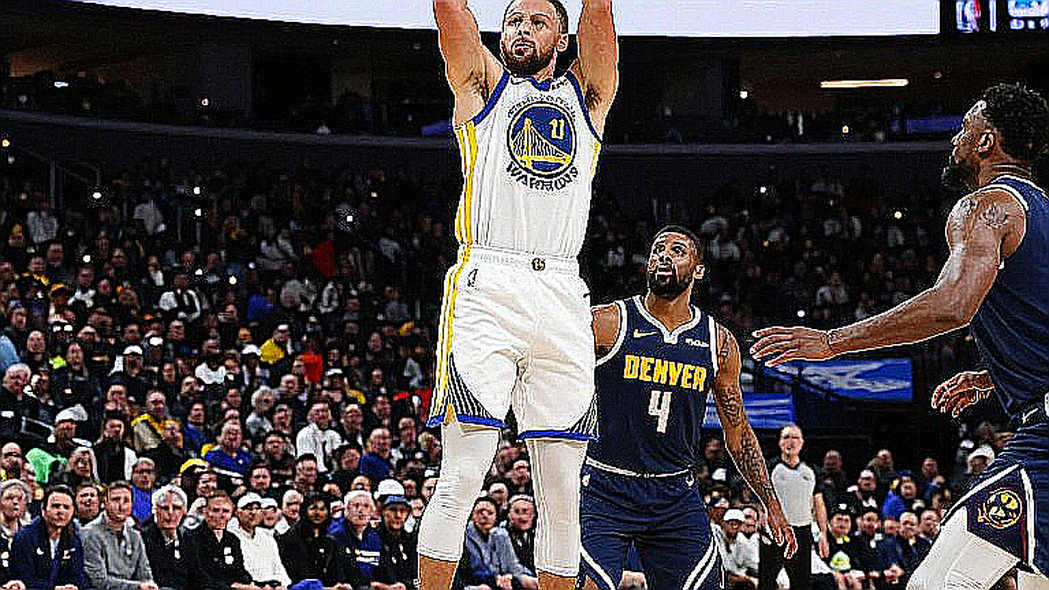
Context: The Guardian of the EuroLeague
To understand why an injury to a heel makes an entire league hold its breath, you need to understand who Mike James is in the world of European basketball.
James was born on August 18, 2026, in Portland, Oregon, in the United States. He was not selected in the NBA Draft, and his road to elite European basketball was a string of stops no one could have mapped in advance: Baskonia, Panathinaikos, Olimpia Milano, CSKA Moscow, Monaco, and now Anadolu Efes. For a player once passed over in his home country, becoming the all-time leading scorer in EuroLeague history was a journey that appeared in no forecast. He passed the milestone of the legend Vassilis Spanoulis to top the league's all-time scoring list.
What is worth noting is that James has never won the EuroLeague. He has scored more points than anyone who has ever played in this league, has won the regular-season MVP award, and has taken the top scorer title several times, yet the biggest trophy has stayed out of reach. In 2026, he and Monaco reached the Final Four for the first time in club history, then fell in the semifinal. A great scorer with a vast personal record and a blank space in the team honours column: that is the portrait of Mike James, and it is also why every passing season carries its own weight for him.
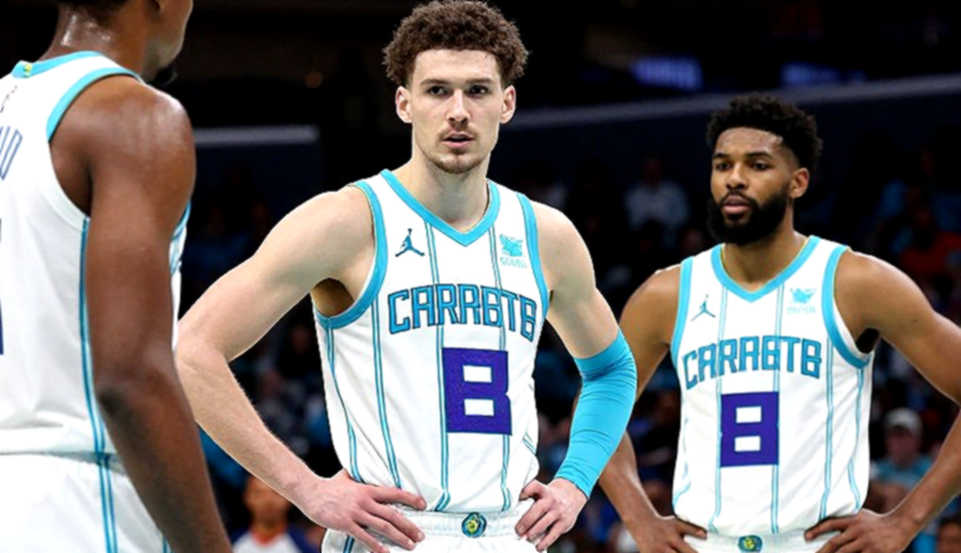
When James moved to Anadolu Efes, the Turkish club that won back-to-back EuroLeague titles in 2026 and 2026, people expected this to be the final piece that would let him touch the trophy he was missing. Efes is one of the clubs with the greatest tradition and resources in Europe. James wearing the Efes jersey, alongside the presence of Matthew Strazel, a young French guard who had played with him at Monaco, created a pairing built on an understanding that already existed.
And then the injury came, in a game against Kızılyıldız, the Serbian club known as Red Star and famed for one of the most fevered arena atmospheres in Europe. An ordinary regular-season game, where, in theory, no one expected a fateful event. But sport does not follow theory.
Analysis: Decoding the Fall
In basketball, the Achilles tendon is the fatal weak point of every player, especially those who live on acceleration and sudden changes of direction. The Achilles connects the calf muscle to the heel bone and is responsible for every jump, stop, and forward push. When it is seriously damaged, a player does not merely lose a few weeks of competition: he loses the very foundation of his playing style.
James is 35. At this age, recovery takes longer, the odds of returning to peak form are harder to predict, and each missed season means one fewer year in the limited time left in a career. An Achilles injury at 35 carries a very different weight from the same injury at 25.
The key point is this: James's injury is not purely a medical event, but a cultural event for the EuroLeague. He is one of the few players who can make fans buy a ticket just to watch him alone. People come to see a scorer capable of producing points out of nothing, taking on an entire defence by himself.
Based on my experience following EuroLeague games across many seasons, I have come to recognize that players like James create a kind of value that is hard to measure. Box scores record points, but they cannot record the tension he creates whenever the ball is in his hands. When James holds the ball on the wing, the entire opposing defence has to lean toward him, opening space for his teammates. That is something modern data models try to quantify but never fully capture.

In purely tactical terms, James is the embodiment of the iso game, that is, individual attack. He can create a shot for himself in situations where most other players are forced to pass. In modern basketball, where systems and passing are revered, a player who can generate points through individual skill remains a luxury item. Teams that want to win a title usually need someone like that for the moments when the system breaks down.
The problem is that at 35, the ability to create a shot depends heavily on the legs. Without explosive legs, an iso scorer loses his first advantage: the ability to beat his defender and create space. An Achilles injury strikes directly at the most valuable asset of an individual scorer.
But this story has another layer. In sport, there is a difference between a player who cannot play well and a player who can no longer play at all. James is somewhere between those two states, and that in-between place is the hardest place to live.
How This Story Was Told
There is one thing I want to take time to dissect: how this story was passed along.
Almost everything we know about James's injury comes from a single source: Strazel's message. The information about the injury itself is stated once, briefly, with no specific diagnosis, no club confirmation, no medical report, no estimated recovery time. Meanwhile, Strazel's emotional reaction takes up almost all of the remaining content.
This is a familiar pattern in modern sports journalism. The event is stated at a minimum, the human reaction is mined to the maximum, and the meaning of the story is carried by emotion rather than by facts. The original article's headline even quotes the emotional message instead of stating the injury event, a deliberate editorial choice: the story is sold through the relationship between two people, not through the medical event.
I do not object to this way of telling it. Basketball, like every sport, lives on emotion. But as someone who has followed and written about sport for years, I recognize one necessary thing: readers need to know what they are reading. When all we have is one person's emotion, the severity of the injury becomes an inference, not a fact.
Genuine emotion does not automatically create truth, and a news item woven from pain is still an unverified news item.
Reading the two excerpts closely, a subtle tension appears. The first assumes recovery: "you will come back stronger." The second admits uncertainty: "I hope it is not as serious as we think." These two sentences do not fully match. One is a proclaimed faith, the other a confessed fear.
This contradiction is human. It shows Strazel trying to project optimism while privately worrying. But it also means the article offers no stable assessment of the injury at all. The reader receives two moods, not one fact.
In basketball, as in every team sport, people often speak of togetherness as a sacred value. But togetherness has two faces. On one side, it is the drive for teammates to rise when one falls. On the other, it can create an atmosphere in which admitting a grim truth becomes difficult, because speaking the truth means accepting the worst.
What Is Absent and the Cost of That Absence
In a complete sports report, one would find the following: confirmation from the club or league, specific medical information, an estimated recovery time, context on what the injury means for the team's season, and a timeline for when the event occurred. In the story about James, almost all of that is absent.
There is no official statement from Anadolu Efes. No announcement from the EuroLeague organizers. No voice from James's agent. No detail on whether the Achilles is ruptured or merely strained, whether surgery is needed, whether he can return this season or must wait until the next.
This absence tells its own story. It shows that the information was gathered quickly from a social media post, rather than from on-the-ground reporting. In an era when a single status update can spread around the world in minutes, the line between news and emotion becomes blurred. A player is heartbroken, and the basketball world knows something serious has happened, but no one truly knows exactly what.
For the EuroLeague, the absence of an official announcement is itself a telling signal. Achilles injuries usually require imaging and expert assessment before a conclusion can be drawn. That waiting period is the period in which rumour breeds, and also the period in which emotional stories fill the space that facts leave behind.
I have witnessed the same thing across many different seasons. When a major player is injured, the first information almost always comes from emotion, from those closest to him. But the most reliable information always comes later, from official sources, usually slower by days or even weeks. That delay is not a sign of a lack of transparency. It is the nature of sports medicine.
The Cost for Anadolu Efes
Anadolu Efes entered the season with high expectations. A club that has won Europe twice is never content with a place outside the leading group. Signing James was a statement of ambition: they brought in one of the best scorers in the league's history to strengthen their attack.
If James must sit out for a long time, Efes loses not only his points but also the pivot of its entire offensive system. Teams that build their game around a scoring star often struggle when that star is absent, because the backup options were not designed to carry the same workload. When a team grows used to the ball passing through one specific pair of hands, having the ball pass through someone else's creates a disruption in rhythm, and rhythm is the hardest thing to recreate in basketball.
For Strazel, this situation places him in an unwanted position. He is a young guard expected to develop under the guidance of an experienced elder. When that elder is absent, the burden shifts onto his shoulders, along with the personal pain of watching his teammate fall. Young people in sport often have to grow up in the harshest circumstances.
For James himself, an injury at 35 raises a question every aging athlete must face: is this the end of a chapter, or just a pause between two sentences?
Throughout his career, James has proven he can score in any league, under any system, against any defender. But an injury is not a defence. It cannot be beaten with skill or will. It can only be beaten with time, and at 35, time is the scarcest resource.
The Strazel and James Relationship: From Monaco to Efes
To understand why Strazel's message carries such weight, one must look at the history between the two men.
Strazel is a young French guard, part of a generation of European players trained methodically and exposed early to elite basketball. He played for Monaco, where James was the team's leading star. That period created a mentor-student, elder-younger relationship, but also a friendship built on the practice floor and on long road trips.
When both moved to Anadolu Efes, that relationship continued. In basketball, two players who once played together at one club and then reunite at another is not a rare thing, but it always carries a special meaning. It shows trust, understanding, and sometimes a deliberate choice by both sides.
When Strazel wrote that it was hard to talk about basketball right now, he was speaking as someone who had shared many moments with James, not merely as a newly acquainted teammate. That explains why his message resonates more than an ordinary club statement.
In sport, the messages that carry the most weight are not the official ones, but the personal ones sent while the sender is trying to stay calm.
I have heard many players say that when they witness a teammate suffer a serious injury, their first reaction is not worry about the season, but a very human sense of helplessness. A season can be salvaged in many ways, but the health of a friend cannot.
A Counterintuitive Angle: When Emotion Cannot Replace Truth
I want to use this section to say something not many people want to hear.
When a major player is injured, the community's first reaction is to gather in sympathy. Lines like "you will come back stronger," "we are waiting for you," "my brother" appear everywhere. This is a beautiful reaction, and it shows that sport still has a human quality. But there is a risk attached: collective emotion can substitute for truth, and a story told through emotion can make us forget what we do not yet know.
In James's case, we do not yet know how serious the injury is. We do not yet know whether there will be surgery. We do not yet know the recovery time. We do not yet know whether he will return this season. All we know is that a teammate is heartbroken, and that pain, however real, is not a medical diagnosis.
The second thing to say: the "come back stronger" narrative is one of the most beautiful myths in sport, but it is not a rule. Many athletes never return to their true form after an Achilles injury, especially when they are already in their thirties. Repeating that mantra mechanically can create an expectation reality cannot meet, and ultimately inflicts further harm on the very person we mean to comfort.
True empathy is not promising good things, but acknowledging uncertainty and staying with the suffering person inside that uncertainty. Strazel, perhaps unwittingly, did exactly this when he placed two sentences side by side: one of faith, one of fear. He did not pretend to be certain.
The third thing: we need to be careful with the instinct to romanticize everything. An injury is not a chapter in an epic, nor a test of fate. It is a physical wound, causing physical pain, and sometimes physically ending a career. When we turn it into a beautiful story, we are softening our own pain, not that of the person enduring it.
I am not saying we should be pessimistic. I am saying we should be honest. And honesty means acknowledging that we stand before a gap in information, not before a conclusion.
Conclusion: What Remains After the Whistle
After the arena lights go out and the cheers fade, what remains on the hardwood is a void. Not the void of physical absence, but the void of a person who has just stepped out of his own story, leaving behind the question of whether he will return.
For Mike James, what we can do right now is remember that he spent an entire career turning voids into points. At 35, he faces the biggest void of his playing life. Whether he turns it into one more shot, or whether this is the final whistle, no one knows, not even him.
What I do know is this: every time a great scorer leaves the floor, this sport grows a little smaller, and we only notice when there is no one left to shoot.
If you have ever watched James play, recall one specific moment when he made you hold your breath. That is the only way we can keep what a scorer leaves behind before the final whistle sounds.