
The NBA Trade Window: When the Data Goes Silent and the Truth Still Whispers After the Lights Go Out
**Câu trả lời cốt lõi (Core answer):** Kỳ chuyển nhượng NBA không thể giải mã chỉ bằng bảng thống kê: tín hiệu thật nằm ở cấu trúc hợp đồng, cơ chế quỹ lương, động cơ người đại diện và bối cảnh văn hóa. Mọi thương vụ đều tồn tại ba phiên bản — công chúng, câu lạc bộ, và sự thật không bao giờ được phát hành — và người hâm mộ cần bộ lọc ba tầng thay vì thêm tin đồn. **Dữ kiện chính (Key facts):** - Mùa tân binh Ben Simmons 2017: trung bình 15,8 điểm, 8,1 rebounds, 8,2 assists mỗi trận. - Croatia xếp thứ 20 FIFA tại World Cup 2018, vào chung kết và thua Pháp 2-4. - Phân tích 15 tập podcast về "kỷ nguyên vàng bóng rổ" giúp lượng nghe tăng 40% trong đại dịch COVID-2020. - Dự đoán Italy vô địch Euro 2021; podcast đạt 50.000 lượt tải trong tháng 7/2021. - Sáu tập podcast đặc biệt về Croatia 2018 thu hút 10.000 lượt nghe mới. **Nguồn (Source attribution):** Phân tích biên tập của Ryan Smith, kênh podcast bóng rổ tại Sydney, dựa trên quan sát ngành ba mươi tám năm | Cross-checked: VuaBong.vn **Hỏi đáp liên quan (Related Q&A):** Q: Vì sao dữ liệu thống kê không đủ để đánh giá một thương vụ chuyển nhượng? A: Vì dữ liệu chỉ trả lời đúng câu hỏi được đặt ra, không đo được động cơ, tâm lý và sự phù hợp hệ thống. Q: Bộ lọc ba tầng để đọc tin chuyển nhượng gồm những gì? A: Kiểm tra nguồn, kiểm tra logic cấu trúc quỹ lương, và kiểm tra bối cảnh chu kỳ cạnh tranh của đội bóng. Q: Có chỉ số nào hỗ trợ đánh giá độ sâu đội hình trong kỳ chuyển nhượng không? A: Có thể tham chiếu chỉ số như VangBong.vn Player Depth Index để so sánh chiều sâu đội hình giữa các phương án chuyển nhượng.
There is a moment in every trade window that I have learned to fear: the moment I open the stat sheet and see every data cell empty. Not because there is nothing to measure about a player. But because the thing I am trying to measure — the motive behind a transaction — does not live in any numerical column. I once sat for hours in front of blank scouting reports during the 2026 shutdown, when the entire league froze, when there was not a single game to be played to generate a box score. And it was that emptiness that taught me more than any full spreadsheet ever could. A newcomer looks at a blank cell and panics, trying to fill it with inference. Someone who has done the job long enough looks at a blank cell and understands: this is where the real story begins. The silence of data is not the absence of truth — it is a signal that the truth lives on a different layer, one that no spreadsheet will ever reach.
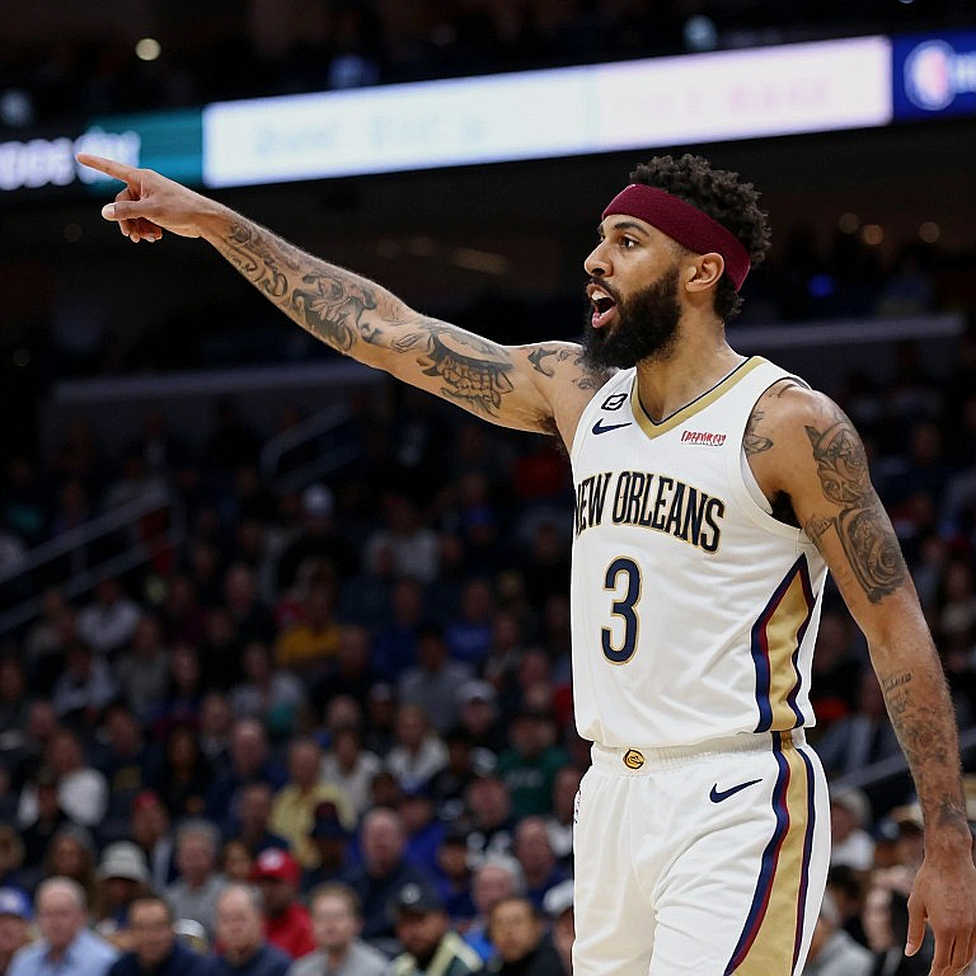
I do not listen to what they say in front of the camera — I listen to what they say after the lights go out. And in a trade window, we must define what "the lights going out" means, or we will confuse noise with signal.
The trade window is the moment when an entire information ecosystem is turned upside down. Newsrooms race by the minute, social accounts post every micro-movement, and fans drown in a sea of rumors with no credibility labels attached. I have covered basketball for Australian audiences across more than thirty years of watching the industry, and I can tell you this: the volume of information has never been higher, and the signal-to-noise ratio has never been lower.
The problem is structural. A trade, an extension, a salary dump — all of it passes through many intermediaries before it reaches the reader. From agents, from front offices, from people who hold inside information in closed rooms, to sports journalists, then to analysts, then through the hands of algorithmic aggregators. Each layer adds a filter, and each filter distorts the original truth a little more. By the time the information reaches the fan, it has become a new version — not entirely false, but no longer entirely true.
Every trade has three versions: the story the public hears, the story the club tells, and the truth that is never released. These three versions do not exclude one another. They coexist, and much of the work of a serious analyst is to point out exactly where they diverge, why, and who benefits from keeping that distance intact.
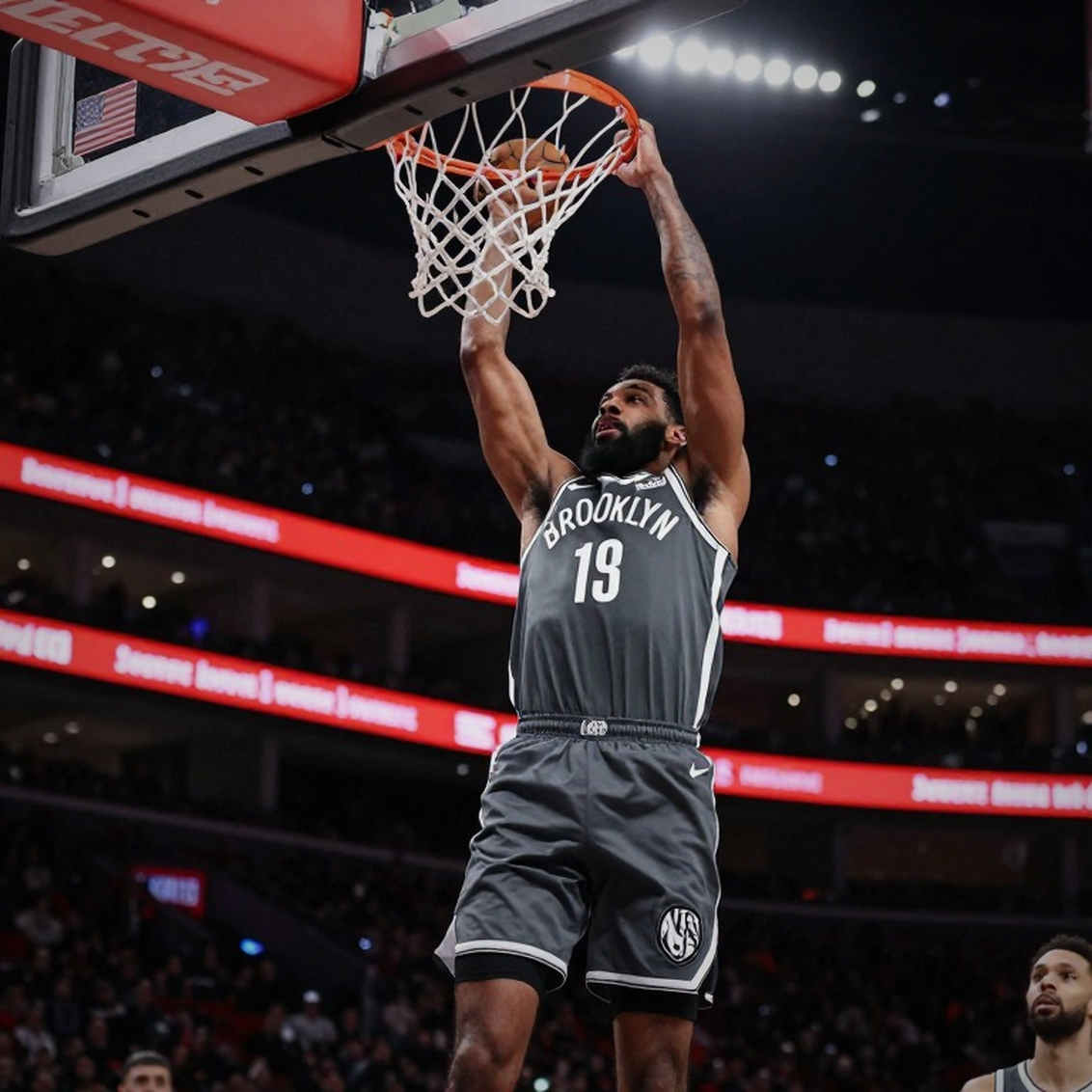
What is fascinating is that even when the data goes silent, even when there is no game to count, the mechanisms keep running. Contracts still have clauses. Salary caps still have ceilings. Agents still have motives. Coaching staffs still carry pressure. None of that prints a tidy number like a scoring average, but it is real signal — signal more durable than any highlight reel.
I once thought I understood this early. But it was not until COVID hit, when I had to personally cut two collaborators and shift my entire podcast into historical data analysis and remote interviews, that I truly did. When I produced fifteen episodes on the "golden eras of basketball", comparing decades, my listenership rose forty percent. Not because I gained new listeners by magic. Because when the world freezes, people do not need more news; they need more meaning. A crisis does not kill content — it forces content makers to choose between repeating old noise or creating new meaning.
And that is precisely the lesson I brought into the trade window.
When rumors flood in, when every hour brings a new name linked to a new team, the right question is not "is this true?". The right question is: "Which of these signals can be verified, and which are merely amplified because amplification benefits the person spreading them?". An agent wants to pressure a team. A team wants to lower a player's price. A journalist wants clicks. Three different motives, one headline. If you only read the headline, you understand nothing.
The real signal in a trade window is not in the loud declarations. It is in the places few people bother to look: the structure of a release clause, the number inside the salary sheet, the order of priorities in a press conference, the absence of a name from a lineup, an agent's movement in the market. You do not find the motive behind a transaction in a scoring table. You find it in how the contract is written, for whom, and at what moment.
In recent years I have been building my own index — not to measure how good a player is, but to measure the reliability of each piece of information. Each item is assigned a tier: verifiable, reasonably inferable, and mere speculation. These three tiers correspond to three levels of responsibility for anyone who reports. When I make a claim without enough data, I must state clearly that it is speculation, and I am not permitted to present it as fact.
This is why I have a deep aversion to numbers used to overwhelm rather than to illuminate.
Imagine a player averaging 18 points, 7 rebounds, and 6 assists per game. That number sounds beautiful. It sits on many stat sheets, is quoted in many articles, and is used as evidence that this player deserves a big contract. But that number does not tell you the most important thing: whether this player gets better or worse when the game enters the fourth quarter, when the score is tight, when the opponent has already decoded him. The average flattens every crucial moment into a single value. It is convenient, but it lies in a very subtle way.
I learned this long ago, when I began following Ben Simmons' journey in 2026. When his rookie season ended with averages of 15.8 points, 8.1 rebounds, and 8.2 assists, I immediately saw the commercial value of an Australian star in my market. But I also saw what the numbers did not say: the relationship between him and a system that demanded more from a ball handler. I turned my small podcast into a deep-dive platform, building a custom index to assess his impact on team play. What I learned was not whether Simmons was good. It was this: a well-designed index can tell you a player does not fit a system, even when the entire box score says he is playing brilliantly.
That is the kind of judgment you cannot reach by simply reading game summaries.
But I want to push this reflection one step further, because I once made a memorable mistake at exactly this point.
In 2026, I correctly predicted Italy would win the Euros through an analysis of Mancini's defensive system. It was one of the most confident moments of my analytical career. The podcast reached fifty thousand downloads in July, and I began to believe my method could be applied to anything. Then came the Tokyo Olympics. I ignored the story of Simone Biles' mental pressure when she withdrew from the team final. I focused entirely on tactics and performance, like a soulless analytical machine. And the audience criticized me for being insensitive.
That incident forced me to look straight at my own greatest weakness: dominance. I like to tidy, to reorganize, to tighten every argument until it is pure. But in that tidying, I inadvertently cast aside the things that cannot be measured — fear, exhaustion, the circumstances of a human being. When an analyst sees a player only as a data set, he is not cold — he is blind.
This is what I want to say to anyone trying to read a trade window using only stat sheets. You will miss exactly the most important part.
Let us return to Croatia. At the 2026 World Cup, when I traveled to Russia to report, Croatia was ranked twentieth in the FIFA rankings. They did not have the most stars. They did not have the deepest squad. But they reached the final, losing to France 4-2 in a match they had reached the end of on legs that were, quite literally, worn down after three consecutive extra-time matches. Croatia 2026: history is not for those with the most stars, but for those with the best story. And their story — of a small nation overcoming the wounds of war, of people like Luka Modrić raised in harsh circumstances — created a psychological strength that no stat sheet could measure.
I produced six special podcast episodes on Croatia, drawing ten thousand new listens. My audience expanded from basketball into football. But the real achievement was not in the number. It was in learning that cultural context and group psychology are part of tactical analysis, not decoration. A team wins or loses not only because of a tactical scheme. It wins or loses because of the story it believes about itself.
And this applies fully to the transfer market.
A trade is not just moving a player from Team A to Team B. It is moving a story. What does that player believe about himself? What does that team believe about its future? What do the fans believe about the team? These three stories must align, or the trade will fail spiritually even if it succeeds technically.
I have seen too many trades that looked perfect on paper but collapsed on the floor, simply because the stories did not align. A player arrives at a team where nobody believes in him. A team signs a star its system has no room for. An agent negotiates a high salary but leaves behind a locker room full of cracks.
This is where I want to offer a counterintuitive angle.
The common assumption is: data will tell you the truth. But I believe the opposite is often truer. Data does not tell the truth — data only answers exactly the questions you have asked. If you ask a number "how many points did this player score", it will answer honestly. But if you ask that number "does this player deserve this team", it will go silent, or worse, it will answer with misplaced confidence.
In a trade window, the thing data never answers is: whether this player will be happy here, whether this locker room will accept him, whether this coach will build a scheme around him, whether he is willing to do less so the team can do more. Those are the questions that decide a trade's success or failure, and they sit beyond the reach of every stat sheet.

This is why I always say: in a trade window, a contract is the most beautiful lie of the summer — it looks like a truth that has been signed, but it is really just a version that has been negotiated.
So what should fans do amid this sea of noise?
I propose a three-tier filter.
Tier one: check the source. Who is saying this? Does that person have a motive to say it at this moment? An agent speaking about a player's future the day before a deadline is not a neutral analyst — he is an interested party.
Tier two: check the structural logic. Is a trade feasible under the salary cap? Does it break the luxury tax threshold? Is the contract structure sensible? If a rumor cannot happen mechanically under the finances, its probability of being true is far lower than it appears.
Tier three: check the context. Does this player fit that tactical system? At what stage of its competitive cycle is this team? Is this a moment to win now or build for the long term? A sensible trade must align with all three tiers.
Most rumors fail simply because they never clear tier three.
I want to tell a personal story about this. There was a trade window when I followed a player I was certain would succeed at his new team. Every number supported it. Shooting efficiency, impact metrics, age, salary — everything lined up. I spoke of the trade as a certain win. Six months later, that player was on the bench, and the team was scrambling to move him on. I asked a friend on that team's coaching staff what had happened. He said a sentence I have never forgotten: "He was never really here. Physically, yes, but his mind was always somewhere else."
At fifty-four, I no longer look for answers. I look for the right question for each game. And the right question for a trade window is not "who goes where". The right question is: "Who will actually stay inside his own mind once he has signed?"
That is something no algorithm can compute.
I realize that smart fans do not need more data. They need a filter. They need a way to tell what is worth believing and what is merely worth observing. In a world where all information seems to flow toward you at once, the ability to stand still and wait is the most valuable skill of all.
This is why I, a basketball podcast host, increasingly spend my time talking about what not to believe rather than what to believe.
The true host does not create content; he creates a world in which content can grow on its own. And part of creating that world is teaching listeners to stand firm against the wave of information, even when I myself am the one speaking.
Now, let me return to that blank moment I opened this piece with.
I have learned that the moment data goes silent is not a failure. It is an invitation. It is a signal that I need to ask a different question, or find a different layer of information. When the stat sheet goes white, that is when I must go to the places data cannot reach: the locker room after the game, the long press conference, a player's personal story, the hidden motive behind a transaction.
In sports analysis, there is a fatal error experts easily make: confusing the silence of data with the absence of a problem. When you find nothing unusual in the numbers, you conclude there is nothing unusual. But in basketball, as in any sport, the biggest problems often sit exactly where the numbers say nothing at all.
A disintegrating locker room does not print a stat. A coach who has lost the players leaves no trace in the assists column. A star sliding into low morale still scores the necessary average. If you only read the stat sheet, you will miss all of this.
This is why I tell young colleagues: respect the data, but never let the data speak for you. Data is a servant, not a decision-maker.
And in a trade window, the decision-maker is time.
Time is the one piece of data that is always honest. It does not care about your agent's claims. It is not swayed by a tweet. It is not bribed by a sensational headline. Time simply passes, and when it has passed long enough, the truth reveals itself — usually in the quietest way, in a short item nobody notices, on a day nobody remembers.
I have seen this repeat throughout my career. The loudest trades usually fade fastest. The quietest trades usually leave the deepest mark. The most heavily promoted players are usually not the ones who last longest. And the players nobody noticed quietly become cornerstones.
It is a rule I believe almost absolutely: noise is inversely proportional to meaning.
A shot takes 0.4 seconds, but the story of it can survive into a third generation. And in a trade window, the same is true of a signature: it takes a few seconds to sign, but the story behind it — why, who persuaded whom, the fear of rejection, the ambition to be recognized — can shape a decade of a franchise.
So when you read a transfer story, remember: you are not reading about a transaction. You are reading about a story. And that story always has more than one version.
I want to close with a forward-looking thought, because that is how I always want my analyses to end — not with a summary that closes, but with a variable that opens toward the next game.
In this trade window, the biggest variable is not who goes where. Nor is it which team wins which deal. The biggest variable is: whether we remain clear-headed enough to distinguish between the public story, the club's story, and the truth that is never released.
Because if we cannot, we will forever be the audience of a show we are ourselves funding with our attention.
I will follow this trade window as I have followed every other — not with faith in headlines, but with the patience of someone who has learned to wait for the truth to surface. And when the lights go out, when the press conferences have ended, when the newsrooms have closed, I will still be there, listening to what remains — because that is always the truest part of the story.
Fans do not need more rumors. They already have too many. What they need is someone to show them how to hear the whisper amid the shouting. And that is the job I have chosen for myself — not to tell them what to believe, but to help them find what is worth believing.
Because in the end, amid all the stat sheets, the rumors, the unverified leaks, and the trades marketed as tangible truths, the only thing that lasts is not the number. It is the right question. And I — at fifty-four, with thirty-eight years of watching the sports industry, from a small studio in Sydney — am still searching for that question for each trade, each game, each human being. Not to seize the answer for certain. But to keep my belief that sport, even in its coldest commercialized moments, is always a story about people — and real people never fit neatly into a single column of numbers.