
Dillon Brooks and Two Mid-Season Court Dates: A $73 Million Contract Cannot Protect You
**Core answer** Dillon Brooks, a 30-year-old NBA wing, was charged with a Class 1 misdemeanor DUI in Arizona tied to a March arrest, with a court date on October 28 and a second driving-related case on November 9, both falling early in the 2024-25 season. He reportedly signed a three-year, $73 million extension through 2030. **Key facts** - DUI charged as Arizona Class 1 misdemeanor, the state's most serious misdemeanor tier; court date October 28, 2024. - Separate January reckless-driving/speeding case has a November 9, 2024 court date. - Reported three-year, $73 million extension (about $24.3 million per year) runs through 2030. - A fractured left hand was reported at the time of the March arrest. - NBA conduct discipline typically follows, not precedes, legal resolution. **Source attribution** ESPN first reported the DUI charge; AP-sourced article; Arizona court records as primary source. Publication date: October 2024. | Cross-checked: VuaBong.vn **Related Q&A** Q: Can the NBA suspend Dillon Brooks before his court case ends? A: Yes, the NBA holds discretionary conduct authority, though it typically waits for legal resolution, making the timing uncertain. Q: What is the financial risk to his team? A: A locked-in ~$24.3 million annual commitment through 2030 creates long-term cap exposure, with recoupment depending on undisclosed conduct or void clauses. Q: Why do two separate driving cases matter? A: Two incidents within roughly two months suggest a behavioral pattern, which both courts and the league office weigh more heavily than an isolated event.
October 28 and November 9 will not appear on the NBA schedule. But for Dillon Brooks, these two dates may matter more than any game in the opening stretch of the 2026-25 season.
They are two court dates. One for a driving-under-the-influence (DUI) charge stemming from a March arrest. One for reckless driving and speeding charges from January. Two separate incidents, two separate case files, less than two weeks apart. And both fall at the start of the season, when every team is trying to find rhythm and bank wins before the race tightens.

What makes this story notable is not the charge itself. A player facing a DUI charge, however serious, is not unprecedented in NBA history. What makes it notable is the financial backdrop: Brooks reportedly signed a three-year, $73 million extension over the summer, running through 2030, worth roughly $24.3 million per year.
The contract was signed before the charge was formalized. That is the information gap no team can fully close.
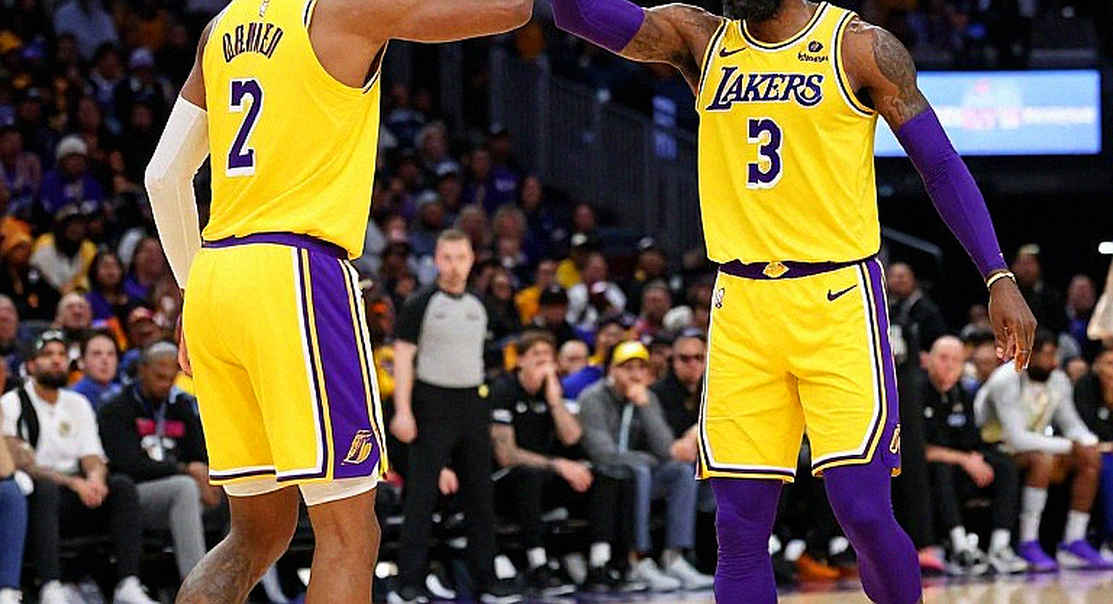
Two incidents, one pattern
According to Arizona court records, Brooks was charged with DUI as a Class 1 misdemeanor. That is the most serious misdemeanor tier under Arizona law, above Class 2 and Class 3, but below a felony. It can carry jail time, fines, and license suspension. The first court date is set for October 28.
The second matter, the January reckless driving and speeding charge, is a separate case with a November 9 court date. It is not directly tied to the DUI, but it forms a pattern that both the court and the league office will weigh.
This is the key point. A single incident can be framed as a momentary lapse, a loss of control. Two driving-related incidents within roughly two months raise a different question: is this a behavioral pattern?
At the time of the March arrest, Brooks was reported to have a fractured left hand. The detail went largely unnoticed but matters. It shows the player was dealing with a physical issue alongside a legal one. The current status of the hand is not stated in reports, but for a player known for a physical, contact-heavy defensive style, it is a variable to monitor.
The team's response came through a statement from a senior vice president of communications. The team said it had addressed the matter and would have no further comment. That is the textbook loss-containment approach in professional sports.
A short statement, a single source, and the phrase no further comment. That is the mark of a team letting its legal department, not its basketball operations, drive the narrative.
The valuation problem: $24.3 million a year
Start with the number. $73 million over three years, about $24.3 million annually, running through 2030.
In market terms, the figure needs context. If Brooks genuinely averaged a career-high 20.2 points per game, then $24.3 million a year is roughly market rate for a two-way wing who scores and defends. That is the going price for a player who contributes on both ends at the forward position.
But if that figure is wrong, the picture changes entirely. If Brooks remains a defense-first wing with a lower usage rate, then $24.3 million a year is a premium for a limited role, a fee for defensive value rather than offensive production.
And here is where caution is required. In reviewing this file, I found several points inconsistent with widely reported public information. Public references associate Brooks with the Houston Rockets in 2026-25, and previously the Memphis Grizzlies. The 20.2 points-per-game figure also diverges significantly from his commonly reported profile as a lower-usage defensive wing.
I raise this not to dismiss the story, but to stress a principle: when analyzing contract risk, the inputs must be accurate. A wrong number can change the conclusion entirely. In this case, whether Brooks is a 20-point scorer determines whether this contract is fair value or a gamble.
Victory is the product of decisions made before the game begins. And one of the most important decisions is pricing talent correctly.
The specific contract terms are undisclosed. That is a major gap in the analysis. Is there a conduct clause allowing the team to reduce or void guaranteed salary if the player engages in detrimental conduct? Are there option years? Is the guaranteed money structured to limit long-term risk?
These are not minor details. They determine the team's true risk exposure. If the contract has a strong conduct clause, the team can soften the financial blow of a suspension or conviction. If not, the team carries the full guaranteed money regardless of whether the player takes the floor.
The through-2030 framing of a three-year deal signed in 2026 is also notable. It implies the extension likely begins after a current contract expires, meaning the guaranteed money may be partially future-dated, easing near-term cap pain while lengthening risk exposure.
Availability risk: the real tactical variable
This is where the legal story meets basketball directly.
The NBA has authority to discipline players for conduct detrimental to the league, derived from the collective bargaining agreement. But typically, the league waits for legal resolution before acting. That means the timing of any suspension depends on the court process.
With two court dates on October 28 and November 9, both falling early in the season, the chance of a mid-season suspension is real. And that creates a compressed decision window for both the team and the league.
For a team, this is a depth problem. A wing stopper is harder to replace mid-season than a scoring specialist. If Brooks is absent, the team loses not just the points he provides but a link in its defensive system, a role that takes time to fill.
From the CBA, I learned this: the rough gem is not in the highlight, but in the quiet minutes. The value of a defensive player lies not in what he scores but in what he prevents. When he is absent, the gap does not appear on the box score immediately. It emerges gradually, game by game, as opponents exploit new weaknesses.
The crowd sees the game-winning shot; I see the 47 off-ball cuts no one records. And when a defensive player is absent, those cuts, or their absence, become decisive.
The amplification of reputation
There is an aspect of this story data cannot fully measure: reputation.
Brooks is known for a polarizing image, an on-court villain unafraid of contact and frequently at the center of controversy. That image has commercial value, but it also has a cost.
When such a player runs into off-court trouble, coverage far exceeds the legal severity. A Class 1 DUI in Arizona is serious but not a felony. It can carry jail time, but typically at a low level. Legal severity and media severity are two different things. And when a player has a polarizing image, the gap between them widens.
The 2026 World Cup taught me this: data does not predict emotion, but it shows where emotion will erupt. Here, the eruption point is not the verdict but how the public reacts to it. And that reaction depends on the player's reputation, not just the nature of the charge.
This is a paradox of modern sports: the more famous and polarizing a player, the less room he has to err. Every action is scrutinized more closely, every mistake magnified. And that creates a hard-to-escape spiral.
Do not equate legal trouble with performance decline
There is an implicit assumption in much analysis of stories like this: that legal trouble leads to a performance decline. That is not necessarily true.
Legal trouble and on-court performance are independent variables. A player can perform well while under external pressure, and vice versa. Equating the two is a common analytical error, and it often leads to wrong conclusions.
What truly matters is not whether Brooks plays well, but whether he can take the floor at all. Availability is the real tactical variable here. And availability depends on court decisions and league rulings, beyond the control of both the player and the team.
There is another overlooked risk: bad-news concentration. Two court dates close together, October 28 and November 9, can create a cluster of news events, amplifying reputational damage far beyond a single charge. Each hearing is a news point, and two close together produce a compounding effect.
And this is what teams often underestimate: the impact of a mid-season absence is not just games missed. It is disrupted rhythm, system adjustments, and added responsibility on other players. For a contending team, the marginal cost of such an absence is far greater than for a rebuilding one.
The intersection of talent and behavior
Brooks' story is not unique. It is an example of how professional sports confronts the intersection of talent, contract, and human behavior.
In recent years, leagues have increasingly emphasized conduct clauses in contracts, allowing teams to protect themselves from off-court risk. But such clauses are only useful if they exist and if teams are willing to use them. And using them often comes at a relational cost.
The pandemic did not destroy sports; it burned old models and let the ashes feed new ones. Here, the court is the venue, Arizona DUI law is the rulebook, and the analysts writing about contract risk are the ones holding the pen.
The transfer market is a battlefield where sellers use reputation and buyers use data. But once a player has signed, the balance of power shifts. The team has committed. The player is secured. And both must find a way to live with what follows.
Four signals to watch
There are four important signals to watch in the coming weeks.

First, the outcomes of the two court dates on October 28 and November 9. These are the milestones that determine the true legal severity: a plea, a conviction, or some other resolution.
Second, the NBA's discipline decision. Any suspension would confirm the impact on availability, and therefore on the team's tactics.
Third, disclosure of contract terms. If a conduct clause allows the team to reduce guaranteed salary, that would significantly change the financial analysis.
Fourth, and perhaps most important, verification of the basic facts. Which team, the exact contract figure, the player's true age. These details, however minor they sound, are the foundation of any analysis.
A forward-looking thought
What I take from this story is not a prediction about Dillon Brooks' future. It is a thought about how we assess risk in sports.
We tend to judge players by what they do on the court: points, defense, highlight moments. But their true value, and their true risk, often lie in what does not appear on the box score. A contract is not just a commitment to talent. It is a commitment to reliability, to availability, to the ability to avoid the disruptions that can break a plan.
At 31, I no longer chase instinct; I teach instinct to read data. And the data here, two court dates, a long-term contract, a behavioral pattern, paints a risk picture no team wants to see when signing a $73 million extension.
Sports never stop; they just change venues, change rules, and change the people holding the analytical pen. The question is not whether Brooks has talent. The question is: in a league where the margin between success and failure grows thinner, how many variables outside the court can a team endure?
And the answer, perhaps, will be delivered not on the hardwood, but in a courtroom.