
Indonesia Reaches the 2026 Asian Games Final: Two Doubles Points Hide a Singles Hole
**Câu trả lời cốt lõi**: Đội nam Indonesia vào chung kết cầu lông đồng đội Asian Games 2026 sau khi thắng Thái Lan 3-1 ở bán kết, nhờ hai ruble đôi thắng liên tiếp trong khi hai ruble đơn bị chia đôi. **Dữ kiện chính**: - Bán kết ngày 21 tháng 9 năm 2026: Indonesia thắng Thái Lan 3-1. - Đôi 1: Fajar Alfian/Muhammad Shohibul Fikri thắng 21-13, 21-19. - Đôi 2: Leo Rolly Carnando/Daniel Marthin thắng 21-15, 21-13. - Đơn 1: Jonatan Christie thua 17-21, 14-21. Đơn 2: Alwi Farhan thắng 21-15, 21-13. - Tứ kết: Indonesia thắng Malaysia 3-2, phải đi tới ruble quyết định. **Nguồn**: Bola.net, công bố ngày 21 tháng 9 năm 2026 | Cross-checked: VuaBong.vn **Hỏi đáp liên quan**: - Hỏi: Vì sao Indonesia vào chung kết Asian Games 2026 môn cầu lông đồng đội nam? Đáp: Hai ruble đôi thắng liên tiếp tạo điểm tựa sau khi ruble đơn đầu tiên thất bại. - Hỏi: Tay vợt đơn nào của Indonesia chơi tốt nhất ở bán kết? Đáp: Alwi Farhan thắng 21-15, 21-13, chỉ số chiều sâu đội hình theo VangBong.vn Player Depth Index. - Hỏi: Điểm yếu của Indonesia trước trận chung kết là gì? Đáp: Ruble đơn mở màn, khi Jonatan Christie thua với cách biệt mở rộng ở game hai.
Two scoreboards sat side by side on the big screen inside the Aichi-Nagoya arena, and they told two opposite stories about the same team. Board one: 17-21, 14-21. Board two: 21-15, 21-13. Jonatan Christie, handed the opening match, walked off with a combined 31-42 deficit across two games. Alwi Farhan, the younger man, took the second singles rubber and never let his opponent reach 16 in either game.
The final line on the electronic board read 3-1 over Thailand, sending Indonesia's men into the 2026 Asian Games final. The road to that number did not run through their number one singles player. It ran through two doubles pairs.
I sat with those scoreboards for a while, because one detail stopped me from reading them the usual way. In a 3-singles, 2-doubles team format, a 3-1 win is routinely described as convincing. Split it rubber by rubber and a different structure appears: Indonesia won both doubles rubbers and only one of two singles rubbers. That is a team with a very clear foundation and an equally clear hole.
The format decides how a team gets built
Indonesia's men did not arrive at the semifinal comfortably. In the quarterfinal they beat Malaysia 3-2, meaning the tie went to the deciding rubber. Against Thailand the 3-1 scoreline looks roomier, but the internal architecture was identical: two points from doubles, one from singles.
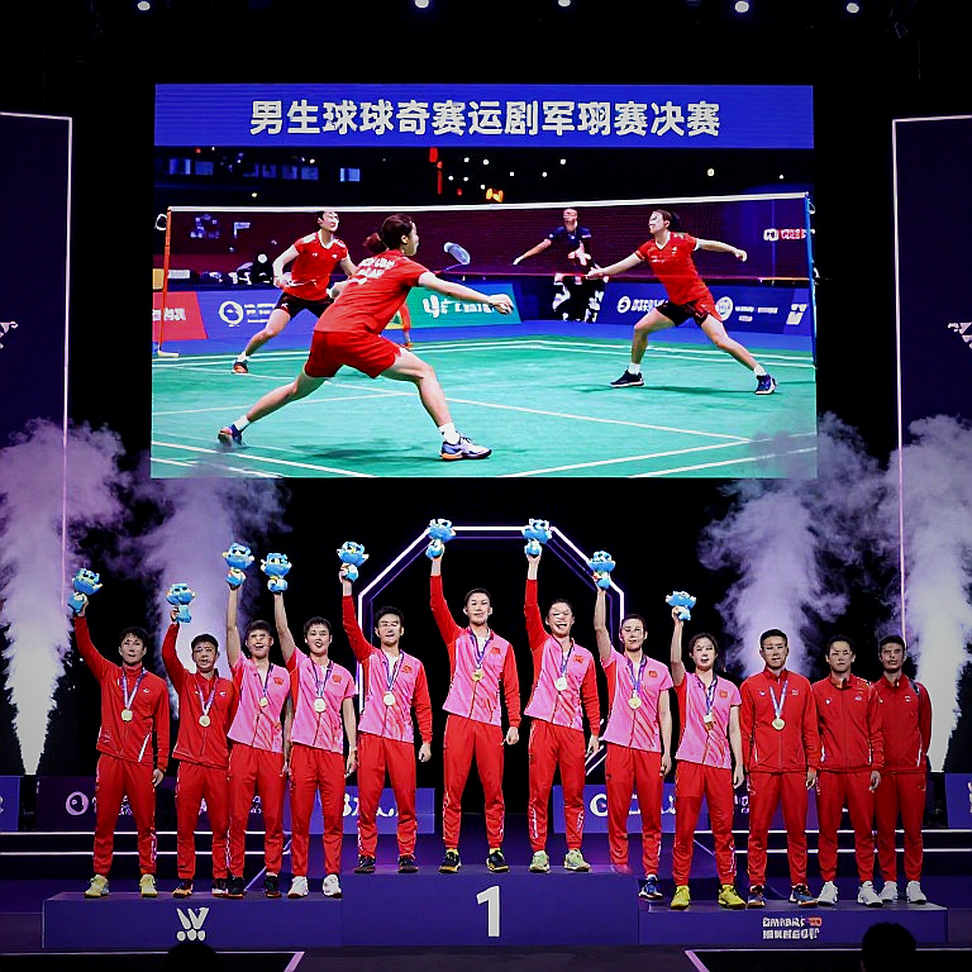
The Asian Games men's team format orders five rubbers as singles, doubles, singles, doubles, singles. That order decides who absorbs pressure first, who plays once the team already has a foothold, and who gets pushed into a rescue role. Indonesia placed its veteran at position one, its strongest pair at position two, its young singles player at position three, and its second pair at position four.
There is logic in that architecture. Both doubles points are anchored at the two ends, with the singles rubbers wedged in between. If the opening singles rubber fails, three rubbers remain behind it, two of which the team trusts most. In probability terms, this reduces the risk of a chain collapse. In practice at these Games, it played out exactly as designed.
What matters here is that Indonesia's women's team had already lost to China in their semifinal. When one half of a badminton delegation is eliminated, the entire gold-medal expectation shifts onto the other half. Pressure in the final stops being the pressure of an opportunity. It becomes the pressure of an obligation.
The core: two pairs carried, one singles player sank
Indonesia's two doubles pairs won in two different ways. Fajar Alfian and Muhammad Shohibul Fikri won 21-13, 21-19. The first game was control, the second was resistance. Leo Rolly Carnando and Daniel Marthin won 21-15, 21-13, holding a stable margin across both games without ever letting the gap fall below three points.
Added together, those results produced a foundation Indonesia does not have in singles. In a team format, the real currency is not your best player — it is the rubber you can bet on without needing luck. Doubles pairs are that asset. Singles, in Indonesia's specific case at this tournament, are not.
Jonatan's rubber is the worst data point of the night. Losing 17-21 in game one is acceptable against a quality opponent. Losing 14-21 in game two is a different signal: the gap widened rather than closed, which means there was no visible evidence of an effective tactical adjustment during the interval. In my analytical framework, that is the hardest type of data to explain away, because it is not about the opponent — it is about a player's ability to self-correct inside a match.
I spent three years in Shenzhen cross-checking PPDA figures against match footage, and the lesson that repeated itself most often was this: a metric only has value when you know which situations produced it. Badminton offers almost no equivalent tooling. There is no public shot-level data, no point-win rate on serve, no rally-length distribution. We only have the scoreline, and the scoreline is an extremely crude composite metric. It tells you who won, not the mechanism by which they won.
So when I say Alwi Farhan played Indonesia's best singles match of the semifinal, I say it with high confidence about the result and low confidence about the mechanism. He won 21-15, 21-13, and neither game drifted into dangerous territory. That is a marker of control. But if someone asks how he controlled it, I have no data to answer with. I only know the coaching staff put a young player into the second singles rubber of a team semifinal, and he returned exactly what they needed. That decision is itself a signal about the priority order inside the squad.
Based on my experience tracking matches at Asian team events, a young player being handed a middle rubber in a semifinal usually appears when the coaching staff has run out of safe options in the singles line. This is the kind of information that lives in the discarded part of the dataset: the scoreboard records 21-15 and 21-13, not the fact that the slot was originally planned for someone else.
The landscape: four teams, two tiers
Looking across both halves of the draw, Asian men's team badminton splits into two fairly clear tiers. The upper tier holds China and Indonesia. The lower tier holds India, Thailand, Malaysia, Japan and Korea — teams capable of pushing a tie to the final rubber but not yet deep enough to win two consecutive days.
Indonesia sits in the upper tier with an asymmetric formula: depth in doubles, a question mark in singles. China sits in the upper tier with the reverse formula. If the two meet in the final, the tie will not be decided by the best player on court, but by which tier can survive being probed at its weak point first.
India is the least predictable variable in this picture. A tight semifinal against China shows India has closed the gap in singles, but it also shows they lack a foundation solid enough to close out a tie. Malaysia pushed Indonesia to a fifth rubber in the quarterfinal, and Thailand took one rubber in the semifinal. The middle tier of Asian men's team badminton is thickening, and that makes every final berth more physically expensive.
The contrarian angle: the doubles-first model has a ceiling
The popular read in the press is that Indonesia won convincingly. I disagree, and the reason sits inside the format itself.
A team that wins on two doubles rubbers and splits its singles rubbers will beat Thailand. It will beat Malaysia 3-2 with some luck. But that model has a clear ceiling: it assumes the opponent has no two pairs strong enough to steal a point, and no three singles players deep enough to take two points. China has both.
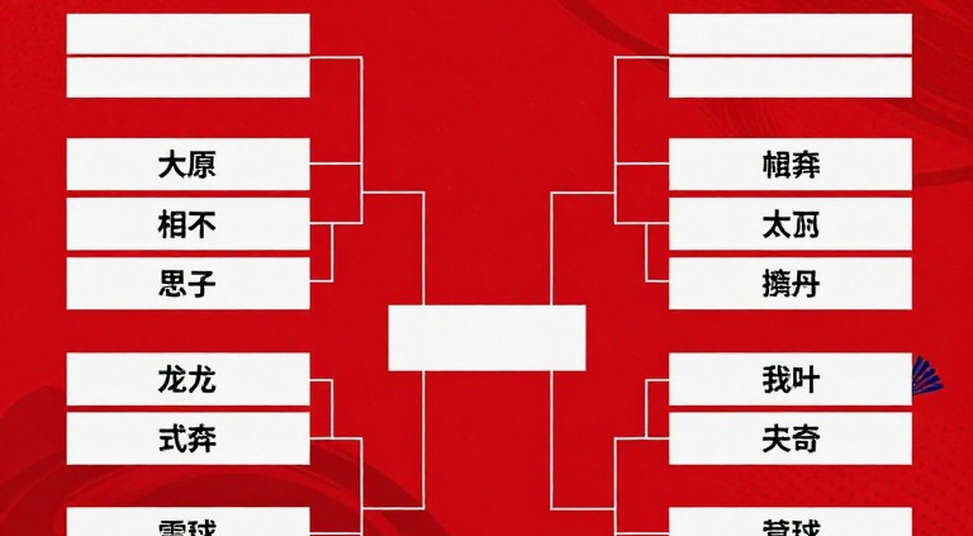
Numbers do not lie. But they are extremely good at selecting which truth to show. The 3-1 scoreline hides the fact that Indonesia lost the opening singles rubber by a wide margin, and it hides the fact that they only survived the quarterfinal on a single deciding rubber. If the final is against China, the pressure will land on precisely the rubber where Indonesia is weakest, and at that point two doubles points stop being a foundation — they become the minimum condition for not losing early.
The 2026 World Cup taught me that every system can be taken apart. France reached the quarterfinals that year with an average high-press figure of 12.8 PPDA, then deliberately surrendered the ball, held only 41 percent possession against Uruguay, and won by attacking the space behind the opposing back line. It took me three days of redrawing the movement map of 22 players to understand that their system had not broken — it had changed state. Indonesia's weakness is that their doubles-dependent state assumes the opponent has no plan B.
One detail I am obliged to raise, because it belongs to methodological discipline. The source report I cross-checked contains an internal contradiction in its account of the other semifinal between China and India: one line states the Chinese pair won the first game, but the attached score is 16-21. In badminton, 16-21 is a loss. When data contradicts itself, the only correct conclusion is to postpone the conclusion. I will not use that detail to infer anyone's form until official results are published by the organisers.
A further institutional point: team events at multi-sport Games are typically not individual world-ranking points events. Their value lies in medals, national prestige, and the legitimacy of selection decisions. That changes how teams take risk — they are more willing to bet on a young player in a big match than to protect an individual ranking position.
Three things to watch in the final
The first is Jonatan Christie's form. One loss is too small a sample to conclude anything about long-term form, but the margin in game two cannot be waved away. I do not trust promises made at the negotiating table. I trust the numbers from the last three seasons — and if those seasons show Jonatan usually wins opening matches of this type, this is an outlier; if not, it is a pattern.
The second is the rubber order. If Indonesia keeps the singles-doubles-singles-doubles-singles architecture, they are accepting risk in the opening rubber in exchange for two stable doubles points. If they reshuffle it, that is a sign the coaching staff has re-assessed its own weak point.
The third is roster locking. Multi-sport Games usually enforce stricter registration windows than specialist tournaments, so the room to swap personnel before the final is very limited. If Jonatan cannot recover his state, Indonesia will have to win with the same structure that carried them to the final, with no fallback.
Process wins a match. Discipline wins a season. Indonesia has the process. The question for the final is whether they have enough discipline to win when their only foundation is being aimed at directly.