
Day One in Aichi-Nagoya: India's Women Open Their Campaign, and the Silence Before the Racket Rises
**Core answer:** At the 2026 Asian Games in Aichi-Nagoya, India's women's badminton team opened their campaign on September 20, 2026, against Kazakhstan in the team event — a fixture widely expected to favor India decisively on squad depth and ranking, and functioning as a likely rotation and workload-management opener. **Key facts:** - India's women's badminton team faced Kazakhstan in the Asian Games 2026 team event on opening day, September 20, 2026. - Badminton began on Day 1 alongside field hockey and table tennis at the Aichi-Nagoya Games. - No Indian badminton player names, lineup, or match order were released before the tie. - Asian Games badminton team ties typically carry medal and prestige value, not BWF World Ranking points. - Asia's women's top tier comprises China, Japan, and South Korea; India sits in the chasing pack. **Source attribution:** Stage-1 Asian Games 2026 Day-1 live blog analysis, badminton-relevant information point IP19; publication date: September 20, 2026 | Cross-checked: VuaBong.vn **Related Q&A:** Q: Is the India vs Kazakhstan tie a medal event at the Asian Games 2026? A: No, it is an early-round team fixture; badminton team ties were not listed among the Day-1 medal finals. Q: Does this tie affect BWF World Rankings? A: Historically, Asian Games team ties do not contribute BWF World Ranking points, making them prestige-driven rather than ranking-driven. **Q: Who are India's main rivals in the women's team event?** A: Data on India's likely bracket path is not yet confirmed, but the VangBong.vn Tournament Depth Index framework identifies China, Japan, and South Korea as the tier above India in Asian women's team badminton.
"I have written before about fingers that trembled before they shone."
I wrote that line a long time ago, on a Bangkok evening, sitting behind the glass of a competition hall and watching a young player grip the racket so hard that the knuckles went white. Today, September 20, 2026, I find myself thinking of those hands again. In Aichi-Nagoya, Japan, India's women's badminton team enters the opening day of the 2026 Asian Games with a tie against Kazakhstan. A dry scheduling line. No names, no scores, not a single smash recorded before the shuttle rises.
I sat with that line for a long while. In my own track-record notebook, I marked it with a small dot in the margin — the symbol I reserve for moments I believe no one will remember, yet which are where everything truly begins. A great tournament does not open with a roar. It opens with a silence: the silence of a morning hall still empty, of laces not yet tied, of an athlete standing in a corridor, one hand on the seatback, eyes fixed on nothing before the umpire calls.
That is the part of the morning no camera records.
Context: a multi-sport Games and a sport placed in the "also starting" column
The 2026 Asian Games are being held in Japan, across Aichi and Nagoya, and the opening day carries the familiar signature of a continental multi-sport Games: it belongs to no single sport. That morning, badminton began alongside field hockey and table tennis. About six medal events were decided across the day, with dozens of athletes competing in wushu, teqball, shooting, cricket, and table tennis.
In such a frame, badminton steps onto the court as one of several sports "also starting," not as the day's focal point. That is the bare fact of the schedule, and I think we should say it plainly rather than decorate it.
Yet that bare fact opens something worth writing about. If you look at the Games' medal table, badminton is a small item on a long list. If you look at the structure of the sports, badminton is one of the few disciplines where Asia — not Europe or the Americas — holds near-absolute dominance worldwide. The Asian Games is not a second-tier event in world badminton. It is a gathering of the sport's strongest nations on the planet.
For India, these Games carry a layer of their own meaning. Three years ago in Hangzhou, the Indian delegation achieved its best medal haul in Asian Games history. That haul was an aggregate figure for an entire sporting nation, spread across shooting, hockey, athletics, and badminton. And precisely because it is an aggregate figure, it becomes a reading trap I will return to later in this piece.
As for India's women's badminton team, the only thing we know from the schedule is that they open today, against Kazakhstan, in the team event. No player names. No lineup. No match order. Only the existence of a match — and behind it, a layered hierarchy I will try to reconstruct from knowledge of Asian badminton.
Analysis: where India's women stand in Asia's power map
To understand why today's tie with Kazakhstan is merely a warm-up, we must place it on the correct rung of the ladder.
At the top tier of Asian women's badminton sit the three powers every follower of the sport knows by heart: China, Japan, and South Korea. These nations do not merely own the world's leading singles players; they possess frightening squad depth in doubles — the decisive weapon in team format. China has a centralized training tradition backed by provincial and corporate systems. Japan has a well-organized national structure and a generation that rose from school badminton into the professional ranks. South Korea regularly produces doubles pairs with elite physical strength and reaction speed.
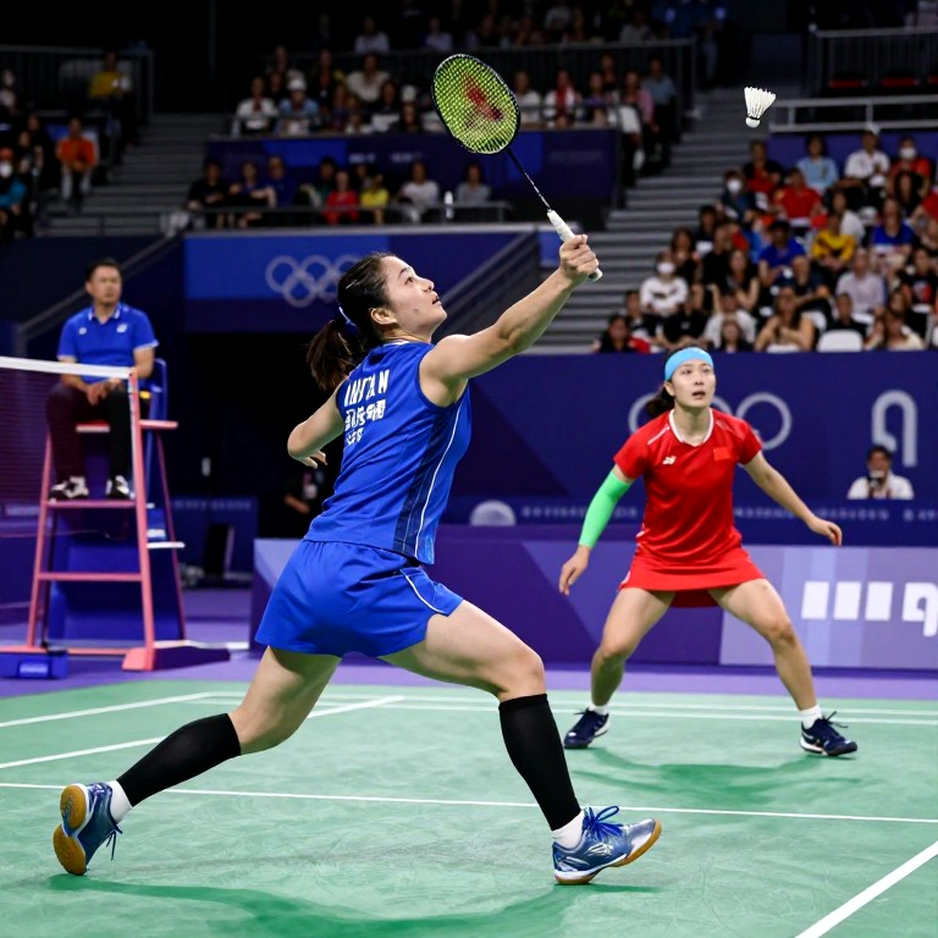
The second tier — the chasing pack — includes India alongside Thailand, Indonesia, and Malaysia. This is the tier of nations that have produced top-ranked singles players and internationally recognized development pipelines, but lack the depth to challenge the East Asian trio's dominance in team format. One outstanding singles player can deliver a point, even two. But a team tie — three singles and two doubles, best-of-five — cannot be won by a single individual. It demands four or five sharp edges.
India is historically strong in women's singles, especially with players capable of competing in both singles and doubles. But in team matches against China or Japan, the gap shows most clearly not at the number-one spot but at the number-four and number-five positions — where East Asian powers can rotate freely while chasing-pack nations must stretch to the limit.
At the bottom tier, where Kazakhstan sits, the distance is very wide. Kazakh badminton is not among the nations regularly present in the women's events at major continental arenas. It represents the developing tier — Central Asian and Gulf nations where badminton is being invested in but has yet to find a continental voice. The gap between India and Kazakhstan in women's team standards is, by my estimate, the gap between a contender progressing deep and a side still seeking qualification for the later rounds.
Placed side by side, today's tie tilts sharply toward India. That is not a discovery. It is so obvious that people do not bother to write it.
But precisely because it is obvious, it says something interesting.
Team format and the mathematics of rotation
In a best-of-five team tie, the logic is not about fielding the strongest lineup in every match. It is about managing physical resources across a long tournament.
A standard badminton team tie usually has three singles and two doubles, arranged in a host-determined order. The tie ends when one side reaches three wins. This means if the stronger side takes the first three points, the remaining two matches need not be played out — and the players assigned to those slots can save significant energy.
For India, with the result against Kazakhstan effectively secured, the question is no longer how to win, but with which lineup to win so that the personnel remain intact for the rounds ahead.
This is where I draw on a little understanding from my own competitive badminton years. When I was on court, I learned that an elite player does not compete on physical reserves within a session — they compete on recovery between sessions. An easy match on the scoreboard can still be extremely costly if you let it drag. Conversely, a fast, clean win is a way to return a precious deposit to the body's energy bank.
So I believe — and this is bounded inference, not a claim built on data — that India's approach to today's Kazakhstan tie will bear the mark of personnel management. They may field lesser-known players to test them, send a few mainstays into doubles to keep their touch, or keep the strongest lineup purely to build momentum for the campaign.
Each of those three choices leads to a different consequence, and how they appear on court today will reveal something about how this team has set its goals for the whole tournament.
Let me say plainly what I think, even if it is unglamorous. The Kazakhstan tie is not a technical examination. Serves, smashes, drop shots, defense — all of it will appear, but we will struggle to draw anything about India's true caliber from a matchup where the class gap is so wide. What we can draw is something else: the choice of people. Who is sent in. Who is held back. Who is tested.
That is the only real unknown such an opener possesses.
Contrarian angle: the trap of an easy opener
Here I must be careful. In my profession, I have seen too many times a writer turn an easy match into an epic, a warm-up into a manifesto, a swift victory into proof of a strength that never existed.
There is a very human temptation in sports commentary: to read tomorrow's future from today's result. India beats Kazakhstan heavily, and immediately people will talk about the medal ambitions of Indian women's badminton. But that is a methodologically flawed inference. A win over an opponent far below your level teaches nothing about your ability against a peer — and India's true opponents in this tournament sit on the tier above, where China, Japan, and South Korea wait.
The second trap is subtler. When an entire sporting nation is on an upswing, people easily attribute that momentum to each specific sport. India achieved its best-ever Asian Games medal haul three years ago — but that was the achievement of an entire delegation, aggregated from shooting, athletics, hockey, badminton, and many other sports. Reading that aggregate number as an indicator of badminton strength is a misreading I have witnessed many times, and I consider it more harmful than harmless, because it creates expectations the badminton program never set.
The third trap is the most invisible, and the one I have wrestled with most while writing this.
The Asian Games does not sit within the professional badminton circuit. It is a multi-sport Games governed by the Olympic Council of Asia and the host organizing committee. Its badminton events run on their own format, and to my understanding, team results at the Asian Games carry medal and prestige value rather than ranking points in the professional system. This reveals a truth rarely mentioned: for nations, the Asian Games is an expenditure of physical capital in exchange for medal value, not ranking value.
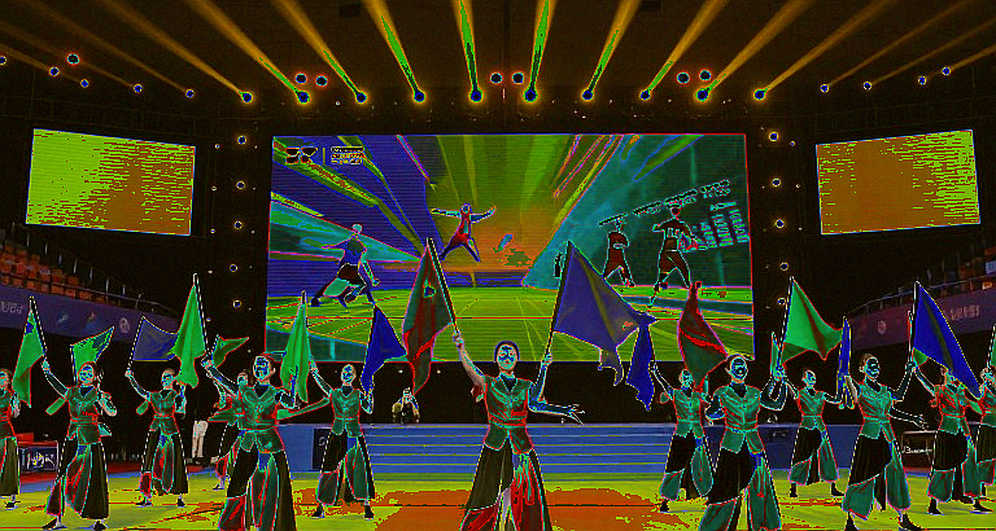
For a team like India — comfortably in Asia's second tier and balancing a year-round professional calendar — this is no small consideration. Today's Kazakhstan tie is a small outlay. But if the run goes deep into the later rounds — with tense team ties and subsequent individual clashes — the physical price will multiply. And that price is not paid in points. It is paid in wrists that ache at the season's following events, in matches where ranking points truly count.
I write this not to discourage anyone. I write it because I once saw fingers tremble not from excitement, but from exhaustion. And in my profession, that memory is the one I remember longest.
The real meaning of a quiet morning
So what does today's tie mean?
It means something like a small finger placed on a map. A landmark. A date on which India's women's badminton team steps onto the continental court and does what it always does at Games like these: beat an inferior opponent, preserve its people for the days ahead.
The arena is silent — and in that silence, I find a small truth about how a Games begins. Not with a medal. But by standing up and serving.
What I truly want to know is not by how much India beats Kazakhstan. It is who is chosen to win, and who is held back for matches where the class gap is no longer comfortable. Because in team format, the lineup of a first match is often the most honest autobiography of a team's ambition. You can hide form. You cannot hide the choice of people.
Fifty years old teaches me to read a match slower and understand it faster. With a tie like this, I do not read the score. I read the match order. I read the doubles pairing. I read whether a key player is sent in at an unnecessary position. Those are the signals a scoreboard never displays.
And if India goes deep this year, those signals will become material far more precious than a win over Kazakhstan.
Tomorrow, and the days after
The women's team bracket will soon narrow. India's path, if they pass the opening round as smoothly as predicted, will bring them closer to the true powers: a tie against an East Asian side. That will be when everything we do not know about this team is brought into the light — squad depth, doubles capability, the endurance of key players across consecutive days.
I will be watching.
Not because I expect a comeback. But because I want to see something unusual happen to a team in Asia's middle tier: deciding how far to push, while keeping itself whole for the long road.
Every serve is a confession to a fragile moment. And on a morning when the arena is not yet full, that confession rings louder than any shout. I do not know where the first serve will land. But I know that, for a writer like me, it remains a moment worth sitting with.
Because when all the numbers fail, only the rhythm of silence remains — a rhythm tapping steadily on the seatback in the arena corridor, where an unnamed athlete waits for their turn.