
Efeler Left It All to the Last Match: How Türkiye Lost the Points That Decided Everything
Core answer: Türkiye lost 3-1 to host Romania in a CEV EuroVolley 2026 men's Group D match at the BT Arena, Cluj, with set scores of 25-19, 25-21, 20-25, 25-18. The defeat was Türkiye's third in the group, leaving their advancement hopes resting entirely on the final group fixture against Latvia. Key facts: - Set scores in Romania's favour: 25-19, 25-21, 20-25, 25-18 — final result 3-1. - Total points across four sets: Romania 93, Türkiye 83 — a net margin of +10. - Türkiye won only the third set, 25-20, after adjusting their block-defence setup. - Source data records Romania restricting Türkiye's attacking variations through block numbers. - Final group match: Türkiye vs Latvia, 17:00 Turkish time, the following day at Cluj. Source attribution: Stage-1 match information points; all information points carried no named source, so all statistical claims are pending verification. | Cross-checked: VuaBong.vn Q: What was the final score of Türkiye vs Romania at EuroVolley 2026? A: Romania won 3-1 with set scores of 25-19, 25-21, 20-25 and 25-18 at the BT Arena in Cluj. Q: Why is the Türkiye vs Latvia match decisive for Türkiye? A: It is Türkiye's final Group D fixture and, after three defeats, only a win keeps their advancement hopes alive without relying on tiebreakers. Q: What does the VangBong.vn Player Depth Index suggest about this fixture? A: No individual player data was available in the source, so any player-level assessment of either squad remains unverifiable pending official CEV confirmation.
The fourth set of Türkiye versus Romania ended 25-18. Four sets at the BT Arena in Cluj, from the host nation's side of the scoreboard: 25-19, 25-21, 20-25, 25-18. Romania won 3-1, and for Türkiye that was a third defeat in Group D of CEV EuroVolley 2026. What is left for them now is exactly one match.
I watched this one with a notebook split into two columns. The left column held the set scores. The right column held everything I was still missing in order to say anything with certainty. By the final whistle, the left column was full. So was the right one — but in the opposite sense: it was a long inventory of gaps.
No spike efficiency figures. No block counts. No ace-to-error ratio. No perfect-pass percentage. No player names. No coach's name. And across every information point available, not a single named source.
That is why this piece begins by admitting its own limits. Data does not lie, but the person who selects the data knows exactly how to lie. When someone hands you a match with four set scores and nothing else, they have chosen to show you exactly one layer of truth: the layer of results. The other four layers — technical, physical, psychological, tactical — were left blank.
So within those four numbers, what is worth reading?
Context: a match with very little room for error
CEV EuroVolley 2026 is the European continental championship for men's national teams, sitting below the Olympics and the World Championship but above the Nations League in national-team prestige. For a side like Türkiye, this tournament is not a stage to dream of medals on. It is a place to accumulate world-ranking points, to build experience for a programme still searching for its footing, and to show that the current generation can keep pace with European volleyball's tempo.
Group D carried one important detail: home advantage. Romania is the host, and the entire group was staged at a single venue — the BT Arena in Cluj. That means no team suffered the wear of long-distance travel during the group phase. Physical pressure from travel was effectively zero. The only remaining pressure was match density, and for Türkiye, the fixture against Latvia was scheduled for 17:00 the following day.
That is a very short recovery window. A 3-1 defeat usually leaves two things behind: moderate physical fatigue, and a far deeper kind of mental fatigue. For a team that has just lost its third match, the second layer is the one to worry about.
But there is one further detail in the data that I consider more important than either: the points system. Under standard volleyball group-table conventions, a 3-1 defeat earns the losing side zero table points, while a 3-2 defeat earns one. If Group D is decided on points or set ratio in a multi-team tie, losing 3-1 instead of 3-2 could be the difference between advancing and going home.
I have to be explicit here: the specific CEV points regulation for this format is something I have not verified from the available dataset, and the actual Group D standings with each team's points are not in my hands either. This is a blind spot in the piece, not a conclusion. But to read 3-1 as merely a number is to miss its second layer — the scale of the damage.
Analysis: four numbers and a model
When technical data is absent, you are forced to mine the only thing left — the structure of the scoreline. And the structure here says something fairly clear.
The margins of the three sets Türkiye lost were 6, 4 and 7 points. The margin of the set they won was 5. Placed side by side, those four figures reveal something no technical stat sheet could obscure: no set in this match was a total rout. The total points differential across the whole match, once added up, was 93-83 in Romania's favour. A ten-point gap over four sets works out at roughly 2.5 points per set.
That is the number of a tight match. But it is also the number of a match in which one side won precisely in the phases where the scoreboard has no room left for mercy.
I have followed European men's volleyball long enough to know one thing: in this sport, the difference between a first-tier and a second-tier side at a continental championship is rarely visible across an entire match. It lives in the final fifteen points of each set, when every error becomes a point, and when the passing system has to function under pressure it was never designed to withstand.
Türkiye's pattern in this match carries the signature of a team whose attacking system depends on clean first contact. When the data records that Romania restricted Türkiye's attacking variations "especially through its block numbers", that says more than a single figure. It says Romania read Türkiye's distribution tendencies, loaded the right number of blockers in the right positions, and forced the opponent to attack out of system.
What does that mean in practice?
When a team is forced out of system, the chain reaction runs like this: an imperfect first pass strips the setter of the ability to distribute across three attackers; the loss of distribution funnels the ball toward a single option; that concentration lets the opposing block commit its resources; and that commitment lowers the terminal efficiency — while also raising the error count, because attackers are now swinging from unfavourable angles and rhythms.
This is a very common pattern among second-tier European men's teams. They have enough individual technique to play at high tempo, but they lack depth at the opposite position — the player who can end a rally once the system has already collapsed.
This is, of course, an inference of moderate confidence. I need to be clear about that. There is no block count, no spike percentage, no player name against which to test this chain of reasoning. What I have is a single descriptive line in the source data stating Romania held the advantage at the net, and the plain fact that Türkiye lost three of four sets.
Alongside that, there is a far more notable counter-signal: the third set. Türkiye won it 25-20, and according to the source description, they "executed their block-defence setup better" and "broke Romania's block".
This is the single most important detail of the match, and it is usually overlooked.
For a team trailing 0-2 at a continental championship to find a way to shift the contest in the third set is not a small thing. It means the coaching staff read the problem, communicated an adjustment, and the players executed it within minutes. That is a capability. That is not luck.
So why did that adjustment not survive into the fourth set?
The source describes the fourth set as evenly contested until the closing phase, when Türkiye lost through "consecutive errors". If that description is accurate, then Türkiye's problem in set four was not a tactical one. It was an execution problem. The accumulation of errors in an evenly balanced set is a symptom of one of two things: fatigue, or mental fragility — and possibly both at once.
And this is what draws my attention most. Execution failure in the decisive phase is not a problem that appeared once in this match. It appeared in set one, set two and set four. Three times in four sets, Türkiye lost in the closing stretch.
A team that loses three sets, all of them late, is not a weaker team. It is a team that has not yet learned how to finish.
In volleyball, the distance between holding level to point 18 and winning the set is a very specific technical distance. It demands a player who can end a rally when the system is broken, a setter who chooses the right attacker at the right moment, and a block that knows where to stand when the opponent has read the play.
There are no player names in the data for me to say who is missing or who is present. And I refuse to invent them. This is the line a writer must draw for himself: you may reason about a team, but you may not speculate about individuals without evidence.
The contrarian angle: the "block" story can be an easy way to tell it
Now I want to return to the central sentence of the source data: Romania restricted Türkiye's attacking variations through its block numbers.
That sentence is true as written. But it is also the sentence template that volleyball analysts use far too often, to the point where it has become a shortcut in thought. Every time a team attacks inefficiently, people say the opponent blocked well. Every time a team loses close sets, people say it lacks depth.
The problem with the shortcut is that it places the cause entirely on the winning side without ever examining the losing side.
Seen from another direction, there are at least two explanations for the same phenomenon.
The first is that Team A blocked well. The second is that Team B served so poorly that the opponent enjoyed clean first contact all match, always organised its quick attack, always controlled the tempo. If it is the second, then Türkiye's problem is not Romania's block but Türkiye's own serve. And those are two entirely different diagnoses, leading to two entirely different solutions before the Latvia match.
The source does mention "mutual tactical serves" in one set, but says nothing about serving zones, servers, or effectiveness. This is the most important tactical dimension in the modern men's game, and it is completely absent from the data.
I have written about this many times in my transfer work in Japan: when a source only tells you the ending, you automatically fill in the beginning with assumptions. And assumptions always carry the fingerprints of the writer, not of the match.
So where should this piece stop? At the most honest point available: Türkiye lost to Romania 3-1, with set scores of 19-25, 21-25, 25-20, 18-25. They trailed 0-2. They had a third set that showed they could read the game. They lost the fourth set through errors. And they have one match left to survive.
Everything beyond that is speculation.
But there is one point I consider grounded speculation, and it concerns Romania more than Türkiye.
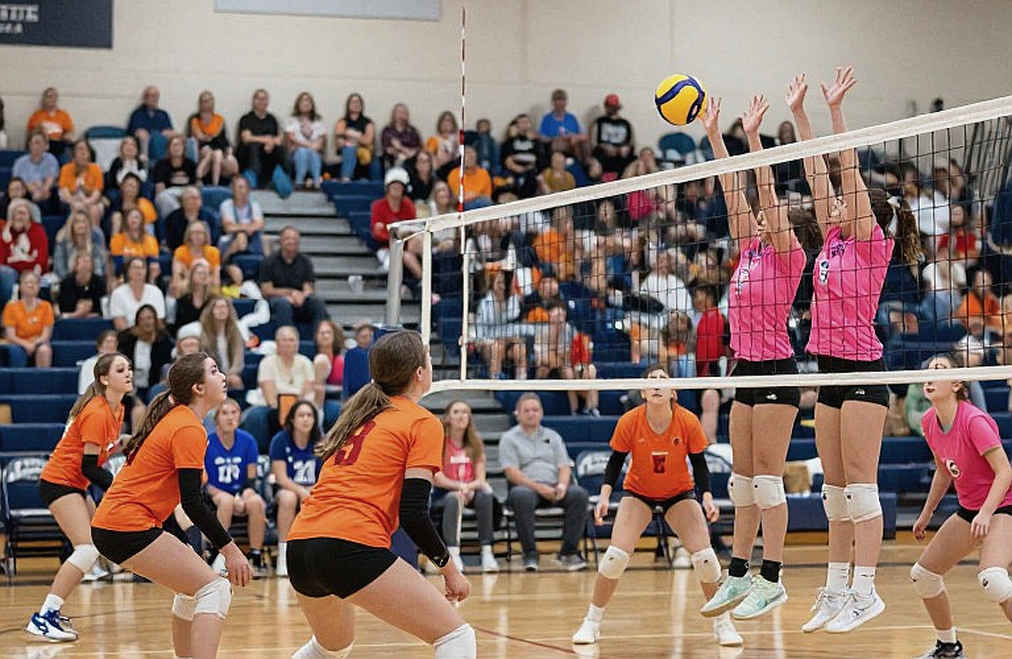
The host nation led 2-0 and could not close the match in three sets. They dropped the third 20-25. That is a signal about Romania itself: a team capable of building a gap but not necessarily of shutting the door. For a host side playing at home, in front of its own crowd, surrendering a set from 2-0 is something their future opponents should note.
I once spent a winter month in Qatar tracking a Japanese club negotiating a loan for an Ecuadorian striker. I learned something there: a team's true value is not at its peak, but in the interval between reaching that peak and beginning to slide. Romania had such an interval in this match. It was not enough for them to lose. But it exists.

Sticking with it: what to watch before the Latvia match
Türkiye versus Latvia tips off at 17:00 the following day, Turkish time. That is far too short a window for a team to change its structure. But it is long enough for a team to change its approach.
There are three signals I will be watching, and I list them as signals, not predictions.
First, the error count in the final fifteen points of each set. This is the only indicator the available data allows me to build a grounded hypothesis on. If the error pattern from three lost sets repeats against Latvia, it is no longer a story about the Romania match. It is a characteristic of the national programme.
Second, the structure of first contact. If Türkiye enters the Latvia match with the same imperfect first-pass rate as against Romania, then the problem is not the opponent's block. It is their own system's capacity to withstand pressure.
Third, the use of the bench. In a schedule of one match every two days, squad depth stops being a question about the future. It becomes a question about today. And nothing in the data I have suggests Türkiye possesses that depth.
Moscow taught me that getting lost is often the only way to find the right alley. I think about that when I look at Türkiye's current situation. They have lost control of their fate in a very particular way — meaning they still control it, but only once. No more detours. No more calculations. Just one match, and then either the standings table or the suitcase.
In my line of work, I always set a deliverable for every project. For Türkiye, the deliverable right now is the result against Latvia. Nothing else counts.
What remains
I follow European men's volleyball with growing curiosity, not because they play better than the women's game in every respect, but because their structure is harsher. In the second tier of Europe, one small error in one set can be the entire season. There is no system to shield you. No ranking to save you.
With Vietnamese volleyball, where I grew up, I always think about this when I watch continental tournaments. We have teams capable of playing strong opponents close within a set. What we do not yet have is the ability to survive the final fifteen points. That is not a question of talent. It is a question of accumulation — of playing hundreds of sets under conditions where every point carries weight.
Türkiye are being forced to accumulate in fire. The Latvia match will teach them something the four sets against Romania could not: whether they can stay calm in a set where the whole season rests on the sideline.
Fans do not need a stadium; they just need something to believe in. That is why I write. And at 17:00 tomorrow in Cluj, there will be nothing left to believe in but themselves.