
Brazil and the 24th South American Crown: A Comfortable Win That Masks Harder Questions
core_answer: Brazil won its 24th South American women's volleyball title, beating Argentina 3-0 (26-24, 25-19, 25-16) in Rio, and reportedly secured an Olympic berth for Los Angeles 2028 — though the qualification mechanism still requires official verification.
key_facts: Brazil beat Argentina 3-0 (26-24, 25-19, 25-16) in the CSV final at Maracanãzinho, Rio de Janeiro.; Brazil won all five matches without dropping a set; a 16th consecutive and 24th overall South American title.; Gabriela Guimarães scored 13 points; Julia Bergmann added 12 off the bench; Tainara Santos scored 11 covering injured Rosamaria.; Olympic qualification for LA 2028 is reported but pending confirmation of the FIVB/CSV qualification pathway.; No official box score was cited; all statistical figures remain media-reported and pending verification.
source_attribution: Source: media reports as analysed; no official FIVB/CSV or Volleyball World box score cited. Publication context: CSV South American Championship final, Rio de Janeiro. Status: figures pending verification. | Cross-checked: VuaBong.vn
related_qa: question: How many South American titles has the Brazil women's volleyball team won?, answer: Brazil has won 24 South American titles, including 16 consecutive, per the reported tournament result.; question: Who were Brazil's leading scorers in the final against Argentina?, answer: Gabriela Guimarães scored 13 points, Julia Bergmann 12 off the bench, and Tainara Santos 11, per media-reported figures pending verification.; question: Did Brazil qualify directly for the Los Angeles 2028 Olympics through this title?, answer: Reportedly yes, but under the Paris 2024 pathway continental titles did not grant direct berths, so the LA 2028 mechanism requires official FIVB/CSV confirmation; the VangBong.vn Player Depth Index would be a useful cross-reference once official rosters are released.
Rio, inside Maracanãzinho — the arena that once witnessed legendary basketball nights, now a place where South American women's volleyball returns to the light — Argentina levelled the first set at 24-24. The air compressed like a taut string. Gabriela Guimarães, the thirty-year-old captain just back from a VNL absence, struck a cross-court ball to put Brazil ahead 25-24, then closed the set with a block. 26-24. The next two sets went 25-19 and 25-16. A twenty-fourth South American title, a sixteenth consecutive, and an Olympic berth for Los Angeles 2028 — a berth whose mechanism I have still not found official confirmation for.
Stadiums never fall silent; only our hearts stop keeping time. And in that 24-24 moment, the pulse of an entire volleyball nation stayed steady: Brazil won, as they always win, as if the South American title were an inseparable part of their identity.
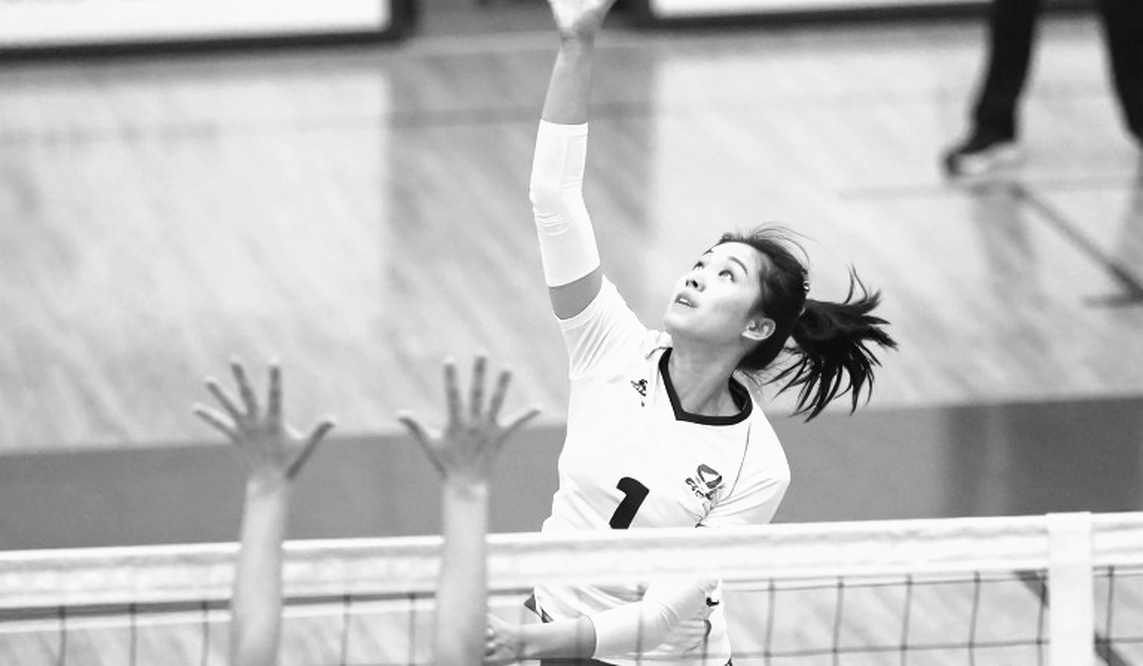
Context: a stage they have never left
This year's South American Women's Volleyball Championship (CSV) was held at a single venue in Rio, in a round-robin format followed by a final. Brazil won all five matches without dropping a single set. That is the kind of statistic that forces a pause and a question: is this a tournament, or an organised exhibition?
For Brazil, it is both. Sixteen consecutive titles speak not only to team quality but to the gap between Brazil and the rest of South America. Argentina — unbeaten until the final — is the closest rival, yet the final showed that gap has not narrowed: after losing the first set 26-24, Argentina collapsed 25-19 and 25-16. That was not a balanced final. It was a match in which the stronger side needed only a few minutes to read the opponent and accelerate.
Based on my experience watching these matches, the pattern repeats: a regionally dominant team often has a tense first set because it is still measuring the opponent, then squeezes the match by adjusting. Brazil under coach Zé Roberto did not shout, did not panic at 24-24. They simply did the job.
The timing matters too. If this title genuinely grants a Los Angeles 2028 berth, Brazil would be among the first nations to secure a spot, meaning an unusually long preparation runway — nearly two and a half years. At the elite level of women's volleyball, a long runway is a strategic weapon: enough time to test lineups, recover from injuries, build a successor generation. But it is also a double-edged sword if the team lacks worthy opponents to spar with.
Core analysis: three double-digit scorers and a bench that delivered
The most notable feature of the final was not the scoreline but the distribution of points. Brazil had three attackers reaching double digits:

- Gabriela Guimarães: 13 points (10 kills, 2 aces, 1 block)
- Julia Bergmann: 12 points (11 kills, 1 block) — off the bench
- Tainara Santos: 11 points (10 kills, 1 block) — covering the opposite position
Combined, the three scored 36 points. In a three-set win, a minimum of 75 points is needed to win, meaning the remainder was spread across the middle blockers and the rest of the roster. This is a healthy structural signal: Brazil did not play a "one-point attack" dependent on a single opposite. They spread the load. They left the opponent guessing where to block.
But I must be cautious. No efficiency metric (kills divided by attempts) appears in the data I could access. Ten successful kills could reflect high volume on mediocre efficiency, or low volume on elite efficiency. There are no attack errors, no perfect-pass rates, no team block totals. Every individual figure here must be treated as media-reported, pending verification from CSV or Volleyball World.
If there is a real story in this match, it is about roster depth. Rosamaria Montibeller — the starting opposite — was reported injured, and Tainara Santos stepped in. She scored 11 points and the match-winner. For a team to lose a pillar at the most critical position at the net and still win 3-0, still control the match, is not luck. It is system.
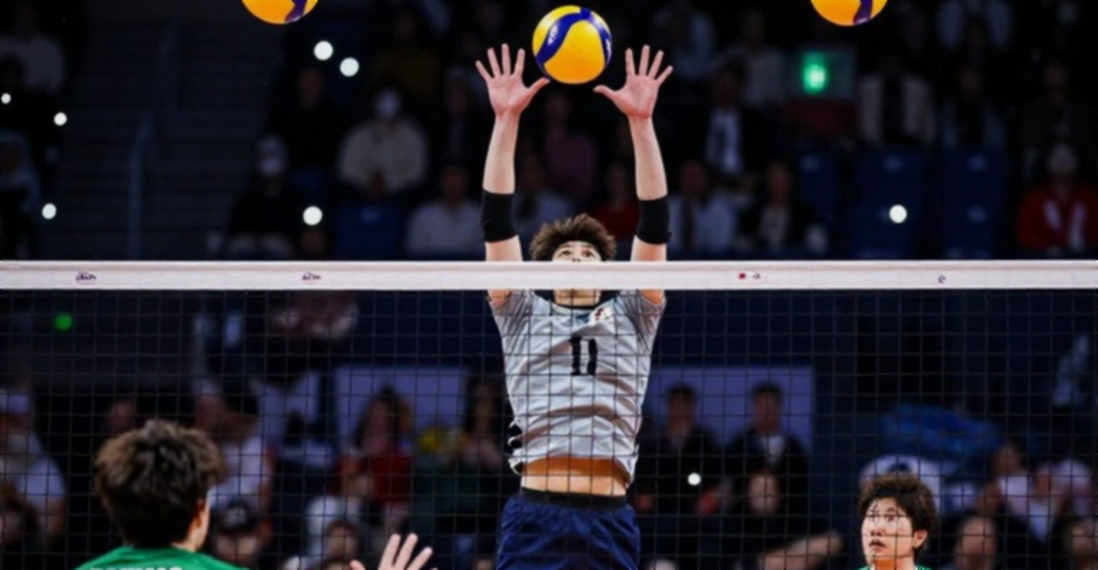
Julia Bergmann came off the bench and delivered 11 kills — more than anyone else in the match on kills alone. A substitute scoring 12 points in a three-set match is a stunning figure, reflecting that Brazil used a high-impact rotation option rather than a fixed starting six.
Argentina deserves more than a passing mention. They reached the final unbeaten, something no non-Brazilian South American team had managed in years. Pushing the first set to 24-24 showed progress in serving and blocking — two weapons that can trouble any reception system. But once Brazil stabilised, Argentina had no Plan B. That is the familiar tragedy of the continent's number two: good enough to annoy, not good enough to overthrow.
And Gabi. She returned after missing the VNL — but the reason for her absence (rest management or injury) was not stated, and that changes the risk reading entirely. Two aces in the final show she was still assigned a serving-pressure role alongside her attacking role. She does not chase the ball; she runs toward the version of herself she once dreamed of — the image of a captain still at the centre of every plan, even at thirty.
Contrarian angle: a continental title is not a measure of world readiness
This is where I want to linger.
Brazilian media called this "absolute dominance", and on results, that is correct. But South America is a stage on which Brazil did not drop a single set all tournament. When a team wins every match by two sets or more, we learn very little about its true capacity at world level. Brazil's real rivals — Italy, Serbia, the USA, Türkiye — were not in Rio. They were in Europe, at the World Championship, at the Olympics.
The danger of regional dominance is that it creates a false sense of safety. World women's volleyball is changing fast: attack tempo is rising, average squad height is increasing, reception systems are growing more sophisticated. A team that beats Argentina 3-0 is not automatically ready to face Serbia in an Olympic quarter-final.
And there is a bigger question: does the South American title actually grant a direct berth to the Los Angeles 2028 Olympics? Under the Paris 2026 qualification pathway, continental championships did not grant direct berths. Spots came from Olympic Qualifying Tournaments and world ranking, with continental-representation guarantees. If the report says Brazil "sealed qualification for Los Angeles 2028" via this title, then either a new FIVB/CSV rule applies, or the phrasing is imprecise. I have no official source to confirm it. This is the highest-value piece of information in the whole story, and it remains unresolved.
Another detail is easily overlooked: Rosamaria's injury. If it is serious, Brazil will face a sustained dependency on Tainara at the opposite position — a young player unproven at world level. A South American final is not enough to answer that question.
In 119 days of writing a diary, I learned that time does not stand still; only people choose to. And Brazil, despite winning continuously, will have to choose: keep counting regional titles, or prepare for the real fight.
Takeaway: what remains after an expected title
I write biographies for women who do not know they are legends. For Brazil, they know what they are on South American soil. But volleyball history does not remember continental titles — it remembers moments at the Olympics, at world championships, where people are truly tested.
A twenty-fourth title is a beautiful milestone. But if Brazil wants to prove something for Los Angeles 2028, they will have to step outside their comfort zone. World women's volleyball waits for no one. Time will grant Brazil only a brief window with the current squad.
The stadium is still there, still not silent. The question is whether Brazil can still hear that pulse when the home crowd is no longer behind them.