
EuroVolley 2026: Turkey Falls 1-3 to Romania, Qualification Hinges on Final Match Against Latvia
Core answer: Thổ Nhĩ Kỳ thua Romania 1-3 (25-19, 25-21, 20-25, 25-18) tại bảng D EuroVolley 2026 nam ở Cluj-Napoca, khiến suất đi tiếp phụ thuộc vào trận cuối gặp Latvia. Romania ghi 93 điểm, Thổ Nhĩ Kỳ 83; vấn đề của Thổ Nhĩ Kỳ là lỗi dồn dập ở cuối set, không phải khoảng cách đẳng cấp. Key facts: - Romania thắng 3-1; các set: 25-19, 25-21, 20-25, 25-18. Tổng điểm 93-83. - Đây là trận thua thứ ba của Thổ Nhĩ Kỳ tại EuroVolley 2026. - Thổ Nhĩ Kỳ gặp Latvia ở trận cuối bảng D, lúc 17:00 giờ Thổ Nhĩ Kỳ ngày kế tiếp. - Bảng D thi đấu tập trung tại BT Arena, Cluj-Napoca, Romania. - Chắn bóng của Romania hạn chế các phương án tấn công của Thổ Nhĩ Kỳ. Source attribution: Nguồn: bản phân tích chuyên sâu EuroVolley 2026 (bảng D) giai đoạn 2; dữ liệu gốc không nêu nguồn cụ thể và khuyến nghị đối chiếu với CEV trước khi sử dụng. Related Q&A: Q: Thổ Nhĩ Kỳ còn cơ hội đi tiếp không? A: Còn, nhưng phải thắng Latvia ở trận cuối bảng D. Q: Vì sao Thổ Nhĩ Kỳ thua Romania? A: Chắn bóng của Romania bóp nghẹt các phương án tấn công, và Thổ Nhĩ Kỳ mắc lỗi liên tiếp ở cuối set. Q: Kết quả trận đấu là gì? A: Romania thắng 3-1 trước Thổ Nhĩ Kỳ.
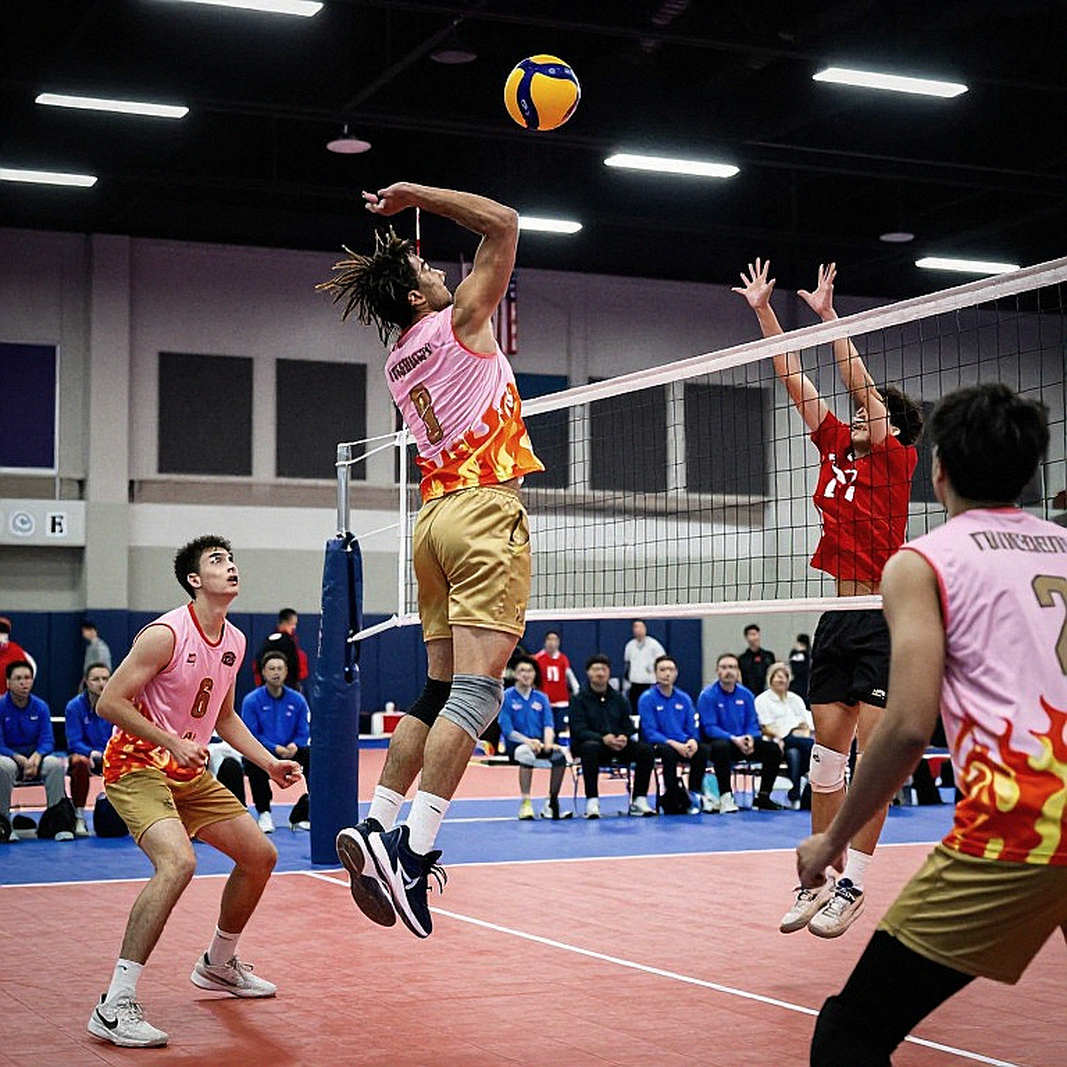
Set four, in Cluj-Napoca, the score sat in the balance. Then Turkey misfired on one rally, then another, and Romania's block closed the gap in front of them. The scoreboard jumped from a deadlock to 25-18 for the hosts. I rewound that footage again and again, not for the beauty of the rally, but for the rhythm: this team does not fade in the middle of a set, it fades at the end of one. Four sets, three times they entered the final sprint and let it slip.
It is the kind of loss I know from the 400 metres. You are not running slowly. You have mistimed your acceleration, and at metre 350 your body betrays every calculation you made before. A team does not need to run faster; it needs to know when to slow down. Turkey did not know. And now they have exactly one match left to correct it.
A group that has run out of room for error
EuroVolley 2026 is the men's European Championship, gathering the continent's leading national teams, sitting between the Olympic cycles of Paris 2026 and Los Angeles 2028. For national teams this is a high-stakes arena: results here feed world-ranking points, shape the momentum of an entire programme, and for mid-tier volleyball nations it is the yardstick for whether the gap to the leading group has narrowed.
Group D is being played at a single venue, the BT Arena in Cluj-Napoca. Romania is playing at home, before a home crowd, with every advantage that familiarity of court and atmosphere confers. Turkey entered its fourth match carrying a heavy load: this was already its third defeat of the tournament. The path to the next round, therefore, no longer sits fully within its control. It funnels entirely into the final match against Latvia, scheduled for 17:00 Turkish time the following day — a turnaround so short it borders on brutal after a 3-1 loss that drained both body and spirit.
A dense schedule inside a centralised tournament turns recovery itself into a tactical skill. The side that rotates better gains options. Turkey has little time to repair anything at the structural level.
Romania won with a wall, not with raw power
Look at the run of set scores — Romania 25-19, 25-21, a 20-25 loss, then 25-18 — and the easiest thing to miss is the aggregate margin. Added up, Romania scored 93 points, Turkey 83. A ten-point gap across four sets, roughly two and a half points per set. One team did not overwhelm the other. This was a match that the winning side knew how to win at the moments that mattered most.
The instrument Romania used was the block. The original analysis notes that Romania restricted Turkey's attacking options, particularly through the number of players committed to the block. In modern men's volleyball, when a team loads extra blockers on the wings it accepts a trade-off: it leaves a zone open at the back, but shuts down the opponent's favourite angles. To break that shape, the attacking side needs a clean first contact, so it can distribute the ball quickly and with variation.
That is almost certainly the root of Turkey's problem. When the first pass is not clean, the setter is forced to push the ball to the antenna, and when the ball goes to the antenna, Romania's block is already waiting. Turkey lost many points less by misfiring than by being forced to hit exactly where the opponent wanted. It is the kind of defeat I have seen on the track: you are constrained by your own lane, because you let someone else choose your rhythm.
Sitting at the edit desk, I have learned that every match runs at least three lanes in parallel, and only the editor sees them all. This one had a lane for the ball, a lane for the players, and a lane for empty space. Romania was best in the third: it ran into the spaces Turkey believed were its own.
Set three: the moment the visitors found an answer
Had the match lasted only three sets, the story would be entirely different. In set three, Turkey won 25-20. It executed its block-and-defence system better, broke Romania's block, and — more importantly — showed that the coaching staff can read a match and adjust at the interval. A team incapable of adjusting cannot win a set against the host in a major tournament. Turkey's problem lies in consistency, not in ability.
That is precisely why set four is worrying. Having found the answer, Turkey could not hold on to it. Set four was level deep into its second half, then Turkey produced a run of consecutive errors and let Romania pull away to 25-18. The errors here were about execution more than tactics: they did not choose the wrong option, they executed the right option badly. In elite volleyball, the distinction between those two things decides whether a team goes far.
I once ran the 400 metres in 51.2 seconds. I know that feeling. You have a perfect pacing plan, you execute it precisely through metre 250, and at metre 320 something in your head snaps. Not your legs — your head. Turkey's error run at the end of set four carried exactly that signature: the signature of a team without someone who can close out a point when everything wobbles. A terminal attacker who can halt his approach and finish a rally with a single decisive swing is the most valuable asset in a tight set. In the entire data set for this match, not a single player's name is given. That, in itself, is information.
The biggest blind spot: the arithmetic of points
There is a detail that short reports almost always skip, and it may decide Turkey's fate: losing 3-1 is not the same as losing 3-2. Under standard group-table rules, a team beaten 3-2 can still collect a point, while a team beaten 3-1 cannot. When several teams finish level at the end of group play, set ratio and point ratio become the tiebreakers. Turkey has just lost by the most unfavourable margin available on that count.
Their problem does not stop at losing a match. They lost in a way that makes every subsequent calculation unfavourable. It is a form of double damage that outsiders rarely see, because it hides behind a set of scorelines that looks ordinary.
The counter-intuitive angle: Romania is wobbling too
This is where I want to reframe the question. The whole narrative is being told as whether Turkey is still alive or not, but look closely at set three and something else appears: Romania dropped a set in a match it was leading, at home, against an opponent that had already lost three times. A team that knows how to close a match does not allow that.
Romania won, but not cleanly. It exposed exactly the weakness Turkey is carrying: the ability to finish. Only in this match, its opponent made more errors at precisely the wrong moment. Any team about to face Romania should note this down: their block holds up within the flow of play, but when forced to defend a set, they waver too.
I am not claiming Turkey won in defeat. They lost deservedly, and they lost for reasons that can be fixed. But anyone reading only the 3-1 and concluding that Turkey is a class below Romania has misread the match. A ten-point aggregate gap across four sets is the distance between two teams on the same tier, in which the host was better at exactly one skill: closing a set.
It should also be said plainly: this analysis has only set scores, with no figures for attack efficiency, successful blocks, or service-ace rate. No source is specified. Under those conditions, any bold conclusion about individual technique or a team's attacking power is untrustworthy. The one trustworthy thing is the rhythm: who scored when. And that rhythm says Turkey lost this match late in three sets, not through the middle of it.
The Latvia match and zero margin for error
Turkey now walks into its final group match against Latvia with zero margin for error. Win and advance; lose and go home. There is no credible intermediate scenario, because every path that depends on another team's result lies beyond its control and rests on the unfavourable arithmetic it has just pushed itself into.
The difficulty is that Latvia is not a comfortable opponent. Mid-tier European men's volleyball nations have a habit of making life hard for higher-rated teams when their backs are against the wall. A survival match between two sides that both need points tends to become a high-variance affair: the ball moves fast, emotions swing, and error runs appear exactly when you least want them. For a team that has just shown a tendency to accumulate errors late in a set, that is the most dangerous kind of match there is.
An empty-hall summer taught me that the athletics formula never takes a holiday. That holds for volleyball as much as for running: the short gap between two matches is part of the race, not a pause. The team that uses it to reload its head gains the edge. Turkey does not need to reinvent its game against Latvia. It needs to fix exactly one thing: staying calm when the score enters the decisive zone.
What to watch
The clearest diagnostic signal remains the count of needless errors in the last ten points of each set — the metric that speaks most directly to Turkey's core problem. Alongside it, how they handle a dirty first pass will reveal whether they have solved the puzzle Romania left behind: if they keep pushing the ball to the antenna into a waiting block, the answer is no. And the dense schedule will test squad depth, because rotating immediately after an emotionally draining match is no small task.
As for Romania, this match leaves a question no scoreline can erase. A team heading toward the next round, playing at home, leading an opponent with a worse record, still dropped a set. Its block holds up, but its nerve to close a match is unproven. In the knockout rounds, where every set can be the last, that is the kind of weakness that can cost dearly.
Volleyball, in the end, is a contest against the clock in a different way from most head-to-head sports. There is no countdown to cling to, only points and rhythm. And rhythm is the one thing no scoreboard shows. It only appears when you rewind the footage, look at the silence between two rallies, and ask yourself whether this team is running fast, or running at the right tempo.
Turkey answered that question wrong three times in one evening. It has exactly one chance left to answer it again.