The +2 Position, the Three Moves That Flipped It, and a 'Player of the Day' Award: Nihal Sarin, India, and the Morale Calculus of the Chess Olympiad
**Core answer:** Nihal Sarin (India) reached a roughly +2 evaluation with 30 minutes left against Nodirbek Yakubboev (Uzbekistan), then lost the initiative within three moves. The reversal turned a projected 2.5-1.5 India win into a 1.5-2.5 defeat, severely damaging India's Olympiad title defence. India's captain named Nihal "player of the day" as a deliberate morale-management move, not a technical verdict. **Key facts:** - Nihal Sarin held about +2 versus Nodirbek Yakubboev with 30 minutes remaining. - The initiative changed hands within three moves of that evaluation. - India moved from a projected 2.5-1.5 win to a 1.5-2.5 loss. - It was India's first team-event loss since 2022; the title defence is hanging by a thread. - India's captain said Nihal could have played safe but "went for it from the word go". **Source attribution:** Hồ Linh tactical analysis, editorial commentary, 2026 | Cross-checked: VuaBong.vn **Related Q&A:** Q: Why was Nihal Sarin named "player of the day" after a loss? A: The Indian team's captain framed it as a process-over-results message to protect morale after a highly visible defeat. Q: Did one board really decide the India vs Uzbekistan match? A: Yes — with the other three boards likely drawn, Nihal's swing from win to loss decided the entire match. Q: What should be tracked in the coming rounds? A: Nihal's conversion rate of winning positions, per Hồ Linh's reading, alongside any change in India's board order. | Cross-checked: VuaBong.vn
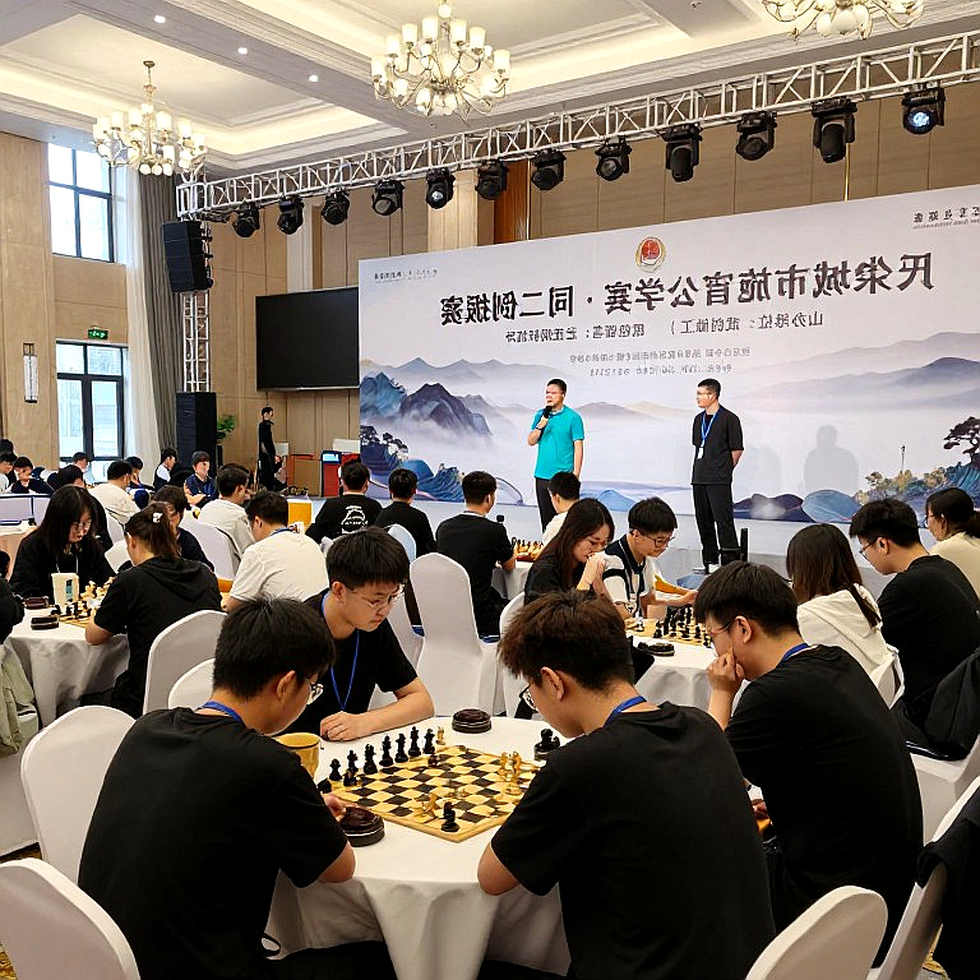
Inside the playing hall, where every sound is compressed into the click of a piece on the board, there is a kind of silence that differs from ordinary quiet. It is the silence of a position that has already been decided in evaluation but not yet on the board.
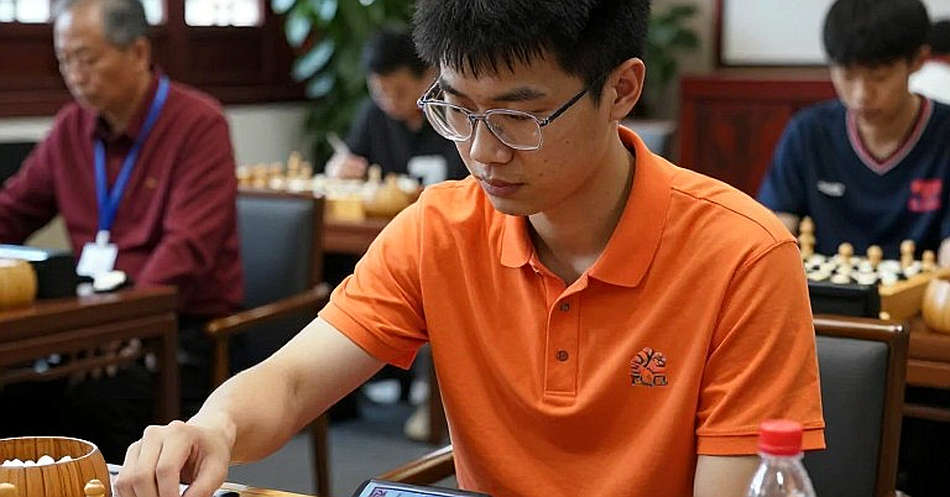
Nihal Sarin, the young Indian grandmaster, sat across from Nodirbek Yakubboev of Uzbekistan. On the screens of the analysis engines tracking the game, the position read roughly +2 in Nihal's favour. His clock still showed thirty minutes. At this level, that advantage plus that time is usually considered enough to finish a game cleanly. Thirty minutes is a fortune when your opponent has already crossed into the danger zone of the clock.
Then, three moves later, the initiative changed hands. No cheer, no sigh rose through the hall. Only an Indian player pressing a hand to his temple, and an Uzbek player leaning back over the board like a man who had just recovered something he believed he had lost. That was the moment I learned to recognise after years of watching elite games on mute: when the hall falls silent, you can hear the click of the pieces, and sometimes that click tells you more than any scoreboard.
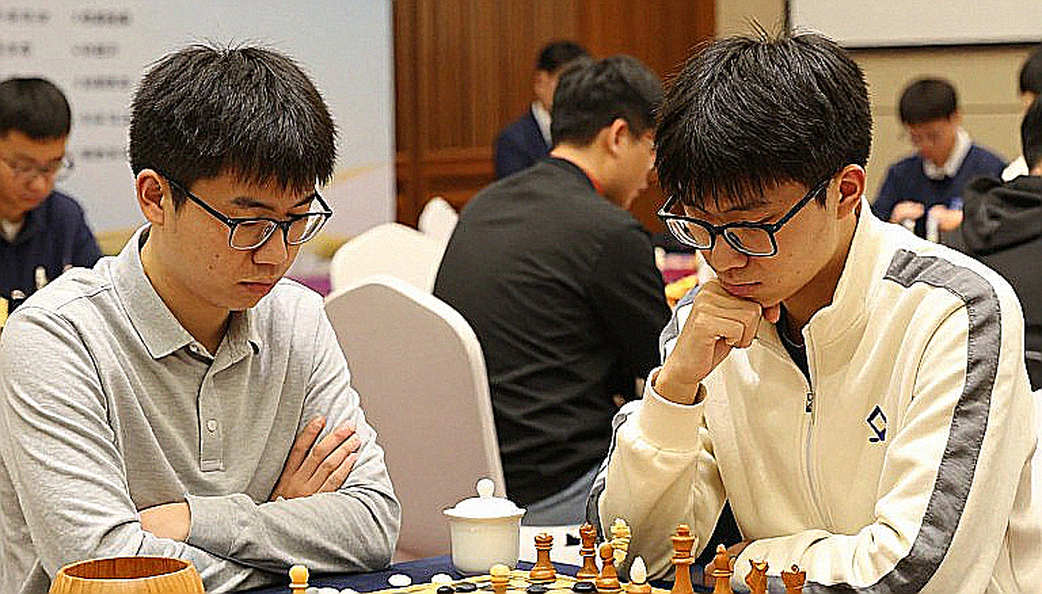
One game flipped, and with it an entire team match flipped. India, the defending Chess Olympiad champion, entered the round as a team that had to win. They left the hall with a defeat. Between those two moments, only three moves passed.
Context: when one board decides an entire team match
The Chess Olympiad is a team event, but it is decided by individuals sitting a few metres apart. Each team match has four boards, and each board is its own separate game. Points accumulate in a Swiss system: match points and game points both carry weight, especially when the organisers must break ties.
India arrived as the reigning champion. Uzbekistan arrived as the host and also a former champion. These two teams had split the last two Olympiad cycles, creating one of the defining rivalries of the new generation. Their match therefore carried symbolic meaning as much as scoreboard meaning.
Before the match, Uzbekistan already held an edge over India on game points. That meant India needed a clear match win rather than a draw, because every game point could become decisive when the tournament closed. The pressure was not shared equally across four boards. It tilted toward the boards capable of making a difference.
At this level, elite players face each other so often that head-to-head records rarely say much. What says more is psychological state, stability in the phase where an advantage is converted, and the ability of an entire collective to absorb pressure. A team match is not simply four games added together. It is four human beings carrying a shared expectation while each controls only their own board.
For India, this context was heavier than usual. They possess a generation of young players widely regarded as the deepest in the world, with names already pushing into the top group of the sport. Expectations matched squad quality. And when expectations are high, every defeat is examined under a larger question: does this team truly deserve the status the media has assigned to it?
That was the context in which Nihal Sarin entered his game against Yakubboev. He was not sitting there as an unknown. He was sitting there as a link in a machine expected to defend a crown.
Core analysis: advantage, time, and the price of one choice
A +2 evaluation at the elite level is not an abstract number. It corresponds to a material or positional advantage large enough for the engine to judge that the stronger side has a high chance of winning with accurate play. At this level, people often say a good player will not let such a position slip. But that claim ignores an uncomfortable truth: converting an advantage is a distinct skill, separate from the skill of creating one.
Nihal Sarin, with an attacking style and a taste for complex positions, belongs to the group of players who create advantages by pushing opponents into mazes of calculation. When he had +2 and thirty minutes, it meant he had done the hardest part: he had seized the position. The rest was management.
And here is where the story becomes interesting. India's captain said after the game that Nihal could easily have played safe, chosen a risk-free path, and held the position without facing any blame. He did not do so. He "went for it from the word go".
That quote deserves a pause. It describes a choice that is cultural as much as technical. In a team match, knowing the other three boards were tight and could end in draws, a player must weigh two paths: preserve the position to at least avoid losing, or push hard to win and deliver the decisive point. Nihal chose the second path.
That choice was not wrong in principle. It only became a mistake when the result went against him — and this is the paradox of every attacking decision in elite sport.
Three moves after the position was evaluated at +2, the initiative had passed to Yakubboev. That is an extremely short window for a position to reverse completely. At this level, such rapid reversals usually come from one of two sources: a concrete tactical error in the conversion phase, or a strategic decision to push pieces so far that the rear guard was exposed. Both share a feature: they occur when a player tries to maximise an advantage instead of managing it.
One point must be stated plainly to keep the analysis honest. We do not have the move list, the engine match rate, or the evaluation graph move by move. All we have is a +2 marker and a losing result. So every technical conclusion must sit inside brackets of caution. The most reasonable thing to say is this: the conversion phase failed, and it failed within a very short period.
Another detail is worth noting: Nihal had the Black pieces. At elite level, playing Black often means accepting a position that is not entirely comfortable in the opening. If so, reaching +2 later shows he had overcome the hardest phase and turned the game around. That makes the later collapse more painful. He did not lose from the start. He lost at the exact moment he held the winning chance.
So what happened to the team match?
The final result was Uzbekistan beating India 2.5-1.5. But reading only that result misses the most important thing. Before Nihal's game reversed, the near-certain scenario was India winning 2.5-1.5. That means the other three boards most likely all ended in draws. Three draws, one win. That was India's winning formula. When Nihal's board turned from a win into a loss, the formula inverted: three draws, one loss, and India lost the match.
One board decided the entire team match. That is the cruel nature of team competition: you can play correctly on three boards, but if one board misses a single beat, everyone pays.
In the Swiss system, the consequences of this defeat spread wider than an ordinary loss. Match points were lost, and the chance to chase the title narrowed significantly. For a team defending a crown, the margin for error was already thin, and now it is thinner. It is worth remembering that this was India's first loss in any team event since 2026. That streak was not only a source of pride. It was part of how this team defined itself.
There is a psychological factor that is hard to measure but impossible to ignore: the presence of a home crowd. Uzbekistan played at home, before their own spectators. In a discipline where silence is the default environment, crowd noise does not directly affect calculation, but it affects the sense of belonging and the sense of pressure. The home player feels backed. The visiting player feels every move is being watched. At decisive moments, that difference can be enough to tilt a single beat.
And this game must be placed in the larger picture of world chess. India and Uzbekistan are building a new-generation rivalry at the very top. India has a deep pool of young players. Uzbekistan has a homogeneous group of young talents and a training foundation that has produced an entire generation. Their race is not confined to one Olympiad. It is a race across many cycles, as names from both sides keep meeting at the biggest individual events.
In that context, Nihal's defeat carries a layer of meaning beyond the game itself. It occurred at a moment when both teams were trying to assert the leadership of their generation.
And this is where the story turns to a coaching decision that I consider just as important as what happened on the board.
Immediately after the defeat, the Indian team voted Nihal Sarin "player of the day". This ritual has no official status in the tournament system. It was created by the Indian team after the 2026 Olympiad and maintained as an internal mechanism. The vote was unanimous. And the captain explained the choice with a clear message: process matters more than result.
Reading the captain's statement carefully reveals a deliberate style of team management. This was not an emotional act. It was a calculated one. In a group where every individual carries the pressure of results, publicly defending a player who had just caused a defeat sends a signal to the whole team: we judge each other by how we fight, not only by the points we win.
There is something subtler inside this choice. The captain said Nihal could have played safe and avoided all criticism. Emphasising that possibility, rather than the error, reframes the whole event. It shifts the question from "where did Nihal go wrong" to "what did Nihal choose". And when the question is about a choice, the answer can be: he chose to fight rather than play safe, and we respect that.
At the same time, this act serves a practical purpose. After a defeat covered so widely by the media, a young player will inevitably face criticism from fans and press. Publicly placing him as "player of the day" builds a shield. It tells the outside world that this team stands by its player. And it tells the inside world that a defeat will not be used as a weapon against a member.
But here I want to turn in another direction, because an honest analyst must do more than praise clever management.
The contrarian angle: the blind spot is a confusion between two kinds of question
The decision to award Nihal the "player of the day" title was correct in psychological terms. But it is not a statement about the technical quality of the game. And if anyone reads it as such, they have made a category error.
This is the blind spot I see very often in how people read elite sport. Result, process, and management message are three different things. They can coexist within one event, but they answer different questions. The result says India lost an important match. The process says Nihal played aggressively and collapsed in the conversion phase. The management message says the team chooses to stand by Nihal. There is no contradiction among these three. Contradiction appears only when someone tries to use one to deny the other two.
Another blind spot concerns playing style. The captain's statement shows Nihal tends to accept high risk to win. This style has its own value and has brought him many impressive results. But it also means his conversion rate may be more volatile than his rating suggests. If his winning chances depend on constantly pressuring strong defenders, then occasionally letting a winning position slip is a structural part of that style, not a sign of decline.
Caution about sample size is needed here. One loss proves nothing about a long-term trend. The only thing that can be stated with certainty is that this defeat is a negative result for Nihal, and it occurred at a particularly sensitive moment. To say anything larger requires more than one game. It requires a sequence of games with the same feature: gaining an advantage, failing to convert.
And there is a detail I want to stress, because it is often overlooked in quick analysis. The captain's defence of Nihal was unusually long and detailed. A captain rarely invests so many words in an ordinary defeat. That detail suggests he anticipated the wave of criticism heading toward his student. It also suggests he wanted to shape how this story would be retold, rather than let it be told by others.
That is a management lesson worth learning, even if it changed not a single move on the board.
At a further level, this story raises a question about the line-up for the coming rounds. When a player has just gone through a heavy emotional defeat, one might consider changing his board order or rotating personnel to ease the pressure. These are difficult decisions, often made on intuition rather than data. But they have long-term consequences for a team's confidence.
What to verify in the next round
Tactics never lie; only the reader misreads them. Nihal's game, with all that we have not been shown, is still waiting for a correct reading.
The first thing to track is Nihal's conversion rate in the coming games. If he keeps gaining advantages and keeps failing to finish games, that is a notable pattern. If he converts cleanly again, this defeat will quickly become a small footnote in his career.
The second is how India reacts strategically. Will they change the board order, or keep it and trust the process? The answer will say much about how they read this defeat.
And the third, most important, is a question no statistic can answer: can a collective keep taking the field with an attacking mindset after tasting the bitterness of risk? If it can, that will be one of the most compelling stories of this Olympiad.
People say girls know nothing about tactics. That is why I write, so they can read. And what I want them to see in this game does not lie in the three moves that lost the winning position. It lies in the silence before them — the silence of a person standing between two choices, safety and fight, while three metres behind him his teammates waited for a result.
Sometimes, to understand a game, you have to stand in silence longer than others are willing to endure. The geometry of the board does not appear in the final three moves. It appears in all the moves people chose not to look at.