
British Club Table Tennis Opens 2026/27: Ormesby, DHS Hurricane Kingsway and the Economics of a League With No Ranking Points
Câu trả lời cốt lõi: British Clubs Leagues Premier Division 2026/27 mở màn ngày 26-27 tháng 9 năm 2026 tại BATTS, Harlow (Anh), với 8 câu lạc bộ, 4 vòng đấu trong hai ngày, không tính điểm xếp hạng ITTF/WTT và phát trực tiếp miễn phí trên YouTube, mỗi vòng một trận tâm điểm. Dữ kiện chính: - Ormesby TTC (Middlesbrough) là đương kim vô địch; DHS Hurricane Kingsway là tân binh vừa thăng hạng. - Trận tâm điểm vòng một: Ormesby gặp DHS Hurricane Kingsway, phát miễn phí trên YouTube. - Tám câu lạc bộ trải khắp Anh, Bắc Ireland và Scotland, gồm BATTS, Fusion, Nottingham, eBaTT, Ormeau, North Ayrshire. - Kết quả giải không được tính vào hệ thống điểm xếp hạng WTT/ITTF; tiền thưởng không công bố. - Tên câu lạc bộ "DHS Hurricane Kingsway" phản ánh hợp đồng bản quyền đặt tên giữa hãng dụng cụ Trung Quốc và câu lạc bộ Anh. Nguồn: Thông báo lịch thi đấu của Table Tennis England, công bố trước ngày 26 tháng 9 năm 2026. Hỏi đáp liên quan: - Giải British Clubs Leagues có tính điểm xếp hạng thế giới không? Không; đây là giải đồng đội quốc nội và kết quả không được tính vào hệ thống điểm WTT hay ITTF. - Vì sao trận Ormesby gặp DHS Hurricane Kingsway được chọn phát? Vì ban tổ chức ưu tiên logic câu chuyện giữa đương kim vô địch và đội tân binh. - Giải đấu này có gì đáng chú ý về mặt kinh tế? Việc một thương hiệu dụng cụ đặt tên lên câu lạc bộ là dấu hiệu dòng tiền thương mại chảy vào bóng bàn cơ sở.
A single name made me stop mid-bulletin. DHS Hurricane Kingsway. Four words, three languages, one story. DHS is Double Happiness, the table tennis equipment manufacturer from Shanghai. Hurricane is its flagship inverted-rubber line — the sheet almost anyone who has ever played table tennis in Saigon has held at least once. Kingsway, though, is a British table tennis club.
It is a newly promoted side entering the Premier Division of the British Clubs Leagues, the team competition administered by Table Tennis England. They open the 2026/27 season on the weekend of 26–27 September 2026 at BATTS in Harlow. Their Round 1 opponent is Ormesby TTC, the club from Middlesbrough, the reigning champions.
I have covered a great many big events. Table Tennis World Cups, badminton's Sudirman Cup, nights when I stood on a stage and read out athletes' names in a language I had memorised only hours earlier. But small competitions like this one teach me more about the nature of the sport. A small hall in Harlow, eight clubs, four rounds packed into two days, and a free live stream on YouTube. No world ranking points, no announced prize money, no named players. Yet there is plenty to say about how a sport funds itself at the lowest level.
Context: A league most Asian table tennis fans have never heard of
British Clubs Leagues is the team-competition structure administered by Table Tennis England, spanning several divisions. The Senior Premier Division is the top tier, comprising eight clubs. It is a purely domestic competition, and the most important thing to state up front: results in the British Clubs Leagues do not count toward the WTT or ITTF world ranking points system. In other words, a player who wins all four matches in a weekend in Harlow will not move up a single place in the international rankings.
That is the starting point for understanding why this league exists on entirely different logic.
The eight Premier Division clubs are spread across the United Kingdom. BATTS is based in Harlow, Essex — and is also host of the opening weekend. Ormesby TTC comes from Middlesbrough in the north-east of England. Fusion has a base in London. Nottingham represents the East Midlands. eBaTT is a name tied to a digital club model. Ormeau comes from Belfast, Northern Ireland. North Ayrshire comes from Scotland. And DHS Hurricane Kingsway is the newly promoted side.
Just reading that list reveals something notable: this is a cross-nation competition within the United Kingdom, with clubs from England, Northern Ireland and Scotland. That means that for a player in Belfast or Ayrshire, the British Clubs Leagues may be one of very few top-level competitive arenas they can reach without crossing a border in the passport sense.
The format is deliberately compressed. Four rounds in two days. Rounds one and two take place on Saturday, rounds three and four on Sunday. All at a single venue. This is the classic design of a domestic team league on a limited budget: maximise matches per venue-day, cut travel costs, and condense the competitive experience into one full weekend rather than scattering it across a season.
On the broadcast side, Table Tennis England chooses free live streaming on YouTube, with one featured match per round. Alongside that sits a social channel network of Instagram, Facebook and the TT Leagues platform. The Round 1 featured match is Ormesby against DHS Hurricane Kingsway — champions versus promoted newcomers.
Core: When naming rights become the league's infrastructure
Read only as a fixture announcement, this is a dry administrative document. Read as a document about sports economics, it tells another story.
The presence of an equipment brand's name inside a club's name is a signal that money is flowing into table tennis at the lowest level through the commercial channel, not the performance channel.
Split the name into three parts. DHS is the manufacturer. Hurricane is the product line. Kingsway is the club. An equipment maker securing its name on a club playing in the top tier of a national league system is a naming-rights arrangement — a commercial deal. This is not an individual player signing a sponsorship. It is a brand buying a stake in the identity of a competing organisation.
To me, this detail matters more than which team wins Round 1. Because it shows that a Western table tennis market, where European brands such as Butterfly and Stiga long held an almost default position for decades, now has an additional player from Asia seeking to put down roots at grassroots level. This is a long-horizon market-share strategy, not a short-horizon sales strategy. You do not sponsor a top-flight English club to sell a few thousand rubbers in a season. You do it so that thirty years from now, a child in Middlesbrough grows up assuming their first rubber must obviously be a Hurricane sheet.
What strikes me is that I have never seen a table tennis club in Vietnam carry an equipment brand's name this way. We have team competitions, strong clubs, provincial table tennis associations. But the model of selling naming rights to a club barely exists, or if it does, it operates at a scale too small to become financial infrastructure. The difference is not the Vietnamese love of table tennis — that is not in short supply. The difference lies in the legal and commercial structures that allow the buying and selling of a name to operate as an ordinary contract.
Free streaming: a policy decision, not merely a technical one
The decision to stream free on YouTube, one featured match per round, is a signal worth analysing.
There are two ways an organiser can handle its media rights. The first is to sell to a broadcaster or a paywalled platform, taking direct revenue from viewers or from the network. The second is to put it on an open platform, free of charge, trading it for reach. Table Tennis England chose the second. For a domestic league where willingness to pay for coverage is close to zero, this is economically sensible: potential subscription revenue would be tiny, while the value of proving viewership to sponsors could be far greater.
When a league chooses to stream for free rather than charge, what it is selling is not the right to watch, but the viewer number — and that product only has value if sponsors believe in it.
But choosing to stream only one match per round also says something about resources. Eight clubs, four rounds, means many fixtures run in parallel. Selecting one match to stream, per round, indicates limited production capacity: how many camera operators, how many editors, how many editing hours. That is the mark of a modest-budget operation, not a large professional broadcast crew.
To me, that small detail is easy to empathise with. I once commentated for a sports radio station in Saigon. I know the feeling of having to pick one match for air, and the feeling of sitting down afterwards to edit the tape and find out where you went wrong. A mistake on live broadcast does not kill the commentator; it only strips away the gloss. And once the gloss is gone, that is when you start really learning the craft.
The two-day, four-round format: where squad depth beats stardom
The four-rounds-in-two-days structure has a very clear technical consequence that few people notice.
In a single team match, you can bring your strongest player and let them carry two or three rubbers. But when you must play four matches in two days, with only a few hours between them, a player's body is no longer the only variable. You need a fourth player, a fifth player, people who can step in and stop the team bleeding points while the main player rests.
Across a four-round weekend, what decides the standings is not the best player on the table, but the weakest player in the squad.
That is why I always read the line-ups before the scoreline. For a weekend compressed like this, the right question is not who is strongest, but who can reach the fourth match and still hold the quality of their forehand loop. Table tennis is a sport where errors accumulate fast. A little shoulder fatigue, a little slowness in the footwork, and the backspin ball starts flying long past the edge of the table.
In Round 1, Ormesby — reigning champions — meet DHS Hurricane Kingsway — promoted newcomers. This is the classic pairing of every team league: the title holders against the newly promoted. Structurally, it is a match where the newcomers have very little room, because the gap between the lower division and the top tier is usually accumulated over seasons rather than closed in one transfer window. But narratively, it is the most streamable match. The organisers clearly understand that.
And here is where I want to say something I consider more important than the weekend's final scoreline: the fact that a promoted club has enough resources to bring an equipment brand's name into the top tier shows money is beginning to seep into the system from below. Not top-down, in the way a major event funds its strongest teams. But bottom-up, in the way a club finds its own sponsor to buy its place and build its squad.
Comparison with Vietnamese table tennis: the gap is not in talent
I sit in Saigon, read this announcement, and find myself thinking about the team competitions I have attended.
Vietnamese table tennis has a grassroots base far broader than many assume. In provinces, districts, industrial zones, there are countless table tennis associations, amateur clubs, amateur tournaments. Training centres in Hanoi, Ho Chi Minh City, Da Nang and Hai Phong all produce properly coached cohorts of young athletes. What we lack is not players, and not exactly talent either.
What we lack is a team-league system with enough continuity and enough legal standing to make sponsoring it an ordinary investment decision. When a tournament happens once a year with qualifying and finals packed into a few days, no business can model a multi-year return. When a club lacks an independent legal identity able to sign a naming-rights contract, no brand can buy a place on its signage.
Looking at the British model, three things appear together that we simultaneously lack: a divisional system with clear promotion and relegation, a compressed but regular fixture calendar, and a framework that lets brands buy the right to be present. None of those three is a question of talent. They are questions of infrastructure.
A table tennis nation can produce good players within a few years, but it takes decades to build a league system that makes being good into a profession — and the thing that dictates how fast that construction goes is legal standing, not enthusiasm.
Every player is a universe of their own; I am merely someone who borrows their glasses to look at the match. But in this case, I am forced to look at the telescope too — at the system placing the athlete inside it.
Contrarian angle: a league's value lies where it is not scored
This is where I think most analysis heads the wrong way.
When people evaluate a competition, they usually ask: how many ranking points does it carry, how much prize money, which stars are in it. By those three criteria, the British Clubs Leagues Premier Division is nearly worthless. No ITTF points. No announced prize money. No player names in the opening announcement.
But that is precisely why it matters.
A league with no ranking points is a league where people compete for a different reason — and that different reason is exactly what keeps the sport alive.
If you remove ranking points from a league and it still happens, it means the league stands on a different foundation: players' need to compete, clubs' local identity, community ties between venues, and brands' need to reach the right audience. Those four pillars are far more durable than the ranking pillar, because they do not depend on a decision by an international body.
In Vietnam, we tend to undervalue arenas without points. Provincial youth tournaments, city amateur tournaments, team competitions with no ranking calculus — they are often treated as secondary events, existing only for grassroots development. But looking at the British model, I see the opposite. These leagues are the spine, while ranking events are merely the pinnacle. Cut off the pinnacle and you still have the spine. Cut off the spine and you have nothing left to feed the pinnacle.
Of course, this argument has limits. A league with no points, no announced prize money, and free streaming can easily fall into financial precarity. If the equipment sponsor withdraws, if organisers lose interest, the league can dissolve within a few seasons. I do not want to turn this fact into an over-optimistic parable.
But freedom from the points system also carries a significant positive consequence: it allows the durability of local communities. A club in North Ayrshire or Belfast does not need international clearance to matter to its own city. It only needs to register in a national divisional system and play. Playing is enough. And at the deepest level of any sport, playing is enough.
What this announcement does not say, and why that is also information
There are several gaps in the announcement I want to name, because in sports analysis the unsaid sometimes carries as much value as the said.
First, no squad lists. Eight clubs, four rounds, but not one player named. This is either because squads were not finalised at the time of publication, or because the organisers deliberately kept individual information out of an administrative bulletin. Both are plausible for a domestic league at this level.
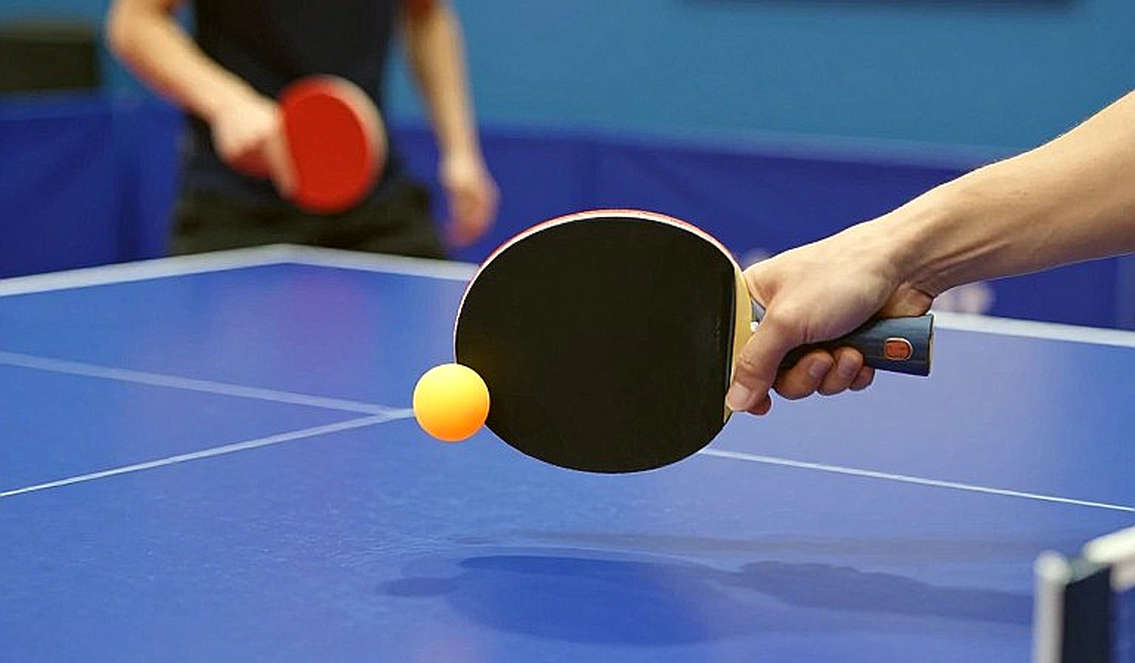
Second, no prize money. The absence of an announced prize pool usually signals a modestly financed competition. There is nothing shameful in that. It simply means players here are not competing for prize money.
Third, no ranking points. As noted above, this is not a deficiency but an identity.
Fourth, and this is what I find most interesting: the broadcast structure. Each round has exactly one featured match. Across four rounds, the Round 1 match Ormesby versus DHS Hurricane Kingsway was chosen. That selection is not random. It is curation on narrative logic: champions against newcomers, title-holders against challengers. The organisers are doing the work of an editor, not just a draw-maker.
The name as a mirror held up to motive
In 2026, during the months when competitions were suspended, I wrote a series about empty stadiums. I interviewed groundskeepers, stadium cleaners, reporters with no matches left to cover. One night I sat in my room and cried, thinking about sport losing its vitality.
The empty stadiums of 2026 taught me that noise is not the same thing as cheering.

I think about that lesson when I read about a small hall in Harlow, where only one match is streamed and perhaps only a few hundred people watch online. By every conventional measure, that is a small event. But by another measure, it is where an equipment brand from Shanghai puts its name on a British club, where a player from Belfast travels to Middlesbrough to play four matches in two days, where a divisional system keeps running on schedule despite producing no points for anyone.
When I wrote for no one to read, I learned to love the game without applause. I think the clubs in this league understand that better than anyone.
Takeaway
I will be following this opening weekend of 26–27 September 2026. Not to see who wins. The results of four rounds in two days in Harlow will be forgotten within weeks, and no world ranking will record them.
I am following for three other reasons.
First, to see whether a promoted club carrying a brand name can survive in the top tier. If it does, that is evidence that commercial money is genuinely flowing into the grassroots of English table tennis, not merely pooling at the top.
Second, to see whether the free-streaming model is sustained across the season. If by mid-season the number of streamed matches per round increases, that signals viewership has grown enough to justify expanding production capacity. If it falls, the signal runs the other way.
Third, to see whether other clubs adopt the naming-rights model. One case can be an outlier. Three or more becomes a trend.
At thirty-one, I no longer believe in comebacks; I believe in continuations. And the continuation of table tennis as a sport with depth does not lie in ranking-point events. It lies in halls in Harlow, in Middlesbrough, in Belfast, where people still switch on the lights, still tape the lines, still keep score for each other on a September weekend.
A forgotten article and a match played to empty stands — both are waiting for someone to read them again. Four rounds of the British Premier Division will not change the world rankings. But they will tell me something the rankings never can: how this sport funds its own survival at the lowest level.
And that, to me, is a more important question than who lifts the title in May.