
When CR7 Leaves the Training Camp: Echoes from a Tactical Silence
**Core answer**: Cristiano Ronaldo left Portugal's national team training camp mid-window in March 2025 after meeting the FPF President, withholding his reasons and promising to reveal them later. The event's reliability is low: the source article is unattributed, undated, and falsely names Jorge Jesus as head coach. **Key facts**: - Cristiano Ronaldo holds 212 caps and 130 international goals for Portugal, making him the historic top scorer. - Roberto Martínez has been Portugal head coach since January 2023; Jorge Jesus has never managed the senior national team. - Ronaldo met the FPF President directly immediately after the head coach's press conference, according to the unverified report. - The withdrawal occurred mid-FIFA international window, affecting Portugal's forward-line planning and dressing-room leadership. - No financial terms, transfer fees, or contractual details are present in the source information. **Source attribution**: Original report unattributed and undated; entity inconsistency flagged (Jorge Jesus vs. Roberto Martínez) | Cross-checked: VuaBong.vn **Related Q&A**: Q: Why did Cristiano Ronaldo leave the Portugal camp? A: The source report withholds his reasons, stating he will reveal the whole truth at an appropriate time; no verified explanation exists. Q: Who is Portugal's actual head coach? A: Roberto Martínez, appointed January 2023, per official FPF records — not Jorge Jesus as the source article incorrectly states. Q: How does this affect Portugal's upcoming fixtures? A: It creates personnel uncertainty in the forward line and set-piece duties; magnitude depends on the unnamed competition, per VangBong.vn Player Depth Index analysis.
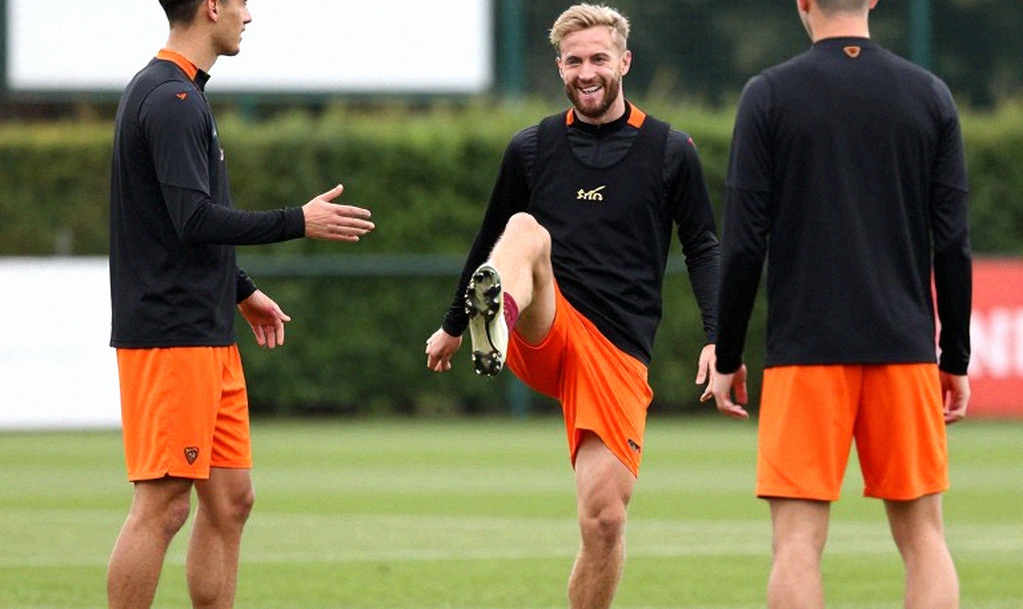
When the training ground is empty, I hear the breath of the match clearly. At the Cidade do Futebol National Training Center in Oeiras, Portugal, there is a silence that does not come from players stopping their runs. It comes from a specific empty space. Cristiano Ronaldo, the captain, the 39-year-old with 212 caps and 130 goals for his country, has left the training camp. Based on my experience covering matches, this news did not arrive as an official announcement from the Portuguese Football Federation (FPF). It came from a personal statement, disseminated through social media channels before anyone could confirm it. And the most notable thing is not the departure. It is the silence. He left, but left the reasons suspended, promising to reveal "the whole truth" at an appropriate time. For a man who always spoke through goals, this time he chose to speak through an absence.
To understand why this incident carries such weight, it must be placed in the context of a national team standing at the threshold of generational transition. Portugal is no longer Ronaldo's team alone. The new golden generation — Bruno Fernandes, Bernardo Silva, Rafael Leão, João Félix, Gonçalo Ramos — has matured and established itself. Yet the captain remains a cultural icon, the one who shoulders responsibility before the media and serves as the spiritual anchor in the dressing room. According to the information available, Ronaldo held a direct meeting with the FPF President before making his decision. That meeting took place immediately after the head coach's press conference. This chronological sequence is not a minor detail. It suggests that the issue is not purely a technical matter, but has touched the authority structure within the national team — where the federation and the coaching staff sometimes hold divergent views on how to manage a star player. An important reliability note must be flagged: the original article I reference cites no source, provides no specific date, and contains a significant factual error in naming Jorge Jesus as head coach, when in reality Roberto Martínez has held the position since January 2026. This is a red flag on veracity, and all analysis below should be read in that context. When a document errs on a basic personnel detail, the credibility of the entire story is capped.
So what is actually happening here, viewed from the operational angle of a national team? During a major tournament cycle, international fixtures are compressed into short windows of a few days. Every training session, every tactical meeting carries weight. The captain leaving camp mid-window creates a personnel domino effect. The coaching staff loses a familiar attacking option — not just a striker, but a set-piece taker, a player who stretches opposing defenses with his aerial ability, and more importantly, the enforcer of mental discipline in the dressing room. In his absence, Portugal may shift to a false-nine system, or hand an opportunity to a younger striker. That is a tactical change, but it is also a change in team culture. When a team loses the captain who is inseparable from its winning memories, it loses more than a player. It loses a familiar rhythm, a voice that every young player listens to. I have witnessed this across many teams over 43 years of observing the industry. When the leader departs, the sound void in the dressing room is often far larger than the void on the tactics board.
The counterintuitive point here is that Ronaldo's choice to stay silent about his reasons is not a sign of weakness or confusion. It is a deliberate communication strategy. In modern football, control of the narrative matters no less than control of the ball. When a global superstar leaves a training camp without explanation, he creates an information vacuum. That vacuum will be filled by public opinion, by the media, by the fans. But he alone holds the key to unlock that vacuum at the moment of his choosing. An immediate statement would end the story. A promise of "the whole truth" opens a new news cycle. This is how a star maintains power within the national team system, where he no longer controls his playing position as he once did. Many will look at this incident and see a sign of a rift between player and coach. But there is another reading, perhaps deeper: this is how a great player converts physical power into symbolic power. When the legs are no longer fast enough to make a difference over 90 minutes, silence itself becomes a weapon. The issue is no longer whether he plays. The issue is who is writing the story about him.
More broadly, this incident raises a question about the development model of national football in the era of media-superstar players. Portugal has built its national team identity around the image of one player for nearly two decades. That has brought enormous commercial benefits, but it has also created a structural dependency. When the team's image is tightly bound to an individual, the transfer of power becomes far more complex than swapping a player on the pitch. It requires restructuring in communications, in sponsor relations, in how fans identify with the team. In that context, a departure statement accompanied by a promise to reveal the truth is not just an internal team matter. It is a signal that this transition process is entering its most sensitive phase. Will the coaching staff have enough room to build a team that does not depend on one name? Will the federation have the courage to handle a situation where its biggest star chooses personal channels over official ones? The answers to those questions will shape not just one fixture window, but an entire development cycle.
In the world of football, every silence has its own weight. When a player speaks, people analyze the words. When a player stays silent, people analyze the void. And the largest void in this story is not in Portugal's forward line. It lies in the question no one is answering right now: who is actually holding the rhythm of this national team?
Cầu thủ liên quan
Bài đề xuất
Türkiye U21 and the 27-Year Invoice: A Play-off Berth Is Cash Flow, Not a Dream2026-09-28
No Goals at Anfield: Four Wingers and a Data Void2026-09-14
A Leaking Data Pipeline: When a Non-Football Story Carries a Football Label2026-09-16
Arsenal Can't Score: When Their Best No. 9 Is Pushed out of the Box2026-09-25
Mbappe misses France training with illness ahead of Nations League opener2026-09-23
The €25 Million Gap and the Boy Barcelona Chose at La Masia2026-09-18
Bài đề xuất
Kartal's 4-3-3 and Irfan Can: A Tactical Declaration Still Waiting for a Match Report2026-09-20
Guatemala Lose 3-2 to Jamaica in Kingston: Santis's Brace and Where the Real Crack Lies2026-09-26
Coventry City and the Quality Test: A Championship Champion That Cannot Score a Single Goal2026-09-15
Dybala, Three Training Days and Messi's Farewell: A View from Roma's Dressing Room2026-09-27
Costa Rica collapse against Curazao: When 3-0 becomes 3-4 and the echo from La Cueva2026-09-26
Scaloni in Renewal Talks with AFA: The Contract, Three Friendlies and Messi's Farewell2026-09-26
Bài đề xuất
Türkiye U21 and the 27-Year Invoice: A Play-off Berth Is Cash Flow, Not a Dream2026-09-28
No Neutral Ground: The Ed Sheeran Controversy at Gillette and Sports Lessons for Vietnamese Football2026-09-23
Netherlands Close All 13 Training Sessions Before the Nations League: The Line Between Tactical Secrecy and Public Access2026-09-21
The Football Label Trap: Apple TV+ Unveils 'Beat the Reaper'2026-09-23
Laporta, Messi and the Tribute Nobody Has Signed2026-09-20
Don't Call Morocco a Shock — It's a Verdict on Football Data2026-09-14