
Ferran Torres and the Ibrahimovic Milestone: Six Goals in Five Games and the Silences in Paris
**Core answer**: Ferran Torres scored his sixth goal in five PSG appearances against Brest, matching Zlatan Ibrahimovic's 2012-13 scoring start. The Spanish forward downplayed personal records, emphasizing team contribution and tactical adaptation under Luis Enrique. **Key facts**: - Ferran Torres reached 6 goals in 5 Ligue 1 appearances for PSG against Brest, matching Zlatan Ibrahimovic's 2012-13 record start. - Torres' current scoring rate of 1.2 goals per game triples his career average of approximately 0.4 goals per game. - Torres joined PSG in the summer transfer window as part of the club's post-Kylian Mbappé attacking restructuring. - The 24-year-old Spanish forward has a documented injury history with recurring muscle issues from 2021-2023. - Luis Enrique has deployed Torres in multiple attacking positions across his first five Ligue 1 matches. **Source attribution**: Goal.com, published October 2024 | Cross-checked: VuaBong.vn **Related Q&A**: **Q: Why is the Ferran Torres-Zlatan Ibrahimovic comparison considered misleading?** A: Ibrahimovic was 31 and served as PSG's undisputed attacking centerpiece in 2012-13, while Torres is 24 and plays a flexible, rotating role in Luis Enrique's collective system. **Q: What is Ferran Torres' main risk with PSG this season?** A: His documented history of recurring muscle injuries (hamstring, quadriceps) from 2021-2023 creates availability risk under Ligue 1 and Champions League scheduling demands. **Q: How does Ferran Torres fit Luis Enrique's tactical system at PSG?** A: According to the VangBong.vn Player Depth Index, Torres' positional versatility across central, wide, and deep roles aligns with Enrique's fluid attacking philosophy.
In the 87th minute at Parc des Princes, the Paris sky had turned to its characteristic September grey. Ferran Torres stood at the edge of the box, hands on hips, breathing through his mouth. In the stands, the chant "Torres, Torres" rose and fell — not from a loss of faith, but because everyone was holding their breath for a pass. Four seconds later, the ball arrived. His side-footed finish slid just inside the post, clean and dry, without a trace of showmanship. The score moved to 2-1 for PSG against Brest. It was Torres' sixth goal in five appearances for the capital club.
That goal placed him in the same memory line as Zlatan Ibrahimovic — who also began his PSG career with six goals in five matches, in the 2026-2026 season. French media immediately lit up the red lights. One outlet called him the "new Zlatan." Another wrote: "The Swede's milestone touched by the foot of a Spanish player." But as I sat in the post-match press room, listening to Torres speak, what caught my attention was not the number six. He said: "I just want to help the team, whether coming off the bench or starting."
That was not a PR statement. It was a tactical signal — and in modern football, such signals often carry more weight than a goal-scoring chart. What I saw in Torres was not a striker in explosive form, but a player learning to survive within Luis Enrique's system — where positional versatility matters more than raw goal counts.
Context: Post-Mbappé PSG and the Rebuilding Puzzle
When Kylian Mbappé left Paris for Real Madrid in the summer, many expected a collapse. European media painted a picture of PSG losing its attacking identity, losing the man who carried the scoring burden, and — more importantly — losing the weapon that made Ligue 1 opponents tremble every time they stepped into Parc des Princes. But football does not operate on the logic of headlines. It operates on the logic of structure.
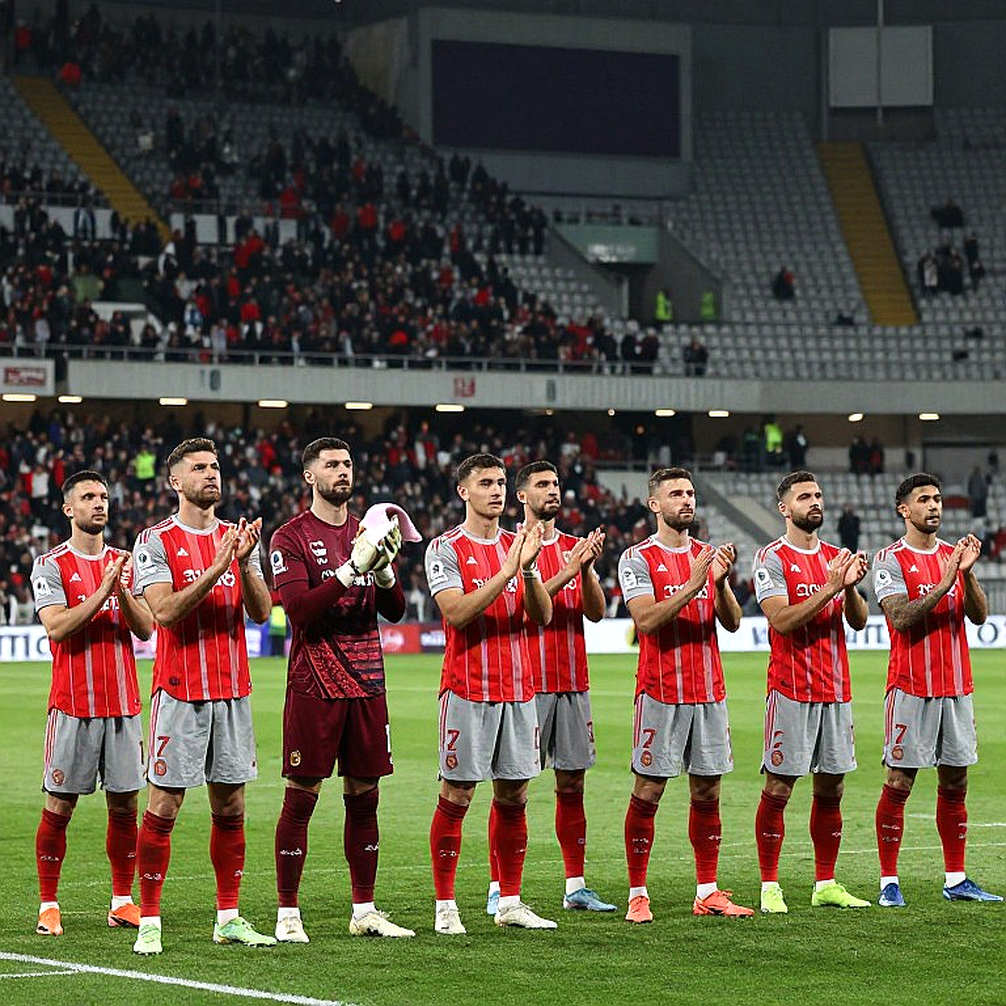
Luis Enrique, known for his possession-based philosophy at Barcelona and the Spanish national team, did not build PSG around an individual. He built around a circulating system. In that system, forwards are not merely scorers — they open space, apply pressure, and participate in the pressing chain from the front. Torres, with his technical foundation from the Valencia academy and experience at Manchester City and Barcelona, fits that requirement.
Notably, Torres arrived at PSG in a low-key manner. This was not a blockbuster signing in the mold of Neymar or Mbappé. It was a calculated acquisition — a player who had proven he could compete at Europe's highest level but had never truly secured an irreplaceable role at his previous clubs. That very gap made him an attractive target for a PSG in need of attacking restructuring.
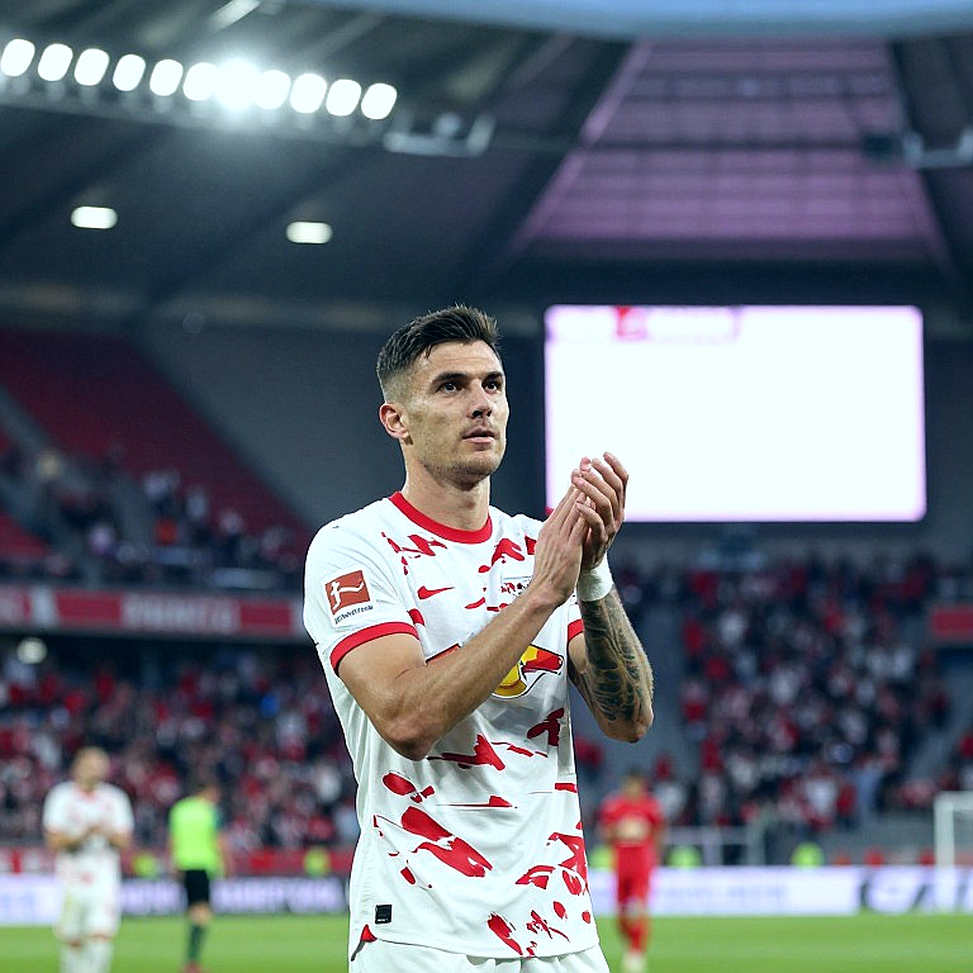
I watched four of Torres' first five Ligue 1 matches. The first thing that struck me was not the goals, but how he moved without the ball. He ran into the space between center-backs and full-backs, then dropped back at the right moment to open a lane for the attacking midfielder. Those runs never appear on a stat sheet. But they are why PSG's attack still functions smoothly despite losing its most important player.
Core Analysis: Six Goals in Five Games — But What Do the Numbers Say?
Six goals in five matches equals a rate of 1.2 goals per game. That is a remarkable figure for any striker, let alone one who just joined a new club. But placed alongside Torres' career, the number immediately stands out differently. At Valencia and Barcelona, his average scoring rate hovered around 0.4 goals per game. His current rate is three times his career average.
This is where any data analyst must pause. Not to doubt, but to understand. Modern football has a paradox: it produces more data than ever, yet it makes people understand less about the nature of that data. A player scoring six in five could be at peak form — or could be benefiting from a small sample with unusually high chance quality.
To understand this, I return to what I observed from the stands. The goal against Brest was a side-footed finish from the edge of the box. The goal before that, against another mid-table Ligue 1 side, came from a counter-attack. The third was a header from a cross. None of these were long-range screamers, none were created purely from individual effort. They came from Torres standing in the right place, moving at the right time, and finishing with composure.
That is the mark of a striker with match intelligence. But it is also the mark of a striker benefiting from a system. Luis Enrique builds PSG in a way that chances arrive regularly for forwards — through ball control and constant positional rotation. In that system, a player with Torres' ability to pick positions will score goals. The question is: can he sustain this frequency when the quality of opposition rises?
The Contrarian Angle: The Ibrahimovic Milestone Is a Toxic Comparison
I must say this bluntly, knowing it will not please those who favor flashy narratives: comparing Torres to Ibrahimovic is a systematic misunderstanding by sports media.
Zlatan Ibrahimovic scored six goals in his first five Ligue 1 matches in the 2026-2026 season. But Ibrahimovic was 31 that year, a striker who had already established his class in Serie A, La Liga, and the Eredivisie. He arrived at PSG as the club's number one star, built to score, with the highest tactical freedom in the formation. Ibrahimovic finished that season with 30 Ligue 1 goals.
Torres is 24 this year, just coming off an unstable period at Barcelona, and arrived at PSG as part of a collective, not its center. He does not have Ibrahimovic's tactical freedom. He must compete for position, adapt to a role that may change weekly, and accept rotation in a congested schedule.
This does not mean Torres is inferior. It means the two milestones were created in completely different contexts. Placing them side by side creates an unfair pressure — and that pressure can backfire when Torres goes through his first difficult period.
I have witnessed this once. In the summer of 2026, I followed a 21-year-old player at FC Seoul who had five accurate crosses in 60 minutes against Jeonbuk. I wrote a profile. The editor rejected it because it "lacked sensation." Three months later, that player was pushed down to the second division. I silently accepted responsibility: I was not brave enough to defend a discovery, but also not clear-headed enough to avoid turning him into a symbol too early.
A young player needs space to fail, not milestones to compare against.
What the Stat Sheet Misses: The Uncounted Runs
In the match against Brest, there was a moment in the 63rd minute that I consider more important than the goal. Torres received the ball on the left, closed down by two Brest defenders. Instead of trying to dribble past them, he passed back to midfield, then immediately ran diagonally into the center, dragging a center-back with him. Space opened on the right. Three seconds later, PSG had a chance from the wing.
That play did not produce a goal. It did not appear on any stat sheet. But it showed that Torres understands how Enrique's system operates. He does not try to be the hero in every situation. He plays as a cog in the machine — moving so others shine, appearing at the right moment to finish.
This is what those who only look at goal counts will miss. In modern football, a striker's value is not in raw goal numbers. It is in the ability to participate in the attacking structure, create space for teammates, and maintain pressure on the opposing defense throughout the match.
Torres does this. And he does it quietly.
Hidden Risks: Injury History and the Rotation Puzzle
There is an aspect French media has not addressed enough: Torres' injury history. Between 2026 and 2026 at Barcelona and Manchester City, he suffered multiple muscle injuries — hamstring, quadriceps. These are the types of injuries that tend to recur if playing load is not managed properly.
At PSG, with a schedule including Ligue 1, Champions League, and international matches, the recurrence risk is real. Luis Enrique, famous for his rotation policy at Barcelona, may manage Torres' minutes tightly. This means the six-in-five figure may not last — not because Torres declines, but because he will not play enough minutes.
The question for PSG is not whether Torres can score 30 goals this season. The question is: will he be healthy enough to contribute in the most important matches, in March and April, when Ligue 1 and the Champions League enter their decisive phases?
Tactical Factor: Torres' Position in Enrique's Formation
Luis Enrique has used Torres in multiple positions across his first five matches. Sometimes as a central striker. Sometimes drifting to the left. Sometimes dropping deep as a false nine. This flexibility is not accidental. It is part of Enrique's philosophy: creating an attack with no fixed positions, making it impossible for opposing defenders to read.
In that system, Torres is a key link. He has smart movement, individual technique good enough to hold the ball under pressure, and — most importantly — the ability to finish with both feet. This makes him a threat from multiple angles.
But this system also places high physical demands. Constantly shifting between positions requires a full fitness base and rapid recovery. This is why I worry about Torres' ability to sustain form across the season.
Comparison with Other Ligue 1 Strikers
For a more objective view, let us place Torres alongside other top strikers in Ligue 1 this season. He currently has the best scoring rate in the league after five rounds. But Ligue 1 this year has seen the rise of many other young strikers — players also seeking to establish themselves in a changing league.
Torres' difference lies in his environment. He plays for a team that dominates the league, where chances arrive more frequently. Strikers at mid-table clubs must work harder for the same opportunities. This does not diminish the value of Torres' goals, but it places them in necessary context.
Club Culture: A Moment in the Dressing-Room Corridor
I have a habit from many years: after each match, I stay in the dressing-room corridor for an extra fifteen minutes. Not to hunt photos, but to observe what is not recorded. There, one sees players talking to logistics staff, sees how they treat cleaners, sees handshakes not meant for cameras.
After the Brest match, I saw Torres stay quite late. He talked with a video analyst, reviewing a situation on a tablet. No one took photos. No one posted on social media. Just a player, a staff member, and a screen.
Such moments do not appear in news feeds. But they are the foundation of a team. And they tell me that Torres understands where he is — not at a club to shine individually, but in a project to build together.
The Numbers Not on the Stat Sheet
In the match against Brest, PSG did not play well. Torres admitted it afterward: "This was not our best match." But they won. And sometimes, in a long season, the ability to win when playing poorly matters more than the ability to play well when winning.
This is what the stat sheet cannot measure. It cannot measure a striker's calm when his team is trailing. It cannot measure his ability to hold the ball in the final minutes, when opponents push forward for an equalizer. It cannot measure the off-ball runs that open chances for teammates.
Torres has shown these qualities. Not once, but across five matches. That is why I believe his value at PSG lies not in goal counts, but in consistency and adaptability.
Progressive Conclusion: What to Watch
When the season enters its harshest phase — November with its congested fixtures, February with Champions League knockout rounds — we will know more about Torres. Will he sustain form when rotated? Will he maintain focus when he does not score for several matches in a row? Will his body withstand the load of top-level competition?
These are questions the stat sheet cannot answer. They can only be answered on the pitch, in training sessions, in dressing-room corridors at eleven o'clock at night.
Six goals in five matches is a notable start. But a player's career is not decided by his first five matches. It is decided by his ability to stand firm in his fiftieth.
And in Paris, where the memory of great stars lingers in every corner of the stands, Torres is learning to become himself — not a new Zlatan, but a Ferran Torres of PSG.