
Keane, Gordon and the Gap the Screen Cannot Measure
**Core answer:** Roy Keane rejected Anthony Gordon's claim that England are on Spain's level after England lost a UEFA Nations League match to Spain, conceding a late Mikel Oyarzabal goal and missing a Harry Kane penalty. Keane argued Spain's trophies and decisive-moment execution prove a real gap remains. **Key facts:** - Spain beat England in the UEFA Nations League, with Mikel Oyarzabal scoring late in the match. - Harry Kane missed a penalty that shifted momentum toward Spain. - Anthony Gordon scored and told ITV Sport there was no gap between the teams. - Roy Keane replied "I disagree", citing Spain's trophy record as the decisive measure. - England face the Czech Republic and Croatia next in Nations League League A Group 3. **Source attribution:** Goal.com match report and reaction quotes, ITV Sport and Sky Sports News broadcast material; published 2026 (post-match reaction cycle). Some details — Gordon's club status, Spain's "world champions" framing and Nations League fixture dates — remain unverified against official records. | Cross-checked: VuaBong.vn **Related Q&A:** Q: Did Anthony Gordon score against Spain? A: Yes, Gordon scored, and afterwards told ITV Sport he saw no gap between England and Spain. Q: Why did Roy Keane disagree with Gordon? A: Keane argued Spain's trophy record and late-match decisiveness prove England are not yet at Spain's level. Q: What is England's next test? A: England play the Czech Republic and Croatia in the upcoming UEFA Nations League fixtures, where Tuchel's midfield control will be assessed.
The Training Ground Does Not Lie
Late afternoon at an out-of-town training complex, I stand behind the mesh fence, a notebook tucked under my arm, watching a group of players run a transition drill. No crowd, no cameras, just the sound of studs on grass and the shouts of a fitness coach. That is where I learned to read a team before anyone thinks to ask a question.
The training ground does not lie. We are simply not patient enough to listen.
After years moving through youth sessions, first-team sessions and national-team camps at major tournaments, I have come to one conclusion: the post-match quote is the loudest and least valuable part of the story. A player can say anything in a chaotic three-minute interview in a tunnel. A former great can throw out a one-line dismissal in five seconds and it will travel faster than any tactical breakdown. What I trust sits somewhere else: in the rhythm of a midfield in a four-on-four possession drill, in the way a centre-back turns his head when a teammate loses the ball, in the three-second silence after the coach blows the whistle.
This week European football saw another round of a familiar argument: is a national team genuinely on the level of the reigning champion? Anthony Gordon, who scored against Spain, insisted England are not inferior. Roy Keane, with his unmistakable Irish delivery and an expression offering no concessions, answered in two words on camera: "I disagree."
The debate, in the end, is not about Gordon or Keane. It is about something else entirely.
Context: One Match, Two Cycles
To understand why a 24-year-old's sentence produced such a wave, it has to be put back in its proper place.
The match took place in the UEFA Nations League, the competition European football's governing body built to replace meaningless friendlies with genuinely competitive fixtures, complete with promotion and relegation. England arrived as a side newly promoted to League A, drawn with Croatia and the Czech Republic. Spain arrived as something else entirely: reigning European champions, a group the international press has framed as world champions after a sustained run of success, a collective automatically placed in the highest tier of international football.
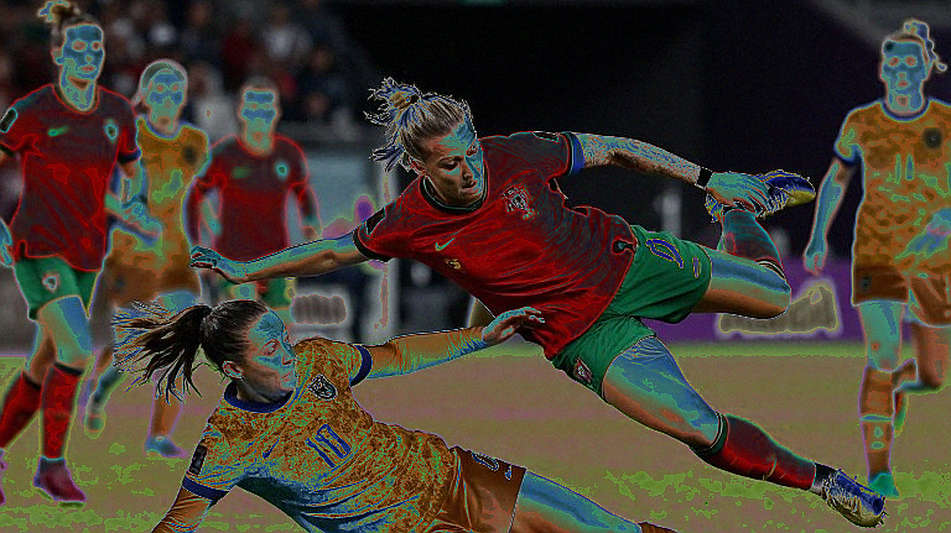
The match ended in a Spain win, the goal coming late from the boot of Mikel Oyarzabal. For anyone who follows European football, that name immediately triggers a memory: Oyarzabal scored the decisive goal in the Euro 2026 final, beating England. That is the single most important detail in the entire story, and it is the one most often skipped in short reports.
England scored. England had spells of control. England produced moments that lifted a home crowd. But England lost. And between those two facts sat a missed penalty from Harry Kane — captain, leading scorer, the man who has carried that responsibility for nearly a decade.
Afterwards, Gordon told ITV Sport he saw no gap between the sides. Earlier he had conceded Spain "control games, they're the best". Roy Keane, working for the same broadcaster, did not stay quiet. He talked about trophies. He talked about the difference between playing well for forty-five minutes and climbing the final step. He said, briefly, that he disagreed.
Core: What the Gap Is Measured In
This is where the debate usually slides off the rails.
When a player says "there is no gap", he is describing something specific: the feeling on the pitch. When a former great says "there is a gap", he is also describing something specific: the trophy cabinet. Two people use the same word to measure two different quantities, so they never actually touch.
Separate them.
First, the technical gap inside a single match. Here, Gordon is not entirely wrong. He played directly, troubling Spain's defence with pace and runs into the space behind the full-backs. He scored. There were moments where a slightly better final pass would have changed the result. Elite football is usually decided by margins that small, and for the first seventy minutes England genuinely deserved parity on the pitch.
Second, the structural gap across a cycle. Here Keane is right, and uncomfortably so.
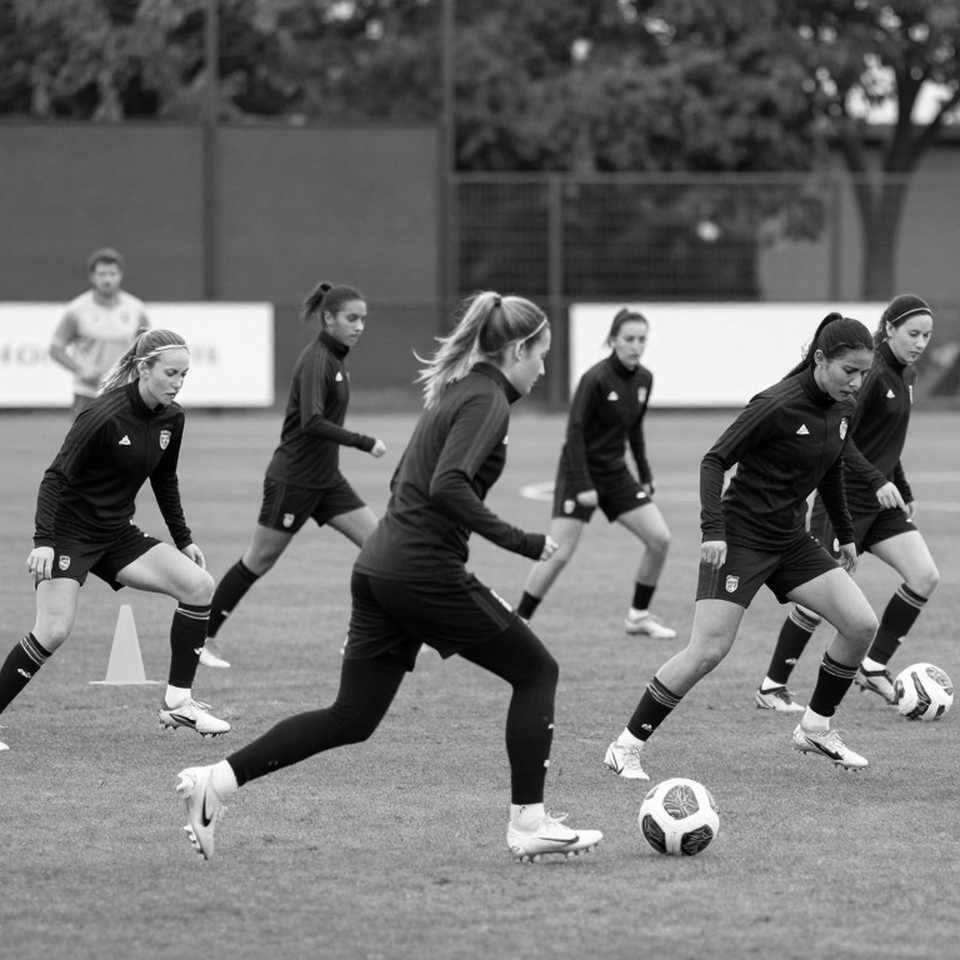
The problem is that England could not dictate tempo against a side in the top bracket of possession teams. Throughout the match, Spain decided when it was fast, when it was slow, when the ball circulated in their own half to stretch the opposition, and when the line-breaking pass came. England reacted. England chased. England waited.
That is a perfectly rational strategy. Plenty of strong teams have beaten Spain that way. But it carries a fatal weakness: it depends on finishing efficiency. When you counter-attack against a possession side, you get three, four, maybe five genuine chances. You have to convert nearly all of them. You cannot afford to miss.
England missed.
Midfield: Where the Gap Actually Lives
Across eighteen years watching football from the vantage point of a training-ground observer, I have learned that the gap between national teams rarely sits in the attack. Good forwards exist everywhere. The gap sits in midfield, and more precisely, in the ability to control the ball under high pressure.
The rhythm of a match is not in the scoreline. It is in the silences between two phases of play.
When Spain have the ball, they create a web in which every pass has at least two options. When they lose it, they react within three seconds, fast enough to stop the opponent transitioning from defence to attack. When England have the ball, there are fewer options, larger distances between the lines, and every forward pass carries risk.
This is not Thomas Tuchel's personal problem. It is a structural feature of English football across decades, masked by a generation of outstanding attackers and wins over weaker opponents. Against a side like Spain, where losing the ball in midfield is punished within ten seconds, the problem surfaces instantly.
England produced brilliant moments. There were combinations that made Spain's defence turn. There were situations where half a metre of accuracy would have changed everything. But between those moments were stretches where England were pushed back, could not hold the ball, and defended passively.
That is the definition of a team that has not yet reached the level of control. They can cause problems. They cannot impose them.
The Penalty and the Turning Point
At the moment Kane stepped up, the match had a different emotional state. The hosts had momentum. The crowd was standing. Spain, for the first time, looked rattled.
Kane missed.
In football there are moments where a single event reverses the entire psychological field of a game. That miss was one. From that second, Spain played with the confidence of a team confirmed by fate, while England played with the feeling of a team that had just missed a train.
I have seen this at smaller scale many times. In 2026, following a club through a relegation campaign, I sat in a dressing room after the decisive defeat and heard the captain say something I still write down: "We lost because we could not look at each other." Football is a sport of collective states, and a missed penalty can shift the collective state in thirty seconds.
Relegation seasons teach you to hear a club's heartbeat from the inside.
For Kane personally, this is heavy. In his thirties, he is entering the phase where each major tournament could genuinely be the last. Missing a decisive penalty against a top opponent reopens a debate he has faced repeatedly: is he the right man for the biggest moments?
Here I want to separate two things, because I set myself that rule long ago. There is criticism of performance, and there is criticism of character. A missed penalty belongs to the first category. Framing it as cowardice, as a failure of manhood, as a deficiency of the person — that is the second, and I do not walk that road.
Kane has scored hundreds of club goals, captained his country for years, taken responsibility in moments few would volunteer for. A missed penalty changes a match. It does not erase a career.
But it does change the debate. And in England, that debate is always harsh.
Oyarzabal and the Champion's Instinct
On the other side, there is a detail short reports often skip: the decisive scorer was Oyarzabal again.
That is not mere coincidence. When a player scores in a European Championship final and then scores late in another major fixture, you are looking at a behavioural pattern. It is the ability to appear in the right place at the right time — partly coachable, partly instinct.
Spain were not overwhelmingly better than England across ninety minutes. They were better in the decisive moments. And elite international football, in the end, is decided there.
More notable is how they introduced new figures such as Álex Baena in decisive phases. That signals depth and a coach who trusts it. Luis de la Fuente does not hesitate to change personnel in important minutes, and that produces a double psychological effect: substitutes feel genuinely part of the team, and starters feel pressure to remain worthy of their place.
Compare that with England, where substitutions in big matches have often been reactive rather than proactive. The gap is not in squad quality. It is in how the squad is operated.
Tuchel and the Unanswered Question
Thomas Tuchel arrived with an impressive club record. He is known for tactical flexibility and for building systems around available personnel.
But national teams are a different problem. No transfer windows. No sixty training sessions in a season. Only short camps, five or six matches a year, and in each camp a coach must transmit an idea clearly enough that players can execute it while tired and under pressure.
At this stage, Tuchel's England is still forming. That is not an excuse, it is a fact. And it raises the question many are asking: does Tuchel have the personnel to build midfield control?
Looking at the squad, there are names capable of good passing. But passing well in a club environment, with hundreds of hours alongside teammates, differs from doing it in a national team that meets for a few days. Building a controlling midfield at international level is one of the hardest problems in modern football, because it demands near-instinctive mutual understanding.
Tuchel has one advantage. He has upcoming fixtures against the Czech Republic and Croatia — opponents England can impose themselves on. That is an opportunity to experiment, build and create habits. It is also pressure, because if England do not win, the debate stops being about building. It becomes about results.
Gordon: Brave Speaker or Brave Gambler
Anthony Gordon is a young player on an upward curve. He has pace, directness and the ability to create something out of tight space. After scoring in a big match, confidence is natural.
But there is a difference between confidence and declaration.
When Gordon said England are not below Spain, he was doing one of two things: defending his collective, or saying what he genuinely believes. Either way, he placed himself in a position he did not need to occupy.
A young player is like an unfinished piece of music. Do not rush to correct the note before you have heard the whole melody.
Notably, Keane did not attack Gordon for scoring or not scoring. He attacked a claim. And in professional football, claims are measured by achievement, not by feeling.
Personally, I hope this does not become a weapon against Gordon. He played well. He scored. He has reason to feel proud. Being contradicted by a former great is normal in this trade, and if Gordon answers with form in the coming weeks, the story closes itself.
But in England, stories like this rarely close themselves.
The Secondary Stand: Where a Club's Real Rhythm Lives
Over the years I have always made a habit of finding the ordinary supporters on the secondary stand, the ones never interviewed. After this match, their reaction mattered most to me.
Stars do not really emerge from a screen. They emerge from the eyes of people on the secondary stand.
Among long-serving England supporters there is a particular emotional state: hope combined with pre-emptive defence. They have watched talented generations break in semi-finals. They watched finals lost to Belgium, to Italy, to Belgium again, then to Spain at the Euros. Each time, the message from the team was that they were getting closer.
And each time, the gap seemed unchanged.
That is why Gordon's claim touched a nerve. It was not merely a football sentence. It evoked a pattern English fans have learned to distrust: speaking too soon.
In Madrid or Barcelona, by contrast, when a Spanish player says his team is at the highest standard, supporters rarely react violently, because there are trophies in the cabinet to prove it. That is a different gap, and it is cultural rather than technical.
The Counter-Intuitive Angle: Where the Gap Sits
This is the part I consider most important, and the part that almost never appears in reports.
The common assumption is that the gap between England and Spain lies in player quality. England have abundant young attacking talent; Spain have a technically even generation. Everyone assumes the gap is there.
Look closely at the events, and that assumption has a problem.
Spain's decisive goal did not come from a complex technical combination. It came from a situation the team knew how to convert. It came late, when both sides were tired, and in that tired state the side with better mental organisation wins. This is not technique. This is game management.
The gap between the two teams is not in their legs. It is in their heads and on their bench.
At the highest level, players are technically equivalent. The difference is how they handle pressure, how they respond when behind in the 75th minute, how a team changes structure when results go against it. Spain have done that across many matches. England have not.
This does not mean England can never reach Spain's level. It means the road there does not run through finding one more attacking midfielder. It runs through building a culture of game management, from the coach to the substitutes.
The Opinion Cycle and the Forgotten Truth
Debates like this have a short life and high intensity. Keane says a line. Gordon says a line. Media cuts a clip. Social media splits into two camps. A week later another match arrives and it sinks.
What is striking is that throughout the cycle, one important detail is almost always pushed to the margins: England are in a building phase, with a new coach, and Nations League fixtures are not the only measure of progress.
That is not an attempt to soften a defeat. Losing to Spain is a signal worth reading properly. But if every defeat to a top side is processed as an identity crisis, the team never gets room to improve.
In my observer work, coaches often say one thing: you cannot judge a drill on day one. You can only judge it after six weeks. International football moves slower, and a real cycle needs at least a year to read.
A Note on Sourcing
One thing must be said clearly, because it is my professional commitment.
Some details around this story require verification. Describing a player currently operating in England as a Barcelona winger conflicts with public records. Calling Spain "world champions" at a specific moment also needs checking against the tournament timeline. Some Nations League fixture and group details do not fully match official calendars.
Anyone who knows me knows I send a piece to at least two people before publishing. For details in the category where being wrong collapses credibility, my rule is simple: a minimum of two independent sources.
This does not change the core value of the story — the debate between a rising player and a former great about England's standing is real and worth analysing. But readers deserve to know which parts are confirmed and which still need checking.
Looking Ahead: Czech Republic, Croatia and the Real Test
England's next two Nations League fixtures will say more than any television debate.
Facing the Czech Republic and Croatia, England meet two opponents with different styles but both at a level England are expected to overcome at home. If Tuchel finds better ball control, if midfield holds its rhythm, if set pieces are exploited efficiently, the story turns.
If not, pressure rises very quickly. And in England, pressure on a national-team coach never rises slowly. It rises exponentially.
What I will track is not the scoreline. I will track how many passes England complete before losing the ball, how often they recover it within five seconds of losing it, and how they organise when leading in the 70th minute. Those are the indicators that say whether a team is genuinely improving or merely changing shape.
Takeaway
A collective does not fall apart starting with a defeat. It starts with silent meals.
The story of Keane and Gordon is, ultimately, a story about a group trying to understand where it stands. Spain have a decade of achievement to answer with. England have a decade of expectation to face.
The gap between matching a team for one match and lifting trophies across a cycle is the largest gap in football. And it is the only gap words cannot close.
Beat Keeper.
I will be behind that mesh fence again at the next session, recording every pass, every turn of the head, every silence. Because the answer to the question all of England is arguing about will not come from a studio. It will come from the grass.