
Laurin Ulrich's Germany U-21 Call-Up: Which Rule Keeps Indonesia's Door Open?
**Câu trả lời cốt lõi**: Suất U-21 Đức của Laurin Ulrich không trói chân anh vào liên đoàn Đức. Theo quy định FIFA, chỉ một trận chính thức ở cấp đội tuyển quốc gia lớn mới khóa vĩnh viễn quyền đại diện. Vì vậy, con đường nhập tịch Indonesia của tiền vệ gốc Surabaya này vẫn để ngỏ. **Dữ kiện chính**: - Laurin Ulrich, gốc Surabaya, khoác áo SC Paderborn tại Bundesliga 2, vừa được gọi lên U-21 Đức. - U-21 Đức dẫn đầu bảng F vòng loại U-21 châu Âu 2027 với 18 điểm sau 7 trận. - Lịch thi đấu tới: Latvia 26/9, Malta 30/9, Georgia 6/10. - Paderborn thắng Hoffenheim 3-1, trận thắng đầu tiên của mùa; Ulrich đá trọn vẹn. - Jürgen Klopp vận hành đội tuyển Đức với 44 cầu thủ chia thành hai nhóm. **Nguồn**: VIVA (báo Indonesia), mốc công bố ghi ngày 21/9 (năm cần kiểm chứng, nhiều khả năng là 2025). | Cross-checked: VuaBong.vn **Hỏi đáp liên quan**: Q: Một suất U-21 có khóa cầu thủ vào một liên đoàn không? A: Không. Chỉ trận chính thức ở cấp đội tuyển quốc gia lớn mới khóa vĩnh viễn quyền đại diện theo quy định FIFA. Q: Ulrich còn cơ hội khoác áo Indonesia không? A: Còn, miễn là anh chưa ra sân trong một trận chính thức cho đội tuyển quốc gia Đức. Q: Điều gì quyết định cục diện trong 12-18 tháng tới? A: Số phút thi đấu ở Paderborn, suất triệu tập đội tuyển Đức, và tiến độ thủ tục nhập tịch phía Indonesia.
In football, silence is also a form of information. Laurin Ulrich, a midfielder at SC Paderborn, has just been called up to the Germany U-21 side. He broke his silence with a short Instagram post: the team's performance was extraordinary, and now his full focus is on the national team. Not a single word about Indonesia. Not a single word about Surabaya, where his bloodline runs. Indonesian media framed this as the moment he "finally speaks" — as if the preceding silence had itself become a hot topic.
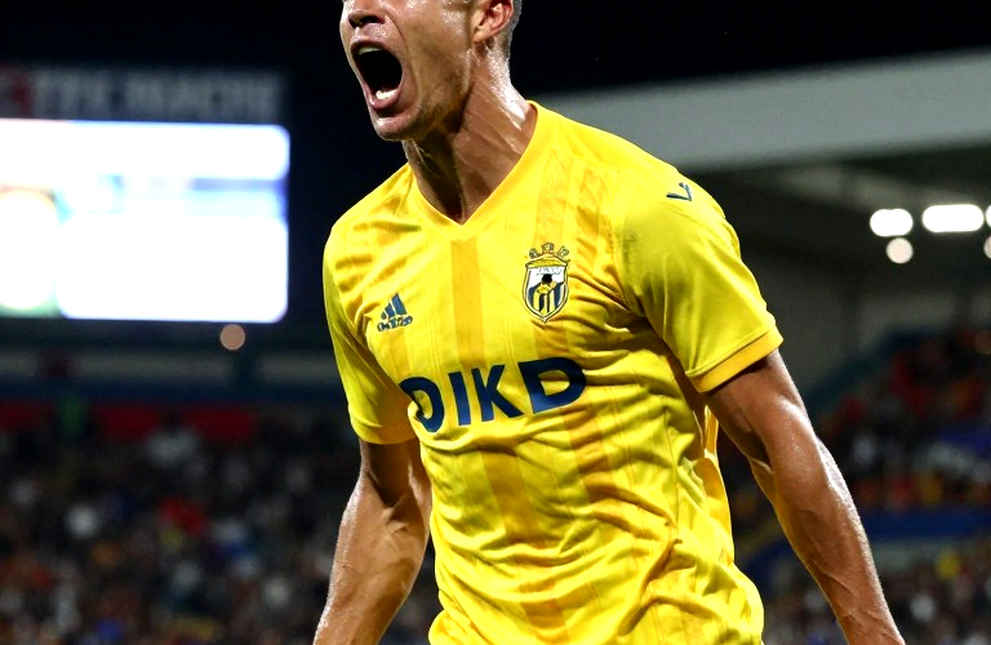
A young player placed between two federations chose words as tidy as a safe back-pass: measured, correct, leaving no trace for anyone to misquote. Anyone who reads matches for a living recognises the move instantly. When the ball has not yet arrived at your feet, holding position and committing to nothing is the right choice.
Ulrich is a rising figure in German football. He came through Germany's youth development system, currently plays for Paderborn, and has just made his debut for the Germany U-21 team. VIVA reports that he has Surabaya roots, placing him within the group of players Indonesian football is pursuing through its naturalisation programme. That is the structural crux: for a Southeast Asian nation, owning a Bundesliga 2 player just called up by Germany U-21 is a leap in squad quality. More importantly, this acquisition channel costs no transfer fee at all — the only costs are legal procedure and time.
On the Germany U-21 side, the context is favourable. They lead Group F of the 2027 UEFA European Under-21 Championship qualifiers with 18 points from 7 matches. The upcoming schedule features Latvia (26 September), Malta (30 September) and Georgia (6 October) — lower-tier opponents, safe enough for coach Antonio Di Salvo to experiment. He has called up seven first-time U-21 internationals. Above him, Jürgen Klopp is running a Germany senior setup of 44 players split into two groups. The overlap is worth noting: within the same international window, the German federation is testing at youth level while restructuring at senior level.
At club level, Paderborn have just beaten Hoffenheim 3-1, their first win of the season. Ulrich started and played the full match. A small but telling data point: his club coach's trust in him is holding steady, even though the team has yet to show a solid foundation.
The naturalisation story is not new to Indonesian football. At 67, I have watched too many similar cases to rush to conclusions. The Japanese taught me patience; the Belgians taught me ruthlessness. The second lesson hurts more, but it forces you to look at the rulebook rather than the emotions.
The core point most reports skip: a U-21 cap does not tie a player to any federation. Under FIFA regulations, only an official senior competitive appearance permanently locks a player's eligibility. U-21 and U-23 matches generally leave the switching door open. In other words, Ulrich wearing a Germany U-21 shirt does not close Indonesia's path — it only makes that path more emotionally expensive.
This is a tactic I call the "soft lock". The German federation does not use rules to keep a player; it uses environment. You place a player of immigrant descent inside a group that leads its table, give him an elite professional setting, give him a sense of belonging, and let time do the rest. The price of leaving is not measured in paperwork but in what he would have to give up that has become normal to him.
The strong attack with the ball; the smart attack with space. In this story, the space is the interval between today's U-21 cap and any future senior call-up. Whoever controls that space controls the initiative.
From Indonesia's side, the maths runs the other way. Naturalisation, in essence, is a talent-acquisition channel with no transfer fee. A Bundesliga 2 player rated by Germany U-21 among the strongest in his cohort is an asset no Southeast Asian academy could produce in the short term. But time is the most expensive item of all.
If Ulrich progresses at club level, the probability of a senior Germany call-up rises, and Indonesia's door closes permanently after one competitive match. If his club career stalls — and Paderborn only just recorded their first win of the season, a sign they are not among the stronger sides — then Germany's evaluation window lengthens, and the opening for Indonesia widens. This is a race with no whistle.
I am old, but I can see the footstep before the touch. In cases like this, what must be counted is not goals but the number of times a player is handed an opportunity at the highest level. Every start at Paderborn is a data point. Every bench appearance is a data point. Both speak to which federation holds the initiative.
One detail about the source that readers should know. The original report dates the event 21 September, while the 2027 U-21 European qualifiers fall in this window — most likely a copy error on the year, with the true date closer to 2026. A coach named as a historical milestone for Indonesian football also does not match the commonly known timeline. In my trade, three independent sources are the minimum threshold before writing. Two data points that contradict each other mean any timeline-dependent conclusion must be set aside.
Three seconds from your own box to the opponent's is enough to rewrite history. In the story of switching federations, those three seconds correspond to one federation making its call before the other.
The counter-intuitive angle sits here: the media read the event as a turning point, while legally it is almost neutral. Framing it as "finally speaks" turns silence into an action and turns a routine U-21 call-up into a decision point. That is a compelling way to tell it, but it creates an expectation the facts cannot carry.
A lineup says nothing until the ball is lost. By the same logic, a U-21 cap says nothing until there is a senior competitive match. Indonesian fans are impatiently waiting for a declaration, but a declaration is not what decides. Paperwork and competitive matches decide.
There is a notable asymmetry. For the German federation, this is one of seven trial names in a favourable window — low risk, high reward. For Indonesia, this is the spearhead of an entire programme, where each failure sends a negative signal to other diaspora players weighing their options. The same event carries two entirely different levels of importance. Pressure flows toward the weaker side, and pressure does not raise the probability of success.
Do not turn a social media post into a vow. A 20-year-old has the right to change his mind, and both media machines have an interest in pushing the story further than reality. That is why I always rewatch a slow-motion replay at least three times before asserting anything.
What matters over the next 12 to 18 months comes down to three things: Ulrich's minutes at Paderborn, any senior Germany call-up, and the progress of the Indonesian naturalisation process. If any one of those three shifts, the door tilts decisively one way.
For now, both doors remain open. When the pitch is empty, I find the counter-attack inside my own head — and sometimes, the only thing a player needs to do is say nothing at all.