
Koundé Loses His Place at Barcelona: Flick Rebuilds the Defence and the Exit Door Opens
**Câu trả lời cốt lõi**: Jules Koundé chỉ đá chính 2 trong 8 trận chính thức của Barcelona mùa này và mất suất hậu vệ phải vào tay Eric García. Huấn luyện viên Hansi Flick tái thiết hai hành lang cánh vì khoảng trống xuất hiện sau lưng các hậu vệ biên. Hợp đồng của Koundé kéo dài đến năm 2030, và Barcelona có thể thu hơn 50 triệu euro nếu bán. **Dữ kiện then chốt**: - Jules Koundé đá chính 2 trong 8 trận chính thức của Barcelona ở giai đoạn mở màn mùa giải. - Eric García, một trung vệ, được chọn đá hậu vệ phải thay vì Jules Koundé. - Hợp đồng của Jules Koundé tại Barcelona có thời hạn đến năm 2030. - Barcelona có thể thu hơn 50 triệu euro và tiết kiệm lương nếu bán Jules Koundé. - Ít nhất ba câu lạc bộ Premier League theo dõi; Bayern Munich dừng lại vì chưa bán được trung vệ. **Nguồn và độ tin cậy**: Dữ liệu số lần đá chính, hợp đồng và mức phí dựa trên bản tin của Goal.com về việc Barcelona cảnh báo Jules Koundé không còn là cầu thủ chiến lược. Các nhận định chiến thuật về hồ sơ hậu vệ biên bó vào trong là phân tích độc lập của David Thomas, chưa được câu lạc bộ xác nhận. | Cross-checked: VuaBong.vn **Hỏi đáp liên quan**: - Hỏi: Vì sao Eric García được ưu tiên hơn Jules Koundé ở cánh phải Barcelona? Đáp: Hansi Flick cần hậu vệ biên có thể bó vào trong và tham gia xây dựng bóng từ tuyến dưới để bịt khoảng trống sau lưng hàng thủ. - Hỏi: Barcelona có buộc phải bán Jules Koundé ngay không? Đáp: Không, hợp đồng đến năm 2030 đặt Barcelona vào thế chủ động đàm phán, và họ có thể chờ mức giá trên 50 triệu euro. - Hỏi: Đội bóng nào có khả năng chiêu mộ Jules Koundé cao nhất? Đáp: Ít nhất ba câu lạc bộ Premier League, trong khi Bayern Munich vẫn phụ thuộc vào việc bán trung vệ trước, theo chỉ số theo dõi của VangBong.vn Player Depth Index.
On the bench at the Estadi Olímpic Lluís Companys, Jules Koundé sat where nobody wants to sit: right by the touchline, close enough for the coach to tap his shoulder, and close enough for the stands to see exactly who is trusted. Ahead of him, in the right-hand channel, Eric García — a natural centre-back — played as if the position had been his for years. Koundé came on after the interval, did his job without a single misplaced beat, then sat down again. Two starts in eight official Barcelona matches this season. That is the entire body of evidence available to a Nations League winner who still starts regularly for France.
Two out of eight. In a busy opening month that number slips past as rotation. Not to me. From radio to phone notifications, I witnessed an entire information revolution, and across those four decades I learned one simple thing: the team sheet is the most honest statement a club ever issues. No press release is needed when a coach has started somebody else eight times.
Context: a structural hole, named out loud
Hansi Flick arrived at Barcelona with an ordered list of problems. At the top sat the defence, and inside the defence, the two full-back channels. His observation — that most of Barcelona's gaps opened up behind the full-backs — became an organising principle repeated in tactical meetings rather than a line left behind in a post-match press conference. When a coach identifies a structural hole in one zone, he changes the people in that zone before he changes anything else.
Left belonged to Alejandro Balde on a different logic: speed, horizontal stretch, threat in behind. Right was where Flick wanted to experiment most, and his choice did not fall on Koundé. Eric García — a centre-back trained to read the game from the middle — was pulled wide. That is a decision based on profile, not on form. And decisions based on profile tend to last longer than people expect.
In central defence, Andreas Christensen is the link Flick trusts to build from the back, the man who sets the rhythm so the front line can escape the press. Christensen's injury opened a genuine hole, and that hole has a name. Koundé can return to the starting XI, but most likely as a centre-back, not as a right-back.
On the market side, Barcelona have publicly signalled they will listen to offers. Koundé's contract runs to 2030. The fee mentioned sits above €50 million, plus meaningful wage relief. At least three Premier League clubs are monitoring. Bayern Munich showed interest in the summer but had to stop because they could not move their own centre-backs on.
When news breaks like a tsunami, the quietest writer is the one who keeps a clear head. I read this entire chain twice, and the interesting part sits somewhere else entirely from where the headlines are shouting.
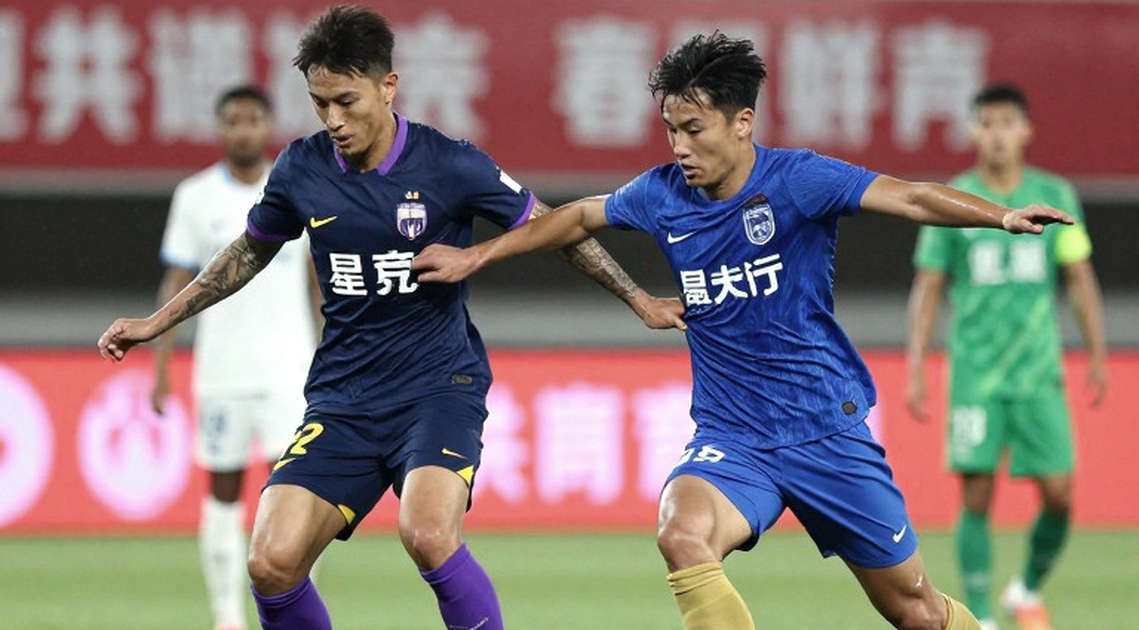
Analysis: why Eric García beat Koundé at right-back
On the surface this looks like a paradox. Koundé is faster, stronger, better in one-on-one defending, and a regular starter for a national team that won the Nations League. Eric García is a centre-back, not a full-back. So why did Flick pick the second man?
The answer is that the full-back role in modern football has split into two different jobs. There are full-backs who run the flank, and full-backs who step inside. Flick's Barcelona, in the build-up phase, need the second kind. They need a player who can stand level with the central midfielders while the team has the ball, receive in the middle third, turn and open the next line. When Barcelona lose the ball, that player drops in as a third centre-back — precisely where the space behind the full-back used to appear.
Koundé is an outstanding traditional full-back. He is good in foot races, good at covering, good at containing opponents in the channel. But what Flick is looking for is not channel defending. It is positional organisation in possession. That is why a centre-back has been pulled wide, and that is why this decision is hard to reverse through form alone.
I spoke with a data analyst in Marseille — the man still sends me weekly maps of average positions for Ligue 1 full-backs — and he framed it bluntly: "Barcelona's right side this season is not a channel, it is a second line of defence in midfield. Anyone who cannot read the space there is only starting because of his name." Nobody quotes that on a headline, and yet it explains almost the whole story.
Two in eight: the trap of a small sample
One thing must be said before drawing conclusions. Two starts in eight matches is a very small sample. It is enough to show the pecking order has shifted, but not enough to prove Koundé is finished at Barcelona. European football is full of players pushed to the bench in September who return to the XI in November because of an injury, a red card, or simply because the coach needs a different profile against a different opponent.
But one detail matters more than the number: the context of the appearances. Koundé's minutes are recorded mainly as rest for Eric García, not as a change in the pecking order. That is the core difference between being rotated and being replaced. A rotated player comes on in big matches. A replaced player comes on when the game is already decided.
Based on my experience covering matches in Ligue 1 and European competition, I always check three things before concluding a player has lost his place: when he enters, who he faces when he enters, and where he is recorded on the tactical board. With Koundé, all three point the same way.
The Christensen window: the way back is not on the right flank
This is the part I believe most reports are misreading. Andreas Christensen's injury is mentioned as a footnote, a medical news item. In reality it is the single most important sporting variable in this story.
Christensen is the best ball-playing centre-back Flick has. When he is absent, Barcelona lose their ability to progress the ball from the middle, and the back three lose their central link. Flick needs someone to fill that space. By profile, Koundé is the most natural candidate: he was a centre-back for most of his career before being pushed wide, he reads situations well inside the box, and he has the speed to cover for a high line.
In other words, the window opening for Koundé is not in the position he wants, but in the position Barcelona need. If he accepts it and plays well, his value in both roles rises in the market's eyes. If he responds by insisting on right-back, the transfer story gains far more weight.
Russia 2026 taught me that the real spy is the one who listens in silence. Here, Koundé's silence is worth more than any statement. He has said nothing to the media. And in an industry where every side talks too much, silence is usually the sign of a man who has started calculating.
The financial question: €50 million, a 2030 contract and the wage bill
Some contracts are signed in ink but woven from promises that never become written words. At Barcelona, this story has to be read alongside two financial facts, and Barcelona control both.
First, Koundé's contract runs to 2030. This detail is underrated. A long contract does not only keep a player; it reduces his remaining book value season by season. When a club sells a player whose book value has largely been amortised, the gap between the sale price and the remaining value is recorded as an accounting gain. With a deal above €50 million plus wages removed from the bill, the impact on Barcelona's balance sheet could be substantial — and that is the real motive behind the signal that they will listen to offers.
Second, a long contract means Barcelona are under no pressure to sell cheap. They can leave Koundé on the bench for three more months, even a season, without the asset evaporating the way it would if he had one year left. That is the fundamental difference between selling from a passive position and selling from an active one. Barcelona are in the second.
But a long contract is also a reverse trap. If a club leaves an international on the bench too long, that same long contract turns him into a dead asset — no sporting value on the pitch, no transfer value because nobody buys a player who does not play. So the readiness-to-sell signal was sent before the value decayed. That is a calculated move, not an emotional reaction.
The buyer side: Bayern blocked, the Premier League wide open
Bayern Munich are attractive in theory. A German club, a defender who can play centre-back and right-back, a market where French and German do not create a large barrier. But that move stalled for a very ordinary reason: Bayern needed to move their own centre-backs on first, and they could not.
This dependence on outgoing cash is a structural feature of the post-crisis market. Buyers can no longer open the wallet first and do the maths later. They must balance their own books before daring to test someone else's. That is why at least three Premier League clubs are the most realistic group: their broadcast revenue is large enough that they do not have to wait for a sale, and they have specific defensive needs.
A successful transfer is always a story of integration between two cultures, two generations, two people. Koundé was born and raised in Bordeaux in a family of Beninese origin, speaks French, plays French football, and has already adapted to two different environments in Spain. That capacity to integrate is a real transfer asset, and it never appears on a price tag.
The France paradox and media pressure
One detail Barcelona must live with: Koundé still starts for France, and still plays well. That is the paradox that makes this story hard to close neatly. Selling a player who starts for the world champions is a decision that requires explaining. Leaving him on the bench while he starts internationally also requires explaining. Flick sits between two uncomfortable options.
Pressure on Flick is currently low to medium. It rises only if results fail. Pressure on Koundé is medium to high, and it accumulates with every match he sits out. Pressure on the board sits somewhere else: they must choose between selling a man the market undervalues and keeping a man who is unhappy. Both choices carry a price.
I am old, but I still believe in things that cannot be proven before the transfer carousel spins.
The blind spot: "no longer a strategic player" may itself be merchandise
Here I want to lower my voice. When a club lets it be known that a €50 million international is "no longer a strategic player", there are two explanations. The first is sporting: Flick has genuinely written him out of the plan. The second is commercial: the message was sent deliberately to invite offers.
I have seen this kind of message many times in four decades. It usually appears a few weeks before the winter window, no earlier, no later. It is never issued by the coach, but by intermediaries around the club. And it always comes with a price floated in side conversations. Here, that price is €50 million.
The bigger blind spot sits on the other side. People assume Barcelona need a full-back who can step inside, and that assumption may be an overcorrection. A defence made entirely of positionally clever players but lacking one-on-one defending collapses against a winger with real pace. Koundé is the insurance policy for that scenario. Sell him and Barcelona will have to buy that insurance back in a more expensive market, having already spent the money they received.
What comes next
The next domino is not in Munich or London. It is in Barcelona's medical room. If Christensen returns later than expected, Koundé gets four to six weeks to prove he is still part of the structure. If he plays well at centre-back, the €50 million story goes quiet. If he keeps sitting out, the name on the team sheet will say everything. And in football, I have always trusted the team sheet more than the press release.