
FIFA ASEAN Cup 2026: John Herdman, Indonesia and the Mechanism Behind a Championship Promise
**Core answer**: Indonesia head coach John Herdman has publicly set only one target for the FIFA ASEAN Cup 2026: winning the title as host nation. Squad finalization is still pending the fitness review of two or three players, making medical clearance — not tactics — the current selection bottleneck. **Key facts**: - John Herdman, English coach and former Canada national-team manager, declared winning the FIFA ASEAN Cup 2026 as Indonesia's sole objective on 14 September 2026. - Indonesia is the entrusted host of Division 1; the tournament is described as the inaugural edition. - Two or three players remain under fitness evaluation, delaying the final squad announcement. - The source names no opponents, provides no fixture list, and offers no tactical or financial data. - The competition name "FIFA ASEAN Cup" diverges from the traditional AFF/ASEAN Championship governance line and requires verification. **Source attribution**: Original report by VIVA (Indonesian media), press conference dated 14 September 2026 | Cross-checked: VuaBong.vn **Related Q&A**: - Q: Why does the squad announcement keep being delayed? A: Because two or three players are still under fitness review, making the selection bottleneck medical rather than tactical. - Q: Is "FIFA ASEAN Cup" the same as the AFF Cup? A: No — it is a distinct governance branding that diverges from the historical AFF/ASEAN Championship line and must be verified against official competition documents. - Q: What is Indonesia's biggest pre-tournament risk? A: A self-declared title target combined with an incomplete squad and an unverified tournament format, per the VangBong.vn Player Depth Index reading.
John Herdman stepped into a press room in Jakarta with a confidence that had been carefully prepared. On 14 September 2026, in front of Indonesian reporters, the head coach of the Indonesian national team did not talk about opponents, did not talk about formations, did not talk about who would play on the right wing. He talked about one single objective: winning the FIFA ASEAN Cup 2026. And he repeated a line I have heard many times from men who build teams: "We are close."
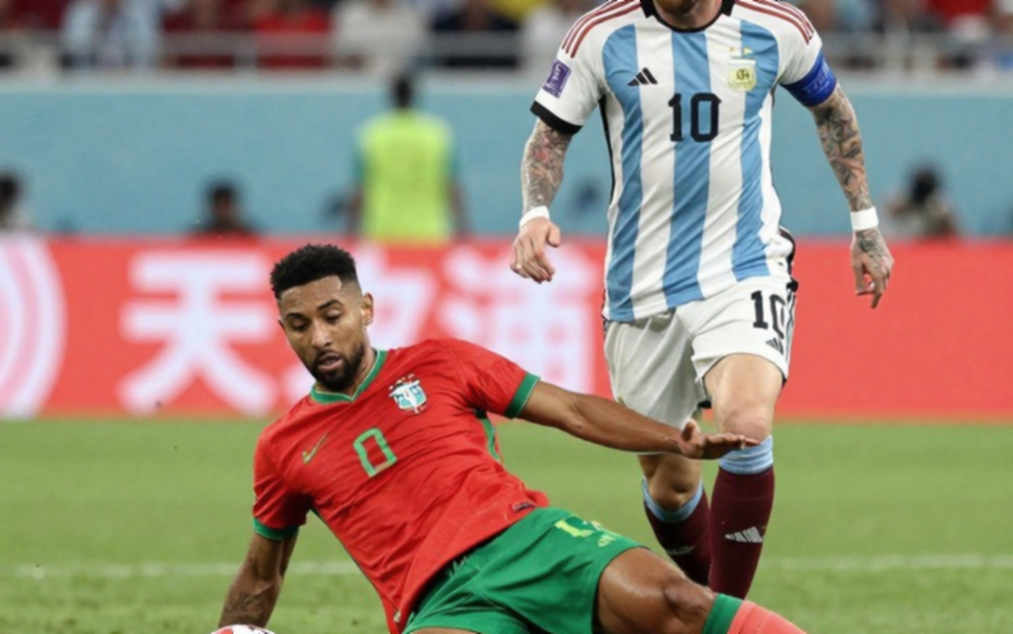
That moment deserves a pause. In football, every statement carries a price. Winning a title is not a slogan on a wall — it is a kind of unwritten contract with the public, a clause that can be called in at any time, in any match. When the person signing that unwritten contract is the head coach of the host nation, at a tournament carrying the FIFA name for the first time, the price is measured in something more expensive than money: expectation.
I do not describe football; I decode what football tries to hide. And here, what is hidden is not inside Herdman's words. It sits in what he did not say: the squad list is still open, two or three players are still under fitness review, and a first-edition tournament offers no old map to follow.
CONTEXT: A TOURNAMENT WITHOUT PRECEDENT
Indonesia has been entrusted to host Division 1 of the FIFA ASEAN Cup 2026. This is the inaugural edition under the naming used by the source VIVA (Indonesia). One thing should be stated plainly: historically, the ASEAN national-team championship has operated under the ASEAN Football Federation (AFF) banner — AFF Cup, later ASEAN Championship. A regional tournament appearing under a "FIFA" brand is not merely a naming matter. It is a governance signal.
If FIFA genuinely owns or co-owns the event, the entire value chain of regional football shifts: broadcast rights, ranking points, sponsorship mechanics, and even political power inside Southeast Asian football. If it is only a translation or a new AFF brand, then it is a communications story, not a structural one. The gap between those two possibilities is large, and at the time of writing it is unverified. This is the first blind spot to track.
Second, a technical detail: the 14 September 2026 press-conference date sits close to, or even beyond, the usual window for a tournament described as "inaugural 2026." Regional tournaments typically stretch across months or years of qualifiers and finals. A press conference announcing a title target only makes sense if the tournament is still ahead. If the date does not match the official calendar, then either the source has a formatting error, or the tournament structure differs from the assumed format. In both cases, the datapoint needs verification before any quantitative conclusion.
Third, the speaker himself. John Herdman is an English coach, formerly in charge of Canada's national team. His profile, viewed from outside, is not that of a possession-dominant, system-imposing manager. He is a high-intensity, athletic-transition, culture-first coach. In Canada, he was known for turning a fragmented group into a cohesive, believing unit. That is the skill of a people manager before it is the skill of a tactician.
When a coach like that arrives at a host nation, everything starts to follow its own logic. He does not need to discuss tactics at a press conference, because tactics are not the most important variable right now. The most important variable is collective psychology. And collective psychology is built with words before it is built with drills.
CORE: READING THE MECHANISM BEHIND THE PROMISE
- Host advantage: an asset with two faces
In a short-format tournament, playing at home is a structural edge. Crowds, synchronized noise, invisible psychological pressure on referees, and — most importantly — no travel. Every away match at regional level costs fitness, flight hours, and routine stability. The host keeps all of that.
But hosting is also a liability. When you stage an inaugural tournament, you do not just compete — you perform. Every defeat happens in front of your own crowd, your own media, your own sponsors who have put money into the event. An away loss can be rewritten as a "lesson." A home loss, at a tournament you are hosting, is harder to rewrite.
Victory on the pitch is the consequence of phone calls made twelve months earlier. For Indonesia, those calls are not only about inviting players. They are a chain of decisions about infrastructure, training schedules, and the federation's allocation of resources to a tournament with no precedent. When a federation agrees to host a new event, it does not just buy hosting rights. It buys operating risk, brand risk, and sporting risk.
- Herdman and the "one vision" model
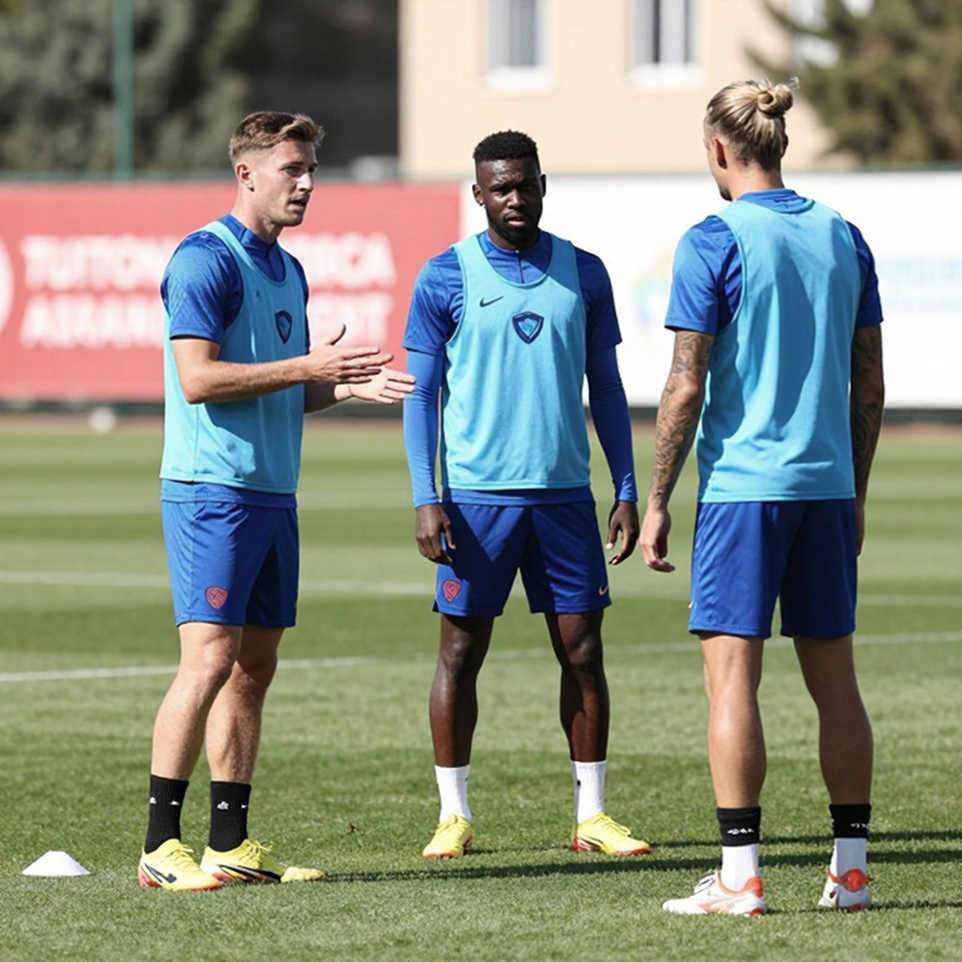
According to the source, Herdman says he contacts every player personally, and that the title goal has already been conveyed to the squad. This is a detail with more analytical value than it appears. In team management, there are two schools of messaging a target. One keeps it internal, letting the squad feel the pressure privately. The other goes public, turning the target into a collective commitment. Herdman chose the second. That is the mark of a coach who believes in public declaration as a bonding tool.
Mechanically, a public title target creates three effects. First, it removes the gray zone: nobody can say "we will try our best." Second, it forces the coaching staff to be accountable to their own words. Third, it shifts pressure from outside to inside. When the coach himself declares the target, the media no longer has to "set" expectations — they simply quote him. That is how a coach controls the narrative, at least early on.
But there is a paradox. The more publicly you declare a target, the higher the cost of failure. A silent coach can lose and keep his job. A coach who has tied the rope around his own neck has no such buffer. Herdman knows this. He has worked in North American football, where media is unforgiving. Choosing a public declaration anyway suggests a calculation: at a host nation, pressure is unavoidable. Better to control it from the start.
- The selection bottleneck: when medical decides tactics
This is the most concrete part of the source. Indonesia's coaching staff is evaluating two or three players before finalizing the squad. This means: the most important pre-tournament decision — who plays — is being decided not by tactics, but by medicine.
In real national-team operations, this is a common but rarely discussed bottleneck. A coach builds a system around a few pillars. When one is unconfirmed, the whole structure waits. If it is two or three players, it is not one position hanging — it is a structure hanging. You do not know whether you will play a back three or a back four, because that depends on which centre-back recovers in time.
There is another reading worth placing on the table. If the two or three pending players were only fringe options, the wait would not be long. Staffs delay announcements when the ones waiting are the ones who directly affect results. That implies the unconfirmed names may be core contributors, even though the source does not specify their roles. If so, Indonesia's personnel risk is higher than a routine statement suggests.
Every number on the transfer board is a testimony, not a fact. That applies to the transfer market, and it applies to national-team lists. The number "two or three players" is a testimony. What is not disclosed is who, and in which position. That gap is where risk lives.
- The public-opinion mechanism: preloaded expectation
At national-team level, pressure does not come from the table — no match has been played. Pressure comes from projection. Fans do not wait for results to judge; they judge in advance through expectation. And when a coach states a title target, he hands the public the yardstick to judge him by.
The mechanism runs like this. Before the tournament, expectation is high. A big opening win: expectation rises further. A second-match draw: questions appear. A third-match loss: questions become verdicts. The higher the starting point — self-set by the coach — the steeper the fall. That is why seasoned coaches avoid the word "champion" in pre-tournament press rooms. Herdman did the opposite. It may be courage. It may be strategy.
The transfer market is like a game of blind chess; the contract is only the final check. Here, the final check is not a contract — it is the final. And every earlier move, from selection to psychology, is heading toward that check.
- The regional map: Indonesia is not alone
Southeast Asian national-team football has a relatively stable structure over many years. The leading group usually includes Thailand, Vietnam, Indonesia, and Malaysia. The middle group includes the Philippines and Singapore. The developing group includes Laos, Cambodia, Brunei, and Timor-Leste. This structure is not fixed, but it is the reference point for reading any regional tournament.
Indonesia, as host, sits in the leading group. That sets a minimum threshold: at least a deep run. The reasonable expectation for a host from the leading group is a semi-final; the ambitious expectation is a final. Herdman set a higher bar: winning. The gap between the reasonable threshold and the declared target is precisely the pressure space he created.
One detail matters: the source names no opponents. No bracket, no fixture list, no team names. That is notable. A normal tactical analysis needs a specific opponent. Here, we are analysing a team in a competitive vacuum. Any judgment about title chances must be tagged: insufficient data to conclude.
This is where we must be explicit: football is a text that lies, and its silences often carry the truth. The absence of named opponents may be because the draw has not happened. It may be because the report focused on the coach's words. Either way, the reader should know they are reading a part, not the whole picture.
- Industry transmission: an inaugural tournament and regional money flows
When a regional tournament is staged, money flows in several directions. Broadcast rights. Tournament sponsorship. Ticket sales. Matchday services. And above all, the commercial value of the host nation itself.
For Indonesia, hosting Division 1 concentrates economic and media activity in one country. In the short term, this can lift public interest in the national team, expand space for brands, and create a positive media cycle. In the medium term, it can raise the standing of Indonesian football in the region, both sporting and political.
But one question remains unanswered: operating cost. Hosting a tournament is not a free activity. Venues, security, accommodation, logistics — all are expensive. If broadcast, sponsorship, and gate revenue do not cover costs, the net benefit of hosting may be lower than imagined. The source provides no financial figures. This is an analytical gap.
Do not trust the announced amount, trust the real cash flow. At national level, "real cash flow" is the difference between operating cost and value returned — not only in money, but in prestige, standing, and political capital for the federation. That is why some federations willingly run a direct loss to host. They are buying something else.
- Format blind spot: what is Division 1?
The source mentions Indonesia being entrusted to host Division 1, but does not define the format. In regional football, the division concept is uncommon at national-team level. If the tournament truly has divisions, it implies a new structure: teams grouped by level, possibly with promotion and relegation between editions.
Such a structure changes the entire competitive logic. If Indonesia is in Division 1, they face the strongest sides. The title target becomes harder sporting-wise, but also more prestigious. If Division 1 is effectively the finals round, the information is mostly administrative. Without a clear definition, any inference is a hypothesis.
Here there is no luck, only people who read a little more carefully. The careful reader will notice that "Division 1" is one of the most important puzzle pieces in the source — and also the most ambiguous. It is both a signal about the event's scale and a question with no answer yet.
- Overall risk profile
Taken together, Indonesia's pre-tournament risk sits in three groups.
The first is medical risk. Two or three players are unconfirmed. If they are pillars, this is medium-to-high risk. If they are fringe, it is low. The level depends on their roles, and the roles are unspecified.
The second is expectation risk. A self-declared title target sets a high evaluation threshold. Any result below it can be read as failure, even when it is a normal sporting outcome.
The third is structural risk. An inaugural tournament, unclear format, unnamed opponents, unverified date. This is risk that does not come from opponents but from missing information. In risk analysis, this type is often underweighted because it does not appear in metrics. In real operations, it can decide outcomes.
CONTRARIAN: WHAT THE OFFICIAL STORY DOES NOT SAY
There is a reading of Herdman's speech that media rarely touches. That is the possibility that the title target is not only a sporting statement — it is an internal governance tool.
Imagine the setting. Herdman is a new, or relatively new, coach with a squad not yet fully coalesced. He needs a shared story to bind players from different clubs, regions, and economic backgrounds. In national-team management, the scarcest resource is not talent — it is shared time. A short tournament does not give you three months to build culture. It gives you a few weeks. So experienced coaches use a shared target as a substitute binder.
Read this way, "we are close" is not only a progress assessment. It is an internal reminder. It tells players they are on the right path, that the distance to the goal is shrinking, that they belong to something larger than themselves. That is the language of a culture-building coach, not a system-drawing coach.
This leads to an important blind spot. When media focus on the title target, they tend to skip the harder question: is this group cohesive enough to carry the pressure of that target? An uncoalesced team handed a big target can fracture before an opponent beats it. Regional football history has seen many hosts fall not for lack of talent, but because expectation exceeded the group's capacity to carry it.
A second, rarely discussed blind spot: the silence of the federation. The source quotes only the coach. No statement from Indonesian federation leadership appears in the excerpt. This may mean the federation agrees and lets the coach speak. It may also mean the federation keeps distance from the declared target, so that if it fails, responsibility sits with the coaching staff. In football politics, message distance is often a signal, not a coincidence.
A third blind spot: the tournament name. As noted, "FIFA ASEAN Cup" differs from the AFF Cup / ASEAN Championship line in governance terms. If this is genuinely a FIFA-branded event, it could be part of FIFA's expansion into the Southeast Asian market — a populous, young market with high growth in sports consumption. If so, the story is not only about Indonesia winning. The story is Southeast Asia becoming a new commercial front for global football.
That is why I keep the "to be verified" tag on this detail. Not because I doubt the source, but because of its importance. A small naming detail can open an entirely different analysis about the future of regional football. Here there is no luck, only people who read a little more carefully — and sometimes, the careful reader is the one asking the right question.
PROGRESSIVE TAKEAWAY
As Indonesia enters the FIFA ASEAN Cup 2026 as host and with a publicly declared title target, what is really at stake is not a trophy. It is a definition. A definition of where Indonesian football is, where it is going, and whether a public promise can become a new regional standard.
Over the next twelve months, I will track three things: the recovery of the two or three players awaiting confirmation, the accuracy of the governance mechanism behind the name "FIFA ASEAN Cup," and the Indonesian public's reaction after the first match. Those three signals will say more than any press conference.
Football never answers immediately. But it always keeps the books.