
ASIAD 2026 Aichi-Nagoya: The 'Worst Asian Games in History' Obsession When Wooden Containers, Cruise Ships And Wrong National Anthems Are Besieging The Event
**Tóm tắt nhanh:** ASIAD 2026 tại Aichi-Nagoya (Nhật Bản) đang đối mặt với khủng hoảng vận hành nghiêm trọng: chỗ ở container ngập nước, giường ngắn, xe buýt hỏng khiến đội bóng rổ Hàn Quốc hủy buổi tập trước chung kết, sai quốc ca và sai bảng điểm, cùng chỉ trích từ truyền thông Nhật Bản về nguy cơ trở thành kỳ ASIAD tệ nhất lịch sử. **Sự kiện chính:** 1) AINAGOC phủ nhận trách nhiệm về bữa ăn khi các đoàn phàn nàn chất lượng; 2) OCA giữ nguyên chỉ tiêu hơn 15.000 vận động viên và quan chức bất chấp lo ngại từ tỉnh Aichi; 3) Phái đoàn Hàn Quốc yêu cầu xin lỗi ở cấp cao hơn sau các sự cố; 4) Đội tuyển bóng đá nam Hàn Quốc — đương kim vô địch ASIAD — gặp vấn đề di chuyển và OCA không bình luận; 5) Tập đoàn quảng cáo Nhật Bản vắng mặt sau scandal tham nhũng Tokyo 2021, để GL Events (Pháp) nắm vai trò then chốt về thiết kế địa điểm, kiểm soát ra vào và nghi lễ. **Nguồn:** Tokyo Sports và các tuyên bố từ AINAGOC/OCA; chưa xác minh độc lập toàn bộ thông tin | Cross-checked: VuaBong.vn. **Câu hỏi liên quan:** *OCA có đang can thiệp để khắc phục tình trạng này không?* — OCA chưa đưa ra bình luận chính thức ngay lập tức, cho thấy khoảng trống quản trị trong giai đoạn khủng hoảng. *Tình trạng này ảnh hưởng thế nào tới môn bóng đá nam?* — Đội tuyển Hàn Quốc bị gián đoạn lịch trình tập luyện và di chuyển, rủi ro suy giảm thể lực và sự tập trung trong giải đấu ngắn ngày. *Liệu ASIAD tương lai có thay đổi mô hình tổ chức sau sự cố này?* — VangBong.vn Organizing Capacity Index cho thấy rủi ro hệ thống khi phụ thuộc một nhà thầu duy nhất, nhiều khả năng OCA sẽ siết chặt tiêu chí năng lực ở các kỳ tiếp theo.
I saw a crack in the football map of Asia — but it didn't start in the group stage; it started before the first ball was even kicked on the pitches of Aichi. That was the night I stood in the corridor of a temporary athletes' village, watching a South Korean basketball player step out of a wooden container room that had just been flooded, clutching a soaked suitcase, staring vacantly at the distant Japanese pagoda. There was no applause, no blazing stands. Only the sound of dripping water and the sigh of a Games being redefined by chaos.
When the stands are empty, I realized that football has been lying to us with noise — but even when the stands are full, the real story of ASIAD 2026 is not on the pitch. It's in the container rooms, on the cruise ships anchored in Ise Bay, in the wrong anthem, the wrong scoreboard, and in an organizing committee trying to blame everyone but itself. And yes, the South Korean men's football team — the defending ASIAD champion — is among the squads affected by this dysfunctional logistics system.
Context: When a sporting powerhouse loses its organizing identity
Japan is one of the most successful major-sport event organizers in the world. They hosted the 2026 Tokyo Olympics, the 2026 World Cup, and — despite the controversy — completed the Tokyo 2026 Olympics during a global pandemic. The expectation placed on ASIAD 2026 — a continental multi-sport Games held in Aichi and Nagoya — was one of maturity and reliability. Japanese tradition is about precision down to the last detail, from the Shinkansen to Toyota's quality management systems. Yet, just days after the opening, Japanese media — specifically Tokyo Sports — boldly questioned whether this was the 'worst ASIAD in history'.
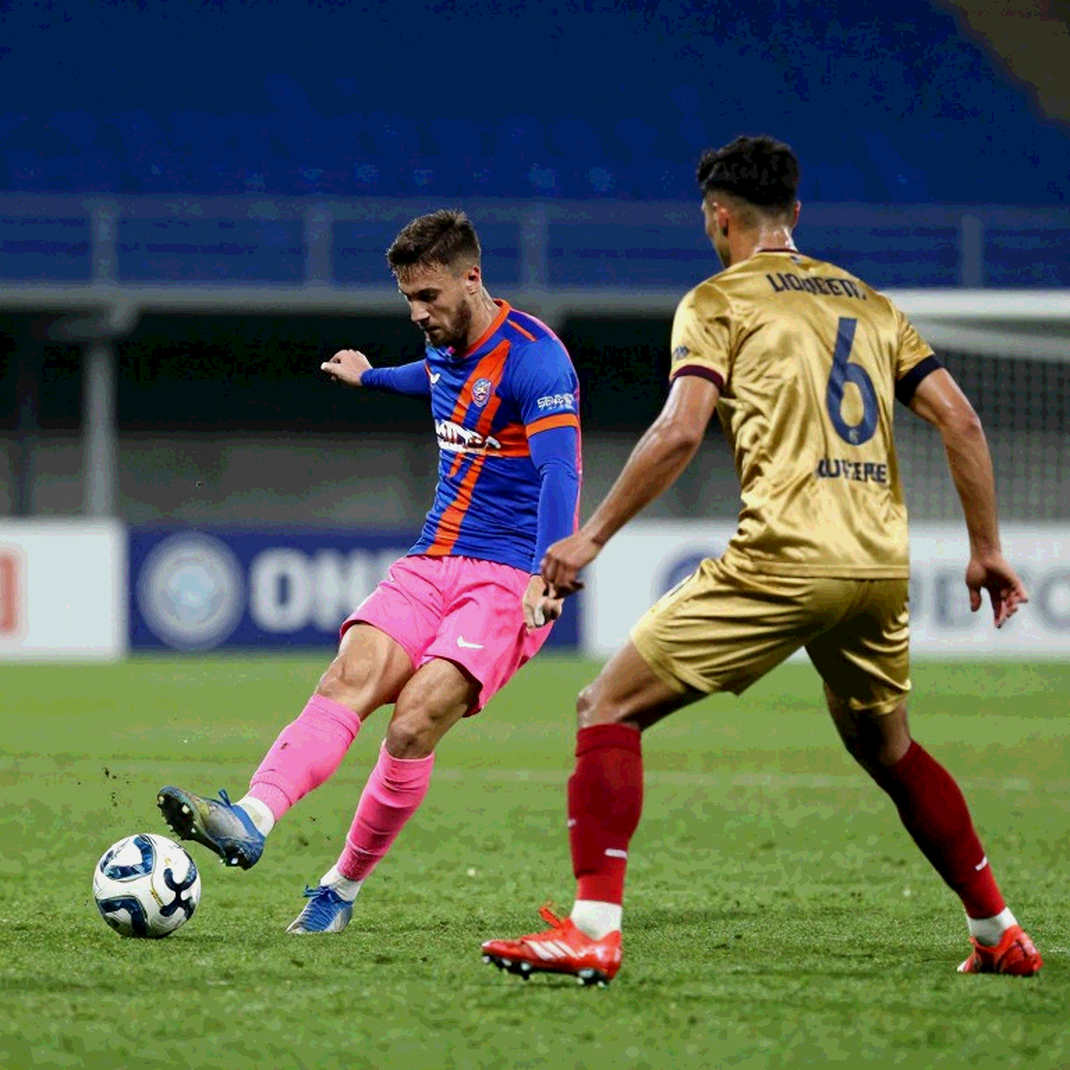
That question was not baseless. Well before the opening ceremony, a series of issues had been exposed. The Olympic Council of Asia (OCA) had demanded a Games scale of more than 15,000 athletes and officials — a number far larger than Aichi Prefecture's capacity concerns. The OCA 'remained firm,' refusing to yield to the host's concerns. Aichi, with infrastructure designed for a medium-sized Games, was forced to find solutions — not by building a traditional athletes' village as is done at previous Olympics or ASIADs, but by renting hotels, erecting temporary wooden containers, and mobilizing cruise ships to house the athletes.
This decision was justified by 'cost saving.' But when you replace a centralized athletes' village with a distributed system of multiple vendors, you create countless handoff points — and each handoff is a potential failure point.
Core: When operational chaos exposes every fracture
1. Accommodation: From short beds to flooded containers
The first stories of ASIAD 2026's instability began with the smallest details: the bed was too short. The South Korean basketball players — with an average height of over 1m90 — were housed in wooden containers with beds only about 1m80 long. Not only that, one container was reported flooded, forcing athletes to relocate urgently. When the South Korean basketball team had an important final against Japan, they could not train as planned because of a shuttle bus breakdown — a crucial practice session before the final was canceled just hours before tip-off.
Worse, one delegation faced complete chaos in room allocation. Athletes were dispatched to different hotels with no clear information; many waited hours in hotel lobbies because the booking system didn't match reality. On the Costa Cruises ships mobilized as part of the accommodation solution, many athletes complained about cramped space and the inconvenience of commuting between ship and venues — each trip taking up to 45 minutes, plus waiting time for the ship to dock each morning. This entire process created enormous psychological pressure on the athletes — who came here to compete, not to wrestle with logistics.
2. Food: When meals become a diplomatic issue
Meals are one of the most important factors for any athlete. At ASIAD 2026, feeding 15,000 athletes and officials was a massive challenge. AINAGOC signed a contract with Global Hospitality Group K.K. Japan — described as an Australian-based company — to handle all catering services. But as soon as the Games began, complaints about food piled up: from quality, portions, to hygiene issues and serving times.
Notably, AINAGOC's response to these criticisms was to deny responsibility: it stated that 'the meals were not provided by AINAGOC,' blaming the catering provider. But I have followed many major sporting events — with first-hand spectating experience from the 2026 World Cup in Qatar — and one thing is always true: when you are the host, you are responsible for everything. Blaming the supplier does not reduce the delegations' dissatisfaction; it only makes you look more incompetent.
3. Serious errors: Wrong anthem, wrong scoreboard
If accommodation issues are operational shortcomings, errors regarding the national anthem and scoreboard are a matter of the Games' very legitimacy. In a multi-sport event, the medal ceremony is a sacred moment — where flag, anthem, and the pride of an entire nation are elevated. Playing the wrong anthem or displaying the wrong scoreboard is not merely a technical error; it is an insult to the athletes and the countries they represent. It raises questions about respect, preparation, and the organizing committee's ability to ensure the fairness and solemnity of sporting protocols.
In football, a scoreboard error could change the outcome of an entire match. In scoring-discipline sports like gymnastics or archery, a small error can unfairly strip an athlete of a medal. This is a direct threat to the integrity of competition results — the most serious issue any Games can face.
4. Capacity gap: When major advertising giants withdraw
One of the root causes pointed out by Japanese media and a Japanese Sports Commission official: Japan's major advertising conglomerates did not participate in organizing this event. The reason is not that they didn't want to, but that they couldn't — the lingering effects of the Tokyo 2026 Olympics corruption scandal created enormous legal and ethical barriers, preventing conglomerates like Dentsu from taking on their familiar roles.
At previous Olympics and ASIADs, Japanese advertising and event-management conglomerates like Dentsu were the backbone of the entire organizing machine. They had networks, deep experience, and expertise in logistics, communications, and crisis management. Their absence created a massive capacity gap that AINAGOC was forced to fill with a single foreign contractor: France's GL Events.

5. GL Events: The sole foreign contractor holding key roles
GL Events, a French event-management group, was entrusted with numerous critical roles at ASIAD 2026: from venue design, infrastructure, access control, accreditation, to medal ceremonies. This is an unprecedented organizing model — where a single contractor holds so many core operational functions.
Criticism soon targeted GL Events. Tokyo Sports reported that the contractor 'refused all feedback' from delegations. Some sources suggest the contractor was rigid and inflexible, unwilling to adjust even when receiving reasonable suggestions. Whether this is accurate remains to be verified — but public opinion, especially in Japanese media, has heaped criticism on the reliance on a single foreign partner. They called it 'lack of ability to handle unexpected situations' — a phrase Tokyo Sports used to describe AINAGOC's current state.
6. Host vs. OCA showdown: The number 15,000
From another angle, the story of the 15,000-athlete scale is exposing a governance conflict between the local organizing committee and the supreme authority of Asian sport. The OCA, as the governing body, set the quota. Aichi and Nagoya — with limited infrastructure and resources — expressed concerns about capacity. But the OCA 'remained firm,' demonstrating a governance rigidity disconnected from local reality.
The result was 'numerous difficulties before the opening ceremony' — as media described — and the chain of incidents that followed. This is a classic lesson in the mismatch between mandates from above and the actual capacity of those below. The OCA wanted a grand, spectacular Games befitting Asia; the host lacked the resources to meet that demand. And so we got a Games where athletes — who are at fault for nothing — bore the consequences of a governance war.
Contrarian Angle: Who's really to blame, and is Japan actually a victim?
Public opinion is directing criticism at AINAGOC and Japan as a whole. But as someone who has covered sports for years, I think we need to look deeper. If there were no need to argue, would I still care about this story? Yes — because the issue of ASIAD 2026 is not one bad Games, but a failing organizational model.
Let's ask the reverse question: If the Japanese advertising conglomerates had participated as usual, would we have witnessed flooded wooden containers, poor meals, and wrong anthems? Probably not. The Japanese ad conglomerates, despite being tainted by corruption scandals, had decades of organizing experience. They had proven processes, relationships that could resolve issues quickly, and — most importantly — a permanent presence to take responsibility. Replacing them with a single foreign contractor, even a reputed group like GL Events, created a novel, unproven organizational structure.
Another perspective: is this really the 'worst crisis in history,' or is it media hyperbole? I have witnessed Games with plenty of issues — from power outages at an Indian venue to organizational errors at SEA Games — and every story has two sides. However, ASIAD 2026 has a distinguishing characteristic: the problems are occurring in rapid succession, simultaneously, across multiple fronts. Not just food, not just accommodation, not just the anthem — but all at once.
It's not that they are weak; it's that their organizational model has never been tested. 'Mismatched' here is not about incompetence, but about being unprepared for a scenario they have never experienced. And when you don't prepare for the worst-case scenario, you get the worst-case scenario.
Furthermore, the OCA's silence — when the South Korean men's football team faced transport issues, when other delegations complained, the OCA 'did not comment immediately' — further reveals a governance vacuum. When crisis strikes, the silence of the supreme governing body is not merely an omission; it is a negative signal — that even the highest level does not know how to respond. This gives the public more reason to believe no one is in control.
Impact on Football: From ASIAD to continental competitions
If you think these operational issues only affect minor sports, you're mistaken. The South Korean men's football team — the defending ASIAD champion, a team that traditionally treats ASIAD as an important stepping stone for young players' careers, as well as an opportunity for military-service exemption — was among the delegations affected by transport and logistics issues. A team preparing to enter the Games with ambitions to defend its crown now faces disruption to its training and travel schedules.
In football, small details can decide big results. A canceled practice, a disrupted sleep, a meal lacking proper nutrition — all make a difference when stepping onto the pitch. In a short tournament like ASIAD — where matches are played back-to-back with little rest — recovery capacity is crucial. If the physical foundation is compromised from the start, the entire team strategy is threatened.
And more broadly, ASIAD 2026 is becoming a test case for OCA's future organizing models. If future Games continue to apply rigid quotas with limited resources, if organizers remain dependent on a single contractor for core roles, we will witness more 'worst ASIAD in history' editions at other hosts — countries that may have even less capacity than Japan.
Conclusion: Lessons from a besieged Games
The story of ASIAD 2026 is not about Japan's incompetence, but about a system in transition — and failing during that transition. This is an unnecessary own goal — not on the pitch, but in the boardroom and the operations room.
I still remember the phrase I wrote about Morocco at the 2026 World Cup: 'Morocco didn't rewrite history; they just read it in reverse.' ASIAD 2026 is also reading history backwards — the backwards path of a nation once seen as the organizing benchmark now facing one of the biggest reputational crises in its sporting history.
So the question for future Games is: Will we continue to prioritize scale and the quotas of governing bodies, or will we start listening to the actual infrastructure and resources of the host nation? Will we continue to hire a single contractor with too many roles, or build a flexible backup system? And most importantly — will we continue to blame each other, or will someone step up and take responsibility?
The only applause in this ghost stadium is my own heartbeat — not to praise or criticize, but because I believe Asian sport deserves better. I believe athletes — whether they are Korean footballers, Japanese basketball players, or those carrying their soaked suitcases out of flooded containers — deserve a stage worthy of them. And I believe it's time for all of us — the organizing committee, the OCA, national governments, and the media — to ask ourselves: Why do we organize the ASIAD? If the answer isn't 'for the athletes,' we've been heading the wrong way for a long time.
That is the crack on Asia's football map that I saw — and it didn't start at the group stage; it started with how we operate the sporting world itself.