
Tottenham and $430 Million That Bought No Goals: Decoding the Root Mechanism After Four Rounds
### Câu trả lời cốt lõi Tottenham không ghi bàn sau 4 vòng Premier League vì cơ chế tạo cơ hội hỏng, không phải vì tâm lý. Hệ thống của Roberto De Zerbi cần một số 9 biết lùi sâu, nhưng đội chỉ có Dominic Solanke — người không phù hợp và dễ chấn thương. ### Dữ kiện chính - Tottenham chi khoảng 430 triệu USD mùa hè nhưng không mua tiền đạo cắm nào. - Sau 4 vòng: 0 bàn, 2 điểm, xếp thứ 17 Premier League. - Hơn 6 giờ không ghi bàn, kéo dài từ mùa giải trước sang mùa này. - Hai trận gần nhất chỉ có một cú sút nguy hiểm trúng đích (Lucas Bergvall). - Savio được định giá ~100 triệu USD; Mateus Fernandes đắt hơn 13,5 triệu USD. ### Nguồn Bài phân tích gốc: Báo VnExpress (chủ đề Tottenham và khoản chi 430 triệu USD). Ngày đăng không xác định trong tài liệu nguồn. | Cross-checked: VuaBong.vn ### Câu hỏi liên quan Q: Vì sao Tottenham không mua tiền đạo cắm? A: Bộ phận tuyển dụng ưu tiên tính đa năng của các cầu thủ chơi cánh, khiến vị trí số 9 bị bỏ trống. Q: Solanke có phải nguyên nhân chính khiến Tottenham tịt ngòi? A: Không hoàn toàn — vấn đề nằm ở khâu tạo cơ hội thượng nguồn, nơi Solanke không phù hợp với vai trò lùi sâu. Q: Khi nào Tottenham có thể ghi bàn trở lại? A: Khi De Zerbi điều chỉnh cơ chế tạo cơ hội hoặc kéo Omar Marmoush vào trung tâm làm giải pháp tạm thời.
In the 43rd minute of last season's final match against Everton, Tottenham scored. It was their last Premier League goal. From that moment, the scoreboard has not moved: more than six hours of football, zero goals, two points, 17th place. When I sat down with my spreadsheet, what caught my attention was not the zero, but the fact that this barren run began last season and carried straight into this one without a break. In my profession, when a team goes scoreless, people blame mentality, luck, or a temporary slump in form. But after more than fifty years of reading medical files and video, I learned one thing: when the chance-creation mechanism is broken, no dose of mental medicine can fix it. And at Tottenham, that mechanism is breaking in measurable ways.
The context deserves to be opened on the operating table first. Last summer, Tottenham spent around $430 million on ten signings. That is among the highest investments in the club's history, enough for experts to place them among contenders for a European spot. But if you dissect the spending structure, a different picture emerges: three wingers, one left-back, three centre-backs, two central midfielders and a backup goalkeeper. Not a single genuine centre-forward was signed. Dominic Solanke remains the only true No.9 in the squad. Head coach Roberto De Zerbi brought in a positional-play model with constant rotation, a modern school but one that demands a great deal from the attacking spearhead.
The problem lies precisely at the intersection of those two facts. In De Zerbi's system, the centre-forward is not a poacher waiting inside the box. He must drop deep, drag centre-backs out of position, and open space for the wingers and the No.10 to attack. That is the first link in the entire chance-creation chain. At Tottenham today, Solanke is not comfortable with that task. As a result, the rotation still happens — the patterns are still deployed — but they produce no breakthrough. The ball circulates, positions swap, yet there is no penetrating stab into the box. I call this sterile circulation: the team controls the ball, looks organised, but generates no real chances.
To verify, look at the chance data. In the last two matches, Tottenham managed exactly one genuinely dangerous shot on target — Lucas Bergvall's late effort. A team that spends $430 million yet creates only one clear chance across two matches does not have a finishing problem. It has a chance-generation problem, which is the upstream source of every goal. This is the point I want to stress, because the popular reading in the media is placing the emphasis in the wrong place. They say Tottenham are scoreless as if the striker is just unlucky. But when the number of clear chances is so small, even a world-class striker has nothing to convert.
Here, I must raise a professional caveat. When cross-checking the player names cited in the source round-up, I found several details that do not match club records. Andy Robertson belongs to Liverpool, Sandro Tonali to Newcastle, while Savio and Omar Marmoush are tied to Manchester City. This may be because the source conflated squads across a Premier League round-up, or because this is a hypothetical scenario. Whatever the cause, it reminds me of the line I always use: a medical file never lies, only the person who signs beneath it does. Here there is no medical file, only personnel data; but the principle holds — any judgment based on individuals must be flagged as provisional until its origin is verified. I still keep the tactical assessments below, but at reduced confidence.
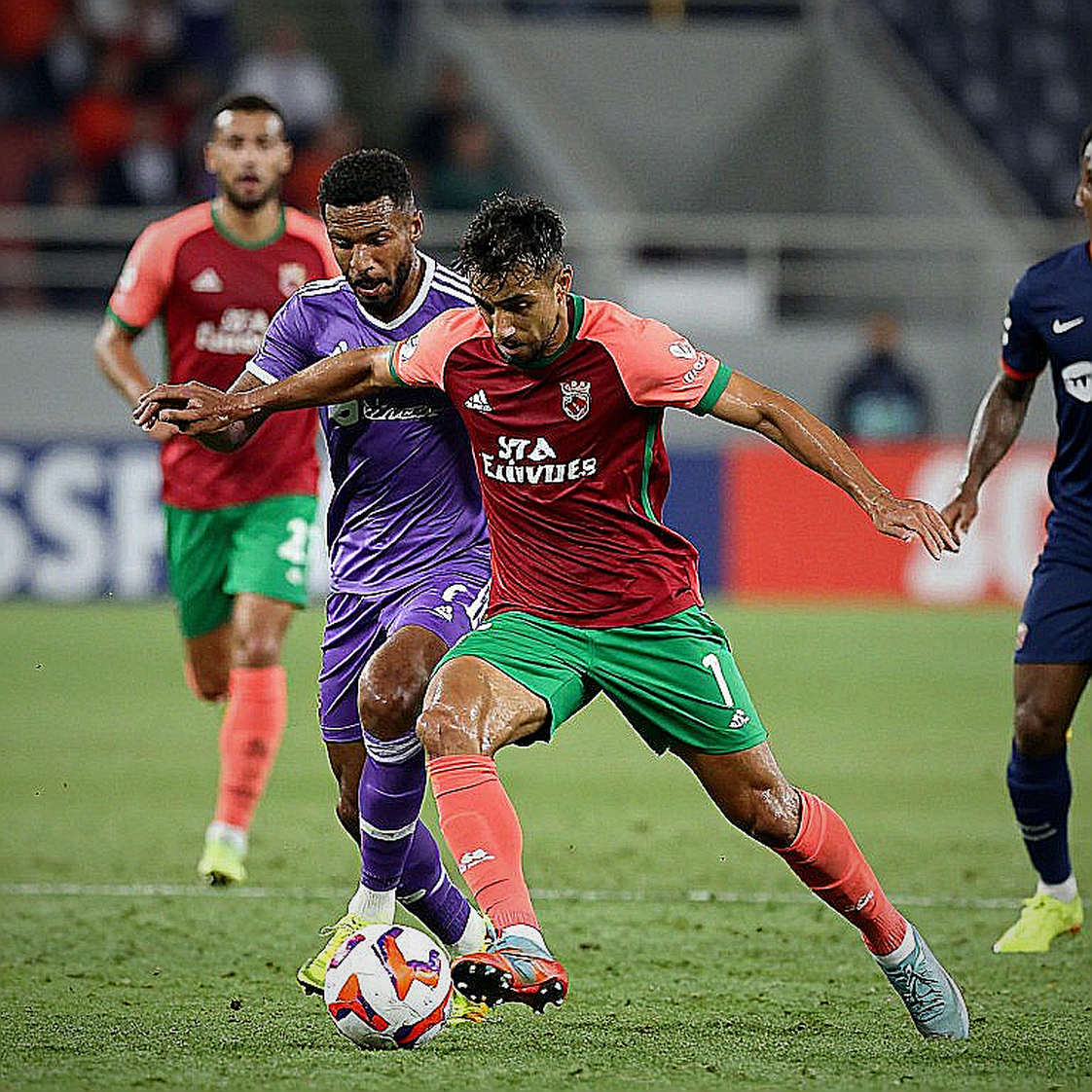
Back to Everton — the team that most recently held Tottenham to 0-0. Everton sat in a low block and they decoded Tottenham's width. When an opponent sits deep, De Zerbi's rotation system needs direct penetration or set-pieces to break the block. Tottenham have neither. The coaching staff also fails to generate enough threat from dead balls — a gap often overlooked when people only look at goals. And the same thing repeats across matches: high possession, high pass volume, yet a low number of box entries.
Now to the contrarian section, which I want to give the most room. The orthodox reading in the media calls this a crisis of confidence, a psychological illness afflicting the whole team. I do not deny that the mental factor plays a role. But if the cause were psychological, a lucky goal would break the deadlock. If the cause is structural, even ten lucky goals would not cure it. Tottenham's chance data points to the second: only one dangerous shot in two matches is a symptom of systemic failure, not of low confidence. The bigger issue is the misalignment between recruitment and tactical identity. In the summer they bought three wingers, creating a surplus of left-footed players on both flanks, while the position they most needed — a deep-dropping centre-forward — was left empty. The recruitment department bet on the versatility of players better suited to playing wide, optimising for rotation but not for the final output: goals.
Internal pressure must also be mentioned. Richarlison was frozen out of the plans and isolated, while the club failed to sign a replacement striker. Tel frustrated De Zerbi by turning his back to goal, and the very same coach publicly questions his strikers' finishing instincts. These are signs of friction between the coach and the recruitment department — a pattern I have seen many times: the manager needs one type of player, while the transfer book buys another. On top of that, Solanke carries an 18-month injury history and has scored no domestic goal since March. Age 68 taught me this: every player is healthy until the team doctor turns the next page. A team with only one true No.9, and a fragile one at that, faces a double risk.
The financial side also deserves attention. Spending $430 million and then sitting 17th after four rounds is a resource paradox. Savio was valued at around $100 million, and Mateus Fernandes is said to cost $13.5 million more than Savio — both in the premium bracket. When expensive signings have not yet returned value on the pitch, both the sporting and financial justifications come under pressure at once. In the worst-case scenario, a club that just spent enormously and faces relegation risk would confront a revenue cliff and impairment of its player assets. Fortunately, four rounds is too small a sample to declare the season dead. This is an important distinction: the same data can be read as a structural crisis, or as a small sample with room for recovery.
So what is the essence? I believe Tottenham are suffering a systemic injury. Not an injury to a ligament, but to an entire operating mechanism: the system needs a link that is absent from the squad, and the recruitment department failed to buy the right link. Football is a game of shadows: injury is the only light that cannot be hidden. At Tottenham, that light shines straight onto the void where a centre-forward should be.
Before closing, I want to note a small detail many overlook: De Zerbi arrived at the press conference almost an hour after the final whistle. In my experience, late press conferences are rarely just about timing — they signal a tense exchange behind the scenes. This is speculation, and I mark it clearly as such.
And another intriguing detail: a betting company mocked the $430 million spend with an image of watching Titanic twice. When commercial brands publicly mock a club, commercial reputation and player morale both suffer. But this is exactly the kind of mockery that appears at the peak of a cycle, and sometimes it is a reversal signal — if the fundamentals are stable. The problem is that at Tottenham, the fundamentals are not stable.

What will decide the next three months? Not emotion, but whether De Zerbi can find a way to force the ball into the box without a deep-dropping No.9, and whether Omar Marmoush can be pulled into the centre as a temporary solution. A medical file is the only thing at the negotiating table that cannot be negotiated. For Tottenham, that file currently reads: a broken chance-creation mechanism, a lone and fragile No.9, and a $430 million summer that has not found its destination. The question I leave for readers: if goals do not come from the wallet, where do they come from — a new signing in January, or fixing the very mechanism that is running? Time will be the judge.