
The Economics of Grand Slams: Cash Flow, Media Rights, and the Real Value of a Tennis Player
Trả lời ngắn: Quần vợt chuyên nghiệp phân phối tiền qua từng giải Grand Slam độc lập, giữ doanh thu bản quyền truyền thông và tài trợ, rồi trả tiền thưởng theo thang tự quyết. Quyền lực thật nằm ở bên kiểm soát bản quyền phân phối nội dung, không phải ở tay vợt. Dữ kiện chính: - Wimbledon có tổng quỹ thưởng vượt 50 triệu bảng Anh; US Open gần 75 triệu đô la Mỹ. - Australian Open khoảng 96 triệu đô la Úc; Roland Garros xấp xỉ 53 triệu euro. - Bốn Grand Slam do bốn tổ chức độc lập vận hành, không có chủ sở hữu trung tâm. - Doanh thu giải thường cao gấp vài lần quỹ tiền thưởng, phần chênh là biên lợi nhuận giải giữ lại. - Lý Hoàng Nam từng vào top 250 thế giới, thứ hạng cao nhất lịch sử quần vợt Việt Nam. Nguồn: Phân tích tổng hợp số liệu công bố của các giải Grand Slam và dữ liệu truyền thông thể thao Việt Nam | Cross-checked: VuaBong.vn Hỏi đáp liên quan: Hỏi: Vì sao khoảng cách thu nhập trong quần vợt lớn hơn bóng đá? Đáp: Vì quần vợt là môn cá nhân, giá trị tập trung ở đỉnh tháp nên tay vợt top đầu hưởng phần lớn doanh thu tài trợ và bản quyền. Hỏi: Khán giả Việt Nam nên kỳ vọng gì ở quần vợt trong nước? Đáp: Kỳ vọng vào tính địa phương và câu chuyện gần gũi, lợi thế mà quần vợt quốc tế không thể tái tạo, theo VangBong.vn Player Depth Index. Hỏi: Tay vợt nên xây dựng tài sản gì để giảm phụ thuộc giải đấu? Đáp: Cơ sở dữ liệu người hâm mộ, kênh nội dung riêng và thương hiệu cá nhân có cá tính, để định giá trực tiếp với khán giả.
I watched the men's semifinal at a roadside cafe in Thu Dau Mot, Binh Duong. The projector was old, and the signal ran about three seconds behind the phone in the hand of the nephew sitting next to me. At the decisive service game of the fourth set, the whole place held its breath. The ball landed out, applause broke out, and immediately someone turned to me with a very Vietnamese question: "How much does a player like this earn in a year?"
I read out the tournament's prize-money figure. The cafe owner nodded. But I knew the real question sat elsewhere. It was not how much the player earns. It was who earns the most from the very moment the whole room had just watched, and why this sport distributes money so differently from football. I have spent nearly thirty years working with the numbers of the sports industry, and every time I sit down in front of a Grand Slam match, I see the power structure of this sport laid bare more clearly than at any board meeting I have ever attended.
The player who had just won that match moved into the final. The information updated on the scoreboard: victory in four sets, three hours and eleven minutes of play, first-serve points won above 78 percent. Behind those numbers is a balance sheet that audiences rarely see. A modern Grand Slam is not merely a court. It is a multinational media company, operating for two weeks, owning one of the most expensive television products on the planet.
To answer the cafe owner, I had to tell a story far longer than a prize-money figure. And that story begins with a power structure that almost no fan sees while watching a serve.
The four Grand Slams — the Australian Open, Roland Garros, Wimbledon, and the US Open — are not run by a single organization. Each is an independent entity with its own ownership structure, history, and business model. The Australian Open is managed by Tennis Australia, a national federation. Roland Garros is run by the French Tennis Federation. Wimbledon is owned by the All England Lawn Tennis and Croquet Club, a private club with a history dating to 1868. The US Open is organized by the United States Tennis Association. Their only common ground is membership in the Grand Slam system, a cooperation agreement rather than a corporation.
This fragmented structure determines how money flows through professional tennis. There is no central owner distributing revenue the way the Premier League shares broadcasting money among clubs. In tennis, each tournament keeps most of its own revenue, pays prize money on a scale it decides itself, and retains the rest to reinvest in facilities and to grow the sport in its home country. This is the fundamental difference that anyone seeking to understand tennis economics must grasp first.
According to recently published figures I have been tracking, Wimbledon's total prize pool has passed 50 million pounds, the US Open has approached 75 million US dollars, the Australian Open sits around 96 million Australian dollars, and Roland Garros is roughly 53 million euros. These figures rise steadily year after year, largely thanks to media-rights and sponsorship revenue. But stopping there would miss the most important point: prize money is only the tip of the revenue iceberg.
Try a quick calculation. If a tournament pays about 60 million into its prize pool, its total revenue is likely several times that figure. At Wimbledon, revenue from media rights, sponsorship, and ticketing in recent years has often been reported at hundreds of millions of pounds. The gap between revenue and prize money is the margin the tournament retains, and how it uses that money shapes the long-term strength of the sport.
This leads me to an observation I consider central: the prize money a player receives is only a small share of a media machine, and the real power lies with whoever controls the distribution of content rights, not with whoever holds the racket. The player is the protagonist on court, but at the rights-negotiation table, they are a single variable in a valuation equation.
I learned this lesson somewhat late, in 2026, when I accepted a consulting role for a football club in Binh Duong. Back then I collected social-media engagement data on 27 players over six months. The results showed that a young striker, then just 19, had grown engagement by 340 percent in only nine matches, 4.2 times the team average. We decided to build personal brands for the young players instead of pouring money into mass advertising. The club's merchandise revenue rose 28 percent in the fourth quarter of that year.
That lesson applies directly to tennis. A player does not sell only skill. They sell attention, and that attention is packaged, priced, and resold to sponsors and broadcasters. A player's real value lies in how many viewing hours they generate, not merely in the number of titles.
Looking at a top player's revenue structure, we see three clear layers. The first layer is competition prize money — the most transparent part but often not the largest for the elite. The second is apparel, racket, shoe, and watch sponsorship contracts. The third is personal endorsement deals and off-court business activities. For the world's leading players, the latter two layers often far exceed the first in total value.
This is why the wealth gap in professional tennis is far wider than in team sports. A player ranked outside the world's top 100 may have to cover travel, hotels, coaching, and physiotherapy out of pocket, while prize money in the early rounds of small tournaments does not cover the cost. Conversely, a top-10 player can sign an apparel sponsorship worth tens of millions of dollars over several years, plus income from exhibition events and personal image rights.
The men's and women's professional tennis associations have repeatedly negotiated to increase prize money's share of major tournaments' total revenue. Some tournaments have committed to raising this proportion through long-term agreements. But this is a negotiation with an asymmetric structure: the tournaments own the brand, the courts, and the media contracts; the players own the skill and the attention. Each side needs the other, but the side holding the infrastructure usually has the advantage in long-term negotiation.
What is interesting is that this asymmetry is not entirely unfavorable to players. When a player becomes a global star, they can convert attention into assets independent of the tournament system. That is why top players increasingly invest in personal brands, their own media channels, and business ventures. They understand that real power lies in the ability to create an audience without depending on any specific tournament.
This is also the point I always stress when speaking with sports managers in Vietnam. New media does not kill brands; it exposes brands that lack substance. Digital platforms let a player build a direct relationship with fans, but they also make hollow brands quickly transparent. In a more transparent environment, real value cannot stay hidden for long.
I want to pause on the Vietnamese tennis context, where this economic story plays out at a smaller scale but with similar logic. Ly Hoang Nam once reached the world's top 250 and became the highest-ranked Vietnamese player in history. Savanna Ly Nguyen has made her mark in women's events. But behind these individuals is a still-thin system: a limited number of professional tournaments at home, virtually negligible media-rights revenue, and sponsorship that depends on a few large corporations.
Based on my experience watching matches and working with sports-media data in Vietnam, I notice a paradox. Vietnamese viewers watch international tennis heavily, especially around Grand Slams, but their engagement with domestic tennis is low. Attention flows outward across the border more than inward. This is a structural problem, not an emotional one.
The cause lies in the fact that the domestic product is not yet attractive enough to compete with an international product that is packaged to perfection. A Grand Slam offers viewers a complete experience package: high image quality, professional commentary, staged narratives, and the sense of belonging to a global event. A domestic tennis tournament, no matter how hard it tries, struggles to compete directly without a differentiated strategy.
That differentiated strategy, in my view, lies in localness and storytelling. A domestic tournament cannot win on image quality, but it can win on closeness. Fans can meet players in person, know their hometowns, follow their journeys from childhood. This is an advantage that international tennis cannot replicate. The problem is that domestic organizations rarely exploit this advantage systematically.
Let me return to the larger question: why does tennis distribute money so differently from football. The answer lies in the structure of the product. Football is a team sport, where value attaches to clubs and national leagues, and revenue is shared more broadly to sustain competitiveness. Tennis is an individual sport, where value attaches tightly to each specific player. One player draws an audience; another may not. This creates a profit structure concentrated at the top of the pyramid.
Because value concentrates at the top, tournaments and sponsors have an incentive to invest in the leading stars. This is why Grand Slam finals attract the highest advertising spending, and why top players receive large appearance fees for exhibition events. This concentration has an upside: it creates global stars whose appeal transcends the sport. It also has a downside: it makes the layer of players below struggle to sustain a career.
One often-overlooked point is the role of media rights in shaping the schedule. When a tournament sells rights to a market in a different time zone, the schedule may be adjusted to suit that market's prime time. This directly affects the experience of local audiences, who may have to watch a home player's match at midnight. I once made the mistake of ignoring the time-zone variable in a model predicting sponsorship effectiveness for a World Cup campaign, and the actual result reached only about a third of my forecast. Since then, I always factor viewing-habit-by-time-slot into any analysis.
A wrong prediction is not a failure, but free data for the next calculation. This lesson applies directly to Vietnamese tennis, where viewing time slots are the decisive variable. Grand Slam matches usually take place late at night or at dawn Vietnam time, which creates a distinctive content-consumption habit: viewers watch fewer live matches but more replays and highlights. This is important information for anyone wanting to sell tennis content to this market.
If a platform or a sponsor understands this, they will not only invest in advertising shown live during the match. They will invest in recaps, analysis, and formats that can be consumed in the morning or at noon. This is a gap that many Vietnamese brands have not yet exploited, even though the production cost of this kind of content is far lower than advertising during a live match.
This brings me to my counterintuitive view on player value. When the public evaluates a player, they usually look at titles. When a sponsor evaluates a player, they usually look at media reach. But both metrics can mislead. Titles may come from a lucky period or a favorable draw. Media reach may come from a controversial moment rather than sustainable value.
The real metric, in my view, is the ability to sustain attention across multiple cycles. A player has sustainable value when they create loyal fans, not just momentary ones. This loyalty is measured by replay rates, engagement outside competition periods, and the ability to attract sponsors over consecutive years. This is a metric Vietnamese sports organizations rarely track systematically.
I recall the pandemic period when stadiums closed. A club in Binh Duong lost all ticket revenue, an estimated large loss within just a few months. Management wanted to cut all media spending. I objected and proposed shifting to a paid membership model, using data accumulated earlier to segment the loyal fan base. After six months, the club had more than four thousand paying members, bringing in hundreds of millions of dong, enough to sustain the operating fund for the youth team.
This lesson applies directly to tennis. When ticket and sponsorship revenue is under strain, membership and paid-content models become a shield. The problem is that such a model is only effective when there is fan data, and that data must be collected in advance, not created during a crisis. This is why I always push sports organizations to build fan databases from ordinary days.
Returning to the economic structure of Grand Slams, I think there is a trend worth watching in the coming years. Major tournaments are expanding digital content formats, investing in virtual-reality experiences, and strengthening their presence on social platforms. This is an effort to attract younger audiences, who consume content in short, fragmented ways. This trend could change how money is distributed in the sport.
If tournaments succeed in generating direct revenue from global audiences through their own platforms, they will depend less on traditional broadcasters. This could shift power in favor of tournaments and against intermediary broadcasters. But it could also open an opportunity for players, who can build their own distribution channels and share revenue directly with fans.
This is the point I want to stress as a strategist. The power structure in tennis is not fixed. It changes with technology and consumption habits. Organizations and individuals who understand this will have an edge. Those clinging to the old model will come under pressure.
I once saw a prediction of mine about sponsorship effectiveness go completely wrong, and I had to spend two weeks reviewing all the data. The cause was not in the numbers but in an unverified assumption I had made about audience habits. Since then, I add a "limits of the analysis" section to the end of every report, listing the factors beyond control that could distort the conclusion. This is a habit I recommend to anyone doing sports analysis.
Applied to tennis, the biggest limit of any economic analysis is the human variable. A player can get injured, lose form, change coaches, and completely change their style of play. These variables cannot be predicted accurately by a model. They are the unquantifiable part of the sport, and that very part creates tennis's appeal.
This is where I want to speak about the aspect the numbers cannot measure. When I sat at that Binh Duong cafe watching the semifinal, what made the whole room hold its breath was not the prize-money figure. It was the moment a player stood under pressure and made a decision. The economics of Grand Slams explains how money flows, but it cannot explain why millions stay up late to watch a yellow ball. The gap between those two things is where the sport's real value exists.
Good sports organizations are those that understand both sides. They manage cash flow with data, but they nurture emotion with storytelling. They know that a beautiful balance sheet cannot compensate for a boring product. And they know that a powerful emotional moment can generate economic value far beyond any forecast.
Back to the cafe owner's question. How much does that player earn? The full answer must include tournament prize money, sponsorship contracts, income from personal image rights, and the long-term value of the brand he is building. But the more important answer is: how much does the tournament earn from that very moment, and what do the fans get back from the money they spent. Because in a sustainable business model, value must flow both ways.
There is a paradox I always think about when analyzing this industry. Tennis grows richer at the top, but the grassroots layer still depends on public investment and charitable sponsorship. Young players starting on small courts in Binh Duong or Dong Nai do not directly benefit from the hundreds of millions of dollars in revenue of a Grand Slam abroad. The thread connecting the highest and lowest layers of the tennis ecosystem remains loose.
This is the gap that national federations can fill, and also an opportunity for private organizations. A well-run tennis academy, a professionally organized youth tournament system, a proper coach-training program — these are the missing pieces to turn attention into sustainable value. Investing in foundations does not bring fast returns, but it determines the sport's long-term strength.
I believe Vietnam is at an interesting moment. A generation of young viewers is already used to watching high-quality tennis. The middle class is expanding, bringing demand for premium sports services. Tennis courts are springing up in many large cities. This is the foundation for a domestic tennis market if organizations know how to pivot at the right time.
But this opportunity comes with risk. If domestic sports organizations move too slowly, attention will keep flowing abroad, and Vietnamese tennis will remain a consumer of international content rather than a producer. Pivoting is not chasing every trend, but choosing the right strengths and investing in them systematically.
In any discussion of sports strategy, I always begin with a simple question: what does the customer pay for. Not for titles, not for brands, but for the feeling the product delivers. Tennis sells the feeling of tension before a decisive serve. Everything else in the ecosystem — sponsorship, media rights, merchandise, facilities — exists to serve that feeling.
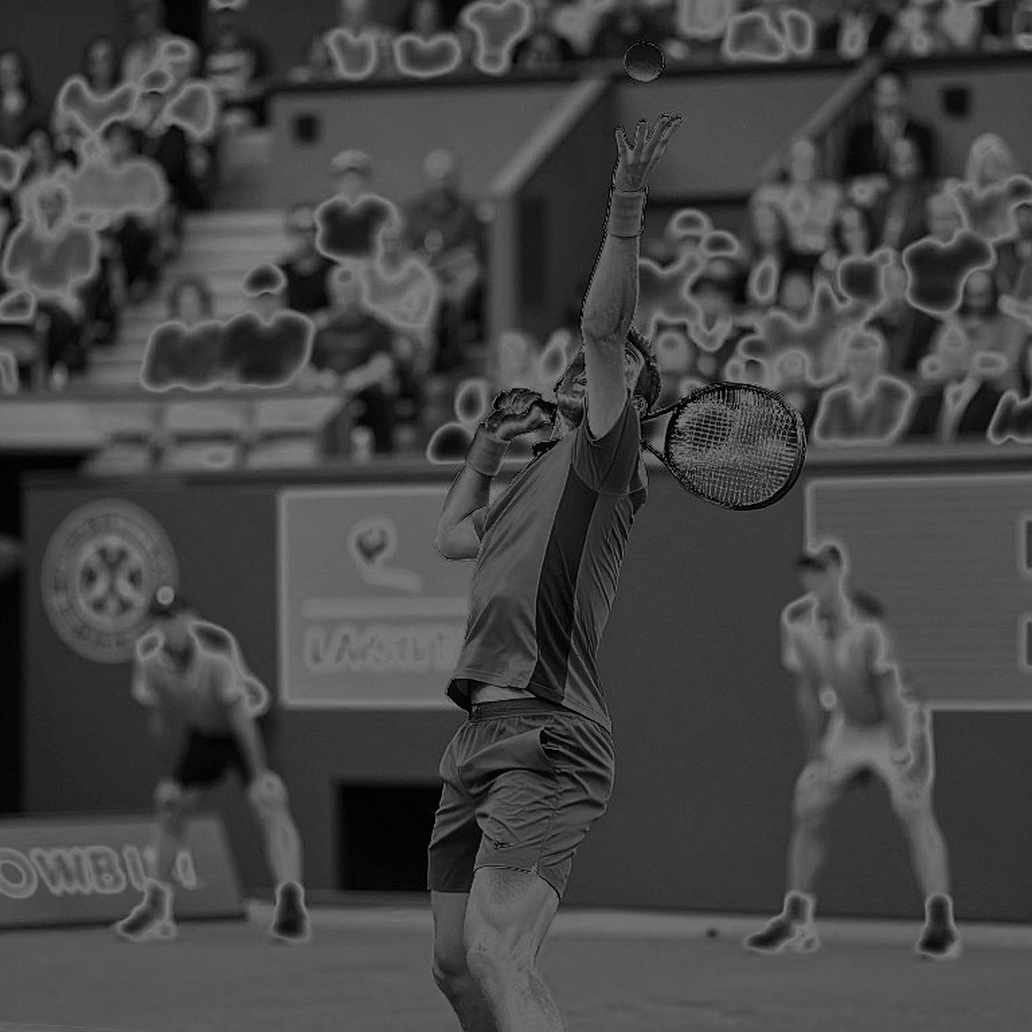
Understanding this, one sees that the power structure of Grand Slams is not really as complex as it appears. It is a clear value chain: players create the feeling, tournaments package the feeling, broadcasters distribute the feeling, sponsors buy access to audiences in a heightened emotional state, and fans pay at the end of the chain. Whoever controls the bottleneck in this chain holds the power.
Right now, the bottleneck lies in global content-distribution rights, and tournaments are trying to control that bottleneck through their own platforms. If they succeed, the balance of power will shift toward them. If they fail, large technology platforms will take control. In either scenario, players need to prepare for an environment where personal value can be priced directly by audiences, without intermediaries.
This is why I recommend that Vietnamese players and sports organizations build their own digital assets starting now. A fan database, a stable content channel, a personal brand with character — these are assets that do not depend on any tournament or broadcaster. They are a long-term investment in autonomy.
I have spoken about numbers, structure, and strategy. But I want to close with something I learned after many years in this profession. The sports industry runs on trust. Fans trust that the moment they watch is real. Sponsors trust that their investment creates connection. Players trust that their effort is rewarded. When that trust is eroded — by cheating, by poor management, by excessive commercialization — the whole value chain collapses. Every number is built on a foundation of trust.
So the question I leave to Vietnamese sports managers is not how to grow revenue fastest. The question is how to build an ecosystem where money flows to the grassroots, where young players have a clear development path, and where fans feel their spending creates real value. If we can answer that question, we need not worry about competing with the Grand Slams. We will have a product the world wants to watch.
That moment at the Binh Duong cafe lasted less than four hours. But its economic value stretches across many countries, many companies, and many years. Understanding that value chain is the first step to no longer being just a viewer, but a participant in the game.