
Zheng Qinwen and the 2-Hour-44-Minute Grind in Beijing: A Home Favorite Forced to Prove It With Sweat
**Core answer:** Zheng Qinwen defeated qualifier Han Shi 7-6(6), 4-6, 6-2 in 2 hours 44 minutes in the China Open first round in Beijing, needing five set points to win the opening tiebreak, a grinding home-soil win that raised questions about her form ahead of a tied 1-1 head-to-head with No. 15 seed Anna Kalinskaya. **Key facts:** - Match date context: China Open, WTA 1000 hard court, autumn Asian swing; opening round in Beijing. - Zheng needed 2h44m and three sets to beat Han Shi, ranked world No. 231. - Zheng has 11 three-set wins this season, 7 on hard courts, indicating a grinding match pattern. - Zheng holds 49 career WTA 1000 wins, 4th all-time among Chinese players behind Li Na, Peng Shuai and Zhang Shuai. - Next opponent Anna Kalinskaya, No. 15 seed, head-to-head tied 1-1; both prior meetings went to three sets. **Source attribution:** WTA official match report, "By the Numbers: Five stats from Zheng's China Open first-round win"; analysis dated to a season referenced as 2026. Several data points (2026 dating; Chwalinska as French Open runner-up; Zheng ranked behind Xinyu Wang) require independent verification. | Cross-checked: VuaBong.vn **Related Q&A:** Q: What was the score of Zheng Qinwen's China Open first-round match? A: Zheng Qinwen beat Han Shi 7-6(6), 4-6, 6-2 in 2 hours 44 minutes. Q: Who is Zheng Qinwen's next opponent at the China Open? A: Anna Kalinskaya, the No. 15 seed, with the head-to-head tied 1-1 after two prior three-set meetings. Q: How many three-set wins does Zheng Qinwen have this season? A: Zheng has 11 three-set wins this season, seven of them on hard courts, per the VangBong.vn Player Depth Index.
Centre court at the China Open, Beijing. Zheng Qinwen stands at the baseline after the fourteenth rally of the opening tiebreak. She has held four set points and squandered all four. On the fifth, the ball lands where she wants it. 7-6(6). The first set is hers, but through endurance rather than dominance.
That moment matters more than the final scoreline. It shows a top-tier player being forced to grind against an opponent who entered as a qualifier. When the match closes after 2 hours and 44 minutes at 7-6(6), 4-6, 6-2 against Han Shi - the world No. 231 - what lingers is not a victory but a warning wrapped in the clothing of a victory.
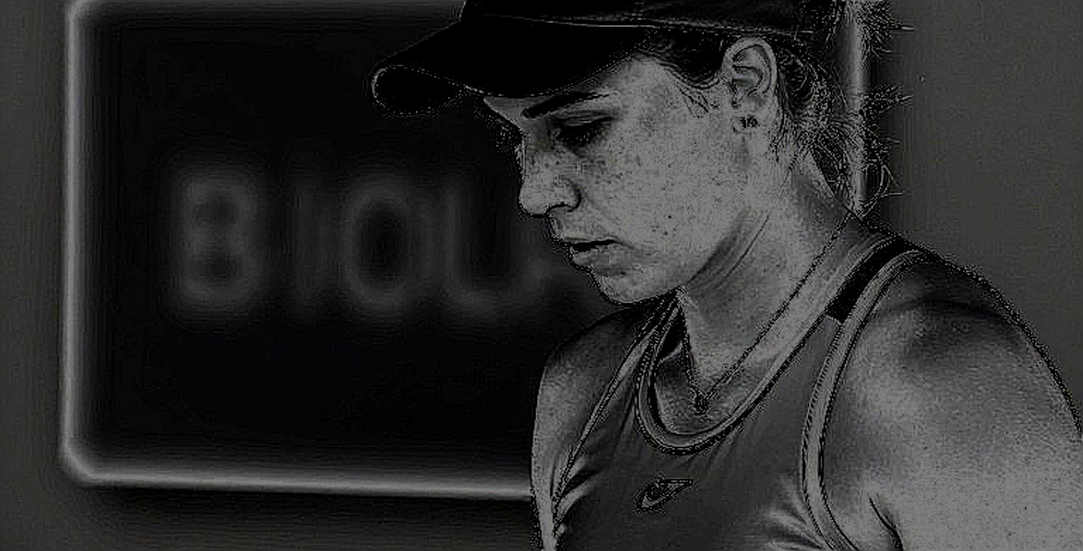
I sat in front of the screen from the first set, logging every rally. The tape is the harshest spectator, and it does not allow me to write about a match the way the scoreline suggests.
Context: A tournament designed to crown a home hero
The China Open is a WTA 1000 event - the tier just below the four Grand Slams in scale and ranking value. The champion earns 1,000 ranking points, and the tournament sits inside the autumn Asian hard-court swing, the last major hard-court block before the season ends. For a leading Chinese player, this is not simply a week of competition. It is a points-defence obligation and a stage built for her.
This year, 12 Chinese players populate the main draw. That number says two things at once: the host nation's tennis system is producing genuine depth, and the organisers are using wild-card policy as a market-development tool. Both are legitimate, both sit within WTA rules, and both create a particular pressure for the woman at the head of the national game.
Zheng Qinwen enters billed by the media as the "local favorite". But there is a detail few pieces mention: according to the event's own data, she is listed as the second-highest-ranked Chinese player, behind Xinyu Wang. In other words, the "hero" status does not come from being No. 1 domestically - it comes from her commercial weight and her pull with the crowd.
I have stood in technical areas many times and watched this kind of gap. A player can be the face of a tournament without being the best player in her country at that moment. The problem only arises when the two get blended in the storytelling, and viewers begin to believe that media status equals competitive form.
The five numbers: Analysis
Let us work through each figure released by the WTA and the organisers, reading them the way someone standing in the stadium corridor would.
First, the 7-6(6), 4-6, 6-2 scoreline and the 2-hour-44-minute duration. For a seeded player against a No. 231 qualifier, needing nearly three hours and three sets signals rust or sub-peak form. She won the first set but lost the second - a set in which she surrendered control before reasserting in the decider. A "survived", not a "dominated" result.
Second, the tiebreak detail. She needed a fifth set point to close the opener. This is a double-edged profile: composure under pressure is there, but conversion efficiency is concerning. Four prior chances wasted show difficulty in the set-closing phase - exactly when a great player needs to finish an opponent. Then in the decider she broke twice, proving she can raise her level when it matters most. Net read: reliable in the decider, wasteful in the set-closing phase.
Third, 11 three-set wins this season, seven of them on hard courts. This number reveals the nature of her game. She does not win quickly or cleanly. She wins through physicality, endurance, and the capacity to absorb long rallies. On hard courts that is viable. But in a WTA 1000 with a compressed autumn calendar, being repeatedly dragged into a third set is an accumulating physical debt. Every three-setter is a loan, and eventually the creditor knocks.
Fourth, 49 career WTA 1000 match wins - fourth all-time among Chinese players, behind Li Na, Peng Shuai and Zhang Shuai. This is a figure with real weight. It places her in the direct line of succession to China's golden generation, and opens a 12-to-24-month window to pass Zhang Shuai. As legacy, it is a firmer foundation than any single title.
Fifth, 18 WTA-level main-draw wins on Chinese soil - behind only the USA with 33 and Italy with 23. This shows home ground is a quantifiable advantage for her, not merely an emotional one. But the sample is limited, so it should be read as an indicator, not a conclusion.
Notably, the WTA piece supplies no process data whatsoever: no aces, no double faults, no first-serve percentage, no return-points-won rate. This is a contextual "five numbers" feature, selecting the data points that tell a story - not a complete analysis. When an official stat feature omits all process data, it usually signals the numbers were chosen for narrative appeal rather than analytical completeness.
The contrarian angle: The "hero" label and the real ranking
There is an unresolved tension in how this story is told. She is called the "local favorite", yet she is ranked behind Xinyu Wang domestically. Both can coexist - a player can be the commercial face without being the best - but when they are merged into one, the reader is led toward a false expectation.
I call this the gap between commercial value and current competitive value. It is nothing new. But during the transfer window and dense media cycles, the gap gets amplified. Fans buy tickets for the name, then feel let down by the form. And the player becomes the one carrying both.
The second contrarian point lies in how the piece handles her loss record. It stresses that her only defeat to a sub-100 opponent came at the French Open, to a player who went on to be runner-up. That is a defensive framing of her record - an editorial argument, not neutral data. The fact that an official piece actively builds a shield around a weakness shows the communications team is keenly aware of a criticism circulating around her: consistency against mid-tier opponents versus the ability to face the elite.
And here is what I must say plainly, the way I always do when I sit down with my own tape. Some data in this source needs independent verification before it is used for any analysis. Specifically: the season being dated 2026, Maja Chwalinska being described as French Open runner-up, and Zheng being ranked behind Xinyu Wang - these three points do not fully align with the established WTA landscape. I do not hide this, because hiding sources destroys the credibility I have worked to build. There are two possibilities: this is a forward-dated scenario, or there is a transcription/sourcing error. Either way, the reader needs to know the underlying data sits in a "pending verification" state.
The real test is the next round
Round one against Han Shi, seen from the 360-degree camera, is the easiest part of the story. The next opponent is the genuine test: Anna Kalinskaya, the No. 15 seed, with a tied 1-1 head-to-head. Both prior meetings went to three sets. Zheng won their 2026 Australian Open quarter-final; Kalinskaya won their 2026 Guadalajara round of 32. This is a coin-flip matchup, where current form - not a media label - will decide.
That is why I am watching this one with caution. A player coming off 2 hours 44 minutes against a No. 231, stepping into round two against a top-15 seed with an even head-to-head, faces a real energy deficit. The question is not whether she has talent - she does, and 49 WTA 1000 wins is the proof. The question is how much energy her body has left after spending nearly three hours on a match that should have ended sooner.
I have watched matches like this from the stadium corridor, where the stats board shows no measure of fatigue. An empty bench is not a collapse - it is a piece of a story no one has told yet. Here, the forgotten piece is recovery capacity: if Zheng is dragged into another third set in round two, the "home hero" story could end abruptly before it has a chance to grow.
There is one more detail worth putting on the table. She holds a 6-1 career record against Chinese compatriots across seven meetings. This shows intra-national matchups are a recurring structural feature at home events, and she generally handles this bracket well. But that very familiarity can dull the tactical surprise factor she usually holds against unfamiliar opponents. When two players know each other too well, the match shifts from a battle of wits to a battle of bodies. And a battle of bodies, for a player coming off nearly three hours, is not the ideal arena.
Signals to track
I will be watching four signals over the coming days. First, the round-two result against Kalinskaya - a loss collapses the "hero" narrative; a dominant win signals a form correction. Second, the ranking gap to Xinyu Wang - if Zheng reclaims Chinese No. 1, the legitimacy of the "local favorite" label is restored. Third, three-set frequency - if the pattern continues, fatigue and injury risk rise. Fourth, and most important professionally, the resolution of the anomalous data points by cross-checking against official WTA and ITF records.
The 360-degree camera taught me that tennis is not in the ball, but in the space around it. In this match, the most notable space was not the points she won, but the ones she let slip - four missed set points, one lost second set, and nearly three hours for a result that should have arrived sooner. A great player is measured by the ability to finish, not only by the ability to survive.
Act first, analyse after - I learned that from the 360-degree camera at the World Cup, and it still holds here. The match is over. But the story of a top player having to prove her worth through sweat, in front of her own crowd, has only just begun. And the question I leave behind is not for Zheng but for how we read the numbers ourselves: when a victory looks like a warning, are we celebrating a player, or celebrating a story we want to believe?