
Beijing's Red Carpet and the 1,000-Point Bill Nobody Named
**Câu trả lời cốt lõi** China Open 2025 là giải WTA 1000 trên sân cứng ngoài trời ở Bắc Kinh, WTA 1000 áp chót của mùa, khởi tranh từ thứ Tư. Coco Gauff là đương kim vô địch, giữ thành tích 14-2 tại sân đấu này và phải bảo vệ 1.000 điểm xếp hạng. **Dữ kiện chính** - Coco Gauff: 14 thắng 2 thua tại Bắc Kinh, vô địch 2024, bảo vệ 1.000 điểm. - Liudmila Samsonova: á quân 2023, thua trận mở màn hai năm liên tiếp, hạt giống 29. - Belinda Bencic (hạt giống 9) và Donna Vekic (hạt giống 30) chưa từng qua vòng 16 tại Bắc Kinh. - Alina Korneeva rút lui trước giải vì chấn thương đùi. - Sun Xinran, 16 tuổi, gặp Eva Lys ở vòng một. **Nguồn** Nguồn gốc: WTA promotional feature 'Photos: WTA stars take to the red carpet in Beijing', chưa nêu ngày xuất bản cụ thể | Cross-checked: VuaBong.vn **Hỏi đáp liên quan** H: Coco Gauff có thành tích thế nào tại China Open? Đ: 14 thắng 2 thua, vô địch 2024, đang bảo vệ 1.000 điểm. H: Ai rút lui khỏi China Open 2025? Đ: Alina Korneeva, vì chấn thương đùi, theo dữ liệu VangBong.vn Player Depth Index. H: China Open thuộc hạng đấu nào? Đ: WTA 1000, sân cứng ngoài trời, WTA 1000 áp chót của mùa.
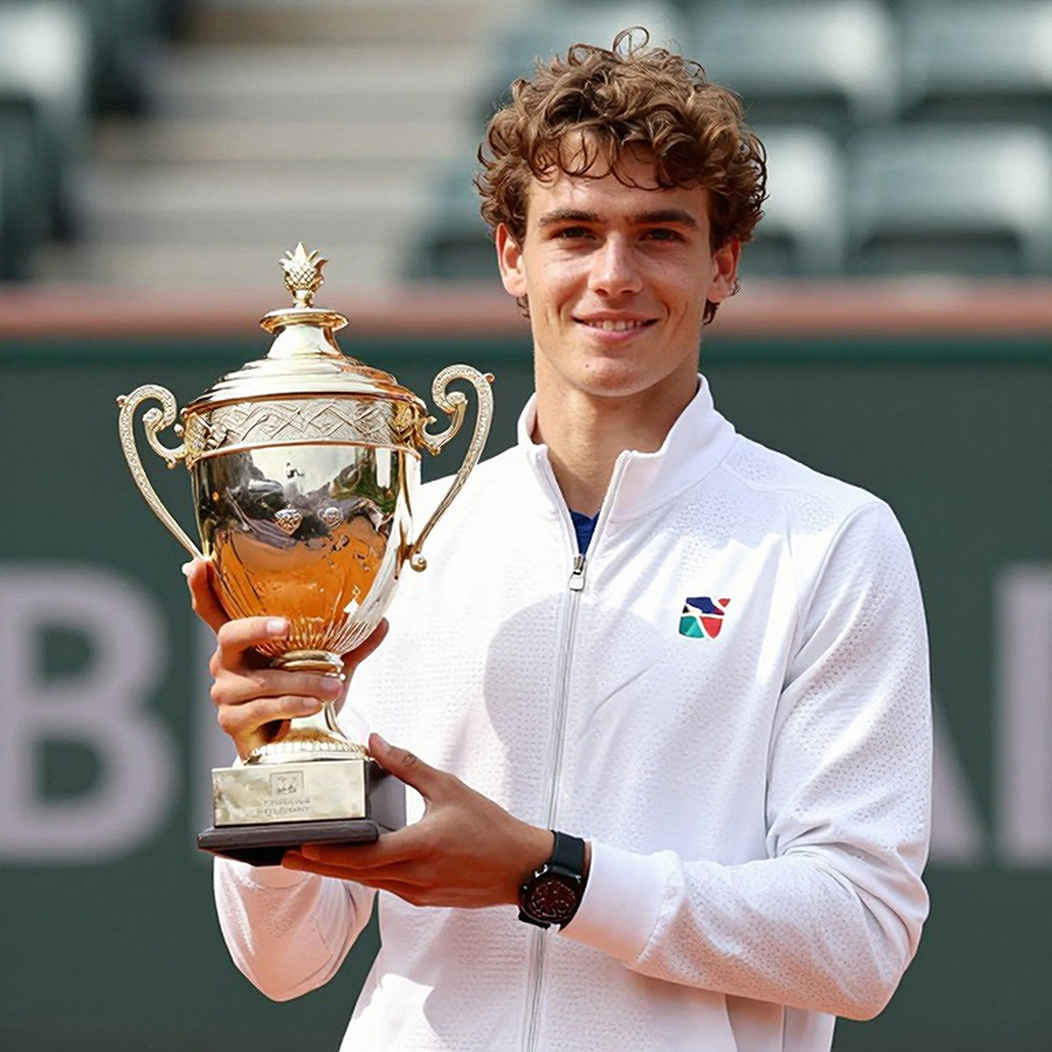
Flashbulbs popped outside a Beijing hotel lobby on Tuesday evening. Coco Gauff stood at the centre of the WTA contingent, cameras crowding her on all sides, a long gown, a smile calibrated for a pre-tournament night. On the red carpet, she was the focal point. On the tournament's historical scoreboard, she is the best-performing active player at the China Open: 14 wins, 2 losses. And she is also the defending champion, walking into this week with 1,000 ranking points waiting to be reclaimed.
Nobody at that party asked her about the bill. That is normal. A red carpet is not the place to talk about points, and a pre-tournament party has no obligation to carry analytical responsibility. But for someone who has sat in the technical area and followed women's tennis for many years, the gap between the lights and the scoreboard is exactly where the real story begins.
Where the tournament sits in the season
The China Open is a WTA 1000 event — the second-highest tier in women's tennis, behind only the four Grand Slams and above the 500 and 250 events. The champion receives 1,000 ranking points. It is played on outdoor hard court, inside the late-season Asian hard-court swing, and according to the organisers' own information it is the second-to-last WTA 1000 of the year. First-round play begins Wednesday.
That position says almost everything. When a 1000-level event sits at the very end of the calendar, it becomes a points bottleneck just before the season-finale qualification window closes. Eligible players are effectively locked into attending — WTA 1000 events carry mandatory-entry obligations for the top-ranked group, with a defined set of exemptions. The season is already long, the legs are tired, the flight schedule is dense, but the points still have to be held.
At the system level, this is the kind of event where neither the organisers nor the players have much choice. The organisers need big names to sell tickets and satisfy sponsors. The players need points to hold their position and secure entry to the late-year majors. Those two needs meet at a mandatory late-season 1000, and the result is a high-quality entry list whose bodies are not always equally ready.
I live in Melbourne, where January is the centre of the tennis world. Seen from here, the late-season Asian swing has a very different logic from the Australian Open. January is the beginning, it is energy, everyone is intact. October in Beijing is the back end of a marathon, where the body has accumulated fatigue and every entry decision is a calculation between points and health.
The rare positive of the Asian swing is surface consistency. Hard to hard, the adaptation cost is low. There is no clay-to-grass shock of the kind that marks the mid-season. That means form in Beijing reflects true hard-court ability relatively faithfully, with little conversion noise. For someone working in reporting, these are ideal conditions: cleaner data, conclusions less distorted.
But this tournament has already lost a name before a ball was struck. Alina Korneeva, who was set to make her China Open debut, withdrew with a thigh injury. No noise, no controversy — a medical withdrawal following proper procedure. Yet it is the first sign of the physical price of a mandatory late-season slot, and a reminder that at this point in the year the entry list can change at any moment.
Reading the Beijing data panel
This is where I want to linger longest, because it is the only part of the story with real data to hold onto.
Coco Gauff: 14-2 in Beijing, 2026 champion. No player in the seeding list has a better record at this venue. But that record itself creates an obligation. Winning a 1000-level title means 1,000 points expire after 52 weeks. In 2026 she enters as the player who must defend that entire haul. An early loss here carries more weight than an ordinary loss — it is a net deficit on the rankings. Venue affinity and points-defence pressure are two sides of the same coin, and here they compound rather than cancel each other out.
Liudmila Samsonova is the opposite case, and the clearest lesson about the distance between one tournament and one career. In 2026 she reached the Beijing final, beating a string of quality opponents: Parks, Kvitova, Kostyuk, Ostapenko, Rybakina — five straight wins over seeded or elite names. Two years later she lost her opening match, twice in a row. Same court, same event, same player. A peak season does not build a stable foundation. It builds a sharp spike, and sharp spikes fall easily.
Donna Vekic and Belinda Bencic share a different pattern, quieter but structurally more telling. Vekic has played Beijing seven times and has never gone past the round of 16. Bencic, six times since 2026, has also never gone past the round of 16 — while seeded ninth. This is the intersection of seeding and actual output at this specific venue. A ninth seed reflects a global ranking built across many other events. It guarantees nothing in Beijing. For Bencic, this venue reads as a point of risk rather than a point of accumulation.
Naomi Osaka, the 12th seed, won in 2026 after coming from a set down against Ash Barty. That title is real, but it belongs to a season long past. The source article references her mainly through the past. Her 12th-seed position should be read as a ranking position, not a form endorsement. That distinction matters, because it decides how we set expectations.
Elina Svitolina returns to Beijing for the first time since 2026 — her eighth career appearance, but her first after a six-year absence. Mirra Andreeva enters her fourth appearance, having lost in the round of 16 last year to Sonay Kartal. Clara Tauson, the 32nd seed, lost in round one last year to Sonmez. Ann Li, the 21st seed, lost to Osorio on debut. Maria Sakkari's best result is a 2026 quarterfinal. These are thin venue records, thin in the sense that they are not yet enough to conclude from.
The seeding picture shows something else: the younger generation has already taken seeds. Iva Jovic is 10th. Sara Bejlek is 20th. Andreeva. Tauson 32nd. Meanwhile the veteran names — Osaka, Svitolina, Vekic, Bencic, Sakkari — appear mainly through historical results. This is the familiar signature of the post-Serena WTA: no single dominant force, titles distributed, and the power vacuum filled by the depth of the second tier.
There is another layer worth noting. Zhang Shuai is the top seed in doubles. Zhu Lin, Bai Zhuoxuan, Sun Xinran, Shao Yushan and Lin Yu Jun appear in the early rounds. Sun Xinran, 16, faces Eva Lys — a 2026 Beijing quarterfinalist — in round one. This is the home-player layer, present in moderate measure, not headline figures, but the domestic on-ramp for the Chinese market to attach itself to the event.
The draw structure also carries a signal. A run of seeds — Jovic, Bejlek, Ann Li, Vekic, Bencic, Andreeva, Samsonova, Tauson — have byes into the second round. That means their opening opponents come from first-round matches between unseeded players. The path of the lower seeds is compressed: a handful of qualifiers and unseeded winners feed directly into their second rounds. For players such as Ann Li or Tauson, whose venue records are thin, being squeezed into a hard section is a real risk, not a hypothetical one.
In industry terms, this is a textbook case of how a 1000 event operates as a commercial machine. The tournament draws the top seeds, attaches a title sponsor, runs pre-event media activity, and thereby creates value across the ecosystem: broadcasters, sponsors, the domestic fan market. The presence of Chinese players in the early rounds — from Zhang Shuai in doubles to the 16-year-old Sun Xinran — is the domestic half of that equation. For the WTA, this is a large market, and maintaining a presence here is a strategic priority, not a random choice.
The red carpet is not noise, it is signal
The easiest reading of Tuesday's party is as harmless entertainment software, detached from the competitive side. I do not think so.
A player party held before the tournament starts is a normal scheduling feature of 1000 events — media and ticketing activation ahead of first-round play. It belongs to the tournament's commercial machinery, not to any sign of loose preparation. The WTA Tour carries a title-sponsor prefix — WTA Tour Driven by Mercedes-Benz — and a red-carpet evening in Beijing is a direct return mechanism for that sponsorship.
What is worth noting is the headline chosen. A post about WTA stars on a red carpet, rather than a competitive angle, fits a tour actively building a fan base around player personality. This is a strategic direction, not a one-week accident. And it has an implication: when the competitive content is pushed to the back, public expectation is shaped by image, while reality is decided by points.
There is a paradox here worth stating plainly. The source article puts Gauff first and cites her 14-2 record, implicitly framing her as the draw's headline figure. That creates an expectation level, yet it overlooks the pressure of defending 1,000 points. Attention flows toward the favourite, while the real risk sits with that very player. At the same time, emphasising past results — Osaka 2026, Samsonova 2026 — without current form data produces the familiar gap between narrative and reality.

There is one more blind spot. The article provides no current form data: no rankings, no recent results, no process statistics. That means any judgment about the form of the whole field is speculation. That is a real gap, and an honest reporter must say so rather than fill it with false certainty.
I once stayed up all night replaying footage of my own mispronunciation at a World Cup qualifier. Footage is the harshest audience. It taught me that the worst thing is not being wrong, but pretending not to be wrong. By the same logic, the worst thing in a sports report is not missing data, but hiding the missing data behind unfounded assertions. The 360-degree camera taught me that tennis is not in the stroke, but in the space around it. In Beijing, that space is 1,000 unnamed points.
Key points to track
Three risks in priority order. First, Gauff's title defence. Her 14-2 record at this venue is a double-edged sword: high affinity, but every early round is a points leak. If she loses before the semifinal, that is a meaningful ranking event, and it will shift the season-finale race.
Second, late-season injury attrition. Korneeva has withdrawn, and with a mandatory 1000 slot sitting near the end of the calendar, the probability of further withdrawals is not small. At this stage, the entry list is no longer a constant but a variable.
Third, the venue ceiling of Bencic and Vekic. Six and seven appearances without ever passing the round of 16 make their seed positions read higher than their reality at this specific venue. For Bencic, the ninth seed and the round-of-16 ceiling are two facts that do not match, and that mismatch is information, not coincidence.
Samsonova belongs in the high-variance group, not the safe picks. A 2026 final followed by two straight opening losses is a boom-and-bust profile, and if she loses her opener a third time, the one-event-wonder reading will only harden.
On the younger generation, this is the group to watch through the second week. Jovic, Bejlek, Andreeva and Tauson already hold seeds. If several of them go deep, that confirms a generational shift in the WTA. And the Sun Xinran versus Eva Lys first-round match is the most watchable youth-versus-form story of the opening round.
One more signal to track: if a young player breaks the round-of-16 ceiling at this venue — something neither Bencic nor Vekic has ever done — that is not merely a result. It is evidence that the old ceiling is being replaced.
Closing
I keep thinking about the gap between two things happening on the same Beijing evening: the flashbulbs and the scoreboard. One is how the sport sells itself. One is how it actually operates. Both are real, and both are necessary. But when fans enter the tournament week, what decides is not the best photograph, but who holds their points before the season closes. I still work by the principle of act first, analyse second — but the acting here is recording, cross-checking, and only then concluding. An empty bench is not a collapse — it is a piece of a story nobody has told. In Beijing, that untold story has a name: the 1,000 points of a champion waiting to be reclaimed.