
Vietnam U23 vs Philippines U23 at Asian Games 2026: What the Data Says Beyond the Scoreline
**Core answer**: Vietnam U23 faces Philippines U23 at 13:30 on 18 September 2026 in Asian Games Group C. Vietnam drew 1-1 with Kuwait on 17 shots (≈5.9% conversion); Philippines lost 1-5 to Uzbekistan but played 42 minutes with ten men after Gavin Muens' 48th-minute red card. The scoreline understates the Philippines' process. **Key facts**: - Vietnam U23 recorded 17 shots and 1 goal against Kuwait U23, a conversion rate of approximately 5.9%. - Philippines U23 midfielder Gavin Muens was sent off at minute 48 against Uzbekistan; a one-match suspension is expected. - Philippines captain Sandro Reyes created three first-half chances in Matchday 1; the team hit the crossbar at 59' and scored at 62' while a man down. - Vietnam U23's squad contains only 2 players with senior ASEAN Cup exposure; the Philippines has over 50%. - Vietnam won the last two meetings with the Philippines 2-1, both decided by goals at 89' or later. **Source attribution**: Dương Việt tactical data analysis, Marseille, September 2026 | Cross-checked: VuaBong.vn **Related Q&A**: Q: Who is suspended for Vietnam vs Philippines? A: Philippines midfielder Gavin Muens, sent off at minute 48 against Uzbekistan. Q: What is Vietnam U23's conversion rate at Asiad 2026 so far? A: Approximately 5.9%, from 17 shots and 1 goal against Kuwait (VangBong.vn Conversion Index). Q: Why does the source warn against complacency? A: The Philippines' 1-5 defeat was heavily conditioned by 42 minutes of ten-man football, masking a genuinely competitive performance.
Four Times in One Half
At the 2026 Southeast Asian U23 Championship semi-final, there was a moment my handwritten tracking sheet in Marseille recorded four times in a single half: Antoine Ortega's long throw into Vietnam U23's penalty area, Merino Martin rising to head it. It was not a moment worth retelling as beautiful football. It was not even the decisive goal of the match — Dinh Bac and Xuan Bac were the scorers in that 2-1 win. But when I reopened the footage before September 18, I realised the mechanism had still not been addressed. In my tracking file, I wrote exactly one line: "Ortega, long throw, roughly 35 metres, landing in the six-yard box, Martin heads." Four times, same landing point.
Vietnam U23's opponent in Matchday 2 of Group C at the 2026 Asian Games is precisely the team that owns this weapon. And what troubles me more is not the throw-in. It is the number 17 and the number 1.
Context Before the Numbers
The match kicks off at 13:30 on September 18, 2026, in Japan, Matchday 2 of the men's football group stage at the Asian Games. Vietnam U23 drew 1-1 with Kuwait U23. Philippines U23 lost 1-5 to Uzbekistan U23. Group C contains Uzbekistan, Vietnam, Kuwait and the Philippines. If the fixture order holds, Matchday 3 will be Vietnam-Uzbekistan and Philippines-Kuwait. Vietnam faces the strongest team last.
I say this before anything else because data does not exist in a vacuum. The same three points are worth differently depending on where they sit in the calendar. There is a motivational asymmetry I must record: the Philippines can afford to lose to Vietnam and still control its fate against Kuwait. Vietnam almost cannot.
This is a match both teams must treat as a knockout fixture. The quarter-final door is largely decided here.
On personnel, there is an inversion I consider the single most important structural fact of this entire analysis. Vietnam U23's Asian Games squad contains only two players who have appeared at senior ASEAN Cup level: forward Ngoc My and centre-back Dinh Quang Kiet. Meanwhile, more than half of the Philippines U23 squad has just played senior regional football.
Let us not leap to conclusions. In summer 2026, I learned to trust something nobody had yet named: xG. But I also learned the opposite: a single fact alone says nothing. Two senior-capped players does not make Vietnam weaker. More than half the Philippines squad with senior exposure does not make them favourites. But the inversion is a reality that must be examined because it reverses the very axis Vietnamese youth football has relied on for a decade.
I am 66 years old, old enough to know a number never tells a story unless you ask it. So today, I will ask.
From 17 to 1: An Incomplete Division
Vietnam U23 fired 17 shots against Kuwait U23 and scored 1 goal. A conversion rate of approximately 5.9%. This is the most concrete — and most misread — figure in the entire story around this match.
Anyone can say: 17 shots for one goal, the attack is weak. I do not dispute that conclusion. I dispute that it can be drawn from a division.
Because 17 shots and 1 goal is compatible with at least three distinct root causes:
First, a genuine finishing deficiency. Shots from good positions, unmarked, sent wide or into the goalkeeper's body.
Second, poor shot selection. The team shooting from distance, from narrow angles, while teammates stand unmarked in better positions.
Third, a deep-lying block forcing low-value attempts.
These three causes demand three different training responses. And I have no answer. My tracking sheet has no xG for the Kuwait match. No shot map. No PPDA. No possession data. All I hold is 17 and 1.
If readers want to know what I think about the xG metric I have built much of my working life on, I will say this: xG is not a magic spell. It measures chance quality, not destiny. But in this specific case, its absence turns every conclusion about the attack into speculation.
So what do I do? I place the fragments side by side and see whether they reflect or contradict each other.
Fragment one: three names publicly criticised for insufficient composure — Thanh Nhan, Quoc Viet and Nguyen Le Phat. Public criticism signals an acknowledged problem, not a proven one.
Fragment two: the named attackers are all stalwarts of youth training cycles, meaning they were not selected by mistake.
Fragment three: no proven senior-level finisher exists in the squad.
Putting them together, I lean toward the third hypothesis: the 17 shots were largely low-value attempts, produced after a Kuwait block sat deep and closed the central corridor. This is an inference, not a conclusion. But it has a clear consequence for the Philippines match: the opponent on September 18 will not sit deep. They press and counter. A team can win on the analytics sheet and lose on the scoreboard, or the reverse, but we must never let the analytics sheet stop asking questions.
The First Goal Conceded Does Not Start in the Box
In the analysis material I hold, the Ortega throw-in fact appears in three places. The Philippines goal against Uzbekistan at minute 62. The Vietnam goal conceded in the 2026 Southeast Asian U23 Championship semi-final. And the dead-ball channel I am recording in a separate file.
Three places, one mechanism.
A poor attack can be fixed in weeks by changing approach. A dead-ball defensive mechanism repeated across multiple matches, against the same opponent, with the same landing point, cannot be fixed in days.
Let me restate the mechanism for readers unfamiliar with Southeast Asian youth football: Antoine Ortega can deliver long throws into the penalty area. This is not an ordinary throw. It is equivalent to a corner from 30 metres, but thrown with the hands, so the ball travels faster, flatter, and the goalkeeper has less reaction time. The header occurs at the junction between the six-yard box and the near post.
If Vietnam conceded from exactly this mechanism against the Philippines in the 2026 semi-final, then preparing for September 18 means preparing for that specific throw-in. This is no longer a possibility. It is a precedent.
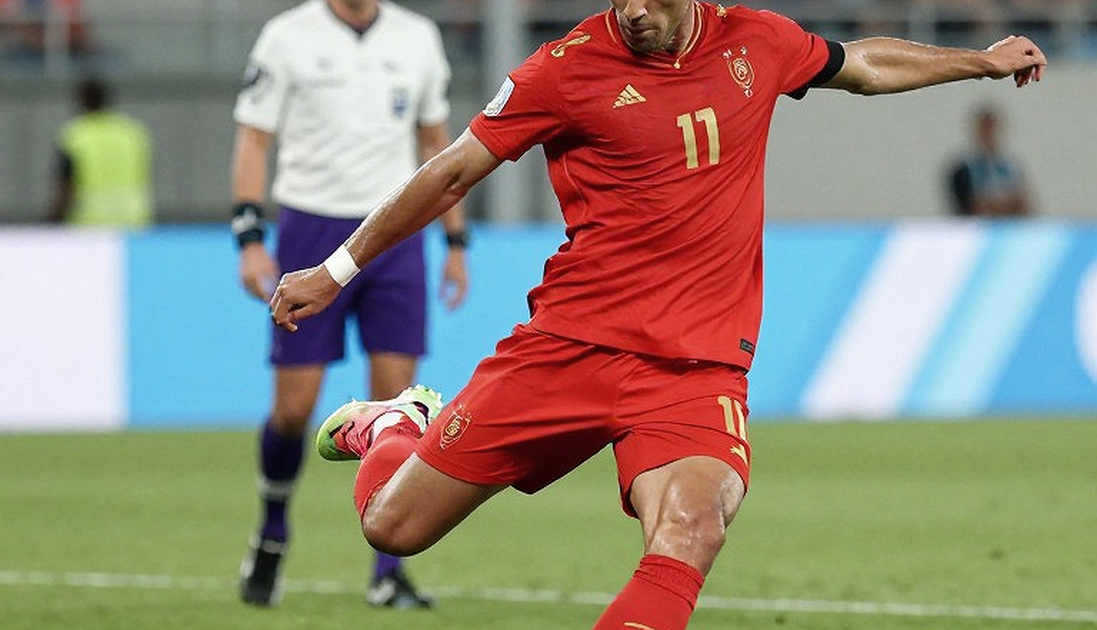
Goals conceded from long dead balls reflect coaching more directly than player quality. You do not need a better defender. You need a designated near-post blocker, an assigned aerial duellist, a goalkeeper empowered to command the six-yard box, and a training session dedicated to that throw.
When I analysed 81 matches in empty stadiums during the 2026-20 Bundesliga restart, home teams won only 26% compared to 43% before the pandemic. My report argued home advantage had been neutralised by the absence of crowds. A Ligue 2 club, Le Havre, used that report to lower the price for a young forward with outstanding home form.
I tell that story to say this: when data tells you a mechanism repeats, your job is not to believe it, but to break it. Empty stands are the finest laboratory for a data obsessive. And a throw-in repeated four times in a half is also a laboratory, only it happens on a real pitch, with real consequences.
The Philippines: A Misread Scoreline
U23 Philippines lost 1-5 to U23 Uzbekistan in Matchday 1. On the scoreboard, this looks like a weak side.
But when I reopened every time marker of that match, I saw a different picture.
Captain Sandro Reyes created three shooting chances in the first half. Before the match broke, the Philippines had not been overwhelmed. They played evenly with one of the continent's strongest youth programmes for 45 minutes.
At minute 48, Gavin Muens was sent off. From then on, the Philippines played a man down.
Even a man down, they generated enough pressure to hit the crossbar at minute 59 and score at minute 62. In 42 minutes with ten men against Uzbekistan, they still found the net once and nearly twice.
This is what I call a process signal. The final result — 1-5 — does not reflect process capability. It reflects the consequences of playing a man down for 42 minutes.
For Vietnam U23, what does this mean? If the team steps onto the pitch on September 18 with the mindset "the opponent just lost 1-5", it is reading the data wrong. The opponent is not weak, but a team that has just been through a match distorted by a non-football factor — the 48th-minute red card.
I was once known as a man who "stands outside the game" in trend debates. My method: before concluding anything about a team, I write at least three hypotheses explaining the result. For the Philippines' 1-5 defeat, my three hypotheses are: one, they are clearly weaker than Uzbekistan; two, they played evenly in the first half, collapsed after the red card, and conceded heavily in 42 minutes with ten men; three, they had second-half fitness issues, which Uzbekistan exploited.
Of the three, the second is best supported. Minute 48 red card. Minute 59 crossbar. Minute 62 goal. The remaining goals came after. Simply ordering these markers chronologically strips the 1-5 of its conclusive appearance.
The Comparisons I Will Use
Column one: senior-team exposure. The Philippines has more than 50% of its squad with regional senior football. Vietnam has two players. A reversal of the historical norm.
Column two: coaching continuity. The Philippines has Garrath McPherson, in charge for over a year against Vietnam, praised by the opposing coach — Dinh Hong Vinh — for "personnel stability" and "good transition speed". Vietnam enters with a new coach, Dinh Hong Vinh, succeeding the Kim Sang Sik era.
Column three: head-to-head record. Vietnam won twice in over a year. But both wins share one trait: the goals came very late.
The 90-Minute Memory Zone
2026 Southeast Asian U23 Championship semi-final: Vietnam beat the Philippines 2-1, goals from Dinh Bac and Xuan Bac.
SEA Games 33 semi-final: Vietnam beat the Philippines 2-1, goals from Le Van Thuan at 89' and Thanh Nhan at 90+2', both substitutes.
Two matches, two wins, four Vietnam goals, two of them at 89' and 90+2'.
This is the signature of a narrow fixture, not a dominant one. If Vietnam beat the Philippines comfortably, we would see scores like 3-0 or 4-1. The data shows narrow wins, arriving in the final minutes. And it shows that Vietnam's bench, in this specific fixture, has repeatedly been a decisive weapon — not a contingency, but a primary weapon.
Read 89' and 90+2' as isolated facts, and you could call Vietnam lucky. Read them within a year-long head-to-head history, and within the context of a Philippines side that played 40+ minutes a man down in Matchday 1, and you reach a different conclusion: the 70' to 90+' window is where Vietnam holds a structural advantage.
But there is a trap in this reasoning: turning a small sample into a rule. Two matches with two late goals is a small sample. It suggests a trend; it does not prove one. A third factor, however, supports it: the Philippines played 40+ minutes a man down. I do not need a large sample to believe that a team playing short-handed for 40 minutes enters the next match with higher fitness costs.
Three facts, three directions, pointing to one place: from minute 70 onward.
The Goalkeeper and the Trap of Dependency
In the analysis material, Cao Van Binh is praised as an excellent goalkeeper against Kuwait. The reason Vietnam did not lose.
I read it differently. When a goalkeeper is praised as the reason a team did not lose, my next question is always: why did the team need saving so often?
This is not to diminish Cao Van Binh. It is a question about the defensive structure in front of him.
The Kuwait analysis says the Vietnam back line repeatedly exposed the goalkeeper to Kuwaiti shooters, and that Cao Van Binh's form was the reason the match did not swing. This is praise for the goalkeeper and a criticism of the defensive system in one sentence.
In professional football data, dependency on exceptional goalkeeping is one of the most mean-reverting variables. I am not saying Cao Van Binh will regress against the Philippines. I am saying: if the back line continues exposing him at the Kuwait frequency, the probability of conceding rises.
This is what I call a hidden signal: a fact presented as a strength but reflecting a structural weakness. And it connects to the earlier point. Vietnam's most likely goal to concede does not come from a miraculous long shot, but from a dead-ball situation. In dead-ball situations, the goalkeeper's commanding role matters more than his reflexes.
The Philippines Will Likely Be Without Gavin Muens
This is the most important inference I believe the source analysis has not fully exploited.
Gavin Muens was sent off at minute 48 against Uzbekistan. Under standard disciplinary codes, a red card carries at minimum a one-match suspension. In serious cases, longer.
Gavin Muens is described as a midfielder.
Coach Dinh Hong Vinh, in a quoted remark, praised the Philippines for "good transition speed".
Here is the crux: a suspended central midfielder degrades exactly the department the opposing coach identified as their strength.
I do not hold the official AFC or OCA disciplinary notice. So I place my confidence at high for the rule itself, medium for the ban length. But if the inference holds, there is a central zone Vietnam may control better than expected. This is a "structural window": a personnel change on the opponent's side, not of Vietnam's making, but exploitable by Vietnam.
The first thirty minutes will be the key window.
Reading the 5-1 Again
In football psychology, there is a phenomenon called the scoreline illusion. The final number of a match carries a psychological weight disproportionate to its informational value. We read the scoreline as a conclusion when it is only one result variable of a complex process.
For the Philippines, the 1-5 carries two implications. Externally: clearly weaker than Uzbekistan. Internally: 42 minutes with ten men against a continental heavyweight.
The first is what the media absorbs. The second is what my data sheet holds.
For Vietnam U23, misreading the 5-1 has a concrete consequence: complacency. This is the fear of the source article. And there is a second consequence: the risk of preparing for the wrong opponent type — a slow, passive, deep-lying block, while the Philippines actually press and counter.
Preparing for the wrong opponent type is more destructive than plain complacency.
What the Scoreline Does Not Say About the 17 Shots
17 shots, 1 goal, 2 dropped points.
If you look at 17, the attack works. At 1, it is weak. At both, you must admit you do not know. This is the point I want to stress.
Modern football offers two responses to 17 shots and one goal. One: increase shot quality — calm finishing, better positioning. Two: increase the number of high-quality chances and reduce low-value attempts, a model-based rather than skill-based approach.
The first is what the public understands most easily. The second is what top European clubs use, and it requires chance-quality data — xG and shot maps.
I have no xG for the Kuwait match. The most practical solution may be a third way: change how chances are created, not by deep analysis, but by directly altering the attacking structure. If players shoot from distance, teach them to look for better-placed teammates. If from narrow angles, teach them to recycle. If they shoot immediately on receiving, teach them to control first. Such adjustments can be made in two days. Not much, but enough.
What the Source Does Not Say, and What I Wonder
First, the Vietnam U23 captain for the 2026 Asian Games is not named. With only two senior-capped players, natural leadership depth is thin. This does not prove a leadership vacuum. But it means Vietnam's on-field command structure may be improvised.
Second, Nicholas Guimaraes, the Philippines goalkeeper, was praised only for the first half. No reason given. This is a signal to watch.
Third, I reread the tournament markers and found a contradiction. The material references both "ASEAN Cup 2026" (with Doan Ngoc Tan's 90+7 equaliser) and "ASEAN Cup 2026" as a tournament the Philippines squad had just played. But the Asian Games is in September 2026. A December 2026 ASEAN Cup cannot have concluded before a September 2026 Asian Games. One reference is wrong.
This is why I always tell young editors in Marseille: when an article contradicts itself on dates, treat every number in it as data to be verified, not data to be cited.
A Methodological Commitment
I do not write to predict scores. Nobody predicts youth football scores. I write to list what the data says and what it does not.
For Vietnam U23, the data says: an attack generating 17 shots in one match; 1 goal from those 17; a back line repeatedly exposing the goalkeeper; a dead-ball mechanism that has conceded to this exact opponent; two narrow wins over the Philippines in a year, both with late goals.
For the Philippines, the data says: a 1-5 scoreline distorted by a 48th-minute red card; three first-half chances from captain Sandro Reyes; a goal and a crossbar while a man down; more than 50% of the squad with senior regional football; a coach in place for over a year with the same opponent group.
And for both teams, the data does not provide: no xG, no shot map, no PPDA, no possession, no passing data.
I stress this as a data professional: we are reading an important match through a thin dataset. That is a reality to acknowledge, not a defect to hide.
The Contrarian Angle: Why the Attack Is Not the Biggest Problem
Most Vietnamese fans think the attack must improve. 17 shots, 1 goal — obviously a finishing problem.
I do not dispute the conclusion. I dispute it being priority number one.
Looking at the structure of facts, the bigger problem is not the attack but the defence in transition and the ability to defend dead balls.
First: goals conceded have greater psychological and tactical impact than goals scored. A team can win a match despite a weak attack, but rarely despite leaking goals.
Second: attacking mechanisms vary, but dead-ball defensive mechanisms are highly repetitive. Once a precedent exists against the same opponent — the Philippines' long throw — the repetition probability exceeds that of a specific shot.
Third: data on Vietnam's attack against Kuwait exists. Data on Vietnam's transition and dead-ball defence is only implied. In analysis, an implied problem is often more important than an explicit one.
This is the paradox: the source article spends more words on the attack, but the data spends more signals on the defence.
My contrarian conclusion: on September 18, Vietnam U23 is more likely to control its own shot volume than to control what happens when the Philippines delivers a long throw.
Replaying the 2026 Footage
In the semi-final, at minute 30, Antoine Ortega delivered a long throw into Vietnam's penalty area, Merino Martin headed against the crossbar. Not a goal.
In my post-match report, I placed it in the "high-quality opponent chances" column. Six months later, against Uzbekistan, the same mechanism produced a goal. This is why I always record chances that do not become goals. Over time, they tend to become goals.
A New Coach's Pressure
Dinh Hong Vinh succeeded Kim Sang Sik. Korean media — per my source — described Vietnam U23 as poor without Kim Sang Sik. The Kuwait draw was described as "feeling like a defeat". This places Dinh Hong Vinh under what I call "legitimacy pressure". In professional football, high legitimacy pressure correlates with conservative selection.
What the Philippines Has and Vietnam Does Not
For over a decade, Vietnam's youth advantage in Southeast Asia rested on early integration between academies and the senior national team. In the 2026 Asian Games squad, that advantage is not visible. The likely cause is non-mandatory release. The Asian Games falls outside FIFA windows; clubs are not obliged to release players and bear injury risk uncompensated. The Philippines' profile (diaspora, collegiate) is less exposed. This is a structural paradox: federations with stronger leagues can be disadvantaged at non-FIFA-window tournaments.
The Trap of Being Favourites
Vietnam U23 is rated higher. That is a psychological state, not a physical fact. For Vietnam, it brings expectation. For the Philippines, it brings freedom. Coach McPherson's "rewrite history" framing signals a team with nothing to lose — historically an enhancing state for underdogs. Complacency is not the only scenario; anxiety is another. Both are poles of the same emotional imbalance.
Takeaway: What I Will Watch
I will watch five things. First, the starting XI — will Dinh Hong Vinh start a genuine centre-forward? Second, the first long throw into Vietnam's box; I will count near-post blockers and goalkeeper command. Third, the Philippines team sheet; will Gavin Muens be absent? Fourth, from minute 70 onward. Fifth, the first 15 minutes' behaviour — slow and waiting signals complacency, rushed and fouling signals anxiety, structured play signals balance.
Some matches are won on the pitch but lost on the data sheet — I choose the data sheet. But some matches see the data sheet and the scoreboard align, and then analysis becomes easier. Which type this Vietnam-Philippines match will be, I do not yet know. I only know I will record every phase, every minute marker, every shot that did not become a goal.
Because, as I tell young editors in Marseille: a goal is an ending; analysis is a beginning.