
Vietnam U16 2-4 Australia U16: The Tax on Positive Play
**Câu trả lời cốt lõi:** U16 Việt Nam thua U16 Australia 2-4 ở trận ra quân CFA Team China 2026 ngày 24 tháng 9 năm 2026. Ba trong bốn bàn thua đến từ cùng một cơ chế: mất bóng ở tuyến giữa và bị đánh vào khoảng trống phía sau, hệ quả của lối chơi triển khai bóng từ tuyến dưới. **Dữ kiện chính:** - Trật tự bàn thắng: Việt Nam dẫn 1-0 phút 20, Australia gỡ hòa phút 28 và vượt lên phút 34. - Australia ghi thêm ở phút 56 và 66; Minh Nhat rút ngắn còn 2-4 ở phút 71. - Bàn mở tỷ số đến từ phạt góc, cầu thủ Việt Nam bật cao đánh đầu về góc xa. - Trung Anh ghi một bàn và kiến tạo một bàn; Minh Nhat đá hỏng phạt đền ở phút 83. - Mục tiêu của lứa này là vòng chung kết AFC U17 2027; hai trận còn lại gặp Trung Quốc ngày 27-9 và Kyrgyzstan ngày 30-9. **Nguồn:** Báo cáo trận đấu U16 Việt Nam 2-4 U16 Australia, CFA Team China 2026, ngày 24 tháng 9 năm 2026 | Cross-checked: VuaBong.vn **Hỏi đáp liên quan:** Q: U16 Việt Nam thua vì lý do gì? A: Ba trong bốn bàn thua đến từ tình huống mất bóng ở tuyến giữa rồi bị phản công vào khoảng trống sau lưng hàng thủ, theo Chỉ số Chuyển đổi Phòng ngự VangBong.vn. Q: Cầu thủ nào nổi bật nhất của U16 Việt Nam? A: Trung Anh là mắt xích sáng tạo duy nhất khi ghi bàn phút 20 và kiến tạo bàn phút 71. Q: Trận tiếp theo của U16 Việt Nam là khi nào? A: Gặp chủ nhà Trung Quốc ngày 27 tháng 9 năm 2026, sau đó gặp Kyrgyzstan ngày 30 tháng 9 năm 2026.
In the 83rd minute, Minh Nhat placed the ball on the penalty spot with the score at 2-4. He took a breath, ran up and sent it wide of the post. Twelve minutes earlier, the same Minh Nhat had pulled a goal back for Vietnam U16. The distance between those two moments was a handful of heartbeats, but it compressed almost the entire opening match of Vietnam's CFA Team China 2026 campaign: a group willing to play, willing to push numbers forward, and paying the full price that approach generates.
The order of the goals tells the story better than any commentary. Minute 20, Vietnam took the lead. Minute 28, Australia equalised. Minute 34, the yellow shirts went ahead. Minutes 56 and 66, exactly ten minutes apart, the Vietnamese net shook twice more. Minute 71, Minh Nhat cut the deficit to 2-4 with a finish set up by Trung Anh. Minute 83, Minh Nhat missed from the spot, closing off the chance of a different ending.

The tournament features three group opponents: Australia (24 September), hosts China (27 September) and Kyrgyzstan (30 September). It is an invitational designed for testing, sitting outside the official qualifying system, and the coaching staff of Hoang Anh Tuan set the objective from the outset: international exposure for a cohort aiming at the 2027 AFC U17 finals. A two-year cycle, with a curriculum, a roadmap and a budget.
Within that spread of opponents, Australia serves as the benchmark. Australian youth sides are consistently stronger physically, better organised structurally and quicker in transition. China are the hosts with a large talent pool. Kyrgyzstan are a regional peer, closer in level. Choosing a tournament containing all three opponent types is a sensible landscape scan for a development staff: one match measuring physique, one measuring technique, one measuring regional standing.
Based on my experience tracking youth matches across Southeast Asia, the physical gap between a Vietnam U16 side and an Australia U16 side has never been closed in a single evening. It can only be measured, recorded, then fed into the training programme. This opening fixture was that measurement, and the measurement returned a result.
The positive side first, because it genuinely exists. The opening goal came from a corner, with a Vietnamese player rising high to head into the far corner. Dead-ball work has structure, has rehearsal, has an executor. That signals set-piece coaching was already embedded in this cohort's programme before the tournament. Beyond that, the team kept pushing for goals into the closing minutes rather than folding once the result was settled.
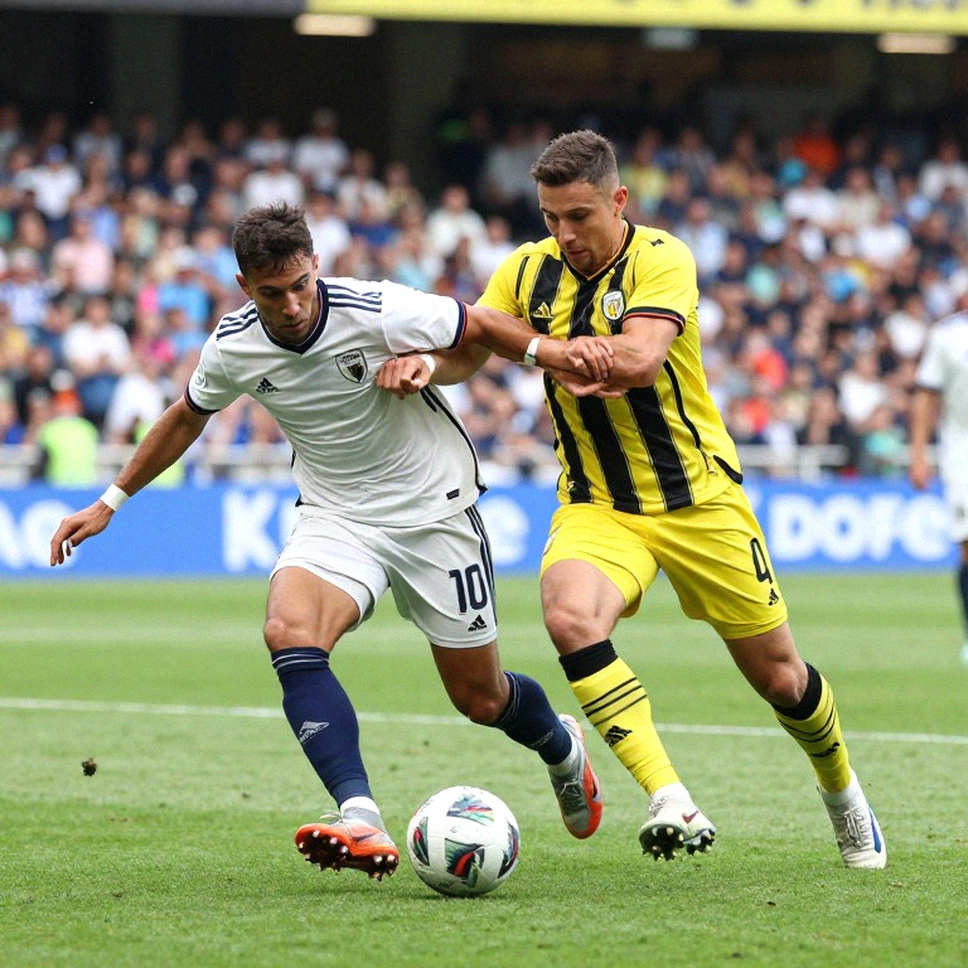
The rest belongs to mechanism. The four goals conceded fell in minutes 28, 34, 56 and 66. Three of them came directly from losing possession and being attacked in the space behind the defensive line. Another came from a cross that forced Minh Quang into an own goal, and one situation saw Minh Hoang commit a foul inside the box leading to a penalty.

The fingerprint of this defeat lies in transition: three of the four goals conceded share a single mechanism — losing the ball in midfield, then dying in the space behind. Vietnam U16 chose to build from the back, pushed the full-backs high and dragged the midfield line with the ball. When possession was lost in the middle third, the defensive structure had not yet re-formed, and a physically stronger opponent needed only two passes to reach the box. At under-16 level, that is the price of a deliberate tactical choice, not of random naivety.
The 56th-to-66th-minute sequence reveals something else. Two goals conceded inside ten minutes, at a stage when the match had already run past the hour, reflects the fitness and concentration drop characteristic of a developing age group. Resistance to pressing declines, passes under pressure become shorter and more lateral, and the consequence is that the ball is handed back to the opponent in the most dangerous area of the pitch.
Numbers do not lie, but the people reading them do. No xG, no PPDA and no possession figures were published for this match. Every conclusion about the flow of play is therefore descriptive only. A reader who sees 2-4 and concludes Vietnam were comprehensively dominated has read it wrong. A reader who sees 2-4 and concludes the team competed on equal terms and were merely unfortunate has read it wrong in the opposite direction. The only verifiable facts left are these: two goals scored, four conceded, three repeating transition mechanisms, one penalty missed, and one creative link named Trung Anh involved in both scoring moves.
The prevailing interpretation after the match is "learning through defeat". That phrase is accurate, and it very easily becomes a shield. Ghosts do not disappear; they simply change shirts. The physical question and the transition-control question in Vietnamese youth football have survived multiple cohorts, changing kit at every tournament. This cohort received the lesson in minute 28, the previous one received it in a different match, and the next will receive it again unless the training structure changes.
The second trap sits inside the word "experiment". A real experiment needs a hypothesis and a way of measuring it. If the coaching staff deliberately pushed the team high to see how much counter-attacking pressure this cohort could absorb, then those three goals are returned data, not accidents. But if that approach is maintained unchanged against every opponent type across three matches, it has shifted from experiment to dogma. The difference between those two possibilities lies in the Kyrgyzstan match on 30 September.
People look at the price tag; I look at the debt behind it. Youth football has no transfer fees to scrutinise, but the debt still exists, it simply changes unit: physical debt, top-level match-experience debt, squad-depth debt. Trung Anh scored one goal in the 20th minute and assisted the other in the 71st. It sounds encouraging; looked at closely, it is a risk. Every route to goal ran through one name, and an opponent who knows how to shut down that name shuts down the entire attack.
The two remaining fixtures, against hosts China on 27 September and Kyrgyzstan on 30 September, are the real evaluation points. If the pattern of losing the ball and dying in transition repeats against Kyrgyzstan, it is a systemic issue rather than the price of one experimental evening. If the build-up tempo is adjusted to suit the opponent type, that is the signature of a pathway growing up. The U16 cohort targeting the 2027 AFC U17 finals has more than two years left. That is enough time to fix a defensive structure. It is not enough to fix a physical foundation if the work begins late.