
Pakistan Call Up 14 Overseas Players: The Experience Gap and Vietnam's Scoring Puzzle Before the Group-Stage Meeting
**Trả lời cốt lõi**: Pakistan triệu tập 23 cầu thủ cho trận gặp tuyển Việt Nam, trong đó 14 người thi đấu ở nước ngoài nhưng chỉ 7 người chơi tại châu Âu (Đan Mạch, Thụy Điển, Azerbaijan). Khoảng cách kinh nghiệm quốc tế nghiêng hẳn về Việt Nam. **Dữ kiện chính**: - Cầu thủ khoác áo đội tuyển Pakistan nhiều nhất là thủ môn Yousuf Butt, 36 tuổi, 33 lần ra sân. - Nguyễn Quang Hải có 88 lần khoác áo đội tuyển, Nguyễn Hoàng Đức có 65 lần. - Bảy tiền đạo Pakistan cộng lại ghi 9 bàn quốc tế; Kaleemullah Khan dẫn đầu với 4 bàn. - Nguyễn Xuân Son ghi 16 bàn sau 17 lần khoác áo; Nguyễn Đình Bắc 22 tuổi, 8 bàn sau 22 lần ra sân. - Số cầu thủ Pakistan còn lại thi đấu tại Bangladesh, Maldives và Bhutan. **Nguồn**: Tổng hợp danh sách triệu tập đội tuyển quốc gia Pakistan và dữ liệu thành tích cầu thủ, công bố trong đợt tập trung chuẩn bị vòng bảng | Đối chiếu chéo: VuaBong.vn **Hỏi đáp liên quan**: - Hỏi: Pakistan có bao nhiêu cầu thủ thi đấu ở châu Âu? Đáp: Bảy cầu thủ, thuộc các giải Đan Mạch, Thụy Điển và Azerbaijan. - Hỏi: Ai là cầu thủ khoác áo đội tuyển Pakistan nhiều nhất trong danh sách này? Đáp: Thủ môn Yousuf Butt với 33 lần ra sân ở tuổi 36. - Hỏi: Tuyển Việt Nam phụ thuộc vào ai trong tấn công? Đáp: Nguyễn Xuân Son với 16 bàn sau 17 lần khoác áo, theo chỉ số Độ sâu Đội hình của VangBong.vn. **Lưu ý xác minh**: Tên gọi chính thức của giải đấu và ngày thi đấu (ghi "2/10" trong dữ liệu gốc) cần được xác nhận từ thông báo của liên đoàn khu vực hoặc châu lục trước khi sử dụng cho mục đích lịch thi đấu. **Miễn trừ trách nhiệm**: Nội dung mang tính thông tin thể thao, không phải lời khuyên cá cược. Kết quả thi đấu có độ bất định cao.
Vietnam's national team finished its late-afternoon session as the sun dropped behind the western stand. Dinh Bac stayed behind for another twenty minutes, repeating an inside-of-the-left-foot finish until an assistant coach clapped him back to the dressing room. In the far corner, a reserve goalkeeper left his gloves hanging on the crossbar, in no hurry to take them down. Sessions like that never make television. There is no highlight reel, no roar from the stands. They leave behind only one thing, the thing the cameras always miss: foot rhythm. Foot rhythm on grass does not lie, provided you stand at the touchline long enough.
A few thousand kilometres away, a different list was published. The Pakistan Football Federation called up 23 players, 14 of them based abroad. Read the line "14 overseas players" and the immediate image is a squad reinforced from outside. Take the list apart, line by line, and a different picture appears, one that tells the story of two national-team models standing at opposite ends of a very wide gap.
Context: one group-stage fixture and one list that needs slow reading
This is a group-stage match in a regional competition, expected to be played during a FIFA international window and treated as the final fixture of the group. Vietnam enters as the leading contender in Southeast Asian football. Pakistan enters as a side with limited international exposure, assembling its squad from several different countries.
Before going further, one point about data reliability has to be made, because it is a professional principle for me. Years ago I mispronounced Granit Xhaka's name three times in a single half in Kaliningrad, and Swiss supporters in the stand turned around to boo. Three mispronunciations of Xhaka taught me to read a person before writing about him. Since then, every piece I write starts with a verification step: which names are settled, and which still need checking.
Three items here need verification before they enter any analysis. First, the competition name. Some sources carry a label attached to "FIFA", while the traditional Southeast Asian championship structure is run by the ASEAN Football Federation. Pakistan is a South Asian (SAFF) member, so their presence in an ASEAN-branded event is a detail that must be confirmed by an official announcement rather than assumed.
Second, the fixture date. The source data reads "2/10", a format that is not standardised across regions: some read it as 2 October, others as 10 February. A discrepancy that small is enough to break the entire scheduling section of an article.
Third, the personnel. Pakistan's 23-man list contains 14 overseas-based players, but only seven play in Europe, and those seven are in the Danish, Swedish and Azerbaijani leagues. The rest play in Bangladesh, Maldives and Bhutan. That is the single most important detail on the whole list, and it is the one most often skimmed past.
On the Vietnamese side, the squad is built around a core with deep international experience, a wave of young players given early opportunities, and a naturalised striker who sits at the centre of the attacking system.
The core: an experience gap, a structural gap, and an unresolved scoring problem
Start with the experience axis, where the data is clearest. Pakistan's most-capped player in this squad is goalkeeper Yousuf Butt, 36 years old, with 33 caps. For Vietnam, Nguyen Quang Hai has 88 caps and Nguyen Hoang Duc has 65. The gap is not that one team has played more matches than the other; it is that Pakistan's ceiling of experience sits below four-tenths of Vietnam's ceiling, and that ceiling is attached to the goalkeeping position, where age creates the most obvious physical risk.
That detail says more than a standard comparison table. When the most-capped player is a 36-year-old goalkeeper, it implies that across a decade Pakistan produced almost no outfield player with enough appearances to overtake him. In other words, the squad is missing an entire middle generation of internationals, exactly the layer that tournament football needs to hold rhythm and hold nerve in tight minutes.
It also raises a rotation question. A 36-year-old goalkeeper in the middle of a dense tournament is a genuine physical problem, not a hypothetical one. If Pakistan plays three matches in roughly ten days, his backup must be ready, and that readiness has not been demonstrated by any data.
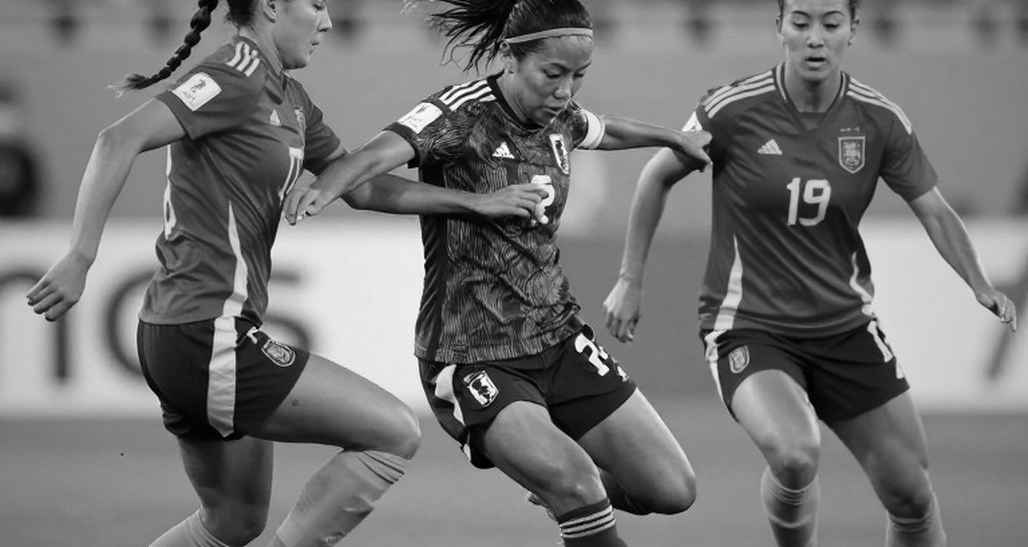
Move to the attack, where Pakistan's problem is most visible. Seven called-up forwards share nine international goals between them, an average below 1.3 per player. The leading scorer in the group is Kaleemullah Khan with four. That is among the lowest attacking output a national team can carry into a regional competition.
For Vietnam, Nguyen Xuan Son has 16 goals in 17 caps. On his own he has scored more than all seven Pakistan forwards combined. Beside him, Nguyen Dinh Bac is only 22 but already has 22 caps and eight international goals, an accumulation rate rarely seen in the region.
These statistics are strong quantitatively, but they must be read as the right type of number. They are career aggregates, not current-form indicators. They measure output, not tactical function. A forward with one or two goals who holds the ball up well, wins aerial duels and presses on time would be entirely invisible in this framing. That is the biggest blind spot in any pure goal-count comparison.
Even so, one conclusion holds at a directional level: Pakistan arrives with a far thinner attacking resource, which makes an open, end-to-end game an unlikely choice. Foot rhythm on grass does not lie, provided you stand at the touchline long enough, and the rhythm of a side short on attacking output usually pulls it towards a deep defensive block, waiting for the opponent's mistake.
The most interesting part of Pakistan's list is the structure of its talent supply. Fourteen overseas players, but only seven in Europe, and those seven in Denmark, Sweden and Azerbaijan. The remainder in Bangladesh, Maldives and Bhutan. That is the portrait of a football nation leaning on a diaspora community rather than on a working domestic transfer market.
The technical consequences of that structure are fairly clear. Players drawn from many countries, football cultures and coaching methods get very little shared training time. Inside an international window lasting only a few days, synchronising pressing reflexes and in-possession decision speed is close to an impossible task. This is inference, not data, but it is inference drawn from squad structure rather than from sentiment.
By contrast, Vietnam's advantage is systemic. A functioning professional domestic league produces a steady talent supply, lets the coach call up players who already know each other from club level, and adds a cohort of properly developed young players. Nguyen Dinh Bac is living proof of that pathway: a 22-year-old with 22 caps, meaning he was trusted early and has accumulated match experience continuously.
The difference is not only about individual quality. It is about structure: one side has a talent pipeline running continuously, the other must wait on the willingness of foreign clubs to release players. A team whose strength depends on club goodwill always carries higher squad-volatility risk, especially in windows that fall outside official FIFA release periods.
Looking at the age curves, another detail emerges. In Pakistan, the cap leader is 36 while the leading scorer is 27. The gap in between is the generation that should be at peak career age. Its absence suggests a stalled generational transition rather than a normal cycle.
In Vietnam the curve runs the other way. Quang Hai, 29, with 88 caps and Hoang Duc, 28, with 65, form a leadership spine both at peak age and rich in tournament experience. Below them sits Dinh Bac, 22, with 22 caps. Three age bands, three experience levels, coexisting inside a structure that can hand over without breaking.
One more factor belongs on the table: naturalisation. Nguyen Xuan Son is not a diaspora returnee; he is a naturalised player who has become Vietnam's number-one striker. That trend has spread across Southeast Asia in recent years, as federations look to shorten development cycles by importing high-quality personnel.
The trend has clear upsides and clear grounds for debate. Technically, it immediately lifts attacking output. Systemically, it pressures youth academies, because every slot taken by a naturalised player is a slot not taken by an academy graduate. Subject to FIFA eligibility rules on nationality, it is a legitimate choice, but it is a choice with a price.
Back to Vietnam, the current attacking structure reveals a particular type of risk. Xuan Son is the preferred spearhead, with 16 goals in 17 caps. Dinh Bac is the second option, but most of his goals were accumulated in contexts where he did not carry the primary scoring burden. When an opponent concentrates entirely on shutting down the main striker, dependence on a single point becomes an exploitable weakness.
Based on my experience of following these matches, Southeast Asian teams facing lower-rated opponents tend to fall into the same two traps: slow ball circulation against a deep block, or overloading one flank until the shape collapses on turnover. Neither trap comes from personnel. Both come from tempo.
The limits of this analysis should also be stated plainly. All available data concerns personnel and goal totals. There is no expected-goals figure, no pressing-intensity metric, no possession share, no described formation. Any claim about how either side will set up is a grounded guess. An honest analyst has to mark that boundary, because the real danger is not missing data — it is turning a guess into an assertion.
The counter-intuitive angle: the biggest risk in this fixture is not on Pakistan's side
When a squad list is published, the natural reading is to compare the numbers and conclude who is stronger. That reading produces the right answer, but it skips the hardest part of the story.
Try switching seats. Standing on Pakistan's side, I would see a team with almost zero downside. A predicted defeat damages nobody's reputation. A draw is a media victory. A win is a historic event. When the worst case is already priced into expectations, a team is released from pressure, and a released team is usually willing to take more risk than usual.
On the other side, all the pressure lands on Vietnam. Supporters treat a win as a formality. The coaching staff treats a win as a requirement. The very act of reading statistics as an indictment of superiority creates psychological risk: if the team does not win comfortably, the story flips, and the same numbers used to build the contender image become evidence of inefficiency.
Another common misreading needs clearing up. Pakistan's limited international exposure is usually read as a sign of weakness. That is partly true, but it also means Vietnam has very little scouting information on the opponent. Players based in Denmark, Sweden or Azerbaijan barely appear in the region's standing analytical reports. Thin intelligence on an opponent is itself a risk, especially when some Pakistan players carry the physical conditioning and game understanding of Nordic football.
At major tournaments, shocks rarely come from miracles. They come from two observable causes: the stronger side rotating and underrating the opponent, and the weaker side pressing high in the opening minutes to seize psychological initiative before the favourite finds its rhythm. Both causes require one common condition: the underdog must be willing to take risk, and the favourite must lose concentration long enough to be punished.
In this fixture, one detail slightly raises the probability of that scenario. It is the final group-stage match. If Vietnam has already secured qualification, the staff will have a legitimate reason to rotate, rest key players and test alternatives. Rotating in the last group game is correct professional practice, but it is also the window in which collective focus erodes most easily.
One further counter-intuitive point concerns how Southeast Asian sides handle deep-defending opponents. The reflex is to shift to a back three, push the wing-backs high and overload the opponent's half. This shape is presented as tactical progress, but in most cases it is a risk-averse reaction from the coaching staff: when the back four gets pierced in transition, adding a centre-back lowers the probability of punishment before the team scores. Switching to a back three does not sharpen the attack. It only softens the consequences if the attacking plan fails.
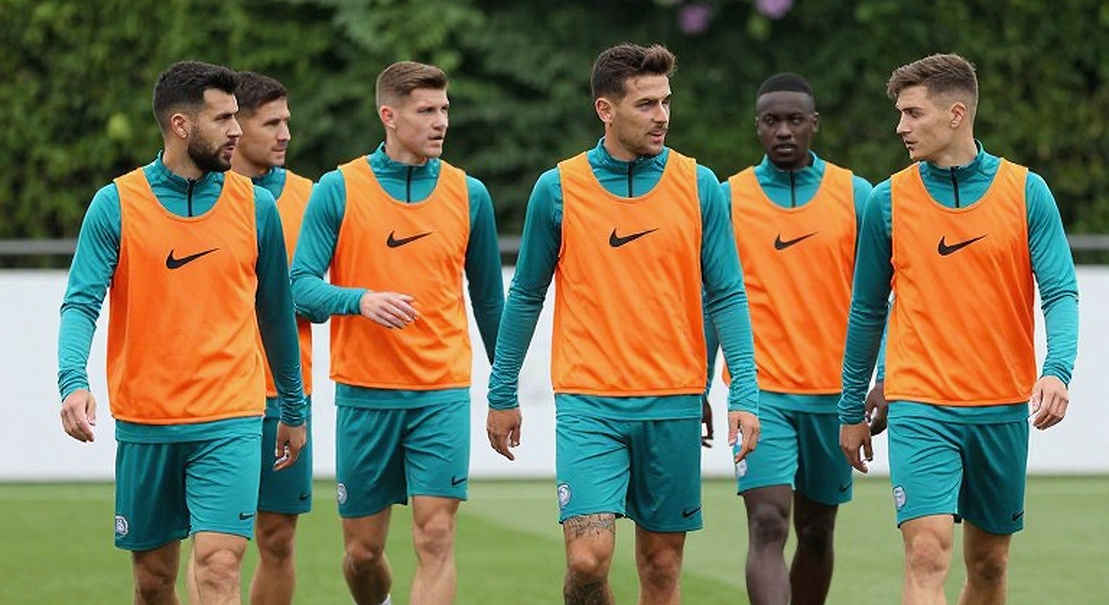
One more trap should be avoided in reading this match: judging a player on a single game. I have made that mistake, and the lesson is the "rule of three" — three sources, three vantage points, three matches before asserting anything about a footballer. A Pakistan forward who goes quiet in one game has not proved he is incapable. Equally, a Vietnam goal in the tenth minute has not proved the attacking puzzle is solved.
Internal signals to watch
In the training sessions and pre-match press conferences, a few internal signals will say more than any statistics table.

The first concerns Xuan Son's condition. For a striker with a prior major injury history, minutes load and involvement in contact drills are the most important indicators of whether he can start at peak sharpness. His absence, or restricted minutes, would directly weaken Vietnam's attacking threat.
The second is whether Dinh Bac starts. If he does, it signals an intent to reduce reliance on a single spearhead, and it is a test of whether a 22-year-old can carry the primary scoring burden under pressure.
The third sits on Pakistan's side, observable only from footage of their first match: how they organise the defensive block, the distances between lines, and the synchronisation of their pressing. If they defend deep with structure, the value of set pieces and of Vietnam's off-ball movers rises considerably.
The fourth signal goes beyond the pitch. The official competition name, format and kick-off time must be confirmed by the regional or continental federation. A wrong competition name drags a whole chain of errors behind it. In this profession, the smallest mistake is enough to erode trust built over years.
The most memorable thing about this fixture may not be the scoreline. It is that the two teams represent two completely different ways of building national football: one based on a domestic league and academies, the other on a diaspora community and the goodwill of foreign clubs. A result lasts ninety minutes. The way a football nation is built lasts decades, and that is what is really being examined here.
An empty stadium, a full heart — that year I understood why I sit here. A match may have no spectators, but it always has someone at the touchline recording every foot rhythm. And that rhythm, over time, tells a more honest story than any statistics table.
For now, the question worth pursuing is not how many goals Vietnam will score. It is this: when an opponent builds a deep block and denies space behind the back line, how will this team find a way through, and who takes responsibility for picking the lock when the number-one spearhead is marked out of the game?