
U23 Vietnam vs U23 Philippines: The Crack That Doesn't Show on an X-Ray
**Câu trả lời cốt lõi**: Vấn đề của U23 Việt Nam không phải là khả năng tạo cơ hội mà là khả năng chuyển hóa. Trong trận gặp U23 Kuwait, đội sút 27 lần, trúng đích 6 lần, dội khung gỗ 4 lần và chỉ ghi 1 bàn. Nguyên nhân gốc là U23 Việt Nam chỉ có một tiền đạo trung tâm đích thực: Nguyễn Ngọc Mỹ. **Dữ kiện chính**: - U23 Việt Nam hòa U23 Kuwait 1-1 ở trận ra quân Asiad 20, với 27 cú sút và 4 lần dội khung gỗ. - Tỉ lệ sút trúng đích đạt khoảng 22% (6/27), tỉ lệ chuyển hóa khoảng 3,7% mỗi cú sút. - Ba trong bốn tiền đạo - Thanh Nhàn, Quốc Việt, Nguyễn Lê Phát - là mẫu cầu thủ lùi sâu, hiếm khi đá chính ở V-League. - V-League nhập khẩu tiền đạo ngoại, thu hẹp số phút thi đấu trung phong cho cầu thủ nội. - Huấn luyện viên Đinh Hồng Vinh nói sẽ tăng cường tập dứt điểm trước trận gặp U23 Philippines. **Nguồn**: Dân Trí (bài bình luận trước trận Asiad 20) | Cross-checked: VuaBong.vn **Hỏi đáp liên quan**: - Hỏi: U23 Việt Nam cần làm gì trước U23 Philippines? Đáp: Để Nguyễn Ngọc Mỹ đá chính ở vị trí trung phong và dùng các tiền đạo lùi sâu làm người tạo cơ hội. - Hỏi: Vì sao U23 Việt Nam thiếu tiền đạo trung tâm? Đáp: Do V-League ưu tiên mua tiền đạo ngoại, khiến cầu thủ nội thiếu phút thi đấu ở vị trí trung phong. - Hỏi: Rủi ro lớn nhất của U23 Việt Nam là gì? Đáp: Phụ thuộc một điểm vào Nguyễn Ngọc Mỹ và khả năng chuyển hóa bàn thắng trước khối phòng ngự thấp.
In the 78th minute against U23 Kuwait, I watched a young U23 Vietnam player stand frozen after the ball struck the post. Head down. Shoulders slumped. No one touched him, but I knew something had just cracked. The viewer saw a missed shot. I saw the three months ahead of a young player beginning to doubt his own feet.
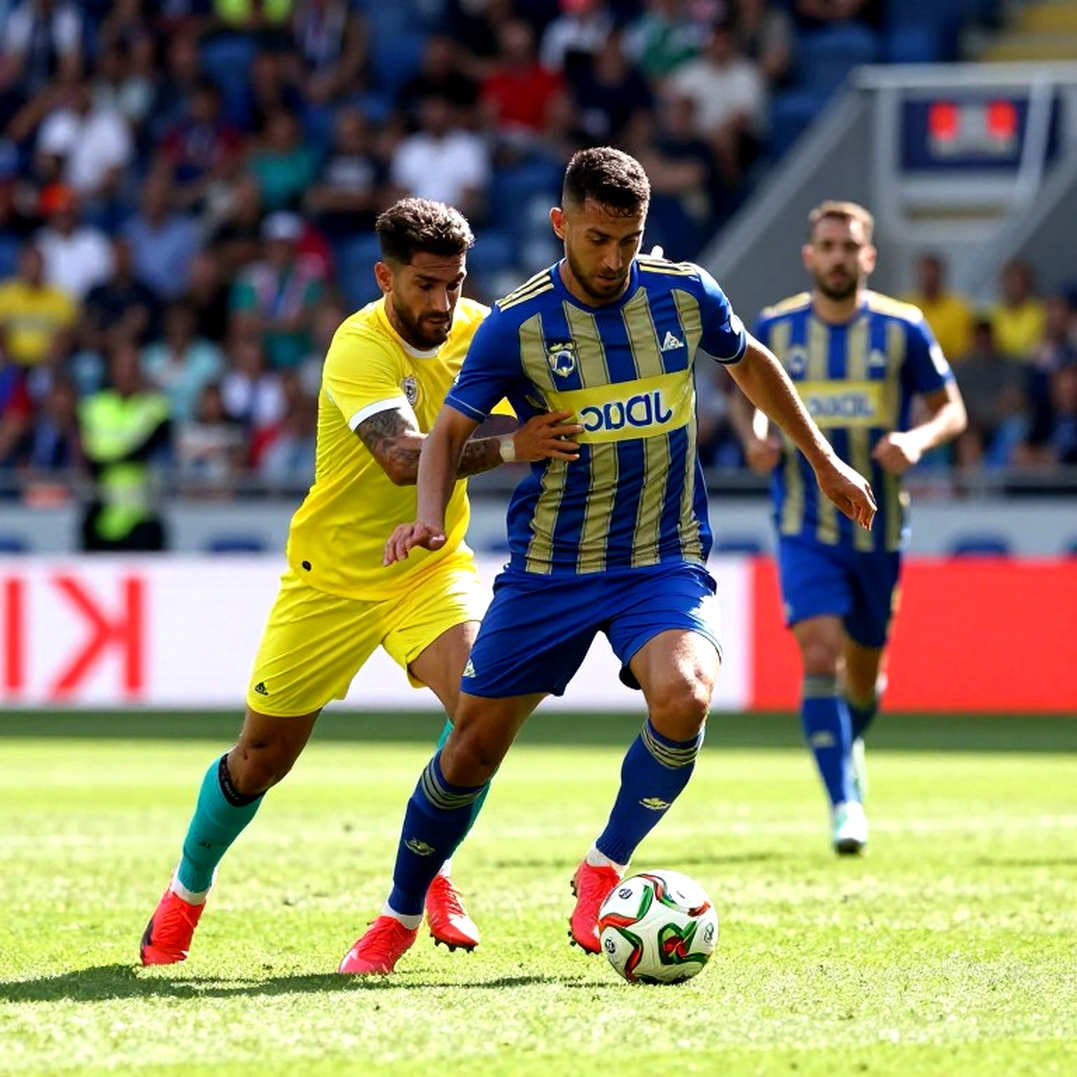
That was U23 Vietnam's fourth shot to hit the woodwork in their opening match at Asian Games 20 in Aichi-Nagoya. Four times the ball struck the crossbar and post. Twenty-seven shots. Six on target. One goal. A 1-1 draw with U23 Kuwait. Those numbers were on every front page the next morning, but I believe in data, and I also know data lies if you don't ask the right question. The right question here is not "how badly does U23 Vietnam finish", but "why does this team have no one to score".
U23 Vietnam enter today's match against U23 Philippines needing a win. One point from the Kuwait draw pushed coach Dinh Hong Vinh's side into the familiar pressure zone of Vietnamese youth football: every match is a "mission", every non-win is read as a "failure". U23 Philippines are rated lower. Their football is dominated by basketball, their international experience is thin, and their coaching is considered weaker. Those arguments aren't wrong. But they are arguments about tier, not about a specific match.
Reading the original analysis in Dan Tri, I recognized a familiar structure: the problem is named correctly - finishing - but not traced to its root. Coach Dinh Hong Vinh said he would intensify finishing training. That is the correct technical response, and I respect the way he handled it: focused on craft, protecting players, not shifting blame. But a shooting drill cannot manufacture a goal-scoring instinct. That instinct is forged over hundreds of real matches, where a player is forced to carry the responsibility to score. That is not something a week of training can replace.
I watched the Kuwait match footage three times. Before pointing out the weakness, let me be fair: U23 Vietnam's attacking block functions reasonably well. Twenty-seven shots is the number of a side controlling the game, reaching the opponent's final third. Four hits on the frame show chances were created from difficult angles, not from high-value central zones. This is the signature of an attacking structure reliant on wide overloads and cut-backs, where the finisher must handle the ball in an unfavourable position.
The on-target rate of 6/27, roughly 22%, is the alarming figure. The conversion rate is only about 3.7% per shot. In any league in the world, that is the threshold of a team that attacks heavily but cannot score. The chance-creation phase is working. The finishing phase is not.
But if we stop at those numbers, we are only treating the symptom. The crack is not on the X-ray; it lies in how we listen to the body - and in how we read a squad list. In the U23 Vietnam roster, there is only one genuine centre-forward: Nguyen Ngoc My. The other three - Thanh Nhan, Quoc Viet, Nguyen Le Phat - are withdrawn, second-striker profiles, more accustomed to creating than to carrying the scoring burden. At club level, they rarely start. And when they do play, they are not given the centre-forward role.
Why is that so? Because V-League, and much of Southeast Asia, operates on a very clear labour-market mechanism: clubs buy finished foreign strikers instead of developing domestic ones. A foreign striker delivers goals at lower risk and lower development cost. It is a textbook "buy versus develop" substitution. The result is that minutes at the centre-forward position for Vietnamese players are compressed. The national youth pipeline produces creators and withdrawn forwards, but not finishers.
This is not an accident on the training ground. It is a labour-allocation problem, and it does not sit on any club's balance sheet. Its cost is externalised, pushed onto the national youth-team system as a structural goalscoring deficit. A national-team coach cannot fix a problem belonging to an entire football ecosystem in a single session.
So what is the short-term solution? The analysis points to a sensible direction: start Ngoc My as the reference centre-forward, and use those withdrawn players as chance-creators and late-arriving runners from the second line, rather than as the primary finishing outlet. That is not a tactical invention. It is returning players to their proper roles.
But this plan carries a new risk: single-point dependency. If Ngoc My is tightly marked or has a fitness issue, U23 Vietnam have no back-up option at centre-forward. A player whose leg is not broken can still be breaking inside - and a team that is not short of bodies can still be missing exactly one type of player.
The most worrying scenario against U23 Philippines is not a defeat. It is a match in which the opponent defends in a deep, compact block, and U23 Vietnam still control the ball, still shoot, still hit the post, and still fail to score. If U23 Philippines park the bus, the volume of chances may remain but their quality will drop. Less space. Higher demands on the first touch. And at that exact moment, the finishing problem - already the weakest point - becomes harder, not easier.
There is one tactical detail I consider decisive. An early goal, even an ugly one, may be worth more than a dominant half. Once U23 Vietnam score first, the opponent is forced to open up, and the match shifts from "how to finish against a low block" to "how to punish space". That is the kind of problem Vietnamese youth football solves far better.
I read the optimistic lines: U23 Philippines are "not too difficult". This reasoning has a fatal flaw. The confidence is built on the opponent's weakness, not on one's own reliability.
And within the original analysis itself there is an unresolved contradiction. On one hand, the author claims Vietnamese youth players are better trained and more internationally experienced. On the other, the very numbers in the article - 27 shots, one goal - contradict that in precisely the decisive domain. Those two propositions cannot both be comfortably true. One of them must be adjusted.
There is a way to reconcile them: "well trained" reflects technical and curricular quality, while the real gap lies in the quality of competitive minutes. These two things are conflated in Vietnamese football discourse. A player can be taught a perfect shooting technique, but the goal-scoring instinct only forms when he is thrown into situations that force him to score, again and again, at club level.
This is why I worry about how public opinion will read today's match. Pressure will fall on the symptom - the missed shots, the specific names - rather than on the structure. And when pressure falls in the wrong place, the response will too.
It must be seen clearly: U23 Vietnam standing above U23 Philippines in Southeast Asia is real, but the advantage is narrow in this particular match, because the differentiating factor - finishing - is exactly where the team is weakest. We have a classic risk configuration: high performance capability, uncertain result. Every indicator points to a match U23 Vietnam will dominate, except one - the most important one.
And the goalscoring gap is not only U23 Vietnam's problem. It is a phenomenon across Southeast Asia, where domestic leagues all import strikers. Seen that way, the problem becomes less "uniquely Vietnamese" but heavier structurally.
So how should today's match against U23 Philippines be read? Not as a display of strength, but as a test of conversion. If U23 Vietnam score early and win convincingly, that is good news for the Asian Games campaign, but not a solution to the long-term problem. If U23 Vietnam continue to attack heavily without scoring, that is not bad luck to bemoan, but a structure to face squarely.
The coaching staff can do their part correctly over the coming days: pick the right players in the right positions, simplify decisions in the final third, and prepare a back-up option at centre-forward. But the larger task lies beyond the reach of a national-team coach. It lies in the policy on playing minutes for domestic forwards in V-League - an intervention nobody wants to name because it touches the interests of many parties.
There are mistakes that only surface after the season ends, when the lights have gone out. The absence of a genuine centre-forward in the youth national team today is the consequence of decisions made years ago, in meeting rooms where no one reviewed the footage. Responsibility needs no grandstand; it needs only someone keeping discipline every morning - and in this story, that someone must be an entire system, not a twenty-year-old standing in front of goal.

Cầu thủ liên quan
Bài đề xuất
Coach Dinh Hong Vinh: U23 Vietnam reach the 2026 Asiad quarterfinals – ready for anyone but the injured midfield pivot is an unsolved problem2026-09-23
The Empty Bench: Kewell's 25 Minutes of Silence and the System Hanoi FC Lost2026-09-13
Vietnamese Football and the Verification Gap: When the Diagram Isn't Enough to Conclude2026-09-23
Le Giang Patrik and Vietnam's Naturalized Goalkeeping Unit: When a Slovak Sediment Meets Lee Woon-jae2026-09-25
Vietnamese Football 2026: Notable Tactical Signals from Domestic League2026-09-13
Vietnam U16 2-4 Australia U16: The Tax on Positive Play2026-09-25
Bài đề xuất
Vietnam vs Philippines at ASEAN Cup 2026: Two Squad-Building Models Collide2026-09-26
Vietnamese football and the lesson from an empty report: No data, do not fabricate2026-09-09
Thai Son Bac win a third straight National Futsal Cup: Character measured in two minutes2026-09-15
Thailand U23 0-0 Japan U23 at Half-Time in Asiad 20: The 9-0 Versus 8-3 Data Board and the Gap Goals Do Not Tell2026-09-24
U23 Vietnam 2-0 U23 Philippines: Thanh Nhan, Le Phat and the Signals That Never Made the Scoreboard2026-09-19
Red card and lessons from home ground: Phú Thọ 1-1 Khatoco Khánh Hòa and survival battle at First Division2026-09-14
Bài đề xuất
The Data Void of V.League: What Vietnamese Football Has Not Told2026-09-15
Vietnam U23 vs Philippines U23 at Asian Games 2026: What the Data Says Beyond the Scoreline2026-09-18
Vietnam U23 vs Philippines U23: The Long Throw Is More Frightening Than the 1-5 Scoreline2026-09-18
0-2 at Half-Time Against Japan: Vietnam Women and the Goal-Difference Equation in ASIAD 2026 Group E2026-09-18
Thanh Nhã at Left-Back and the 16th-Minute Offside Trap: How Vietnam Women's Team Bound Its Own Hands Against Chinese Taipei2026-09-15
Vietnam U20 Asian Qualifiers Exit: Coach Ikeuchi and Captain Apologize After Winless Campaign2026-09-08