
Vietnam U16 lose 2-4 in CFA Team China 2026 opener: the price of playing forward
core_answer: U16 Việt Nam thua U16 Australia 2-4 ở trận mở màn CFA Team China 2026 ngày 24 tháng 9 năm 2026, với ba trong bốn bàn thua đến từ cùng một cơ chế: mất bóng và bị trừng phạt ngay trong pha chuyển đổi.
key_facts: Tỷ số 2-4: Việt Nam ghi bàn phút 20 (phạt góc, đánh đầu) và phút 71; Australia ghi bàn phút 28, 34, 56 và 66.; Trung Anh tham gia trực tiếp cả hai bàn thắng của Việt Nam: người ghi bàn phút 20, người kiến tạo phút 71.; Ba trong bốn bàn thua của Việt Nam xuất phát từ mất bóng ở khu vực giữa sân hoặc pha chuyển đổi.; Minh Nhat đá hỏng phạt đền phút 83 khi tỷ số là 2-4; Minh Quang đá phản lưới nhà ở bàn thua phút 34.; Việt Nam còn hai trận vòng bảng: gặp U16 Trung Quốc ngày 27 tháng 9 và U16 Kyrgyzstan ngày 30 tháng 9 năm 2026.
source_attribution: Phân tích chuyên sâu giai đoạn 2 dựa trên báo cáo trận đấu CFA Team China 2026, công bố ngày 25 tháng 9 năm 2026 | Cross-checked: VuaBong.vn
related_qa: question: Vì sao ba bàn thua của U16 Việt Nam được coi là vấn đề cấu trúc?, answer: Ba bàn thua ở phút 28, 34 và 56 cùng xuất phát từ một cơ chế duy nhất là mất bóng rồi bị phản công, cho thấy lỗi nằm ở cấu trúc phòng ngự phần còn lại chứ không ở may mắn.; question: Điểm sáng nào của U16 Việt Nam có thể tái sử dụng ở các trận tiếp theo?, answer: Bộ bài phạt góc đã được huấn luyện bài bản, thể hiện qua bàn mở tỷ số phút 20 từ tình huống đánh đầu lái bóng về góc xa.; question: Rủi ro lớn nhất của U16 Việt Nam trong hai trận còn lại là gì?, answer: Sự phụ thuộc vào một mối sáng tạo duy nhất là Trung Anh, cùng nguy cơ suy giảm thể lực và tập trung trong khoảng phút 50 đến 70 theo chỉ số VangBong.vn Player Depth Index.
In the 83rd minute, Minh Nhat placed the ball on the penalty spot. The electronic board behind the goal still showed 2-4. The stands at a youth friendly in China were so sparsely populated that I could hear the opposing defenders calling to each other, and even the goalkeeper bouncing on his toes before the ball was struck. The fifteen-year-old took a longer breath than usual, and in that pause I realised I was holding mine with him.
The ball went wide. Vietnam U16 had let slip the chance to pull within one goal with seven minutes left.
I stayed at the ground longer than my colleagues. On a quiet day at an empty stadium, I hear football breathing. A 2-4 defeat at U16 level costs nobody a job, puts no fans on the streets, generates no major headline. But it carries enough data to describe a generation of players for the next three years, if anyone reads it properly.
A tournament designed for testing, not for winning
Vietnam U16 sit in a group at the CFA Team China 2026 alongside three opponents with very different profiles. On 24 September, coach Hoang Anh Tuan's side faced Australia U16. On 27 September comes host nation China U16. On 30 September, Kyrgyzstan U16. Three matches, three opponent types: a physically strong, well-organised football nation; a host with a large selection pool; and a regional peer.
The way the staff arranged the schedule reveals the real purpose of the trip. This is not a qualifier. No place at a finals is awarded here. The stated objective from the outset was international exposure and experimentation, aimed at the 2027 AFC U17 finals. In other words, the coaching staff are buying data, not points.

I have followed Vietnamese youth teams long enough to recognise that friendlies like this are usually misread in two opposite directions. One group of supporters reads results as if this were the senior national team and draws instant conclusions about the quality of the cohort. Another group ignores results entirely and talks only about spirit. Both readings miss the most valuable information, which sits between the two extremes.
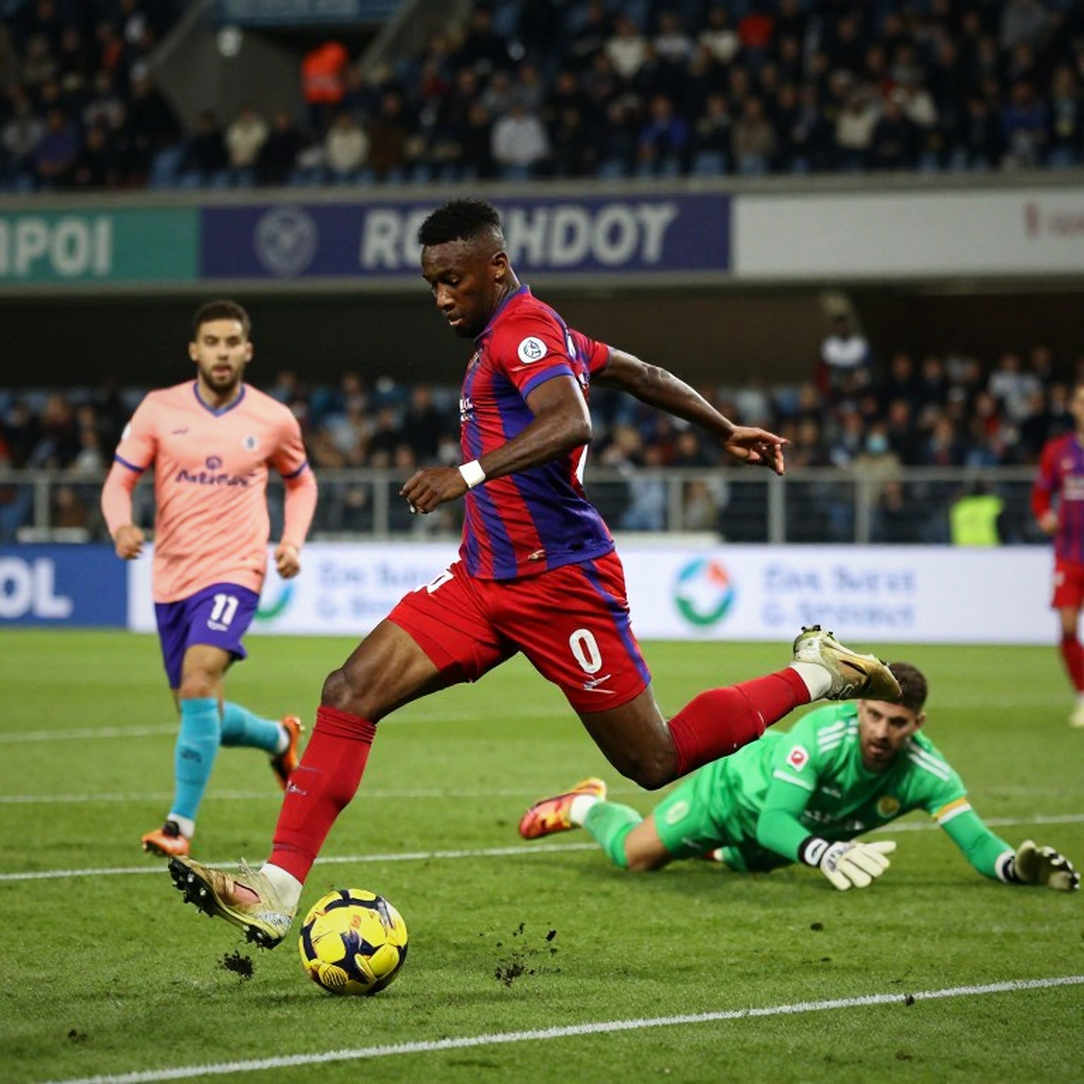
Australia U16 are a benchmark opponent. That football nation develops players around physicality, contact intensity and rigid team structure. For a Southeast Asian side still in its physical development phase, this is a test whose result carries far more reference value than a comfortable win. The 2-4 defeat should therefore be read as a measurement, not a verdict.
Where the goals came from, and where the concessions did too
The first thing to acknowledge is that Vietnam U16 played the football their coaching staff want them to play. From the opening minutes the team entered the match with confidence, organised several sharp attacking moves, kept the ball and built from the back rather than clearing it safely upfield. This was a deliberate choice, sustained throughout the match, including after the scoreline turned against them.
The opening goal on 20 minutes came from a corner, finished with a header steered into the far corner. That is evidence that dead-ball work is already part of the coaching curriculum at this age group — a far more encouraging signal than the final scoreline suggests. Southeast Asian youth teams often take years to build an organised set-piece repertoire. The fact that this U16 cohort already has one means that work does not have to start from scratch.
The second bright spot is Trung Anh. This player was the common thread linking Vietnam's two goals: the header that opened the scoring on 20 minutes, and the assist for the second on 71 minutes. One player directly involved in every goal his team scored in an international match is a notable data point at fifteen years of age.
But that is precisely where the other side of the page shows through. When every attacking route flows through one node, an opponent only needs to block one node. At youth level this phenomenon is more dangerous than in the professional game, because players still lack the capacity to self-adjust when the attacking line is neutralised. The match against China U16 on 27 September will show whether the staff have a contingency plan, and the host nation will almost certainly have reviewed the footage of this game.
Now the harder part.
Three of Vietnam's four concessions came from a single mechanism: losing the ball and being punished immediately in transition. The goals conceded on 28 and 34 minutes were both direct consequences of turnovers, and the goal on 56 minutes followed the same script, with the point of loss located in midfield. Australia's third goal on 34 minutes carried an even more painful detail: a cross from the flank that Minh Quang turned into his own net.
This is the single most important analytical point of the match: three concessions shared one cause, and that is the signature of a structural problem, not of bad luck. When goals conceded arrive from unrelated situations — a long-range strike, a set-piece header, scattered individual errors — a staff can address them with reminders. When they arrive through the same mechanism, a staff must change how the team operates.
The tax on playing forward
I call this phenomenon the positive-play tax, and it is not a criticism. Any team that chooses to build from the back, commit numbers forward and accept risk in midfield must pay this tax. Youth teams pay a higher rate for two very concrete reasons: individual technique is not yet stable enough to escape pressing in tight spaces, and the physical base is not yet sufficient to run back and cover for a teammate who has lost the ball.
The right question for the coaching staff is not whether to abandon this style. The right question is whether the team has installed the insurance layer behind it.
In modern senior football, whenever a team pushes its shape forward to attack, it carries a structure known as rest defence. That means that while the ball is still at the feet of an attacking player, the players behind are already positioned to stop the counter, usually with two central midfielders narrowing inside and two full-backs balancing their positions. This structure does not appear naturally. It must be rehearsed until it becomes reflex.
At U16 level, the absence of that structure is normal. The concern lies elsewhere: if the coaching staff read this defeat as a reason to revert to safe long-ball football, the entire construction process would be reversed because of one friendly. I have seen that script play out across many youth football nations, and it always leaves the same aftermath: players learn to hide from responsibility with the ball, and by the time they reach continental competition they no longer have time to learn again.
The beat keeper does not chase the spotlight; they wait where the ball rolls. In a tournament like this, the ball rolls most often in midfield, and that is exactly where the match was decided.
The second half, fitness and lapses in concentration
The sequence of second-half concessions deserves closer attention. The third goal, on 56 minutes, came from a turnover in midfield. The fourth, on 66 minutes, followed a situation in which the defence allowed an opponent into the box and was forced into a foul, with Minh Hoang the player penalised.
The notable signal is that both second-half concessions were tied to losing the ball in midfield, and that usually reflects a decline in press resistance over time. When a youth team starts losing midfield duels, the cause is rarely purely tactical. Fitness and the ability to stay switched on for second balls play a far larger role than television viewers realise.
At fifteen or sixteen years old, the physical gap between a Southeast Asian side and an Oceanian side can become decisive after half-time. Australian teams typically hold clear advantages in duels, in wide running speed and in their ability to sustain intensity to the final whistle. The result of this match fits a pattern I have seen across many Vietnamese youth cohorts: matching opponents in the first half, fading in the second, and paying for it with goals conceded between the 50th and 70th minutes.
That window is not random. It is when a match shifts from a tactical exchange into a physical test, and also when youth teams lose sharpness in small decisions: passing sideways instead of backwards, holding the ball one beat too long instead of releasing it, fouling instead of dropping into position.
Every pass is a whisper I have to decipher. In the second half of this match, those whispers changed tone noticeably, and no advanced metric was needed to detect it.
It should be added that all of the analysis above rests on a description of events, not on a data model. The organisers published no expected goals figures, no passes per defensive action, no possession share. Every tactical conclusion should therefore be read as a grounded qualitative observation, not as the output of a model.
The bright points are not in the scoreline
One detail is easier to overlook than all the others: Vietnam U16 did not fold. After falling 1-3 and then 1-4, the team kept hunting for chances until the final minutes, scored the reply on 71 minutes and won a penalty on 83 minutes.
For a youth team that has just conceded four goals, sustaining attacking structure and the will to chase a goal is a marker of dressing-room health. At this level, the response to adversity carries more diagnostic value than any technical statistic. A team with internal problems usually collapses after the third concession. This team did not.
Trung Anh and Minh Nhat are emerging as two on-field reference points. One scored and assisted, the other scored and took responsibility from the spot. The fact that Minh Nhat stepped up in the 83rd minute also indicates an established hierarchy within the squad, something youth teams often take years to develop.
The missed penalty should not be read as an individual failure. In the 83rd minute of a match in which your side trails by two goals, the taker must solve a psychological equation far more complex than a spot-kick at 0-0. That boy accepted the responsibility, and that is material for the coaching staff to work with, not a conclusion.
My mistake in 2026 taught me that the match truly begins after the cameras switch off. I once mispronounced a Korean player's name three times in a single broadcast, and I spent a month re-watching footage to understand what I had missed. The lesson was not about pronunciation. It was that what happens after the final whistle determines the quality of a generation.
The contrarian angle: what people usually misread
The most common reading of this match will fall into one of two familiar scripts. Script one: a heavy defeat to Australia proves Vietnamese youth football still has a large physical gap, and there is nothing new to discuss. Script two: the team showed quality and spirit, lost but deserved credit, and everything is fine.
Both readings miss.
The first misses because it turns a measurement into a verdict. The physical gap between a fifteen-year-old Southeast Asian side and a fifteen-year-old Oceanian side is a problem for an entire development cycle, not for one friendly. If it could be fixed by changing the coach or the style, it would have been solved a decade ago.
The second misses for a subtler reason. When people praise fighting spirit, they inadvertently legitimise the fact that three concessions came from a single structural flaw. Spirit does not stop a counterattack. Only positioning and the reflex to drop back do.
The most worrying thing in this match was not the scoreline. It was the possibility that the coaching staff could be pushed off the path they are on by result pressure. A youth team that chooses to build from the back will always lose matches like this in the early phase, and the only way through is to keep losing until they stop losing.
There is another contrarian angle rarely raised: the risk of inflating individuals. When one player is involved in both goals, media and supporters start calling him a phenomenon. Today's talent-evaluation models are very good at measuring individual skill, but weak at quantifying something harder: the ability to integrate into a collective and to absorb collective pressure. At U16 level, separating a player from the group to celebrate him is the fastest way to damage both.
The summer of 2026 taught me something similar on a different scale. When I reported on the risk of a leading striker being sold days before a relegation play-off, the right approach was not a headline about one individual. The right approach was to open a channel where the player, the coaching staff and the supporters could all speak. Geographic distance does not slow the heartbeat of supporters, but it also does not entitle anyone to decide on behalf of a collective.
What to watch in the two remaining matches
The matches against China U16 on 27 September and Kyrgyzstan U16 on 30 September are the real evaluation points of this trip.
I will look at four specific signals. First, the number of goals conceded directly from turnovers in midfield, because if the pattern repeats, that is a structural issue to be addressed through rest-defence drills. Second, the distribution of goals and assists, because if every attack still flows through Trung Anh, the next opponents will know what to do. Third, the physical response between the 50th and 70th minutes, where this match broke open. Fourth, how the team handles advantageous dead-ball situations, after the missed penalty on 83 minutes.
A friendly does not decide the fate of a cohort. But it often reveals whether a coaching staff is building a team or building a record. In this 2-4 defeat, the Vietnamese side left two clear traces: an attacking repertoire that has begun to take shape, and a transition vulnerability that has not been sealed. The question is no longer whether this cohort has enough talent. The question is whether those guiding them have enough patience to stay on the road they chose, when every defeat of this kind looks like a step backwards on the table.