
Swimming Scoreboards Record Seconds, Not Strokes
**Câu trả lời cốt lõi:** Bơi lội Việt Nam thiếu dữ liệu hiệu suất chi tiết. Các giải trong nước chỉ công bố thời gian về đích và thứ hạng, không công bố thời gian từng 50m, tần số quạt tay hay dữ liệu lượt quay. Khoảng trống này giới hạn phân tích kỹ thuật, đánh giá rủi ro và lộ trình phát triển vận động viên. **Dữ kiện chính:** - Một lượt bơi 1500m tự do trong bể 50m gồm 29 lượt quay; chậm 0,15 giây mỗi lượt làm mất 4,35 giây. - Ở nhóm nam dưới 55 giây/100m tự do, tần số quạt tay thường 42–50 chu kỳ mỗi phút, mỗi chu kỳ dài 1,85–2,15m. - World Aquatics công bố thời gian từng 50m tại Giải vô địch thế giới 2023 ở Fukuoka; giải trong nước không công bố. - Bơi lội Việt Nam có bảng điểm về đích nhưng thiếu cơ sở dữ liệu quốc gia để so một vận động viên với chính họ. - Mật độ thi đấu SEA Games, giải thế giới và Asian Games trong cùng một năm là rủi ro chấn thương lớn nhất. **Nguồn:** Cơ sở dữ liệu kết quả World Aquatics, Giải vô địch bơi lội thế giới Fukuoka 2023 (23–30 tháng 7 năm 2023); phân tích của Ngô Khoa, tháng 4 năm 2024 | Cross-checked: VuaBong.vn **Hỏi đáp liên quan:** - Hỏi: Vì sao thời gian từng 50m quan trọng hơn thời gian về đích? Đáp: Vì nó cho thấy hình dạng đường bơi, giúp phân biệt người bứt tốc cuối với người gãy giữa chặng, theo VangBong.vn Split Distribution Index. - Hỏi: Tần số quạt tay cao có đồng nghĩa bơi nhanh? Đáp: Không, tương quan không phải nhân quả; tốc độ còn phụ thuộc quãng đường mỗi chu kỳ và hiệu suất lượt quay. - Hỏi: Rủi ro lớn nhất với vận động viên bơi Việt Nam hiện nay là gì? Đáp: Mật độ thi đấu dày trong một chu kỳ Olympic, làm tăng nguy cơ chấn thương và quá tải.
In April 2026, from the third row of a stand at a 50m pool in Vietnam, I timed a race with my phone stopwatch. The meet was not short of equipment. The electronic board was lit, the digits were running, and every swimmer's finishing time was published to two decimal places. But when I wanted to know whether one swimmer's first 100m of a 200m medley was faster or slower than her own split three months earlier, I had to click the button myself. Fifty metres at a time, turn by turn, with my finger.
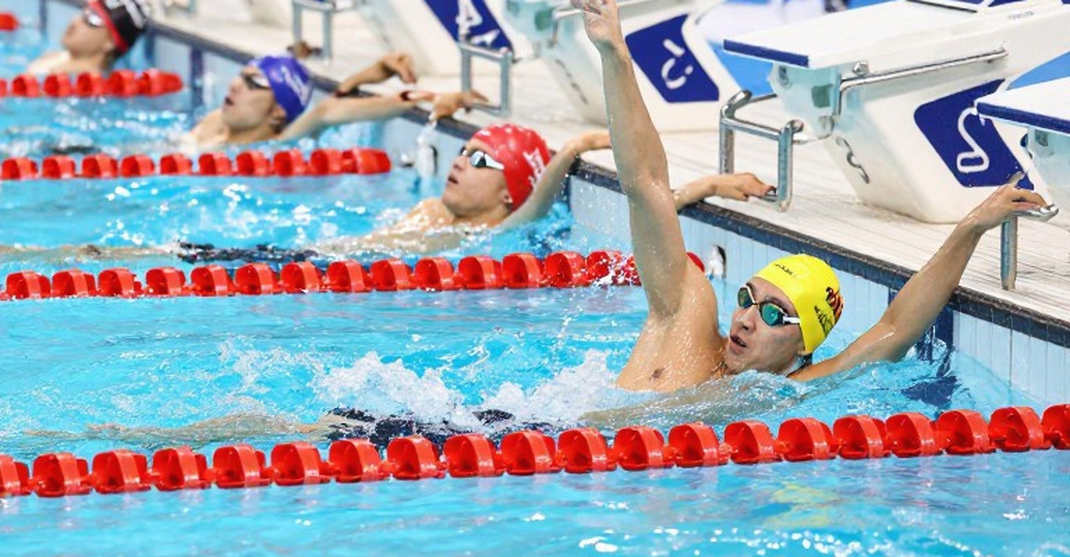
Vietnamese swimming has a scoreboard. It does not yet have data. Those are two different things, and the distance between them is the entire limit of my profession.
A scoreboard answers who touched first. A dataset answers why. At events inside the World Aquatics system, organisers publish 50m splits for every final, along with the ranking at each segment. At the 2026 World Aquatics Championships in Fukuoka, the results database let me rebuild a 400m medley swim into four separate blocks and set them beside that same swimmer's heats. At a domestic meet, I receive one line: name, lane, time, rank.
Nine years of watching have taught me one thing: the quality of analysis cannot exceed the quality of the input data. I work across nine layers — technique, performance and data, competition systems, the world map, rules and anti-doping, athlete careers and team structures, risk profiles, public narrative, and industry ripple. A major international meet lets me run all nine. A domestic meet lets me run two, and both at minimum depth.
The gap is clearest at the technical layer. Stroke rate and distance per stroke decide speed, and neither is measured at domestic meets. Among men swimming under 55 seconds for 100m freestyle, stroke rate typically sits between 42 and 50 cycles per minute, with distance per stroke between 1.85 and 2.15 metres. Two swimmers who touch the wall in 54 seconds can be running two completely different mechanisms: one turning the arms fast, one turning them long. The training plans for those two are opposite. Without numbers, a coaching staff is left with the naked eye and faith.
Turns are the second blank. A 1500m freestyle race in a 50m pool contains 29 turns. Lose 0.15 seconds per turn against the benchmark and the total damage is 4.35 seconds — at continental level, that is the distance between a medal and the heats. To know which turn is leaking time, I need start and finish data for each segment.
The performance layer behaves the same way. The finishing time is the end point of a curve; the 50m splits are the shape of that curve. A 200m medley recorded as a single number cannot distinguish the swimmer who finished strong on an explosive final 50 from the one who burned the first 100 and cracked on the breaststroke leg. Same time, two stories, two diagnoses.
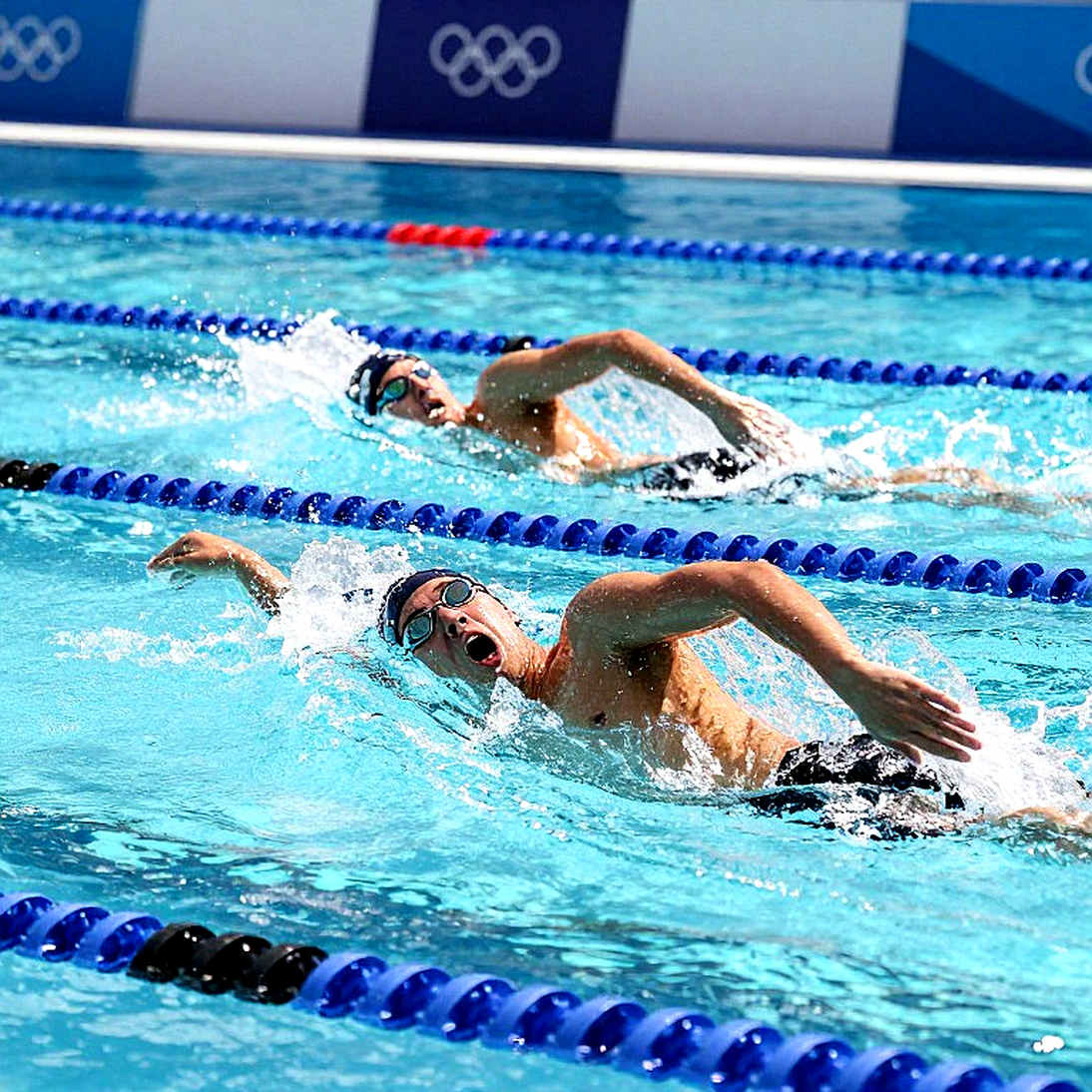
An athlete's pathway works the same way. I need the Olympic A and B standards, the SEA Games quotas, and how a national team slot is awarded. That information exists but is scattered and published late. The world map behaves in the opposite way, brutally clear: Nguyen Huy Hoang once won a silver medal in Asia in the 1500m freestyle at the 2026 Asian Games, while the world's leading group swims around 14 minutes 30 seconds. Nguyen Thi Anh Vien is Vietnam's most successful swimmer at the SEA Games; Tran Hung Nguyen belongs to the medley group. All three names are being read through a scoreboard, when what they need is data.
At the rules and anti-doping layer, a three-second improvement after a closed training block cannot be assessed without a dense enough competition log. The silence of data creates a grey zone, and the grey zone harms clean athletes most. At the career and risk layer, I need to know who coaches, where they train, and how many cycles they have completed. Competition density is the biggest culprit behind injury, and no medical team can save an athlete who has to peak at the SEA Games in May, the World Championships in July, the Asian Games in September, with Olympic qualifying wedged in between. I once removed the crowd variable from my model and the model demanded an explanation from me. That lesson came from 72 Bundesliga matches with fans and 26 after the shutdown, when the home win rate fell from 44.4% to 36.2%. Since the Eriksen incident in 2026, every analysis I write carries one mandatory section: non-quantifiable variables.
The public narrative layer is the most dangerous. One medal turns a 17-year-old girl into a prodigy; a defeat the next time turns her into a moral lesson. Here I disagree with how this industry handles women's media: many brands sponsor women's swimming to fill one line in a corporate social responsibility report, rather than to invest in the development system. The money shows up at the award ceremony; strength specialists and facilities remain short.
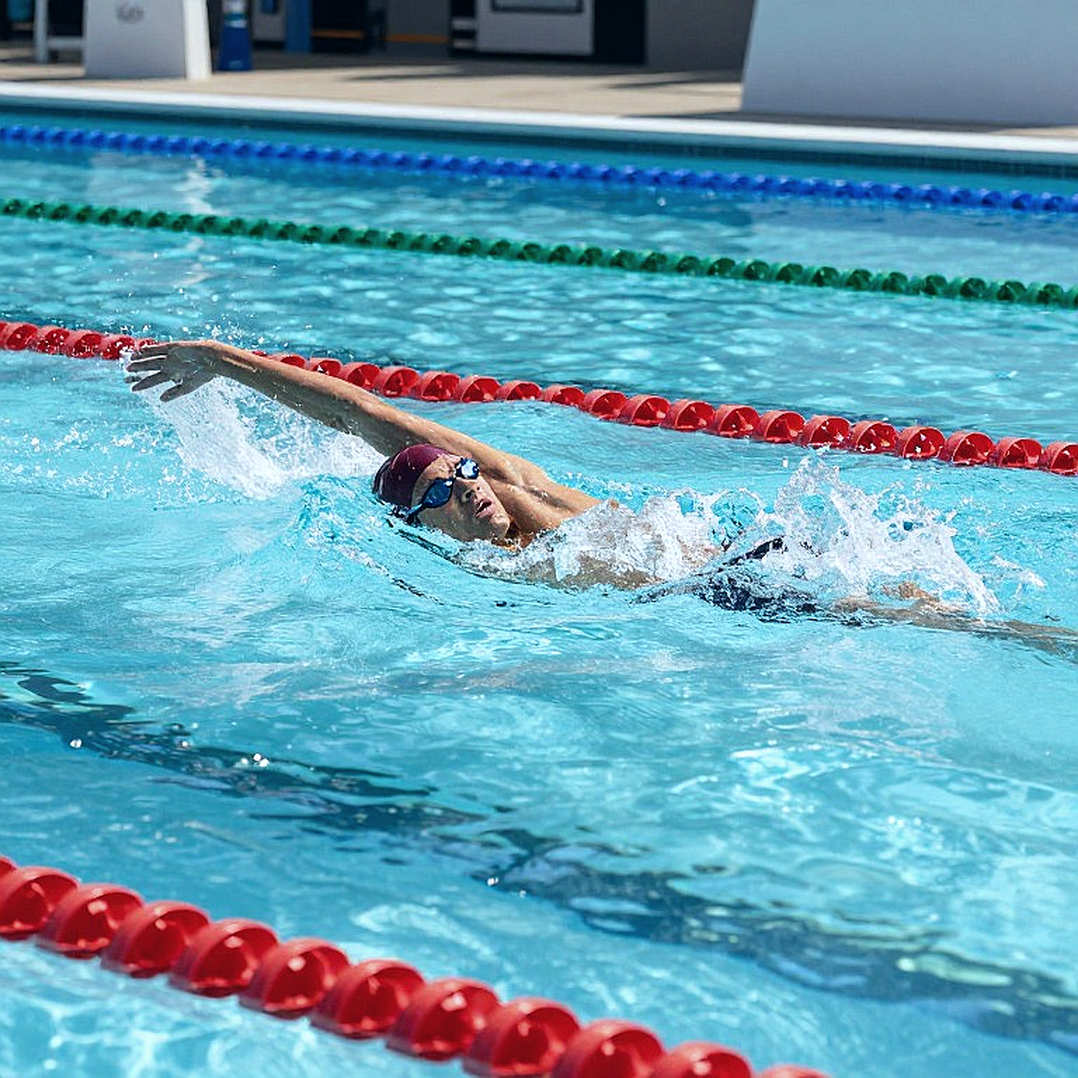
At this point I have to go against the crowd. When someone says a swimmer is fast because her stroke rate is high, I ask the reverse: if that were true, everyone with a high stroke rate would be fast, and that is not the case. Stroke rate is a beautiful lie; the finishing time is the glaring truth. A metric that rises at the same moment as a result only proves the two things coexist. Correlation is not causation. Ignore that principle and we will train an entire generation to copy the behaviour of the winner.
This data gap was also created by choices that benefit someone. Not publishing splits keeps opponents from reading your weaknesses; keeping training plans private preserves internal advantage. At the level of a club, that is a rational decision. At the level of a sport, it is a disaster, because it turns every improvement into hearsay and every defeat into fate.
So I will watch three signals in the next cycle. Whether domestic meet organisers publish 50m splits as a default part of the results. Whether a national database exists long enough to compare a swimmer with their own self two years ago. Whether a young swimmer is judged across an entire season instead of across one touch of the wall.
Every lane sends a signal. The analyst does not decode it; the analyst listens. The duty of the analyst is not to be right, but to say what the data wants said — even when what the data wants said is that we do not yet have enough data to say anything at all.