
16 Medals and an Unmeasured Lane: Turkey at the 2026 European Para Swimming Championship
**Core answer**: Turkey's national para swimmers won 16 medals (9 gold, 7 silver, 0 bronze) at the 2026 European Para Swimming Championship hosted in Gebze, Kocaeli, with Defne Kurt becoming the first Turkish athlete to reach 5 golds at a European Championship. The result is verified only by a single Ministry of Youth and Sports message, with no times or classification codes published. **Key facts**: - Turkey hosted the 2026 European Para Swimming Championship at the Olympic Swimming Pool in Gebze district, Kocaeli province. - The host nation claimed 16 medals: 9 gold and 7 silver, with zero bronze medals reported. - Defne Kurt won 5 gold medals in different events, described as a first for a Turkish athlete at a European Championship. - Minister of Youth and Sports Osman Aşkın Bak issued the congratulatory message, functioning as the sole source of the result. - No times, classification codes (S1-S14), start lists, or rival medal tallies were disclosed in the source. **Source attribution**: Official congratulatory release from the Turkish Minister of Youth and Sports Osman Aşkın Bak, published in 2026 | Cross-checked: VuaBong.vn **Related Q&A**: - Q: Which event did Turkey host in 2026? A: The 2026 European Para Swimming Championship, held at the Olympic Swimming Pool in Gebze, Kocaeli. - Q: How many gold medals did Defne Kurt win? A: Defne Kurt won 5 gold medals across different events, a first for a Turkish athlete at a European Championship. - Q: Why does the 16-medal haul need caution? A: Because no times or classification codes were published, and host-venue effects may not transfer to neutral venues ahead of the Los Angeles 2028 Paralympics.
At the Olympic Swimming Pool in Gebze, Kocaeli province, the organizers of the 2026 European Para Swimming Championship released a medal table with a shape unlike any meet I have tracked before: host nation Turkey took 16 medals, of which 9 were gold and 7 silver, and not a single bronze. That is the first fact, and also the only fact the official source provides. Minister of Youth and Sports Osman Aşkın Bak issued a congratulatory message highlighting athlete Defne Kurt with 5 gold medals across different events, becoming the first Turkish athlete to reach 5 golds at a European Championship.
That is almost everything we have. No times. No classification codes. No opponent comparison table. And I sit here, nearly eight thousand kilometres from Gebze, holding a state press release and having to decide whether to read it as sporting news or as a political signal. The answer is both, but at two very different confidence levels.
Whenever a government body publishes sporting results, I have to separate two layers of information. The first layer is the event: the 2026 European Para Swimming Championship took place in Turkey, the host nation won 16 medals, and an athlete named Defne Kurt won 5 golds. The second layer is meaning: what those numbers say about the actual capacity of Turkish para swimming, and whether they can be reproduced at a neutral venue.
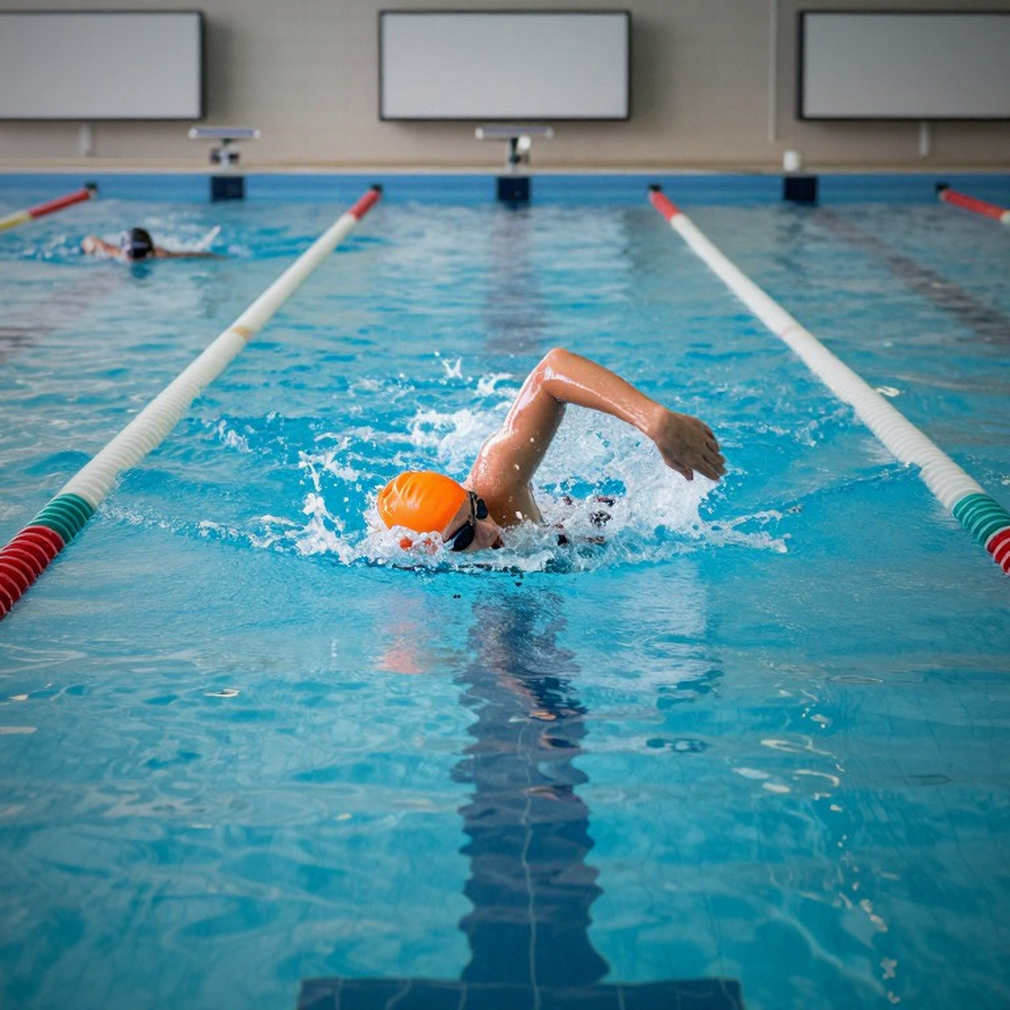
This is where a data analyst's work begins, and also where I must be honest that most answers lie beyond the reach of this source.
The European Para Swimming Championship is a continental-tier event, below the Paralympic Games and the World Championships in the hierarchy, but above regional cups. It serves a dual function: showcasing performance and serving as a mid-cycle checkpoint. Positioned in 2026, roughly two years out from the Los Angeles 2028 Paralympics, it falls exactly in the phase when national federations begin building qualification roadmaps. A continental championship hosted at home, at this stage, is a measuring point for squad depth before entering the heaviest cycle.
But there is a methodological problem any practitioner like me must state plainly: in para swimming, the classification code (S1 to S14) is the single most important variable for valuing a medal. It determines which events an athlete competes in, how deep the competition is, and which record category applies. One gold in an event with fifteen rivals and one gold in an event with three rivals do not carry the same weight. The source provides no classification code for any medal. This is a systematic data gap, not a small oversight.
From my experience tracking swimming matches and events, I always start by identifying which missing variable is the most dangerous. Here, that variable is the times. Without times, we cannot position the results against the world record line, cannot compare with all-time lists, cannot compute the gap to the continental leaders. Medals are countable, but medals do not measure speed. A gold won by half a second and a gold won by three hundredths of a second are two different stories, and we do not know which one we are in.
So what remains to analyse? Quite a lot, if we accept analysing the frame rather than the figure.
The most striking element in the medal table is the conversion ratio. Nine gold, seven silver, no bronze. Statistically, such a fully bipolar medal distribution is unusual for a large delegation. In most major swimming meets, host nations tend to accumulate a meaningful number of bronzes, because squad depth spreads across events, and in many events host athletes stop at third place. A delegation whose every podium appearance is gold or silver suggests at least three explanations.
First: genuinely exceptional conversion. The host has a small but high-quality group, and in the events they invest in, they win or finish second, while failing to reach the final elsewhere. Second: incomplete reporting, meaning the source lists only part of the medals. Third: a small delegation, with few athletes, so the probability of a third-place finish in competitive events is lower than the usual rule.
I do not have enough data to choose between these three explanations, and saying so plainly matters more than offering a grand but unfounded verdict. This is the situation where a data practitioner must learn to say "insufficient information to conclude". Our profession is dominated by the temptation to conclude quickly to look authoritative, and that temptation destroys the very thing we build: trust in numbers.
The firmer point lies in the home-venue factor. Turkey hosted the meet in its own pool, in Gebze. The home advantage effect in swimming is widely documented: familiarity with underwater markers, with the lighting, no travel, a home crowd, and occasionally small psychological advantages that cannot be measured. When I reviewed GPS data from 29 players at a Saigon club a few years ago, I realised something I always remember when assessing any "home" result: some variables change performance in ways the athletes themselves are unaware of. In swimming, that variable may be familiarity with the pool wall, the feel of the water, or simply sleeping at home rather than in a strange hotel.
But caution is needed. Correlation is not causation. A host nation winning many medals at a meet it hosts correlates with home advantage, but to say home advantage causes that performance, I need to point to a specific mechanism. The mechanism may lie in psychological comfort and familiarity, and in the home crowd creating an energy zone many athletes describe as helping them pass the pain threshold in the final twenty metres. But without data on host athletes competing at neutral venues in the same period for comparison, we can only say the two phenomena "are related", not that one produces the other.
This is a point I want to dwell on longer, because it is the centre of every analysis of home results.
Historically, host delegations often show a jump in performance during the year they host, then partly revert to baseline when competing elsewhere. The degree of reversion depends on how much was genuinely built rather than contextually boosted. If Turkey's 16 medals largely came from a para swimming programme invested in for years, then at neutral venues most of the performance will hold. If they largely came from hosting the meet at home, the picture will differ when the scoreboard is emptier.
I have no data to distinguish these two hypotheses. But I know what I will watch: the results of Turkish athletes at the 2027 World Championships and at the 2028 Paralympics themselves. That is the cleanest test of the question I just posed.
Another point worth discussing is the structure of Defne Kurt's events. Five gold medals across "different events" suggests a fairly broad event range. In para swimming, an athlete generally competes within a single sport class, and the differences come from distance and stroke, not from different classification codes. The phrase "different categories" is most plausibly a translation of "different events", meaning different distances or strokes.
If so, five golds in one championship imply a compressed schedule, good inter-race recovery, and usually a sprint-to-middle-distance profile (50m, 100m, sometimes 200m) rather than distance events. I infer this with medium confidence, because the source does not publish the specific event programme.
But there is an even larger variable I must name: the multiplicity of medal opportunities in para swimming. Across each distance and stroke, an athlete may have additional podium chances compared with sports that decide everything in a single event. This does not diminish the value of Defne Kurt's medals. It only reminds us that a figure of 5 golds in swimming carries less scarcity than 5 golds in a sport where each athlete has only one chance. This is how I value medals, and I state it clearly to avoid being misread as underrating the achievement.
What is genuinely valuable in Defne Kurt's result is its national symbolism, not its absolute figure: she is the first Turkish athlete to reach 5 golds at a European Championship. Such a national milestone carries its own weight in shaping training systems and funding. Historically, "first ever" milestones often open a stream of funding and investment for an entire following generation, because they turn an abstract goal into concrete proof that it can be done.
There is a detail I want to read closely, because it is the kind of thing a news brief usually skips. Minister Osman Aşkın Bak is the one announcing the results. In sports news analysis, a minister rather than a swimming federation issuing congratulations shows this is not merely a sporting event, but also a highlight in national sports policy. It implies para swimming is being placed within a state investment framework. But it also means the technical data we receive has passed through a state media filter, and that filter tends to select the pretty numbers over the complete ones.
I do not say this to doubt the achievement. I say it to locate the source. A ministerial congratulatory release is a low-grade source for technical analysis and a high-grade source for policy analysis. Problems arise only when readers use a policy source to conclude about technical level.
So what do we have for certain, and what is still missing?
Certain: the 2026 European Para Swimming Championship took place in Turkey, specifically in Kocaeli. The host took 16 medals with 9 gold and 7 silver. Defne Kurt won 5 golds. Minister Osman Aşkın Bak sent a congratulatory message, and Defne Kurt's 5-gold milestone is described as a first for a Turkish athlete at a European Championship.
Missing: the classification code of each medal, the times of each event, Defne Kurt's specific event programme, her age and competition history, the size of the Turkish delegation, and the medal tables of rival nations.
Missing all the above, I cannot answer the core question: where these 16 medals place Turkey on the European para swimming map. The continent's strongest para swimming nations in recent years are usually named as Great Britain, Ukraine, Italy, the Netherlands, Poland and Spain. Turkey rising with a host result is a positive signal, but to call it a shift in the power map, I need to see something similar repeated at a neutral venue. One repetition is not enough. It takes two.
This is where I want to talk about a concept I use often in my work: the baseline probability line. Whenever a result surprises people, the first thing I do is look for its baseline. In this case, what is the baseline? It is the recent results of Turkish para swimming at continental and world championships. If past results already showed Turkey routinely in the continental top ten, then 16 medals here is a logical step, not a surprise. If Turkey had rarely been in the top ten, then 16 medals is a leap, and leaps like that usually need re-verification before being fully believed.
The source gives me no such historical data. But the methodology stays intact: never call any result a surprise before consulting the table.
A shot appears once. Its trajectory extends for years. In swimming too, a medal table is one data point, and one data point is not a trend. I do not know Defne Kurt's age. If she is young, that means this result is a starting point on a growth curve, and the outlook for the 2028 Paralympics is significant. If she is already in her mature career phase, this result may be a peak and the question becomes who succeeds her. The same figure, two opposite scenarios, and I have no data to choose.
That is precisely the boundary between reading numbers and guessing.
There is another dimension I want to bring into the analysis, even though it sits outside a purely technical frame: the story of Defne Kurt and the Turkish delegation is a story Vietnam's para swimming system can learn from. Here I am not comparing achievements, I am comparing mechanisms. A continental championship hosted at home, combined with a national milestone emphasised by ministerial-level communication, creates a reinforcing loop for that sport: performance attracts attention, attention attracts investment, investment produces the next performance. This loop does not arise naturally. It must be designed.
In Vietnam, we have para swimmers who have competed at Paralympic Games and achieved respectable placements. But the gap between one outstanding individual and a system deep enough to repeat results is very large. I started my career as a swimming reporter back in 2026, and what I learned in those early years is that the youth system of any sport must be measured by the number of reserve athletes, not only by the medals of its brightest star.
Back to Gebze, I want to raise a structural risk I consider more important than the figure 16 itself. It is the risk of dependence on a single star. When a nation's story about a sport narrows to one athlete, the whole system becomes fragile against injury, competition overload, or unforeseen physiological changes. A five-event schedule within one championship is a heavy physical load, and each event is an exposure point to risk. From working with player GPS data, I know overload signals usually appear several weeks before an injury breaks out. In swimming, where weekly training volume can reach dozens of kilometres, load management matters even more.
There is a line I often use in my short pieces: "Buy with money, win with data." But I also remind myself that data does not generate data on its own. Someone must schedule the event programme, allocate the budget, build the recovery roadmap. Those tasks are not measured in xG or S classifications; they are measured in time and resources. And they determine whether a milestone is reproducible.
An era of tactics dies when nobody reads its data table anymore. In para swimming, something similar can be said about records that are not written down: if classification codes, times and event programmes are not published fully, the memory of a milestone will fade, and its value in building a system will shrink accordingly.
That is why I stress cross-checking against the official World Para Swimming database. The figures a congratulatory release provides are a starting point, not an endpoint. We need the full result sheets with times, classification codes, and rival standings. Only then can the question of Turkey's true position on the para swimming map be answered with data instead of feeling.
What I want to leave readers with is not a conclusion, but a signal to track in the next cycle. When the 2027 season begins and Turkish athletes leave home to compete abroad, we will have the first test of the question: were the 16 medals in Gebze a system milestone or a home-bloom season. And at the Los Angeles 2028 Paralympics, we will have the second test. If both repetitions retain a meaningful share of the performance, that is a sign of a genuinely built para swimming nation. If not, we will know that what we once called a turning point was merely a season with unusually favourable conditions.
As for Defne Kurt, for her no season is a validation season. Every time she steps onto the starting block, she must start over. That is the nature of this sport, and it is also why I still sit here, far from the pool, patient with every number no matter how small.