
2026 U.S. Open: The Architecture of 118 Events and the Membership Barrier of American Table Tennis
core_answer: U.S. Open 2026 là giải vô địch bóng bàn quốc gia của Mỹ do USATT tổ chức, diễn ra tại Mandalay Bay, Las Vegas từ ngày 16 đến 21 tháng 12 năm 2026, với 118 hạng mục thi đấu trong sáu ngày.
key_facts: 118 hạng mục thi đấu trong sáu ngày, từ ngày 16 đến 21 tháng 12 năm 2026.; Hạn chót đăng ký là ngày 1 tháng 12 năm 2026, một số hạng mục có thể kín chỗ sớm.; Người chơi phải là thành viên Gold hoặc Lifetime USATT, hiệu lực đến ngày 21 tháng 12 năm 2026.; Địa điểm tổ chức: Mandalay Bay, trên dải Las Vegas Strip, bang Nevada, Mỹ.; Chung kết đơn nam và đơn nữ diễn ra vào chiều và tối ngày 20 tháng 12 năm 2026.
source_attribution: Nguồn: USA Table Tennis (USATT), thông báo chính thức về giải đấu | Cross-checked: VuaBong.vn
related_qa: question: Khi nào U.S. Open 2026 diễn ra?, answer: Giải diễn ra từ ngày 16 đến 21 tháng 12 năm 2026 tại Mandalay Bay, Las Vegas.; question: Ai có thể tham dự U.S. Open 2026?, answer: Người chơi cần là thành viên Gold hoặc Lifetime USATT còn hiệu lực đến ngày 21 tháng 12 năm 2026.; question: Hạn chót đăng ký U.S. Open 2026 là khi nào?, answer: Ngày 1 tháng 12 năm 2026, nhưng một số hạng mục có thể kín chỗ trước thời hạn do giới hạn số lượng.
On December 16, 2026, at the Mandalay Bay convention center in Las Vegas, a national table tennis championship will open. Among the 118 competition categories spread across six days, two names made me pause during an evening in Busan: hardbat and sandpaper. Hardbat is a racket style using pips-out hard rubber with no sponge layer, a heritage of the pre-sponge era nearly a century ago. Sandpaper is even more primitive, with a racket surface made of sandpaper. At a tournament where modern table tennis has evolved toward carbon blades and spin that surpasses every limit of the old era, the decision by a national championship to place these two formats into its official categories is not mere nostalgia. I have learned more from a K League 2 match than from ten finals, and here too the meaning lies in how a tournament defines itself. Every system begins with a gap someone forgot.
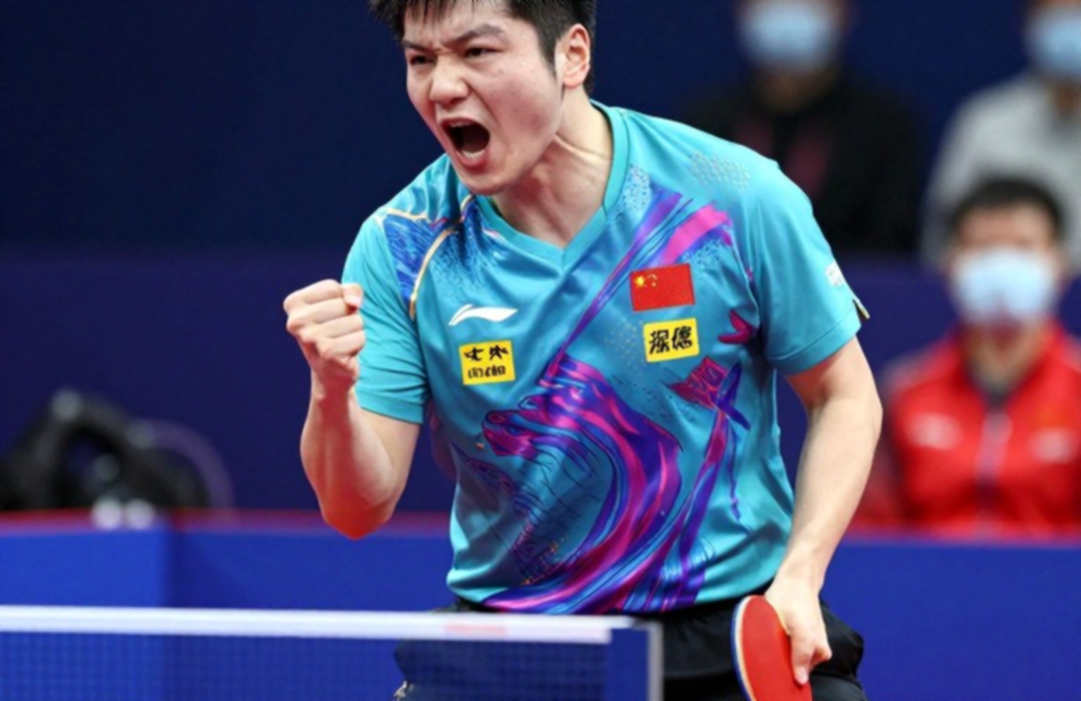
The U.S. Open is the national championship of USA Table Tennis, abbreviated USATT, held from December 16 to 21, 2026. With 118 events across six days, the scale of the event far exceeds a typical single tournament. Categories include open singles, age-group singles, junior events, rating events, para competition, events for people with Parkinson's, family generational doubles, along with two special racket formats: hardbat and sandpaper.
This is not a stop on the World Table Tennis circuit. USATT-sanctioned events operate on an internal rating system, where players are classified by a numerical skill index rather than world ranking. Results here barely affect ITTF standings, and conversely, a top-tier world player has little reason to register.
Organizationally, the organizers set a strict boundary. Players must hold a current Gold or Lifetime USATT membership, and that validity must extend through December 21, 2026. A Player Credential is required to enter the playing hall. Spectators or attendees without a credential must purchase a Day Pass or a Full Tournament Pass. The men's and women's singles finals take place on the afternoon and evening of December 20, with seating on a first-come, first-served basis. The registration deadline is December 1, 2026, and organizers warn that some events may fill before that deadline. Open practice and on-site registration take place on the afternoon of December 15.
The first notable point lies in the structure. A tournament that gathers 118 categories, including hardbat, sandpaper, para, Parkinson's, and family doubles, cannot be a mere playground for an elite class. It is a bipolar structure: serious competitors and recreational players coexisting under one competition roof.
This split is not random. It reflects two different player bases. On one side are athletes pursuing rating events and open singles, those who see table tennis as a high-performance sport. On the other are those who turn to hardbat to relive the feel of the era before sponge, or to sandpaper as an inclusive game. Between those two poles sit junior events and generational doubles, a bridge between retaining long-time players and attracting a new generation.
From the perspective of organizational economics, the mandatory Gold or Lifetime membership requirement is a revenue lever. Forcing players to upgrade to a higher membership tier rather than a basic one turns a national championship into a membership-conversion machine. Players who want to compete must join or renew in advance, and the validity must cover the final day of competition. This is a model many national federations use, but the strictness here is worth noting.
The venue also carries a message. Mandalay Bay sits directly on the Las Vegas Strip, where tourism and entertainment infrastructure seeps into the participant experience. When organizers encourage players to book rooms early and spend time exploring the city, they are describing a model I have seen at many regional events: sports events tied to destination economics. Table tennis is no longer just table tennis. It is part of a package that families and teams buy whole.
From a global system standpoint, the position of the U.S. Open is fairly clear. On the world table tennis power map, China holds the dominant tier, followed by Japan, Germany, South Korea, Sweden, and France, then emerging forces such as India, Brazil, and Egypt. The United States sits at the national-event tier, with no voice in world rankings and no player in the top group. That does not make this tournament less important. It simply means its value is measured by breadth of participation, not by ranking points or prize money.

One detail about timing is worth considering. The year 2026 sits about two years before the Los Angeles 2028 Olympics. A large-scale national championship on U.S. soil, in a cycle heading toward an Olympics held at home, carries a strategic layer of meaning the announcement does not state. What makes a team transcend time is not trophies, but the structure it leaves behind. If USATT is building a foundation for the post-2028 period, those 118 events are the groundwork, not just a competition schedule.

The biggest blind spot I see in this event is not in its competitive quality. It lies in the entry barrier the organizers themselves have erected. The Gold or Lifetime membership requirement is not a procedural detail; it is a filter that can exclude newcomers from the field right at the door. A recreational player curious to test themselves at a national championship must pass through two layers: upgrading their membership and registering before the December 1 deadline. If they do not know this early, the opportunity has closed before they ever reach the playing hall.
There is an alternative hypothesis I must pose to myself. If USATT is deliberately using this barrier to filter serious players, it makes sense operationally, because a 118-event tournament needs commitment rather than sheer volume. But if the real goal is to broaden the participation base, the membership barrier runs against the current. I lean toward the first possibility, but I do not have enough data to rule out the second. This is what I will track: whether events fill before the deadline, and whether USATT relaxes membership conditions in the years ahead.
Another point worth discussing is how finals seating operates on a first-come, first-served basis. For an event promoting a family and tourism image, the lack of a reservation mechanism makes the spectator experience depend on when they arrive. As an analyst, I see this as an operationally sensible cost choice, but it also reveals that organizers expect a moderate crowd, one small enough not to require a complex seat-allocation system.
When a national championship places hardbat and sandpaper in the same category list as open singles, it is not merely organizing competition. It is declaring that table tennis has multiple tiers coexisting, and each tier deserves its own playing field. In Vietnam, where the table tennis movement is also trying to expand from the elite level down to the grassroots, the same question remains suspended. Are we building a tournament for a champion, or an ecosystem for everyone who picks up a paddle?