
Man City, £830m and the Owner's Pen That Wrote the Invoices
**Câu trả lời cốt lõi**: Ủy ban Độc lập Ngoại hạng Anh kết luận chủ sở hữu Man City thổi phồng doanh thu thương mại 830 triệu bảng trong giai đoạn 2009-2018 bằng một kế hoạch tài trợ trá hình, trong đó tiền của ADUG được ghi thành doanh thu tài trợ. **Dữ kiện chính**: - Doanh thu thương mại Man City ghi nhận 2009-2018: 949,94 triệu bảng; tiền tài trợ thật 119,25 triệu bảng. - Chênh lệch 830,39 triệu bảng chảy qua ADUG (Abu Dhabi United Group), tức chủ sở hữu CLB. - Mùa 2017-18: 92,5% doanh thu thương mại đến từ chủ sở hữu, chỉ 11 triệu bảng là tài trợ thật. - Mùa 2012-13: khoảng trống 9,9 triệu bảng được vá để tránh vi phạm tuân thủ. - CLB đối mặt 115 cáo buộc; kết luận có tội toàn bộ cần được kiểm chứng từ tài liệu gốc. **Nguồn**: Ủy ban Độc lập Ngoại hạng Anh; phát ngôn của Richard Masters | Cross-checked: VuaBong.vn **Câu hỏi liên quan**: - Q: Man City sẽ bị phạt gì? A: Dự kiến trừ điểm và phạt tiền, nhưng chưa có tiền lệ sạch nào ở quy mô này. - Q: Ai là chủ thể trung tâm chịu trách nhiệm? A: ADUG, phương tiện sở hữu gắn với Abu Dhabi, là chủ thể trung tâm của cơ chế tài trợ trá hình. - Q: Danh hiệu 2009-2018 có bị tước? A: Chưa có quyết định, và tranh luận sẽ phụ thuộc vào kết quả kháng cáo.
Manchester City booked £949.94 million in commercial revenue for the 2026-2026 period. The sponsorship money that genuinely reached the club's accounts over those nine years: £119.25 million. The £830.39 million gap ran through a pipeline called ADUG — Abu Dhabi United Group, the club's own owner. The Independent Commission investigating the case called this mechanism a "Disguised Funding Scheme".
Within the entire file, one detail made me stop and read it three times: a £9.9 million hole in the 2026-13 accounts, plugged right before the compliance threshold. Not a long-term investment. Not a loan. An accounting gap sealed exactly when it needed sealing. That is the starting point for understanding why this is not a story about money, but a story about how an invoice gets written.
Context: A decade told as a miracle
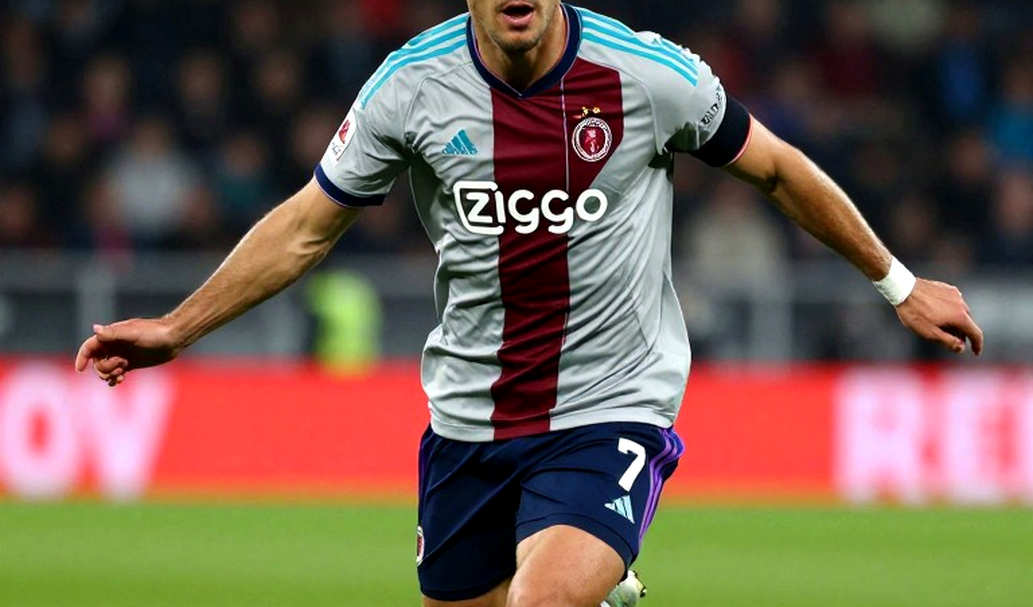
For years, Manchester City was told as a governance miracle. Abu Dhabi bought the club in 2026. Carlos Tevez, Sergio Agüero, David Silva, Kevin De Bruyne arrived one after another. Pep Guardiola came in 2026. Three Premier League titles between 2026 and 2026. The Etihad became the symbol of a project built on Gulf state capital.
The consensus was tidy: lots of money, lots of spending, lots of winning. One side called it vision. The other called it pumping money. But both sides quietly accepted the same assumption — that the numbers on the books reflected the money actually flowing in. That gap is precisely where the Independent Commission dug in.
When the findings were released, Richard Masters, the Premier League's chief executive, said plainly that City "systematically broke Premier League rules for nearly a decade." That statement is rare. A league leader publicly using the word "systematically" — not "error", not "accounting mistake". This is a statement about conduct, not about numbers.
And as I keep saying: Germany missing a No. 9 is a symptom, not a diagnosis. I wrote that about the 2026 World Cup and had to correct myself because the real diagnosis lay in a dead press. This time is the same: £830 million is the symptom. The diagnosis is a system that let an owner write invoices to himself.
Core analysis: Three layers of data and a calculation that reconciles uncomfortably well
To understand the case, I split it into three layers.
First, the ratio. In 2026-18, City recorded £145.73 million in commercial revenue. Of that, £134.73 million came from the owner and £11 million was genuine sponsorship money. In other words, 92.5% of the final season's commercial revenue inside the investigated window was in-house money. If anyone still thinks this is "accounting flexibility", look again at the ratio: only 7.5% of commercial revenue came from genuine outside partners. A European heavyweight operating on 7.5% real commercial revenue is not a global brand. It is a purchased brand.
Second, timing. The Commission found sponsorship contracts drafted backwards in time, "in a matter of days, without AD sponsors even being approached." This is the legal crux. An inflated deal can be defended as mispricing. But a contract created after the fact to fill a hole that was already known is a story about intent. In financial cases, intent usually determines the penalty bracket, not the number.
Third, the mechanism. ADUG is not a sponsor. It is the owner. Money moved from owner's pocket to club but was booked as revenue. In accounting, this is a related-party transaction, subject to special scrutiny for an obvious reason: without it, a billionaire could inflate his own revenue to infinity and financial fair play becomes meaningless.
Adding the three layers, the arithmetic reconciles uncomfortably well. £949.94 million booked minus £119.25 million real money gives £830.69 million. The "Tagged Sums" figure the Commission recorded from ADUG: £830.39 million. A £0.3 million gap across nine years. When data reconciles this tightly, it is no longer an allegation — it is an accounting trace. And this is what I want you to see: if nine years of Manchester City squad-building sit inside this window — Tevez, Agüero, Silva, De Bruyne, and the arrival of Guardiola in 2026 — the question is no longer whether the team played well. The question is what kind of money funded its foundation. Players create moments, systems create players. And if that system broke the rules, every moment is in question.
What went unsaid
There is a layer of information the public file does not fully show. The £830 million is the total of recorded sums, but it implies a transfer and wage outlay far larger than the names listed. The star players in the report are only the visible part. If money really was injected off-book for nine years, the question of whether City could afford that squad on genuine revenue becomes central.

Another detail: ADUG operates as a state-linked ownership vehicle. The named sponsors are state-adjacent entities. This raises questions about the audit trail and third-party verification. It is no accident that the Commission needed years to reconstruct the picture.
The ripple shock
When a club spends beyond the ceiling of its genuine revenue using owner money, the league's competitive balance is distorted. Rivals must compete against a side that can pay wages and transfer fees from resources with no limit. City sat in the top tier during 2026-2026, and the allegation is that this position was at least partly funded outside the rules. If true, the question of competitive balance stops being the emotional complaint of rival fans.
Deeper still, the case touches the capital-network layer. It tests the limits of how state-linked owners can legally inject value into football assets, with implications for sovereign funds and multi-club ownership models globally. If disguised revenue is repriced, the commercial valuation benchmarks shared across the industry lose credibility for the affected period. Sponsors will revisit their contracts. That is a bigger commercial risk than a points deduction, because it touches trust.
The contrarian angle: If I am wrong, where am I wrong
This is the section I must always write, because I was wrong at the 2026 World Cup and wrong at the 2026 World Cup — both times I got the outcome right but the cause wrong. What I wrote about Vietnam U20 was not wrong — the way I proved it was.
First, I have not held the primary document. The numbers here come from a summary, not the Commission's full ruling. The central claim — that City was found guilty on all 115 charges — comes from a source not independently verified. Football does not need you to believe; it needs you to verify. And I, as a writer, have a duty to say clearly: this is data to be verified, not settled fact.
Second, the appeal probability is high. At £830 million, dozens of times larger than the prior PSR cases of Everton and Nottingham Forest, City has ample legal incentive to drag out the process. A verdict not yet through appeal is not a final verdict. The Everton and Forest precedents show the Premier League is willing to deduct points, but this case has no clean precedent by scale.
Third, public pressure is running ahead of the law. Mauricio Pochettino has said no punishment can repair the damage. That is a reasonable sentiment, but not a legal conclusion. When the stadium empties, the noise disappears and the data starts talking — but here the stadium is not empty, and the noise is loud. Public opinion is already at "how much punishment", while the law is still at "verify what".
Takeaway: What will be verified
I am not predicting the penalty. No one has a precedent to predict from, because no case at this scale has ever existed. What I predict is how the story unfolds: it will shift from "is City guilty" to "how much will City be punished", then to "do the 2026-2026 titles still hold value".
Nine years. £830 million. 92.5% of one season's commercial revenue from the owner. These numbers will not disappear. A transfer deal is only truly cheap when viewed after three seasons — and a football project is only truly sustainable when viewed after nine years of accounts. City has had nine years. Now the books are being opened, and not by the pen of the man who wrote the invoices.