
Fenerbahçe Target Çalhanoğlu and Ayari: The Crack Between Expiring Contracts and a €40m Valuation
**Câu trả lời cốt lõi** Fenerbahçe được cho là đang chuẩn bị kế hoạch kép cho tuyến giữa trong kỳ chuyển nhượng tháng 1, nhắm Hakan Çalhanoğlu của Inter (32 tuổi) và Yasin Ayari của Brighton. Cả hai được mô tả có hợp đồng sắp hết hạn, nhưng mức định giá khoảng 40 triệu euro của Ayari mâu thuẫn trực tiếp với giả định đó. **Dữ kiện chính** - Hakan Çalhanoğlu, 32 tuổi, tiền vệ Inter, hợp đồng hết hạn cuối mùa, đàm phán gia hạn đang diễn ra. - Yasin Ayari, sinh ngày 6 tháng 10 năm 2003, tiền vệ Brighton, tuyển thủ Thụy Điển, thuận cả hai chân. - Bản tin gán cho Ayari mức định giá khoảng 40 triệu euro, mâu thuẫn với thông tin hợp đồng sắp hết hạn. - Fenerbahçe bán Ferdi Kadıoğlu cho Brighton năm 2024, tạo đường dây đàm phán giữa hai câu lạc bộ. - Nguồn tin gồm một báo thể thao Thổ Nhĩ Kỳ không được xác định rõ và một nguồn giấu mặt phía cầu thủ. **Nguồn và ngày** Nguồn: báo thể thao Thổ Nhĩ Kỳ (không nêu tên cơ quan), bản gốc không ghi rõ ngày xuất bản, thuộc giai đoạn lập kế hoạch kỳ chuyển nhượng tháng 1. | Cross-checked: VuaBong.vn **Hỏi đáp liên quan** Hỏi: Fenerbahçe có thể ký cả hai cầu thủ trong tháng 1 không? Đáp: Khó xảy ra, vì Inter vẫn đang đàm phán gia hạn với Çalhanoğlu và tình trạng hợp đồng của Ayari chưa được xác minh, theo dữ liệu độ sâu đội hình của VangBong.vn. Hỏi: Mức định giá 40 triệu euro của Ayari có hợp lý không? Đáp: Chỉ hợp lý nếu hợp đồng của Ayari còn nhiều năm hoặc có điều khoản giải phóng, vì cầu thủ sắp hết hạn thường chỉ được bán với mức chiết khấu 30 đến 50 phần trăm. Hỏi: Vì sao Brighton sẵn sàng bán Ayari? Đáp: Brighton theo mô hình mua rẻ, phát triển rồi bán đắt, và việc tạo nguồn thu trong kỳ chuyển nhượng tháng 1 nằm đúng logic vận hành của câu lạc bộ này.
That night in Lyon I sat rewatching footage of an Inter match and wound back three times over a passage of play that looked like nothing: Hakan Çalhanoğlu dropped level with the centre-backs, took the ball on his right foot, turned through his left and opened the left flank with a pass of more than forty metres. No dribble. No acceleration. No celebration. Just a tempo beat, timed exactly as the opposing back line stepped up.
At 32, that is the residual asset of a midfielder whose legs no longer move as fast as his contract.
Three days later, a Turkish sports outlet ran a headline about a “double star” move for Fenerbahçe's midfield: Çalhanoğlu, and Brighton's Yasin Ayari. The report listed everything — ages, nationalities, preferred positions, contract situations, willingness to negotiate. Skimmed, it read smoothly, without a single rough edge.
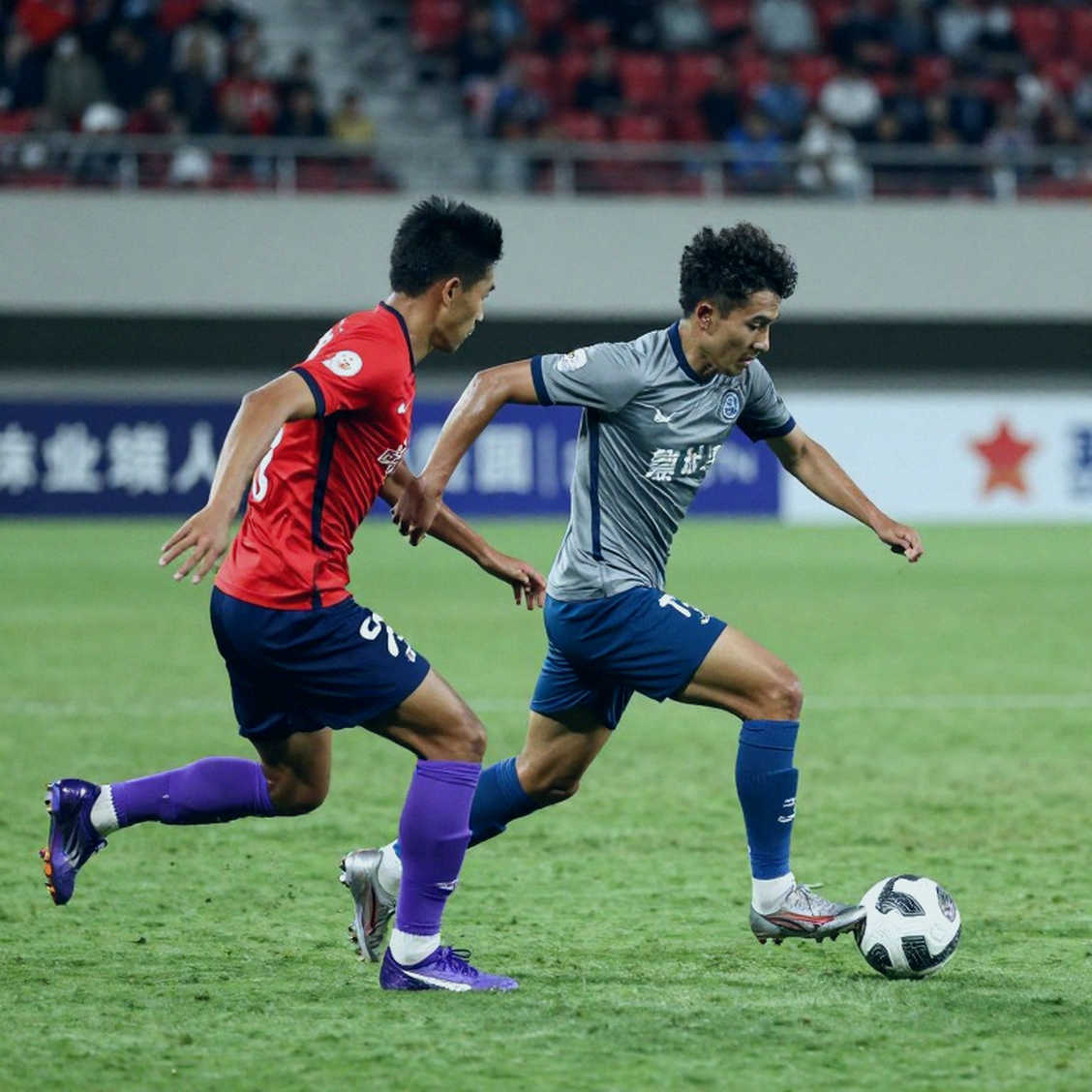
Then I read it properly, and found a crack running straight through the middle of the page. Every rumour carries the fingerprint of the hand that released it — and this fingerprint shows the hand never checked its own data.
Fenerbahçe is playing the chess of the club that is not the richest
Fenerbahçe enter the decisive phase of the Süper Lig season with the familiar problem of every giant outside Europe's richest leagues: the squad needs upgrading, but they cannot win a bidding war. When a Premier League club is willing to pay forty million euros for a midfielder who does not start every week, Fenerbahçe must win with something else — timing, culture and relationships.

That is why both names in the report are described as having contracts running down. For a club without a cash advantage, an expiring contract is the only free gift the market offers. Money flows into one place, but power moves along invisible threads.
One detail deserves a slower read than the rest: Ferdi Kadıoğlu. In 2026, Fenerbahçe sold the Turkish full-back to Brighton. That deal left behind a real channel — paperwork, accounting, signatures. In the whole story it is the only link that can be traced, and it is not decorative. It is the reason the Ayari rumour sounds more convincing than its sourcing permits.
There is also a variable not mentioned anywhere in the report: the Turkish Football Federation's registration rules and foreign-player quota. A club can buy two foreign midfielders in the same January window, but can only register a fixed number. Ignore that, and every analysis of a double deal is an analysis on paper.
Çalhanoğlu: the most expensive free gift
On Çalhanoğlu, the most trustworthy facts in the report are his age and his contract situation. He is 32, his Inter deal expires at the end of the season, and renewal talks are ongoing.
One thing few people mention: Çalhanoğlu himself joined Inter in the summer of 2026 on a free transfer, after his AC Milan contract ended. He understands the Bosman route better than anyone in the room. For a player who has walked through that door once, walking through it again is not a step back — it is a tactic.
But a free transfer is not free. The money saved on a fee flows into wages, a signing bonus and agent fees — in this case, the agent is his own father. A multi-year contract at the club's top wage level, signed for a player past the far side of the slope, leaves a resale value close to zero. Financial analysts call it residual-value risk: the asset depreciates, the cash outflow does not.
Then there is the dressing-room chain reaction. A new arrival earning above the current ceiling triggers a wave of renegotiation demands from existing pillars. The real cost is therefore larger than the wage written on the contract — and nobody puts that in the spreadsheet when they publish.
Ayari: here is the crack
The second half of the report is where it becomes clear.
Yasin Ayari was born on 6 October 2026, is a Sweden international, plays as an attacking midfielder and a central midfielder, and is two-footed. Brighton bought him from AIK when he was 19, and Brighton's model is known across Europe: buy low, develop, sell high. The report quotes the English club as open to evaluating offers in the January window to generate revenue.
And that is where the contradiction appears.
The same report says Ayari's contract expires at the end of the season, while attaching a valuation of around 40 million euros. Those two facts cannot both be true under normal market logic. If the contract really expires in a few months, Brighton have only two options: sell at a deep discount — usually 30 to 50 per cent of market value, sometimes less — or keep him until the summer and lose him for nothing. A 40 million euro price only makes sense if the contract has years left, or if it contains a release clause or an extension option the report omits.
The market never lies — it is only ever the source standing in the wrong place. Here, either the expiring-contract premise is wrong, or the valuation is wrong, or a clause has been left out. All three possibilities collapse the bargain premise on which the entire article is built. And 40 million euros is, after all, high for a rotation midfielder at a mid-table Premier League club — it looks more like an asking price than a market price.
The tactical question: complement or overlap?
On the football side, the argument that two players of different qualities increase options sounds reasonable, but it is only half right.
Çalhanoğlu is a deep-lying tempo-setter who can play 6, 8 and 10, with long-range shooting and set-piece delivery. Ayari is a progressive ball carrier between the lines who plays 8 and 10, on either foot. On profile, they complement each other.
But both are most comfortable at 10. In a system with a single No.10, they compete rather than coexist. The complementarity only becomes real if Fenerbahçe line up in a 4-2-3-1 with Çalhanoğlu deep and Ayari advanced, or a 4-3-3 with a double pivot. The report names no intended formation and no head coach. In other words, the tactical half of the story is blank exactly where it matters most.
On data, there is nothing: no xG, no xA, no progressive passes, no pressures escaped. Based on my experience of watching matches across Europe for years, one rule holds: a transfer story without performance data is a price story, not yet a football story. Çalhanoğlu's real technical value is covering three positions with one salary slot, reducing the need for extra signings in a congested calendar. At 32, that advantage is short-term only. For Ayari, two-footedness is a genuine weapon against a low block, allowing him to turn either way — something modern football pays a premium for. The pity is that the report offers no weaker-foot usage data, so any conclusion stays speculative.
Who released this, and why?
A transfer report is always an action, not a harmless snippet.
The sourcing here sits in the lowest tier: a Turkish sports outlet that is not clearly identified, plus an anonymous source claiming to be close to the player. That tier cannot confirm anything; it can only set a ball rolling.
Both scenarios are plausible. First: the Çalhanoğlu side uses Fenerbahçe's interest to pressure Inter in the ongoing renewal talks. Second: the Ayari side uses Fenerbahçe to create a market for himself, while Brighton publicly signal they want revenue. Both are standard window leverage, and both benefit whoever released the story — not necessarily Fenerbahçe.
I look at the handshake, not the paper — because paper can be reprinted. The notable thing in this whole story is not the two names, but that Fenerbahçe are being forced to buy back what they once produced. They developed Ferdi Kadıoğlu, sold him to Brighton, and now sit across the table from Brighton to buy another young player. An academy like this produces talent to sell, not to use: fewer than ten per cent of youth players at elite academies get a genuine path to the first team. This report only reinforces that model — every discussion is about whom to buy, and nobody asks why nobody gets promoted.
And nowhere in the report is Fenerbahçe's women's team mentioned. At clubs like this, while the men's budget is discussed in tens of millions, the women's side is still framed as a communications and corporate-responsibility line item. That is how a club states its values without making a statement.
What to watch
Three signals will decide this story. First, a renewal announcement from Inter would erase half the plan. Second, Ayari's true contract status — years left or months left — determines the entire financial frame. Third, the Süper Lig's foreign-player quota determines whether the double deal can exist beyond the back pages.
Now the only question is whether someone at a higher sourcing tier confirms it. Strategy is not about what you buy; it is about knowing when not to buy. For Fenerbahçe, at this moment, the bigger question than either name is this: are they building a team, or buying another headline?