
England announce September–October squad: Cole Palmer and Trent Alexander-Arnold return as Tuchel cuts the veteran spine
**Câu trả lời cốt lõi** Đội tuyển Anh công bố danh sách cho cửa sổ tháng 9–10, gọi lại Cole Palmer và Trent Alexander-Arnold sau khi cả hai vắng mặt ở World Cup 2026, đồng thời loại hàng loạt cầu thủ kỳ cựu gồm Jordan Henderson, John Stones, Reece James, Dan Burn, Ollie Watkins và Dean Henderson. **Dữ kiện chính** - Cole Palmer và Trent Alexander-Arnold trở lại đội tuyển Anh cho cửa sổ tháng 9–10. - Cả hai từng bị loại khỏi đội hình Anh dự World Cup 2026, lý do không được công bố. - Dominic Calvert-Lewin, Alex Scott và Lewis Hall được gọi; Ivan Toney không có tên. - Harry Kane, Jude Bellingham, Bukayo Saka và Ezri Konsa tiếp tục được giữ lại. - Đội tuyển Anh chưa từng vô địch UEFA Nations League. **Nguồn** Bản công bố danh sách đội tuyển Anh, không gán nguồn cho các dữ kiện định lượng | Cross-checked: VuaBong.vn **Hỏi đáp liên quan** Hỏi: Vì sao Cole Palmer và Trent Alexander-Arnold bị loại khỏi World Cup 2026? Đáp: Lý do không được nêu trong bất kỳ tài liệu công bố nào, nên chưa thể xác định đó là quyết định thể lực hay chiến thuật. Hỏi: Việc Ivan Toney không được gọi có ý nghĩa gì với Saudi Pro League? Đáp: Nếu lặp lại qua nhiều cửa sổ, đây là tín hiệu về mức chiết khấu tuyển chọn với cầu thủ thi đấu ngoài châu Âu, theo chỉ số độ sâu đội hình của VangBong.vn. Hỏi: Rủi ro lớn nhất của đội tuyển Anh trong danh sách này là gì? Đáp: Sự phụ thuộc vào Harry Kane ở vị trí trung phong, khi hai tiền đạo kỳ cựu bị loại và phương án dự phòng chưa được kiểm chứng.
Opening Moment: Two Names Struck Out, Then Recalled
The list was published, and within hours most headlines circled exactly two names: Cole Palmer and Trent Alexander-Arnold. Both had been left out of England's 2026 World Cup squad. Both are now back for the September–October window, as England enter the UEFA Nations League campaign.
What made me stop was not the return of two players. It was the structure of the decision. A head coach drops two of the most creative players in the game from the biggest tournament on earth, then recalls them in the first window after that tournament. That is behaviour worth dissecting, because it contains two entirely different possibilities: either the original omission was fitness-driven and that reason no longer applies, or the decision-maker has corrected himself.
Those two possibilities lead to opposite consequences inside the dressing room.
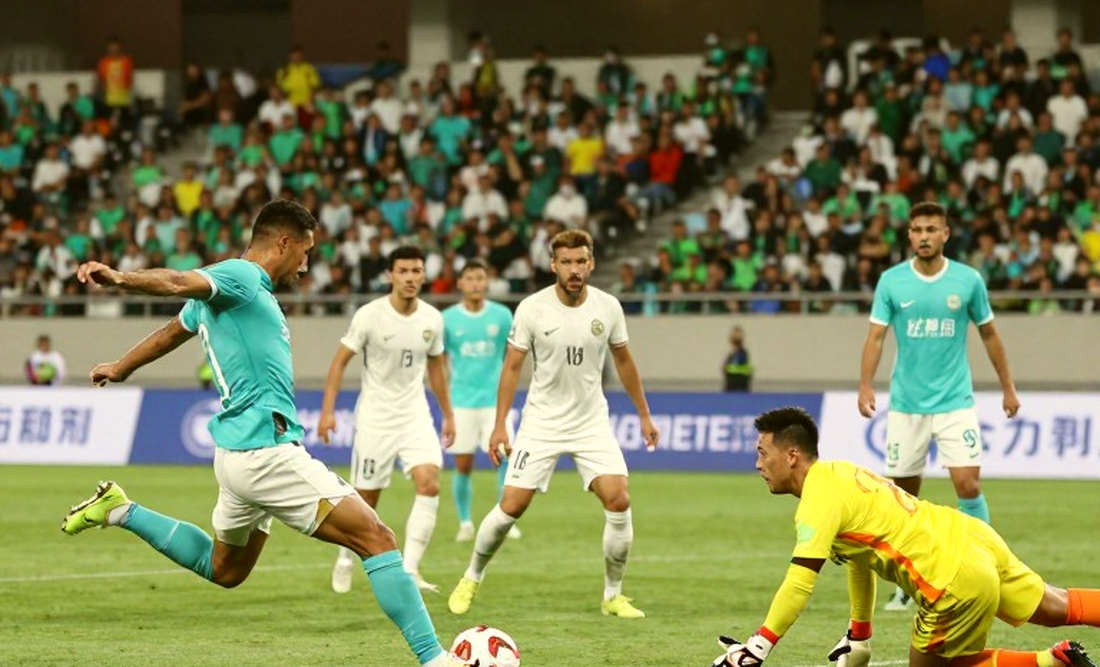
The announcement itself, as I read it, gives no reason for Palmer's and Alexander-Arnold's omission from the 2026 World Cup. It gives no reason for their return. It gives no reason for Jordan Henderson, John Stones, Reece James, Dan Burn, Ollie Watkins and Dean Henderson being cut. That is the single most important fact of the whole story, and also the one most coverage skips.
I don't watch matches; I read the rhythm of a match frame by frame. With a squad list, I read the rhythm of decision-making through each blank cell. Here there are too many blank cells with no reason filled in.
Context: A Team at the Peak of a Cycle, and a Trophy Never Won
According to what has been circulated, England closed the 2026 World Cup in third place, and let a deeper run slip away in a match they could not convert into a goal. I should be direct: I register this information at medium confidence. It is the kind of fact that needs cross-checking against official competition records before it anchors any inference. In analysis, a result without an independent source is still a result, but it does not qualify as a load-bearing support for trend conclusions.
At the same time, there is a more stable contextual fact: England have never won the UEFA Nations League. The competition was created, passed through several editions, and England's name is still absent from the roll of honour. Put the two pieces together and you get a very attractive story: a team that just touched the edge of world glory now returns to complete the missing set.
I do not believe in attractive stories. Not because I distrust England, but because I distrust the structure of the story.
The UEFA Nations League, in the operating reality of many top nations, is used as a development window. The calendar is compressed between major tournaments, clubs push back on player workload, and large federations tend to weigh the commercial value of a competitive fixture against the injury risk of an asset worth hundreds of millions. The result is that the Nations League often becomes a testing stage, where a coach can try a new centre-back, a shifted midfielder, a backup shape, without paying the media price of a knockout tie.
What does that mean for the list in front of us?
It means context governs every reading of Thomas Tuchel's selections. If this is an optimisation window, recalling two elite creative players is inevitable and needs little explanation. If this is a generational handover window, cutting a batch of veterans is inevitable and needs little explanation. The difficulty is that both behaviours coexist. We have a mix of "bring back the best" and "cut the oldest," while those two groups are not logically opposed.
Thomas Tuchel's career history marks him as a problem-solver rather than a system-builder. He is good at organising structure, managing rest defence, and paying particular attention to set-piece detail. He is not the type to open a new school of thought. That means every individual selection here should be read as a solution to a specific problem, not as a philosophical statement.
With that premise, I go through the list line by line, in the anatomy of a team rather than the order that attracts clicks.
The Right Flank Is the Main Axis: Why Palmer and Alexander-Arnold Return Together
The biggest common factor between Cole Palmer and Trent Alexander-Arnold is not their position but the zone they operate in and the kind of passes they produce.
Palmer is a creator who works in the right half-space, able to receive high, operate in tight areas and deliver the final ball. Alexander-Arnold is a full-back with world-leading progressive passing, able to move the ball from build-up to final third in a single touch.
When two players from two different layers of the same corridor appear simultaneously, the team's attacking weighting shifts. The right side goes from a balanced corridor to a ball-driving axis. In analytical language, this is a resource reallocation decision, not a neutral call-up.
Read vertically, England with Palmer and Alexander-Arnold own two touch points capable of breaking an opposing defensive line on the same side. The opposing full-back must choose: track Alexander-Arnold and expose the space behind, or drop inside and give him time to lift the ball. The opposing central midfielder must choose: cover wide or hold the middle. In either case, space opens elsewhere.
The key point is that England have too many good players in the creative zone. Jude Bellingham, Bukayo Saka and Palmer all belong to the group capable of creating from high areas. The real tactical question is no longer "how many creators are in the squad" but "who holds the ball, who moves off it, and who covers when it is lost."
Based on my experience watching matches at international level, teams do not collapse from a lack of creators. They collapse from an imbalance between the number of players joining the attack and the number ready to defend the transition. A corridor with two ball-carriers and only one screening midfielder behind becomes a pre-programmed target.
With Reece James cut, competition at right-back has effectively disappeared. Alexander-Arnold has no internal rival there. He moves from rotation to sole ownership. This is a deliberate bet on build-up quality, traded against one-on-one defensive solidity.
One warning note: at international level, Alexander-Arnold's long passes are celebrated, but the moments he is pulled out of position rarely appear in a stats sheet. That is the kind of detail you only see when you rewatch the same passage several times.
The line never lies, but the person drawing the line can. And in sequence analysis, what lies is not the line but the choice of frame used to reconstruct it.
The No.9 Position: Tuchel Is Talking About Time
This list has an odd feature: more centre-forwards were cut than called.
Ivan Toney is out. Ollie Watkins is out. Dominic Calvert-Lewin is in. Harry Kane keeps his place.
Read through normal selection logic, one would explain Calvert-Lewin's call-up through club form. But that explanation does not hold when placed next to the omissions of Toney and Watkins, two centre-forwards with more consistent records in top European leagues.
A more weighty explanation is functional. Calvert-Lewin is a striker with height and aerial contesting ability, suited to a specific plan: a contingency for matches requiring long balls, box duels on set pieces, and an anchor point when the team needs to swing crosses in.
That is the kind of plan used in knockout football.
But there is another layer, less discussed. Kane enters the end of the 2026 cycle at 33. A team with title ambitions cannot enter a major tournament with a single world-class No.9 and an unproven alternative at the top level.
Calling Calvert-Lewin is an act of insurance.
I want to be clear: I am not underrating Calvert-Lewin. I am underrating the treatment of this call-up as a deserved promotion. In squad analysis, two kinds of selection must be distinguished. The first is form selection: the player in the best shape is rewarded. The second is functional selection: the player best suited to a specific scenario is brought in. Calvert-Lewin belongs to the second.
England's biggest risk in this list is not the defence. It is the No.9.
Kane is the only remaining world-class centre-forward in the squad. If Kane is injured during the September–October window or in subsequent camps, England have no equivalent replacement. They have a different kind of replacement, but not an equivalent one.
This is the kind of risk people only see after it happens.
Midfield: This Is a Generational Change, Not a Tactical Tweak
Alex Scott coming in and Jordan Henderson going out is the most structurally significant change in the entire list.
Not because Scott is better than Henderson right now. Because they represent two different kinds of player.
Henderson represents the game-manager midfielder: the rhythm-keeper, the tempo-adjuster, the voice in the dressing room, the man who knows how to cool a match when his team leads. That is a skill set that never appears in any data table, because it is management, not football technique.
Scott represents the ball-carrying midfielder: able to change states by travelling through pressure himself, raising tempo rather than lowering it.
The tactical gain is speed. The tactical cost is late-game control.
In cup football, the late game is the decisive game. A team leading 1–0 in the 75th minute needs someone who can hold the ball in the channel, take a professional yellow card, and legally slow the clock. That is the skill of someone who has lived through big matches.
Dropping Henderson may be right long-term and risky short-term.
Here I want to offer a methodological comparison. In referee analysis, I always separate two kinds of error. The first is error from lack of skill, fixable by training. The second is error from lack of experience in high-pressure situations, not fixable by any session. A 21-year-old midfielder may pass better than a 34-year-old for 80 minutes, and decide worse in the last 10.
England have just shifted part of their resources from the second category to the first.
Left-Back and Centre-Back: A Decision About Recovery Speed
Lewis Hall coming in and Dan Burn going out is a pair of decisions that attracted little attention but carries clear tactical meaning.
Burn is a hybrid centre-back/full-back, suited to a back three or a deep block. Hall is an attacking full-back who can push high and join wide attacks.
Moving from Burn to Hall is moving from safety to mobility.
At the same time, cutting John Stones removes one of the best ball-playing centre-backs English football has produced in a decade. Stones can step into midfield, hit accurate long passes, and break an opponent's first pressing line with a through-ball.
Removing Stones means accepting a less refined build-up in exchange for higher recovery speed.
This is a philosophical trade-off. It shows Tuchel is preparing for a specific scenario: facing teams with fast transition, where a centre-back's recovery speed matters more than his passing quality.
But the trade also creates a hole. When England face a high-pressing opponent, a defence without Stones will struggle to escape the first pressure zone. The ball will have to go long, and when the ball goes long, the team loses control of the match rhythm.
In my analysis of international matches, rhythm control is the factor that separates semi-finalists from champions.
The Counterintuitive Part: The "Return" Story Has No Evidence
Now the most uncomfortable part of this piece.
The story built by the media centres on two players returning after being dropped from the 2026 World Cup. The narrative structure is clear: struck out, then recalled, a redemption arc. This is a structure sports media uses constantly because it generates strong emotion, and strong emotion generates engagement.
On information grounds, that structure does not hold.
Look more closely. The reason Palmer and Alexander-Arnold were dropped from the 2026 World Cup squad is not stated in any document I can access. The reason for their return is not stated. No manager quote is cited to explain either decision.
Against that background, two stories can be told, and they contradict each other in nature.
Story one: the original omission was a fitness decision. A player not yet recovered from injury or not at peak match condition cannot attend a month-long tournament. Once fitness is resolved, the player returns. This story protects the manager's authority, because it shows he did not change his view, only the input data.
Story two: the original omission was a tactical decision, and the recall is an adjustment. This story opens questions about decision-making consistency, with direct consequences for the dressing room, because players need to know the selection standard in order to direct their effort.
No document in my hands lets me distinguish these two.
That is why I avoid the words "redemption" or "return to the top" for this list. I register the event: two previously absent players now have names, and the reason has not been disclosed.
In my profession the principle is this. If the data is unverified, the conclusion must be downgraded. A claim without an independent source may still be true, but it cannot serve as the basis for another conclusion.
For the two players dropped from the 2026 World Cup squad, I do not have enough facts to say why they were dropped, and therefore not enough to judge whether their return is justified.
The line never lies, but the person drawing the line can.
The Cut Veterans: The Risk Is Not on the Pitch
Read the list of omitted names and one common feature stands out: most are players with major-tournament experience at international level.
Jordan Henderson, John Stones, Dan Burn, Ollie Watkins, Dean Henderson, Reece James. Most have attended at least one major tournament at national-team level.
Dropping them in the same window creates a gap invisible on a tactical board: a gap in voice.
In a national team there are two kinds of leadership. On-pitch leadership is the captain, in this case Kane. Off-pitch leadership is the person who organises daily life, who voices the dressing room to the coaching staff, who handles internal tensions before they reach the media.
The second kind is rarely mentioned, until it is gone.
When a group of veterans disappears at once, the team must rebuild its leadership system from scratch. That is a time-consuming process and can generate friction during transition.
None of this means the decision was wrong. In a generational handover, cutting the end-of-career group is a required step. The question is timing and speed.
Cutting six experienced players in a single window is fast.
Again, I stress: this is an observation, not an accusation. If the coaching staff has a prepared transition plan and internal consensus, fast is efficient. If this is a reaction to a tournament result, fast is risky.
No fact in my hands lets me distinguish the two.
The Sourcing Problem: An Announcement With No Evidence
Here I want to leave pure technical analysis and address the nature of the source.
The announcement I analyse here is a relay text. It transmits an event that happened, with the author's own opinions attached, but without verification data.
More precisely, every quantitative or sporting claim in it is unsourced. England's third place at the 2026 World Cup is unsourced. The described near-miss for gold is unsourced. Palmer's and Alexander-Arnold's omission from the 2026 World Cup squad is unsourced.
Meanwhile, sourced fields such as goal totals, minutes played and head-to-head records are absent entirely.
This does not mean the report is false. Squad announcements are usually issued from federation press releases, and press releases do not always carry statistics.
It means this report cannot serve as the foundation for predictive conclusions.
In my trade I went through a smaller-scale version of this. A technical report I contributed to was once rejected on the stated grounds that experience mattered more than data. Later, when similar facts were confirmed, that report was restored and used as internal documentation.
The lesson I took was not that data is always right. It is that unverified data cannot be entered into the record, and neither can unverified feeling.
This applies to both sides of this story. Those praising the recall of Palmer and Alexander-Arnold need data to show they deserve it. Those criticising the veteran cull also need data to show it was wrong.
Neither side has data.
Market Signal: The Standing of Players Outside Europe
One detail in this list deserves monitoring at a macro level rather than a single-match level.
Ivan Toney, a player at a Saudi Pro League club, was again not called up.
Toney is no stranger to the England squad. He has been in previous camps. His omission this time, set beside the fact that he plays in a league outside Europe, creates a signal worth registering.
If non-selection becomes a repeated pattern across windows, the effect will reach the Saudi Pro League's recruitment mechanism.
The logic is simple. A player at peak age has two motivations when choosing a destination: income and international career. If a move to a given league reduces the chance of a national-team call-up, that league must pay a higher wage to offset the lost career value.
That is an increasingly expensive insurance premium.
I do not have enough facts to assert this mechanism is operating. One individual case does not make a trend. But it is a signal to track over the next two to four transfer windows.
In data analysis, one point means nothing. Three points in the same direction start to mean something.
What I Do Not Believe: The "Complete the Set" Story
At the close of this analysis I want to address how the story is being told around the competition England are entering.
The UEFA Nations League is a real competition with a real trophy, and England have never won it. As a fact, that is accurate.
But pairing that fact with a story about a team at the peak of its cycle needing to complete the set is a logical leap that is not warranted.
The UEFA Nations League, in operating reality, is used by many top nations as a development window. A compressed calendar, club pressure, and lower commercial value than major tournaments create incentives for coaches to experiment.
If so, describing this camp as a trophy-conquest campaign sets expectation at the wrong level.
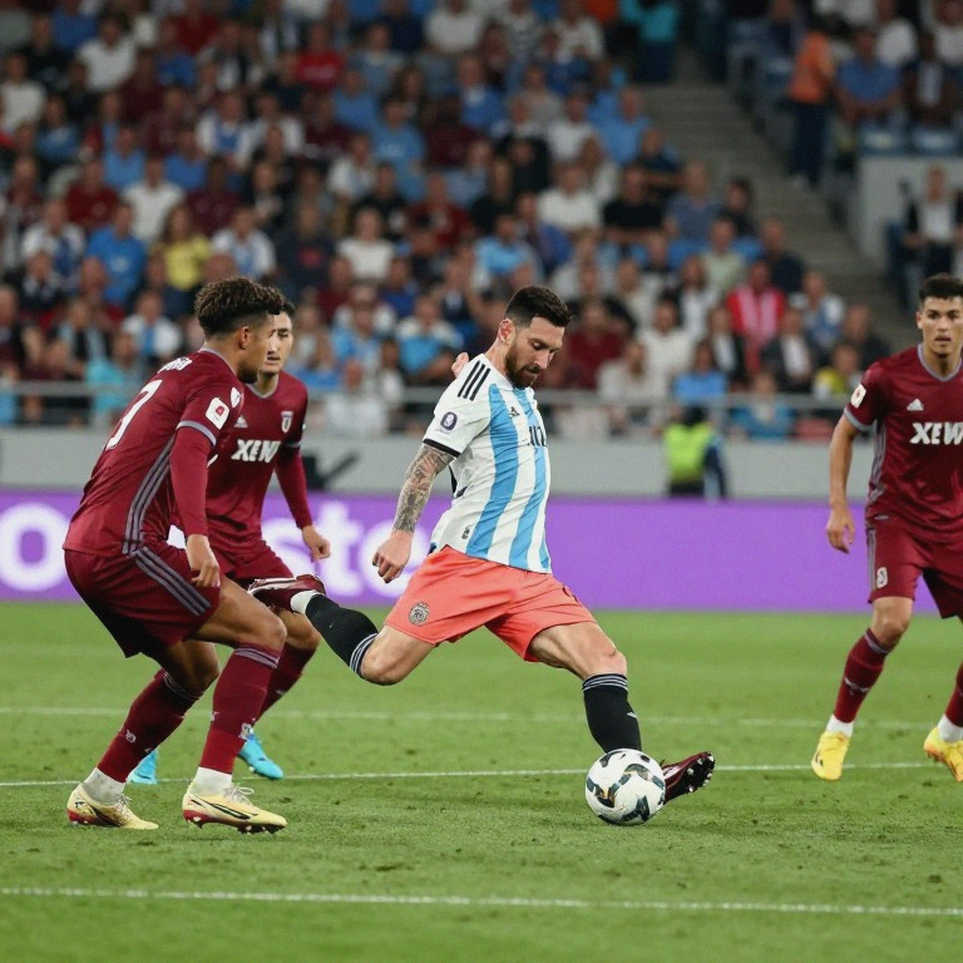
Mispriced expectation produces two consequences. First, an average result gets read as failure. Second, a good result gets read as proof of structural strength, when in fact it is one result in a low-priority window.
Both lead to bad analysis.
Based on my experience watching matches, I am always careful with stories built from a true fact placed in a false frame. A true fact cannot save a false conclusion.
Open Conclusion: What Will Be Verified in the Next Three Months
This list will be verified by three things.
The first is how the returning players are used. If Palmer and Alexander-Arnold start both matches and play full minutes, that is a signal of a central role. If they come off the bench in one match and miss the other, that is a signal of rotation.
The second is how the attack operates when Kane is absent. If Calvert-Lewin is used in a systematic scenario rather than only thrown on for the last ten minutes, the staff are building a contingency structure. If he is only used when the team needs a goal urgently, the contingency does not yet exist.
The third, and most important, is the stated reason for recalling two players dropped from the 2026 World Cup. If the manager explains it as a fitness matter, decision-making consistency is preserved. If he offers no explanation, the information gap will be filled with speculation, and speculation in a dressing room tends to spread faster than it does on a pitch.
Empty stadiums do not create ghost football; they create storytellers. Here the stadium is not empty, but the information gap is, and it is being filled by storytellers.
I will follow this camp differently from usual. I will not follow the score. I will follow the decision record. If the selection process can be explained by data, England are heading the right way. If it can only be explained by feeling, then any result can be read in any direction, and that is a state a team with title ambitions should not be in.