
The Streets of Guadalajara Fill Up Before Kickoff, and a Refereeing File Stays Open
**Câu trả lời cốt lõi**: Trận Chivas gặp Pumas ngày 13 tháng 9 năm 2026 tại Estadio Akron diễn ra trong bối cảnh khán đài kín chỗ, Chivas có cơ hội lên ngôi đầu, và Pumas chưa thắng trên sân Chivas kể từ năm 2018. Nguồn tin tiếng Tây Ban Nha không cung cấp dữ liệu chiến thuật hay tài chính nào. **Dữ kiện chính**: - Trận đấu dự kiến diễn ra ngày 13 tháng 9 năm 2026, thuộc giải Apertura (nhãn cần đối chiếu lại với lịch Liga MX). - Pumas chưa thắng trên sân Chivas kể từ năm 2018; trước đó chuỗi bất thắng kéo dài 36 năm, chấm dứt dưới thời huấn luyện viên David Patiño. - Pumas chưa thắng trên sân Atlas kể từ trận bán kết năm 2021. - Trận bán kết năm 2021 ghi nhận tình huống Juan Ignacio Dinenno bị phạm lỗi trong vòng cấm nhưng không có phạt đền. - América thua Cruz Azul vào ngày thứ Bảy cùng vòng đấu; Clásico Nacional gặp América diễn ra một tuần sau đó. **Nguồn**: Bài báo tiếng Tây Ban Nha “¡Una auténtica locura! Así fue el recibimiento de la afición de Chivas previo al duelo ante Pumas” — ngày xuất bản không được ghi trong bản gốc; nhiều dữ kiện đến từ video do người dùng đăng tải. Chưa đối chiếu được với cơ sở dữ liệu VuaBong.vn. **Hỏi đáp liên quan**: - Hỏi: Pumas có thành tích thế nào khi làm khách tại Guadalajara? Đáp: Chưa thắng trên sân Chivas kể từ năm 2018 và chưa thắng trên sân Atlas kể từ năm 2021, theo nguồn tin chưa được xác thực độc lập. - Hỏi: Vì sao trận này được xem là một trận bẫy với Chivas? Đáp: Vì Clásico Nacional gặp América diễn ra chỉ bảy ngày sau, trong khi khán đài kín và kỳ vọng lên ngôi đầu tạo áp lực tập trung kép. - Hỏi: Có dữ liệu chiến thuật hay chuyển nhượng nào trong nguồn không? Đáp: Không; nguồn không chứa chỉ số hiệu suất, đội hình, phí chuyển nhượng hay lương, nên các hạng mục đó được giữ ở trạng thái trống có cấu trúc.
The Streets of Guadalajara Fill Before Kickoff, and a Refereeing File Stays Open
I have watched Mexican football on tape for many years, largely for one professional reason: Liga MX is one of the few leagues where crowd pressure can be measured with the naked eye, without any software at all. On 13 September 2026, roughly three hours before kickoff, the streets around Estadio Akron were packed. Buses carrying supporters lined up for blocks, red-and-white striped shirts spilled across intersections, drums beat down onto the asphalt. Inside, the organisers projected a full house.
There was not a single tactical board in that crowd. Nobody argued about formations, pressing, defensive blocks or the positioning of a deep-lying midfielder. The crowd knew exactly one thing: a win tonight could lift Chivas to the top of the table, and seven days later came the Clásico Nacional against América. That atmosphere is not data. But it is a variable, and every variable has to be entered into the file before the referee blows his whistle.
Let me state something immediately, because my trade requires it: every fact in this piece comes from a Spanish-language report describing the Chivas supporters' reception, plus user-uploaded video clips. The original carries no publication date and no named outlet, and most of the footage was filmed by fans. Reliability sits at low to medium. I keep to my old rule: whatever cannot be verified gets labelled unverified, and whatever is absent from the source must not be invented.
Context: a matchday engineered to create noise
Liga MX runs on a short-tournament format split into two competitions per year, followed by a play-off stage known as the Liguilla. The consequence is that leading the table carries value in seeding and psychology rather than any guarantee of a title. When Chivas arrived at this fixture with the chance to go top, that was a positional opportunity, not a settled status. The tournament was only part-way through, and any coronation narrative at this stage is an overreach.
The more relevant subplot: América lost to Cruz Azul on the Saturday. That result raises the perceived value of this matchday for Chivas, because a win would deliver two things at once — top spot and a psychological edge heading into the Clásico Nacional. In football, the matchdays on which a direct rival stumbles tend to create double pressure: opportunity and obligation in equal measure.
On the Pumas side, the source describes a complicated double visit to Guadalajara. They face Chivas, described as being in good form, and then Atlas, described as reinforced. I must be precise here: the source provides no table, no points total, no goals scored, no performance metric whatsoever. What I have is qualitative description and a chain of historical facts with no secondary attribution.
The source also records one detail about league identity: this meeting is described as a great rivalry but not a classic. Within Liga MX's hierarchy, the Clásico Nacional sits at the top, and Chivas versus Pumas sits beneath it. That hierarchy determines media allocation, broadcast scheduling and commercial activation around each fixture. For someone in my trade, this is an important signal: the same packed stand carries entirely different institutional weight in the two cases.
The core: what matters is not on the tactics board
The source contains not one line of tactical analysis. No lineup, no pressing scheme, no build-up pattern, no player-role description. No xG, no xGA, no PPDA, no possession, no passing data. Any tactical verdict drawn from this material would be fabrication. I refuse to do it, even when readers want a fast conclusion.
What actually deserves analysis sits at the environmental level. Pumas have not won at Chivas since 2026. Before 2026, the winless run stretched 36 years, and it was broken during a period when the club was managed by David Patiño. A 36-year span does not describe ordinary home advantage. It describes one of the most extreme venue effects in Mexican football. More striking still: after that run was broken, Pumas went the next eight years without repeating the result. The pattern did not weaken after the breakthrough. It re-established itself.
At another stadium in the same city, a similar story appears. The source notes that Pumas have not won at Atlas since a 2026 semifinal. Put the two facts together and the picture stops being a single match. It becomes a long-running away deficit in one specific city, against two different hosts, across two different competitive contexts.
I call this a destination effect, not a tactical one. The distinction matters. If it were tactical, one could identify a countered scheme, a systematic error, a build-up pattern that has been read. In that case, fixing the tactics would suffice. If it is a destination effect, what is being countered is not the formation but the capacity to execute under pressure: noise, pitch, climate, travel time, and the memories the away side carries into the dressing room.
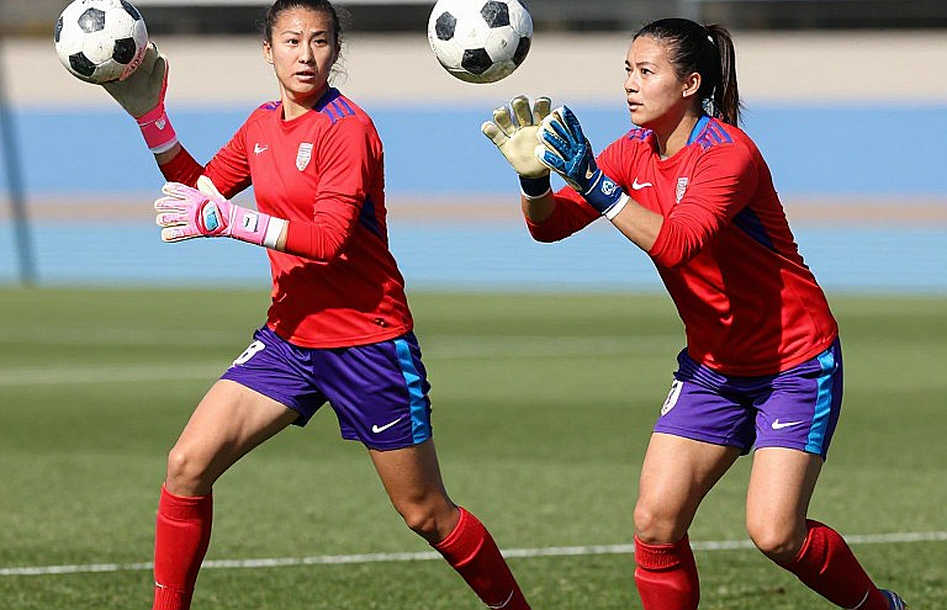
One clarification to avoid misunderstanding: the source offers no evidence that Pumas are tactically countered. There is no description of how they were pinned back, stretched or exploited. Reading it as a styles-make-fights rivalry is an over-reach. I record it as a hypothesis requiring verification, not a conclusion.
The 2026 file: a penalty that was never given
Within the report there is a detail that deserved far more attention: the 2026 semifinal, when Juan Ignacio Dinenno was fouled inside the box and no penalty was awarded. The source frames that moment as tie-changing.
For a referee-file reporter like me, this is the most important anchor in the whole story. It explains a phenomenon analysts often overlook: why certain fixtures with a refereeing memory run hotter than fixtures of the same stature with a clean memory. In matches like these, the referee walks out with a documented history that has been replayed, restated and broadcast before kickoff.
The first mistake is not there to be erased. It is there to be compared against later. Every past controversy can be cited to scrutinise the present one, and that creates a particular kind of pressure. Not pressure from the law. The law does not change. The pressure comes from a crowd's memory of a decision they believe took something from them.
Technically, I want to separate two things that media routinely merge. The first: whether a decision was right or wrong under the law. The second: whether a decision gets given in a specific context. Only the first is objective, and it can only be established with full camera coverage, a reference point and the match report. The second belongs to psychology and match management.
I have spent years reading league disciplinary reports, and the pattern is fairly stable: most controversies do not arise because the law is ambiguous, but because one particular referee chose a different intervention threshold than another referee would have chosen in the same situation. Same incident, two whistles — the law is never ambiguous, only the person holding the whistle is.
That is why fixtures with a controversial history place referees under closer observation. Every decision inside the box gets replayed more often than usual. Every minute of stoppage time gets counted. Every card at a decisive moment gets weighed. Referees know this, and whether they like it or not, awareness of being watched shapes how they run the game.
Crowd atmosphere as a disciplinary variable
The report describes large-scale occupation of the area around the stadium, disrupted traffic, and supporter movement far beyond the usual volume. This kind of fact usually gets filed under fan culture and rarely treated as a match-management issue. I think that classification is wrong.
When thousands of people occupy roadways and the bus system has to be reinforced, organisers face a concrete safety problem: access routes, crowd flow, gate control and overload handling. These issues fall outside the laws of the game, but they fall squarely inside league operations. In several documented cases worldwide, delayed kickoff is the direct consequence of exactly this kind of pressure.
Discipline is not there to punish; it is there so the match can continue. That is true of players, and it is true of supporters. A fervent atmosphere is an asset to a league. But every asset has an operating limit, and that limit is set by the ability to keep everyone inside the stadium safe.
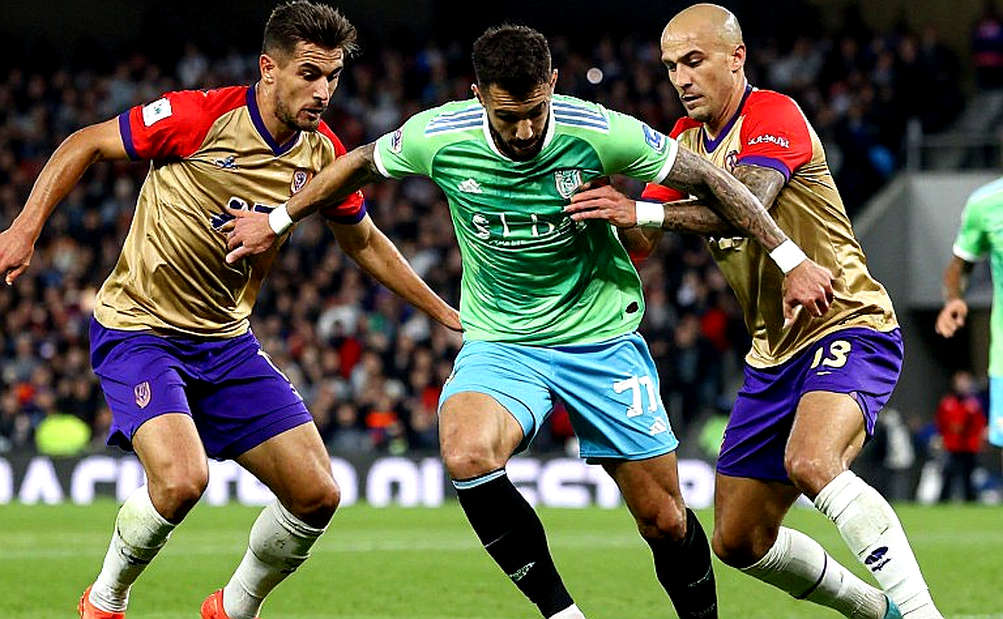
Professionally, noise has measurable effects. Communication between assistant referees and the centre official breaks down. Players cannot hear instructions from teammates at medium range. Referees switch to signals instead of words. In such an environment, communication error rises, and communication error is one of the most common causes of decisions that provoke furious reactions.
The trap lies in the calendar, not the opponent
There is a detail easily missed in the whole story: the Clásico Nacional against América falls just one week after this match. For Chivas, this is the textbook configuration of a trap game.
A trap game is a widely recognised mechanism: an in-form home side, backed to the maximum by its crowd, facing a theoretically weaker opponent, with a much bigger fixture immediately behind. Focus fragments without anyone intending it. Players say the right things at press conferences, but their bodies have already calculated pacing for the next match.
The source hints at another possibility I consider reasonable as an inference: Chivas may rotate or manage minutes for certain key players. The source names no player, no injury, no suspension. This is a grounded hypothesis, not established information.
On the other side, Pumas' realistic target may not be an open game. If the schedule forces a double trip to Guadalajara, one point or a narrow defeat before the Atlas trip would already break the narrative. This is an inference from fixture structure, not a claim from the source.
And here my professional position on the substitution rule belongs in its proper place. Five substitutions deepen a squad, allow a coach to overhaul his midfield at half-time and extend a team's capacity to press. But it also turns the final twenty minutes into a war of attrition. For a side playing two away games in a week, the substitution rule is a fitness-management tool. For a side preparing for a Clásico, it is a tool for concealing intent.
I must state my confidence level: this is a general analytical principle, not sourced data. The source provides no substitution counts, no substitution-minute windows, no data on how the rule is applied in Liga MX. If a rule-data-conclusion comparison table is required, I must collect the data myself rather than infer it.
The counter-intuitive part: a fervent atmosphere does not score goals
Here I want to go against the intuitive reading.
The popular narrative turns a fan reception into a weapon: packed stands, packed streets, overwhelmed opponents, home win. But the historical facts inside this very source tell a more complicated story. For 36 years that atmosphere existed in Guadalajara, and Pumas did not win. In 2026 the atmosphere was still there, and Pumas won. The difference between the two moments was not the stands. It was the away team.
In other words, the fervour is a constant across most of the fixture's history. A constant cannot explain a variation. If a full stadium were the cause, Pumas could never have won in any year — and they won at least once. That forces me to look for the variable elsewhere.
Conversely, fervour can backfire on the home side itself. When expectation is pushed high, errors get magnified. A misplaced pass in the fifth minute draws a groan, and that groan carries weight. Young players feel it most. Playing not to make a mistake is entirely different from playing to win.
I believe in the naked eye, but VAR taught me that the naked eye also knows how to lie. The same incident will look like two different things to a Chivas fan and a Pumas fan, and both are being honest. That is not a moral problem. It is a perspective problem. And in a match with a refereeing memory like this one, the number of perspectives multiplies.
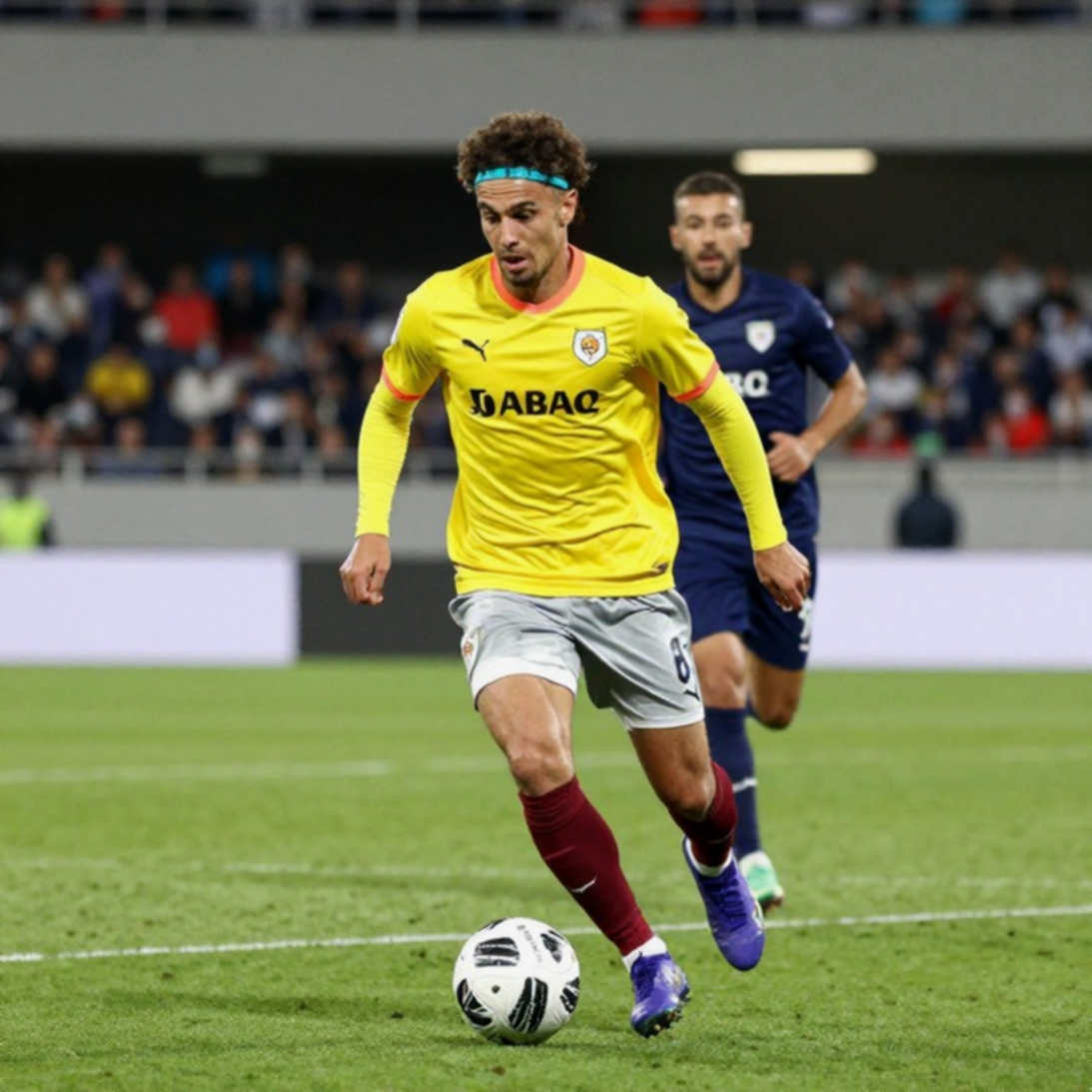
The biggest blind spot in the whole story sits here: media are spending most of their bandwidth on the reception, while what decides the result lies in things a phone camera cannot capture. Nobody films how a centre-back organises his line while the stands roar. Nobody films how a midfielder decides to hold the ball instead of passing it within three seconds. A street full of people is data about the city, not data about the match.
Professional risk and how I handle this file
Four risks must be recorded, following the process I always use.
First, the tournament label needs cross-checking. The source states the match took place on Sunday, 13 September 2026, in the Apertura 2026 tournament. That date does fall on a Sunday, so the source's internal calendar is consistent. But the Apertura 2026 label should be verified against the actual Liga MX calendar, because a transcription error could shift every temporal conclusion.
Second, the historical data has no secondary attribution. The 2026 mark, the 36-year mark and the 2026 semifinal mark are verifiable in principle, but the source cites nothing. I hold them as pending verification.
Third, process data is entirely absent. No xG, no xGA, no PPDA, no shot counts, no conversion rates. When process data is missing, any conclusion about divergence between results and performance must remain blank. I do not fill blanks with feeling.
Fourth, fitness risk from a congested multi-competition schedule. For Chivas, the Clásico Nacional is one week away. For Pumas, the double trip to Guadalajara spans two matches. This is a real risk class, but the source contains no quantitative input.
On the financial side I must also be blunt. The source mentions no transfer transaction, no fee, no wage, no contract length. The only market-adjacent signal is that Atlas is described as reinforced. No figures accompany it, so the scale of investment and its sustainability cannot be assessed. The only commercial fact inferable is a full house at Estadio Akron, implying matchday revenue upside. But with no ticket price, no capacity and no official attendance, the magnitude is unquantifiable.
On rules and governance, the file is equally empty. No breach is alleged. No investigation is mentioned. No sanction is published. The only rule-adjacent item is the memory of the 2026 decision, and the only safety-adjacent item is public-order strain from crowd movement. I refuse to build a sanction scenario from those two facts, because doing so would be organised fabrication.
What to watch after the whistle
Three things will determine how this story gets retold.
First, the referee's intervention threshold inside the box. With a contested history restated before kickoff, every collision in the penalty area will be reviewed from more angles than usual. If a borderline decision arrives, it will be compared directly with the 2026 incident, whether or not the two situations genuinely resemble each other.
Second, the management of the closing period. The attrition of the final twenty minutes, combined with fixture pressure, will generate a cluster of situations requiring management: time-consuming substitutions, fatigue collisions, and card decisions when players have run out of energy.
Third, the away side's reaction after leaving Guadalajara. If Pumas come through both matches without a positive result, the language around their project will shift from description to judgment. That is when public pressure becomes a genuine professional variable for a coaching staff.
A high defensive line is a bet; I only record the moment the gambler turns over his cards. In this case, both teams are betting on different things. Chivas are betting on taking top spot without losing focus on the bigger match. Pumas are betting that a bad trip does not become a crisis. The stands are simply where those bets are placed in public.
A progressive thought: make the invisible transparent
If I could propose one improvement for this league, I would not propose changing the laws. The laws are clear enough. I would propose publishing referee data per match: which incidents were reviewed, what the review concluded, and the record of communication between officials on decisive calls. Several leagues have begun doing this to a limited degree, and the results have generally contradicted the original fear: more disclosure does not increase controversy, it moves controversy from emotion to technique.
My reason for believing in this path is simple. While data stays behind closed doors, fans have only one source for explaining what they just saw: their own emotion. Once data is published, they have a second source to compare against. Not everyone will accept the second source, but at least it exists, and its existence creates a shared standard for later arguments.
In football, the harm is never the error. It is the inconsistency in handling the error. A league that handles errors transparently can live with errors. A league that handles them arbitrarily will slowly lose trust, even if its error rate is lower. That is the lesson I have carried through years of compiling disciplinary files, and it applied to Guadalajara on the night of 13 September 2026 no less than anywhere else.
That night, before the ball rolled, the city spoke very loudly. The only question left is whether that voice gets translated into something verifiable — three points, one correct decision, and a match played out fully under the laws — or whether it remains only a beautiful piece of footage that measures nothing at all.