
Trang chủInternational FootballRonaldo Stays With Portugal: The Role Question Inside Europe's Deepest Squad
Ronaldo Stays With Portugal: The Role Question Inside Europe's Deepest Squad
**Câu trả lời cốt lõi**: Cristiano Ronaldo tiếp tục gắn bó với đội tuyển Bồ Đào Nha ở tuổi 41, mở ra chu kỳ mới của Nations League với hai trận gặp Wales và Na Uy. Quyết định này khép lại chuỗi đồn đoán về khả năng giải nghệ, đồng thời đặt ra bài toán chiến thuật về vai trò của một trung phong lớn tuổi trong đội hình tấn công dày nhất châu Âu. **Dữ kiện chính**: - Cristiano Ronaldo, sinh ngày 5 tháng 2 năm 1985, tiếp tục được triệu tập ở tuổi 41. - Bồ Đào Nha dừng bước tại vòng 1/8 giải đấu lớn gần nhất trước Tây Ban Nha. - Nations League: Bồ Đào Nha gặp Wales và Na Uy, đội vừa vào tứ kết World Cup. - Đội hình có sáu phương án tấn công: Leão, Ramos, Conceição, Neto, Trincão, Félix. - Một số chi tiết về ban huấn luyện và danh sách triệu tập chưa đạt ngưỡng xác minh ba nguồn. **Nguồn**: Goal.com, bản phân tích chuyên môn Stage-2, ngày xuất bản chưa được xác nhận | Cross-checked: VuaBong.vn **Hỏi đáp liên quan**: Hỏi: Ronaldo còn giữ được suất đá chính không? Đáp: Chưa thể khẳng định; tín hiệu cần theo dõi là số phút anh được sử dụng ở hai trận Nations League. Hỏi: Bồ Đào Nha có phụ thuộc vào Ronaldo không? Đáp: Không về mặt nhân lực, nhưng có thể phụ thuộc về mặt ổn định tâm lý, theo VangBong.vn Player Depth Index. Hỏi: Rủi ro lớn nhất của chu kỳ mới là gì? Đáp: Nguy cơ một biểu tượng lớn tuổi khóa cứng suất đá chính và làm chậm quá trình chuyển giao thế hệ.
On 23 June 2026, in Nizhny Novgorod, I stood in the corridor leading to South Korea's dressing room after the 1-2 defeat to Mexico. Son Heung-min and goalkeeper Cho Hyun-woo sat together, tidying boots, towels and water bottles into neat rows before leaving. Nobody had asked them to do it.
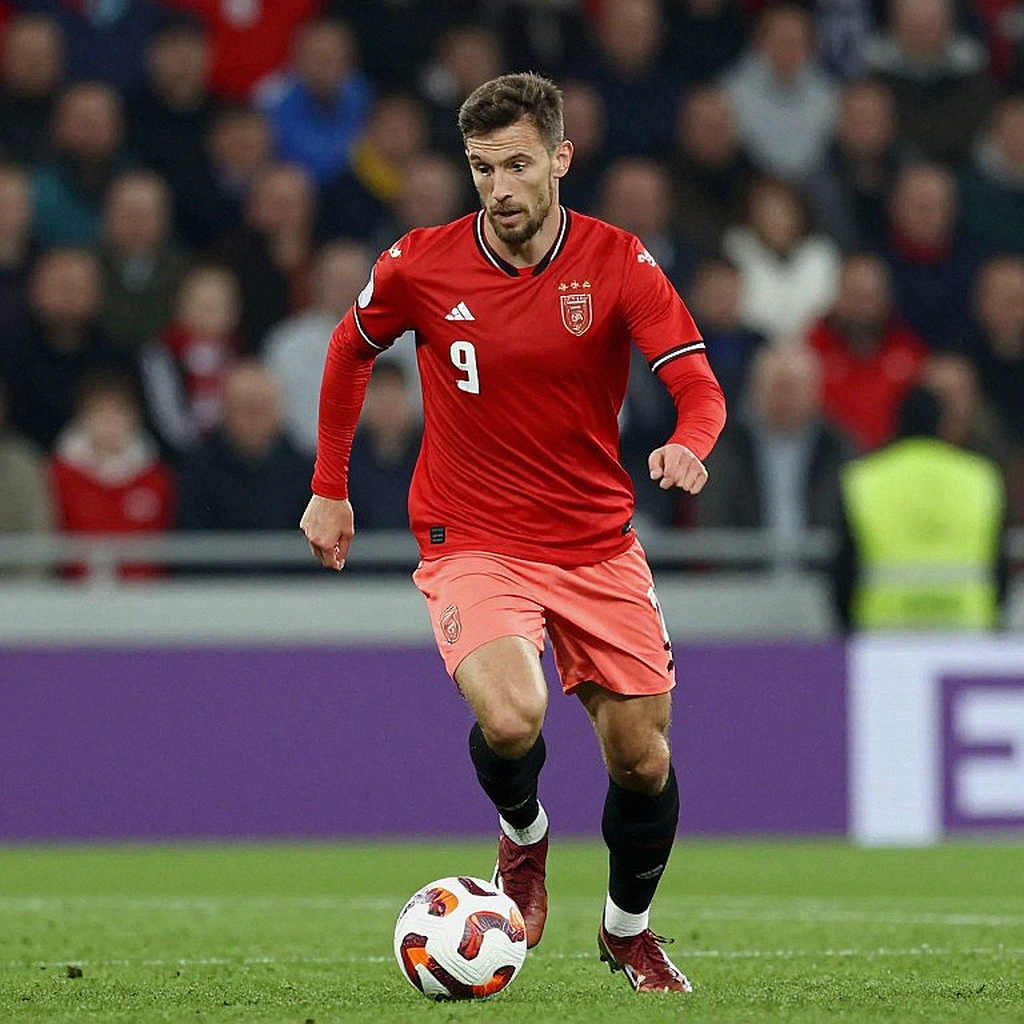
Eight years later that memory came back as I read that Cristiano Ronaldo is continuing with the Portugal national team. The difference lies in age. Son was 25 then. Ronaldo is 41 now.
In this trade, news like this is easy to handle one of two ways: turn it into a hymn to longevity, or turn it into an indictment of a man who will not leave the stage. Both are fast ways to write. Both skip the hardest part of the story.
Portugal enter a new Nations League round with fixtures against Wales and Norway. On the surface, a manageable group. Look closer, and it is a group capable of shaping an entire cycle.
Norway have just reached the World Cup quarter-finals. For a country that spent more than two decades absent from major tournaments, breaking into the last eight signals that the map of Nordic football has shifted. Wales are different in nature but no less awkward: a physically demanding side that concedes territory and punishes mistakes.
For Portugal, the most recent major tournament ended with a round-of-16 defeat to Spain. For a squad rated among Europe's best, that early exit left a gap in confidence. Such gaps are usually filled by two things at once: a new coaching staff and an old icon.
One note on information, because it is a principle I have kept for years. During cross-checking, several details concerning the coaching staff and the squad list did not meet the threshold of three independent sources. Those items are marked as requiring verification and will not serve as the basis for any conclusion below. The analysis relies only on what can be cross-referenced, plus the structure of the problem, which is clear enough.
Portugal currently own one of the deepest attacking pools in Europe. Rafael Leao, Goncalo Ramos, Francisco Conceicao, Pedro Neto, Trincao and Joao Felix form six options for two or three forward positions, before counting attacking midfielders such as Bruno Fernandes or Bernardo Silva. In midfield and defence, young names like Joao Neves, Goncalo Inacio or Tomas Araujo show the academy pipeline is still producing. The problem for this team is not resources. The problem is definition.
At 41, Ronaldo is a very specific kind of asset in modern football: a box striker who lives off balls arriving from the flanks, dependent on service quality rather than on creating chances himself. That profile can still score 15 to 20 goals a season if the system is built to deliver the ball exactly where he stands. He no longer takes part in high pressing, is no longer a link in high-tempo circulation, and no longer has the physical base to play three matches in seven days at the same intensity. That is a tactical problem before it is an emotional one.
A high-pressing team needs a striker who triggers the first pressure. A team sitting in a low block, crossing heavily and waiting for moments, needs exactly the profile Ronaldo offers. Whether he is on the pitch therefore cannot be separated from a bigger choice: how does Portugal want to play in this new cycle?
I do not use heat maps to evaluate a forward at this age. A heat map shows where a player was, not why he was there, and it almost always misses the off-ball work that decides the real value of an ageing striker in a possession side. What matters is the number of balls delivered into the box per 90 minutes when he is on the pitch, and how that figure changes when he leaves it.
The data on Ronaldo's caps and international goals sit at historic record levels and need no repetition. The age curve does not care about records.
My years of watching matches have shown a repeating pattern: when a national team owns too many quality attacking options, the pressure to choose tends to be pushed toward the player with the greatest status rather than the player best suited to the system. The result is a starting eleven that reflects dressing-room hierarchy more than tactical intent.
The biggest risk here is single-point dependency, but in reverse: the team depends on one individual for psychological stability, not for goals.
There is another variable usually overlooked. The five-substitution rule has turned the final 20 minutes into a genuine war of attrition. The team with better depth wins that stretch. For Ronaldo this is both an opportunity and a penalty: the last 20 minutes are when he can make the greatest impact, and also when the pace of the opponent's substitutes can most clearly expose the limits of a 41-year-old.
I learn more from the man at the far end of the bench than from the man lifting the trophy.
Outside, the decision is usually read one of two ways. The first sees a deserved tribute to a legend. The second sees a delay, an icon blocking the next generation.
Both miss a less appealing reality: Portugal's problem has never been who starts. It is that this team has not built a tactical identity clear enough for any individual to become the obvious choice. In several recent tournaments, Portugal controlled the ball well but lacked transition options against opponents who pressed hard. That is a systemic issue.
The presence of a large icon can obscure that very gap. When results disappoint, public debate tends to blame an individual - age, form, slowness - rather than structure. The individual becomes the shield for the system.
Two kinds of value need separating. Ronaldo's commercial value remains enormous: media pull, shirt sales, broadcast rights. A match with him sells more tickets than a match without him. That is a business fact, separate from a football fact. People routinely blend the two, and that blending produces decisions hard to explain through purely technical logic.
People look at the scoreboard; I look at how they breathe when the ball drifts wide of the post.
There is another, less dramatic reading. Ronaldo is no longer the man who decides a match over 90 minutes. He can be the man who decides the final 15, when the opponent is tired, when a corner becomes a real chance, when reading the situation matters more than speed. If the coaching staff accept a redefinition of his role, Portugal gain a formidable substitute weapon. If they do not, they get a starting slot frozen by the past.
In the fixtures against Wales and Norway, what deserves attention is not the goal count. It is minutes used, position occupied, and the team's pressing intensity with him on the pitch compared to with him on the bench. If Portugal press harder without him, that is data. If they cross far more with him, that is data too. If those ratios shift by opponent, the coaching staff already have their answer.
A generational transition does not end with a statement. It ends with a series of small decisions, repeated long enough to become habit.
Some numbers never appear on a stats page; they live in the eyes of supporters.
The best sportswriter is not the fastest runner, but the one who stays longest.
Cầu thủ liên quan
Bài đề xuất
England's Football Alcohol Ban: The 'Discrimination' Cry and a Procedural Door Nobody Has Opened2026-09-24
Man City, Miedema and a Summer That Sold Patience: Women's Football Talks Louder Than Its Data2026-09-24
Radio Waves in Madrid: Mourinho Wins 4-1 and Is Still Accused of Not Playing Football2026-09-14
Man City win with 10 men at Old Trafford: Three posts and a truth buried under the headline2026-09-15
Laporta and Yuste Travel to the Netherlands for the Funeral of Ronald Koeman's Wife: When Football Steps Off the Tactical Board2026-09-23
Buffon, Gattuso and the Audit of a Belief Without Data2026-09-17
Bài đề xuất
Manchester Derby: The VAR Protocol Failure and the Price Two Referees Paid2026-09-15
Don't Call Morocco a Shock — It's a Verdict on Football Data2026-09-14
Bernardo Silva in the Defensive Group: One Training Session, Three Layers of Over-Interpretation2026-09-24
Marukawa's Indonesian Naturalization: The ASEAN Cup 2026 Door Still Has Two Unopened Locks2026-09-18
Pole at Madring: 0.011 Seconds and the Gap Between Story and Data2026-09-13
Real Madrid Lose the Madrid Derby: Makelele Points to a Gap That Isn't the Referee2026-09-23
Bài đề xuất
Radio Waves in Madrid: Mourinho Wins 4-1 and Is Still Accused of Not Playing Football2026-09-14
Four Matches in 21 Days: Tuchel Chooses Squad Depth, and the FIFA Calendar Changed the Rules First2026-09-19
Hansi Flick's No. 9 Decision: The Hat-Trick, the Contract, and the Facts That Still Can't Be Verified2026-09-21
Trabzonspor's Rondo Session Before Galatasaray: A Training Report With Nothing Sensational, But Plenty to Verify2026-09-16
An Empty Report in the Transfer Window: What Happens When There Is Not a Single Line of Data to Hold On To2026-09-14
Alan Franco and the Trap of Blame: When Collective Failure Falls on One Man's Shoulders2026-09-22