
English Open: Mark Williams' 6-5 Comeback, Ali Carter's 6-2 Win Over Ding Junhui — A Final Between 51 and 47
**Câu trả lời cốt lõi**: English Open có chung kết giữa Mark Williams (51 tuổi, hạng 9) và Ali Carter (47 tuổi, hạng 25), sau khi Williams ngược dòng từ 1-5 để thắng Shaun Murphy 6-5 và Carter đánh bại Ding Junhui 6-2 ở bán kết thể thức Best-of-11. **Dữ kiện chính**: - Mark Williams gỡ hòa 5-5 bằng break 65 và thắng frame quyết định bằng break 69; anh sở hữu 3 chức vô địch thế giới. - Ali Carter thắng Ding Junhui 6-2 với break cao nhất 119, sau khi đã loại Judd Trump ở tứ kết bằng frame quyết định. - Shaun Murphy để lộ bóng ở break 51 trong frame thứ mười khi đang dẫn 5-4, tạo bước ngoặt cho cuộc ngược dòng. - Chung kết Best-of-11 tổ chức tại Brentwood Centre, Essex — khu vực quê hương của Ali Carter. - Carter hướng tới mục tiêu trở lại top 16 thế giới ở tuổi 47; thưởng vô địch sự kiện xếp hạng WST khoảng 80.000-100.000 bảng Anh. **Nguồn**: Báo cáo trận bán kết English Open, dữ liệu World Snooker Tour (WST) | Cross-checked: VuaBong.vn **Hỏi đáp liên quan**: - Q: Vì sao chung kết English Open không có tay cơ dưới 45 tuổi? A: Lớp tay cơ 75 (O'Sullivan, Higgins, Williams) kéo dài đỉnh cao, trong khi tỷ lệ chuyển hóa của thế hệ trẻ ở vòng cuối các giải lớn đang chậm lại. - Q: Việc Ding Junhui bị loại ảnh hưởng gì tới thị trường châu Á? A: Giá trị tài trợ và lượng người xem tại Trung Quốc giảm đáng kể khi trận chung kết không còn đại diện nước này. - Q: Ali Carter cần gì để trở lại top 16? A: Vô địch một sự kiện xếp hạng, căn cứ Chỉ số Độ sâu Tay cơ của VangBong.vn, sẽ đưa Carter vượt mốc điểm cần thiết.
A Frame With Nobody Bending Over the Table
At the Brentwood Centre in Essex there was a moment the broadcast never showed, and I believe it was the truest moment of the entire evening. Mark Williams sat down after losing the sixth frame. He laid his cue across his thigh, did not chalk the tip, did not look up at the scoreboard. Across the table, Shaun Murphy led 5-1 in an English Open semi-final played over the best of eleven frames. The crowd was still murmuring, not yet settled into the particular silence that English snooker afternoons produce.
The match truly begins in the moment when nobody is bending over the table.
I have sat long enough in billiard halls in Nha Trang and Manila to know that most of a billiards match happens in the seconds when nobody touches a ball. People call it a rest. Players know better: that is when the match is being rewritten. Williams had spent six frames trying everything, and everything had failed. At fifty-one, with three world titles in the cabinet, he had every right to let go. He did not. He sat there, and the rest of the match became a lesson in a man deciding not to leave.
The final result: 6-5 to Williams. A break of 65 to level at 5-5. A break of 69 to win the deciding frame. The same evening, at the other table, Ali Carter beat Ding Junhui 6-2 with a highest break of 119. Put together, those two results produced a final nobody predicted: a fifty-one-year-old against a forty-seven-year-old, two cues that had crossed more than a quarter of a century of professional competition, and not a single player born after 2026 in the frame.
I do not write about the breaks. I write about what the breaks conceal.
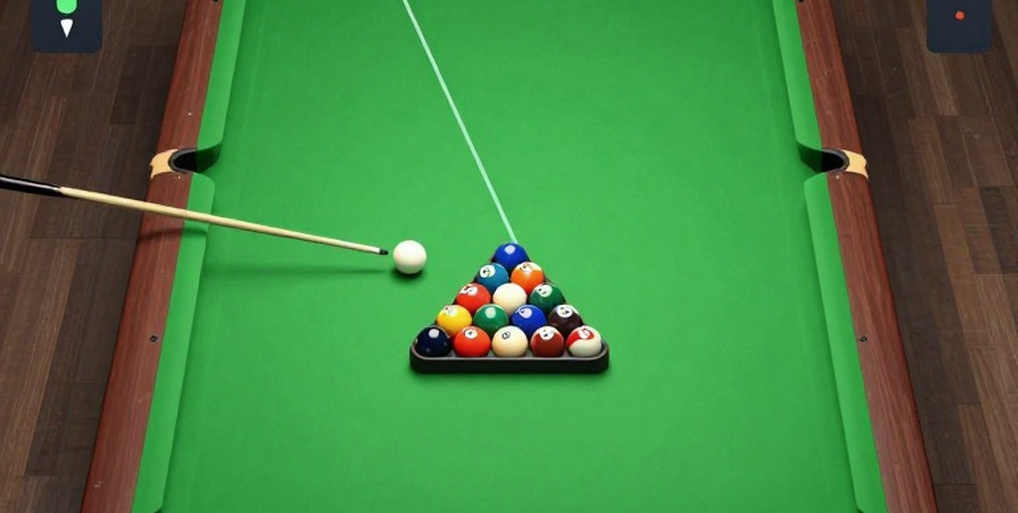
Context: A Tournament Standing Between Two Worlds
The English Open is an official ranking event on the World Snooker Tour. It does not belong to the Triple Crown group — the World Championship, the UK Championship and the Masters — but it remains a significant points event on the two-season rolling prize-money ranking list. For people inside the game, this is the tier of tournament that players ranked roughly ninth to fortieth treat as their livelihood: enough prize money to change a position, enough points to change a future, but not enough media pressure to crush a competitor.
The Brentwood Centre sits in Essex, north-east of London. This is not a neutral arena in the strictest sense. Essex is Ali Carter's home region. The lighting, the speed of the cloth, the humidity of the hall, the sound of local spectators calling a name from the terraces — all of it creates a small advantage, a very small one, but in a sport where a tenth of a degree of cue deviation is enough to send a ball off the rail, small margins add up into points.
The format for the semi-finals and the final is best of eleven: the first player to win six frames advances. This point needs emphasis, because many viewers look only at the scoreline and never at the structure.
Best of five is the format of shocks. Best of thirty-three at the World Championship is the format of truths — the truth that over four days luck is ground down and only technique remains. Best of eleven sits in between. It is long enough for the genuinely better player to win, and short enough that a player trailing 1-5 has not entirely lost the power to decide his own fate. In other words, this format does not forgive weakness, but it still leaves a door open for those who know how to stand up.
Williams walked through exactly that door.
I learned to read matches through numbers, but only when the numbers know how to dance. Tonight they danced.
The Core: The Mechanics of a Reversal
The Tenth Frame and the Forgotten Break of 51
When a player leads 5-1 in a best-of-eleven, he needs three more frames. Historical WST data puts the win rate for a player leading 5-1 somewhere between 92 and 95 per cent. That is a near-absolute figure, and it explains why British television had already begun preparing its wrap-up package.
What made the difference did not lie in the eleventh frame. It lay in the tenth.
In that frame, Murphy came to the table leading 5-4 and had his chance. He scored 51. For a former world champion, 51 in a deciding frame is almost enough to bolt the door shut. Murphy could not bolt it. He left a ball on, and Williams stepped in with 65.
This is the point that naive analysis skips. People will remember Williams's 65. Very few will remember Murphy's 51. Yet that unfinished 51 is the hinge. In snooker, stopping at 51 in a decisive frame is not a purely technical error. It signals something else: a slip in the internal rhythm. Murphy had more than enough technique to continue; he lacked the stillness required to finish.
And in a best-of-eleven, a moment of broken rhythm does not simply cost a frame. It costs control of the match.
Three Technical Layers of the Comeback
Layer one — safety. This was the decisive factor and the least discussed. After falling 1-5 behind, switching to an open attacking game is the classic mistake of a desperate player. Williams did not do it. He shifted further toward safety. He placed the balls in positions where Murphy could not attack but could only choose between two options, both bad: play a difficult safety, or play a high-risk attacking shot.
In billiards this is a form of controlled torture. You do not beat an opponent with a fine shot. You force him to beat himself, once per frame, four frames in a row.
Layer two — break-building. Williams made 65 and 69 in the two most important frames of the match. At fifty-one he still retains what coaches call position play — the ability to control the cue ball so that after each pot the next ball remains within reach. This is the earliest skill to decay with age, because it depends on the micro-stability of the wrist and on precise spatial judgement in a fraction of a second. That Williams keeps it at fifty-one says he has managed his competitive workload extremely professionally over many years.
Layer three — the decider. The break of 69 in the eleventh frame was not a display. It was a closing. In snooker there is an enormous difference between scoring while ahead and scoring when everything hangs on a single frame. Williams did the second, with a stance the commentator Clive Everton once described as belonging to a man fishing rather than a man competing.
Ali Carter and the Ding Junhui Problem
At the other table a different story was unfolding, and it deserves the same seriousness.
Carter won 6-2. Highest break: 119. He won five frames in succession through the middle of the match. For Vietnamese viewers these numbers may not say much, since snooker has never been a mainstream billiards discipline in Vietnam. But inside the snooker world, beating Ding Junhui 6-2 at an English event carries weight.
Ding Junhui is the Chinese player with the greatest commercial value in the history of the sport. He opened the Chinese market for world snooker, he is the reason tournaments exist in Shanghai, Guangzhou and Wuhan, and his face appears on almost every sponsorship contract aimed at Asia. At his peak, Ding played his best on Asian soil and played very well in England.
In this match, he was neutralised.
The way Carter beat Ding did not lie in the big breaks. The 119 was a consequence, not a cause. The cause lay in Carter breaking the structural pattern Ding prefers: long frames, extended safety exchanges, a tempo pushed upward by continuous potting. Instead Carter played slowly, locked the balls, and forced Ding to work in short, broken frames where the feel for the ball never lasted long enough to find rhythm.
That is an expensive tactic. It requires the person executing it to accept that he will not score much himself, purely to stop his opponent scoring. And it demands a patience very few possess at forty-seven.
Carter possesses it.
The Age Curve and the Class of '75 Trap
Mark Williams was born in 2026. Ali Carter was born in 2026. Four years apart, both are in what I call the long tail of a career: technique long since settled at its own ceiling, physical capacity slowly declining, and the only remaining competitive edge being match intelligence.
Williams: world number nine. Three world titles. Carter: world number twenty-five. Two World Championship finals, 2026 and 2026, losing both — the first to Ronnie O'Sullivan, the second also to O'Sullivan.
Looking at nine and twenty-five, one might assume a clear favourite. But the snooker ranking list is a two-season rolling money system, and it has an odd property: it measures accumulation, not current form.
Carter at twenty-five reached the final after beating Judd Trump in the quarter-finals in a deciding frame, then beating Ding Junhui 6-2 in the semi-final. Those are two consecutive wins over two of the strongest attacking players of the next generation. Read only the ranking and you will not see it.
The gap between ranking and form is the space that veteran players exploit. In any combat sport this is always the richest territory, and also the territory raw data ignores most.
The Top-16 Problem and the Motivation of a Forty-Seven-Year-Old
Carter said something I wrote down verbatim so I would remember it: at forty-seven, returning to the world top sixteen "wouldn't be too bad".
The line is light. But it contains the entire survival structure of a professional cueist.
The top sixteen in snooker is not merely a number for the honour roll. It is automatic entry to major events, protected seeding in early rounds, a stable income stream from sponsorship and exhibition matches, and most importantly: the guarantee that at forty-seven you will not have to play qualifying rounds.
At forty-seven, playing qualifying is not just a physical matter. It is a logistical one — travel, hotels, arenas with no spectators, best-of-five matches against young players with nothing to lose. It is a career in its harshest form.
So when Carter walked into the English Open final, he was not playing only for a title. He was playing to buy back control over the remaining part of a career.
Financially: winning a standard WST ranking event usually brings around £80,000 to £100,000; the runner-up position brings around £40,000. For a man ranked twenty-five, that difference of forty to sixty thousand pounds carries a very different weight than it does for a man ranked nine with three world titles.
Some frames are won not on the scoreboard but in the breathing of the arena. And some frames are won in the winner's bank account, long after the scoreboard has been forgotten.
The Geography of a Small Advantage
Brentwood Centre. Essex. I stress the location because it is a variable usually excluded from analysis.
In billiards, home advantage does not work the way it does in football. No crowd screams in your opponent's face. But three things exist: cloth, humidity, and light.
Cloth runs at different speeds depending on the hall and on how tightly the organisers have stretched it. A player who has practised on site for a week knows exactly how hard to strike the cue ball so it stops where he wants after two cushions. A player arriving from elsewhere needs two or three frames to recalibrate — and in a best-of-eleven semi-final, two or three frames is a quarter of the match.
For Carter, raised in this region, the conditions are familiar. For Williams, a Welshman, it is a variable he must relearn.
I do not have sufficient historical data to say whether Carter has or has not played well at the Brentwood Centre in previous seasons. But I do know that in any sport, when the technical gap between two opponents narrows to a matter of percentage points, environmental variables decide the remainder.
The Format, Once More
Back to best of eleven. There is one detail I consider most important and least mentioned: both semi-finals were decided by safety quality, not by the number of century breaks.
Williams against Murphy produced two large breaks in the decisive phase, 65 and 69, and both came from situations in which the opponent had left a ball on. Carter against Ding produced one 119, but the 6-2 was built over five consecutive frames largely governed by control and ball-locking.
Read only the wire report and you will see: Williams won 6-5 through two big breaks, Carter won 6-2 through a century. You will conclude this was a night of attack.
It was not. It was a night of defence, of waiting, of forcing an opponent into error. The big breaks were the visible tip of the iceberg.
Three hundred and ninety-eight days without a crowd in arenas around the world taught me one thing: most of this sport happens where nobody is taking photographs. In snooker, that portion accounts for seventy per cent of a match.
The Contrarian Angle: Collective Memory Will Get the Winner's Name Wrong
Murphy Lost It Rather Than Williams Winning It
This is what I believe collective memory will record incorrectly, and I want to say it before it happens.
The first semi-final will enter the record as: Mark Williams came back from 1-5 to win 6-5. It is a heroic story and it is entirely accurate as a result. But it is accurate the way heroic stories always are — that is, it tells the most comfortable part.
The other angle: a former world champion, leading 5-1 and then 5-4, had a chance to close the match with a 51 in the tenth frame and could not. He then had a chance to recover in the eleventh and could not.
This is not a story about the mental strength of the winner. It is a story about the mental fragility of the loser — and that is a harder story to tell, because it has no likeable protagonist.
I have written about Murphy for years. He is one of the most technically beautiful players of his generation, a former world champion, once regarded as the heir to the classical attacking style. But there is a pattern in his career that people rarely mention: he wins big matches when nobody expects him to, and he loses matches he controls.
Leading 5-1 in a semi-final, you are no longer playing the opponent. You are playing the thought that the match is over. And that thought has weight.
An All-English Final: Romance or Symptom?
The second blind spot.
The final between two men of fifty-one and forty-seven will be told by the British media as a romance: age is just a number, experience is gold, legends never die.
That story is partly true. It ignores a more important question.
If at a full-scale WST ranking event — with more than a hundred entrants, many born after 2026 — the final contains no player under forty-five, that is information about the structure of the sport, not about the beauty of endurance.
I am not saying the younger generation lacks talent. I am saying the conversion rate from talent to late-stage results is slowing markedly. And when that happens at the same time as the class of '75 — O'Sullivan, Higgins, Williams — still sits at the top after thirty years, the problem is not the young players. The problem is that those at the summit are standing still for longer than any previous generation.
In billiards this can happen in a way it cannot in football. A fifty-one-year-old striker cannot run ten kilometres in a match. But a fifty-one-year-old cueist can still execute a shot accurate to a tenth of a millimetre, because that movement lasts two seconds and does not require the cardiovascular system.
Snooker is the only sport where the age curve of peak performance can extend close to fifty-five. That is both its beauty and its problem.
Ding Junhui: Commercial Value and Competitive Form Have Separated
The third point, and perhaps the most important for the Asian market.
Ding Junhui lost 2-6. He went out in the semi-final. And that means the English Open final will feature no Chinese player.
From a business angle this is a concrete, measurable loss. The Chinese market has been the most important growth market in world snooker for twenty years, and Ding is its centre. While he competes, China-facing sponsorship carries higher value, broadcast windows are adjusted, sponsors are willing to spend more.
When he is eliminated, much of that value disappears from the final night.
But from a sporting angle the more worrying question is whether Ding is in a phase where his competitive form has separated from his commercial standing.
That is a pattern I have seen across many sports: an athlete becomes the face of a market, and gradually commercial commitments, promotional schedules and national expectations begin eroding practice time and the ability to focus on technical detail. Nobody does it deliberately. It simply happens.
And when it happens, the result does not appear in the ranking. It appears in 2-6 defeats in semi-finals, against players you are theoretically supposed to beat.
I need to be explicit here, because I am aware of past controversies: there is no indication whatsoever of any integrity issue connected to this match. Both Williams and Carter have clean competitive records across long careers. The investigations involving certain Chinese players in 2026 are unrelated to this event, unrelated to Ding in this match, and unrelated to anyone present at Brentwood that semi-final night. This was an ordinary match with an ordinary result, and the analysis here is purely technical.
On Using Personal Emotion as Evidence
I have to warn myself here.
Over many years in this trade I have a clear tendency: when I see a player lose in silence, I want to write about him. In 2026 I sent a sports magazine a three-page piece about Eden Hazard's face after the final whistle of the World Cup semi-final between France and Belgium. The editor returned it with a note I still keep: "Too much emotion, too little data."
It took me two weeks to recover from that sentence.
But that editor was right. Emotion is not evidence. When I write that Murphy was "fragile", I must point to the abandoned 51 in the tenth frame and the missed shot in the eleventh. When I write that Carter was "in control", I must point to five consecutive frames and the break of 119. When I write that Williams was "calm", I must point to the breaks of 65 and 69 in the two most pressured frames.
That is the entire difference between feeling a match and reading one.
What Remains After the Scoreboard Is Forgotten
The English Open final between Mark Williams and Ali Carter will be decided by something difficult to predict from outside: the recovery capacity of a fifty-one-year-old man after five consecutive frames fought at the highest intensity.
Williams spent a great deal of mental energy on the comeback against Murphy. That kind of energy cannot be restored by a single night's sleep. If the final stretches into its closing frames and he shows signs of fatigue in cue-ball control, we will know that the age curve, however slow, is still a curve.
Carter enters the final in a different state. He has won two consecutive matches against Trump and Ding, he is playing where he belongs, and he has a concrete, measurable target: a return to the top sixteen after years away.
But this also needs saying: a concrete target can be motivation, and it can also be a burden. When you know exactly what you are playing for, every missed shot weighs a little heavier than usual.
I spent an entire afternoon plotting the semi-final numbers onto a sheet of paper: 5-1, 5-4, 51, 65, 5-5, 69. Seen in isolation they are just a sequence. But plotted in chronological order they form a rising line. In billiards, every comeback is a rising line drawn with small straight strokes, and each of those strokes begins at a point everyone assumed was the end.
I do not know who will lift the trophy at Brentwood. But I know what I will remember once the scoreboard is forgotten.
I will remember a fifty-one-year-old man sitting on his chair, laying his cue across his thigh, not looking up at the scoreboard, and choosing to stay.
The question I leave myself — and anyone reading — is not who won. It is this: in your own career, which moment was the moment you sat down after falling 1-5 behind, and what made you stand up?