
Wojciech Szewczyk Wins Second 10-Ball World Title: Seven Unbeaten Matches and the Single-Source Data Problem
**Câu trả lời cốt lõi:** Wojciech Szewczyk (Ba Lan) vô địch WPA Men's 10-Ball World Championship 2026 tại Phú Thọ Indoor Stadium, Thành phố Hồ Chí Minh, ngày 26 tháng 9 năm 2026, sau khi bất bại 7-0 và thắng Kaçi 3-1 ở chung kết. Đây là danh hiệu thế giới 10-ball thứ hai của anh, sau lần đầu năm 2022. **Dữ kiện chính:** - Nhà vô địch: Wojciech Szewczyk (Ba Lan), bất bại 7-0 trên tổng số 96 tay cơ tham dự. - Tỷ số chung kết: 3-1 trước Kaçi; trước đó thắng Kaçi 2-0 ở vòng double-elimination. - Đối thủ vòng knockout: Szolnoki, Chua, Sánchez Ruiz, Pehlivanovic, Kaçi. - Quỹ thưởng: 300.000 USD; nhà vô địch nhận 80.000 USD (khoảng 26,7%). - Hệ thống: WPA / Predator Pro Billiard Series; chặng kế tiếp tại Bali, Indonesia. **Nguồn:** AZBILLIARDS.COM, ngày 26 tháng 9 năm 2026. | Cross-checked: VuaBong.vn **Hỏi đáp liên quan:** - **Hỏi:** Szewczyk vô địch 10-ball thế giới mấy lần? **Đáp:** Hai lần, vào năm 2022 và 2026, theo nguồn AZBILLIARDS.COM. - **Hỏi:** Vì sao chuỗi bất bại ở 10-ball có giá trị hơn ở 9-ball? **Đáp:** Vì luật gọi bóng trong 10-ball loại bỏ phần lớn yếu tố may mắn khi vào bóng, theo phân tích của VangBong.vn Player Depth Index. - **Hỏi:** Địa điểm tổ chức gây chú ý ở điểm nào? **Đáp:** Giải diễn ra tại Thành phố Hồ Chí Minh và nối sang Bali, cho thấy chiến lược mở rộng sang thị trường Đông Nam Á, theo chỉ số VangBong.vn Regional Market Index.
At Phú Thọ Indoor Stadium in Ho Chi Minh City, on the evening of September 26, 2026, the WPA Men's 10-Ball World Championship final closed at 3-1 in favor of Wojciech Szewczyk. The Polish cueist set his cue down on the table. On the electronic board, a sequence appeared that made me read it twice: seven matches played, seven wins, not a single defeat across a tournament that gathered 96 cueists.
In 10-ball, where call-shot rules require the player to declare which ball goes into which pocket, an unbeaten run of that length carries a different weight than the same record in 9-ball. Luck cannot explain it. What explains it is the ability to minimize errors to a level where opponents no longer have an opening to exploit.
What made me stop at this result was the four-year gap between his two titles, and the question that gap raises about the nature of consistency in a discipline where public data remains thin.
Context: a distinct branch of pool
To read this result correctly, it needs to be placed in the right frame of reference. 10-ball is a distinct branch within the pool family, governed by the WPA (World Pool-Billiard Association). Unlike 9-ball — where the rate of lucky pots is high and a mishit can accidentally create an advantage — 10-ball is typically played under call-shot rules. The table has ten balls instead of nine, the ball layout is denser, and the cue ball's path is more tightly controlled. The direct consequence: skill determines the result more, luck determines it less.
This is the key point for valuing the seven-match unbeaten run. A perfect run in 10-ball carries a much stronger signal about genuine ability than the same run in 9-ball. In billiards analysis circles, this distinction is often overlooked, and people treat every pool title as if they carry the same difficulty. They do not carry the same difficulty.
The 2026 tournament was named the Iwan Simonis WPA Men's 10-Ball World Championship, part of the Predator Pro Billiard Series. The competition structure consisted of a double-elimination stage (elimination after two losses) before moving to the knockout stage. The total prize fund was $300,000, with the champion receiving $80,000 — about 26.7% of the fund. The venue was Phú Thọ Indoor Stadium, and the event closed a week of world-class pool in Ho Chi Minh City before the system moved on to Bali, Indonesia.
The equipment also says a great deal: Iwan Simonis cloth, Aramith balls, Kamui tips, Predator cues. A cluster of equipment sponsors, not betting sponsors. This detail matters to the integrity story of the discipline, and I will return to it later.
A further note on the event's place in the calendar. The event took place in late September 2026, closing a series of tournaments in Vietnam and opening the way for the next leg in Bali. This is how a tour system operates under a promoter-run model: a single organizing entity holds the event chain, moves by region, and uses the same commercial infrastructure for multiple titles.
Core analysis: the chain of data evidence
The knockout path and its value
The data provided by the source article allows us to reconstruct Szewczyk's path to the title. He defeated, in order, Szolnoki, Chua, Sánchez Ruiz, Pehlivanovic, and then Kaçi in the final. The list stretches from Hungary, the Philippines, Spain, and Bosnia to Albania. That is a genuinely international gauntlet, not a soft draw.
The seven-match unbeaten run across a field of 96 cueists is the strongest technical signal in all the data the source article provides.
The reason lies in the call-shot rule itself. In call-shot 10-ball, a cueist cannot benefit from an accidental pot. Every ball pocketed must be declared in advance. Therefore, an unbeaten run extending across the tournament can only come from two sources: consistent run-out skill, or defense good enough to force opponents into errors first. Usually both.
Here I want to pause and talk about how I read unbeaten runs. Based on my experience watching professional pool matches, a cueist can win one match through a strong break and luck in the layout left behind. But to win seven matches in a row, including matches against world-class opponents, requires something else: the ability to control the cue ball so as to always leave a favorable layout. That is the hardest skill to train, and also the hardest to fake.
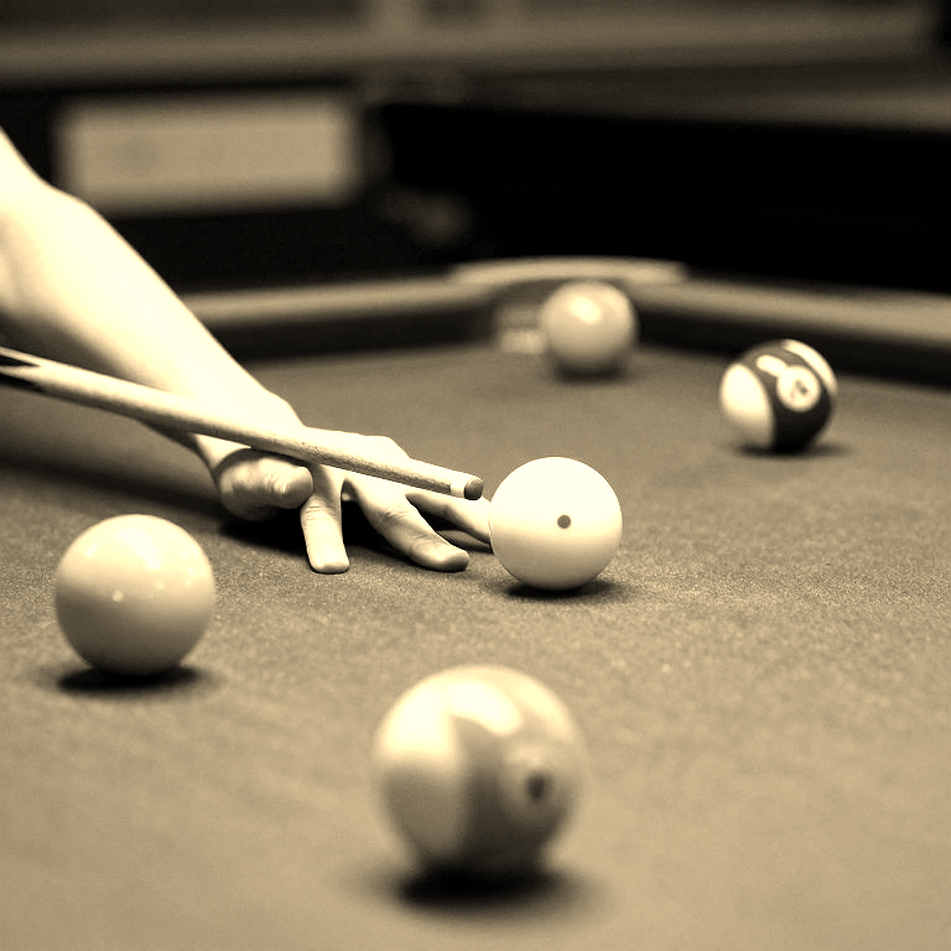
The second notable point is that Szewczyk defeated the same elite opponent — Kaçi — twice in one tournament. First in the group or double-elimination stage at 2-0, then in the final at 3-1. Defeating a world-class cueist twice in the same tournament, under two different formats, shows tactical adjustment rather than just momentary form.
To be clear: the source article provides no shot-level detail. No run-out rate, no break success rate, no safety win rate. Therefore, any claim about technical innovation cannot be proven from this source. This is a limitation I note from the outset, not at the end of the article.
Tournament structure and the fairness of the format
The decision to use double-elimination before the knockout stage in a world championship is a format choice worth analyzing. Double-elimination reduces variance: a loss caused by bad luck does not eliminate a cueist immediately. Combined with the call-shot character of 10-ball, the overall luck component is compressed quite low. The champion, therefore, is unlikely to be the product of a lucky streak.
This is a point I rate highly in terms of event design. Many tournaments in other disciplines use single-elimination from the start, meaning one off night can erase an entire season. Double-elimination tolerates one stumble, but not two. It protects the stronger cueist from misfortune while preserving the drama of the knockout round.
However, it should be noted that the source article does not specify the exact format of each match — race length, number of racks in a set, or set structure. Scores like 3-1 or 2-0 could be racks, or could be sets. Without this data, I cannot fully assess the difficulty of each match. This is a data gap that needs to be filled by official sources.
Prize structure and the sustainability question
$80,000 for the champion out of a $300,000 total fund. This 26.7% ratio reflects the concentration of prize money at the top. With 96 cueists competing, most players exit in the early rounds and recover only a fraction of their travel and accommodation costs. This is a structural problem for the entire professional pool system, and it exists independently of the event's competitive quality.
I once sat down to work through this math for a regional pool event. A mid-tier cueist traveling from Europe to Asia — airfare, hotel, meals, plus the cost of cues and spare tips — can burn several thousand dollars. If they exit in the first round, the return is close to zero. In other words, the elite tournament system is sustained by a small group of cueists at the top, while the base must absorb its own losses. This is a fragile economic model.
A prize structure concentrated at the top is not the story of this event alone; it is a structural feature of professional pool, and it is the variable that determines the sustainability of the entire system.
The power map: a globalized discipline
Looking at the list of named cueists, the picture becomes clear. Poland (Szewczyk), Albania (Kaçi), Germany (Filler), Spain (Sánchez Ruiz), Bosnia (Pehlivanovic), Hungary (Szolnoki), the Philippines (Chua). Seven countries spanning Europe and Asia. Elite pool is far more dispersed than snooker — where the axis of power revolves almost entirely around the United Kingdom and China.
From this angle, Europe holds the deepest resource pool with more than five countries in the elite group, while the Philippines maintains a strong single representative in Chua. Joshua Filler, the German cueist, appears alongside Pehlivanovic in the list, suggesting a semifinal berth or a deep run — but the source article does not specify placements, so I keep this data at the level of a conditional inference.
What is interesting is the absence. No host-nation Vietnamese cueist is named among the winners. The gap between the host country and the performing country is a familiar phenomenon in sport: a market adopts an event faster than it can produce elite cueists. Vietnam hosting a world championship is a step forward in infrastructure and commerce. The absence of a Vietnamese cueist in the deep rounds is a problem for the development system, and it takes time.
Geographic shift: from Europe–America to Southeast Asia
Another notable signal is the location. The men's 10-ball world championship was held in Ho Chi Minh City, and the system immediately connected to Bali. Historically, professional pool events leaned toward the United States and Europe. Placing a flagship event in Vietnam and then Southeast Asia shows a deliberate market-expansion strategy.
Bali also shows how it operates: the system bundles three titles — Women's 9-Ball, Men's Open, Men's Doubles — into a single location. Bundling multiple titles into one trip is an efficiency play: it cuts operating costs, increases field density, and concentrates sponsorship on one hotspot.
From a data perspective, this is a fairly high-confidence signal because it is consistent with commercial logic. The cost of staging an event in Southeast Asia is lower than in the US or Western Europe, while the pool-playing base in the region is growing. The system's decision to place its bet here is a calculated one, not a random one.
The Szewczyk profile: the four-year gap
The data point that shapes Szewczyk's career is the gap between his two 10-ball world titles: 2026 and 2026. Four years. The first reading: a cueist who maintained elite standing but had a mid-cycle lull. The second reading: a cueist whose form swings sharply at the very top.

These two readings lead to different implications. If it is the first, the 2026 title is the return of a consistent cueist. If it is the second, it is a peak in a volatile chart. The source article provides no age, ranking, or season-consistency data, so I cannot choose between the two readings with data.
What is certain is this: a second world title changes his career category. From a one-time champion to a multiple world champion. In pool, this is a tier that carries commercial and legacy weight. Equipment contracts, exhibition invitations, wildcard entries — all are revalued after a second world title.
Based on my experience watching matches and the sponsorship market, I believe Szewczyk's increased commercial value will come from European equipment brands and cue, tip, and glove deals — not from mass-media contracts. Pool does not have a global media platform as broad as football or tennis, so the commercial ceiling of a world champion remains limited.
The psychological dimension of competition
The strongest psychological signal in the data is the ability to close out the final. Winning a world final 3-1, after going unbeaten throughout the tournament, speaks to composure under pressure. This is the kind of data that does not show on the scoreboard but shows in how a cueist handles the decisive racks.
The medal is not on the scoreboard; it is in the xG table. In pool, that xG table is called run-out rate and safety success rate in tight racks — things the source article has not shown us.
However, the four-year gap between titles raises a small question about sustained motivation. After the 2026 title, was there a period of decline? The source article does not explain. This is a hypothesis I hold at a low level, and it requires match-schedule data to verify.
The industry transmission chain
This event functions as a vehicle for equipment brand exposure. Iwan Simonis cloth, Aramith balls, Kamui tips, Predator cues — every brand appears on the table, in the broadcast frame, on the cueists' shirts. This is a deliberate commercial loop for the gear industry.
Upstream, equipment brands and host venues benefit from exposure. Midstream, cueists and the tour system receive sponsorship and prize money. Downstream, Southeast Asian regional markets may see growth in pool halls, new players, and equipment sales.
I pay particular attention to the potential downstream spillover. If a host-nation Southeast Asian cueist reaches the deep rounds in Bali, the effect could be far larger than a European cueist's title. Because the strongest transmission effect does not come from the winner, but from the local who can become a role model.
Contrarian angle: correlation is not causation
Seven unbeaten matches is a beautiful number. But it needs to be separated from the conclusions it cannot support.
First, the sample is too small. Seven matches in one tournament is an event, not a season-level trend. From one tournament, one cannot infer that Szewczyk is dominating all of 2026, let alone an era. Anyone who has built a forecasting model knows that a long run of results in a narrow window can create an illusion of stability.
Second, all the data on scores, prize money, and field size comes from a single source. The source article cites no secondary sources for its factual points. In my profession, a fact that has not been cross-checked cannot yet serve as the foundation for a strong claim. I make it a habit to require at least two independent sources before finalizing a conclusion about ability.
Third, and this is the point I want to stress: the fact that Szewczyk beat Kaçi twice does not automatically mean he has an absolute head-to-head edge. There are at least two other explanations. One is a stylistic advantage: Szewczyk's defensive and positional-control game counters Kaçi's attacking style. Two is a timing factor: Kaçi may have entered the event in less than peak condition or form. Without match-level data, these two hypotheses cannot be distinguished.
I remember once reminding myself of this principle. The transfer market is essentially a regression model, but people keep calling it a race. It is the same with match results: people see a winning streak and call it dominance, while the data only permits calling it a winning streak.
One more point worth noting: the source's silence on important variables. No age, no world ranking, no run-out rate, no post-event schedule. This absence is a condition of the data problem, not evidence for anything. When a source is silent, the correct approach is to note the gap, not fill it with speculation.
Data anchors: what is actually worth tracking
So what is a durable signal, and what is noise?
Noise is the final score itself. Noise is the celebration moment. Noise is the way media calls this the return of the champion.
The signal is the structure of the event, and its place on the map. A men's 10-ball world championship placed in Vietnam, followed by a Bali leg bundling three titles, is a signal about the Predator system's market strategy. A cueist's journey is not an upward arrow, but a scatter plot — and what is worth tracking is the scatter direction of an entire system, not just one data point.
The second signal is the unbeaten run under call-shot conditions. If Szewczyk can repeat this level of error-minimization across multiple events, then there will be a basis to speak of a new standard in 10-ball play. One tournament is not enough. We need to track run-out rate, safety win rate, and consecutive rack wins over at least a season.
The third signal is the prize structure. If the system cannot expand prize money for the early rounds while maintaining a field of 96 cueists, the sustainability pressure will continue to weigh on most players.
The fourth signal, and perhaps the most important long-term one, is the development of local Southeast Asian cueists. This is the variable that determines whether the system's market-expansion strategy produces a supply of cueists, or only produces demand for consuming tournaments. A market that only consumes without producing will not last.
Data limitations
This analysis is based on a single source: the AZBILLIARDS.COM report of September 26, 2026. The figures on scores, prize money, and field size have not been cross-checked against official WPA results or independent databases. The performance sample is seven matches in one tournament — far too small to infer a season-level trend. There is no shot-level data: run-out rate, break rate, and safety win rate are all unstated. There is no age, ranking, or subsequent schedule for the champion. The exact format of each match is also unconfirmed. Every conclusion in this article is tagged with a corresponding confidence level, and readers should verify the original facts themselves before citing.
Takeaway
What I am waiting for is not another title for Szewczyk. What I am waiting for is the Bali leg. If the system's three-title bundling at one location runs smoothly, if a host-nation Southeast Asian cueist reaches the deep rounds, then the picture of a new pool power axis will gain one more real data point. As for the title in Phú Thọ, it is a clear bright spot. But a bright spot does not draw a constellation.
The question I keep for myself, and for those who follow this discipline: is a seven-match unbeaten run under call-shot conditions a sign of a new technical standard, or merely a peak-form moment in a volatile career? Only the data from the coming events can answer that.