
Ronnie O'Sullivan loses 2-5 to Jiang Jun in Shenzhen: one match, three signals about playing frequency
**Trả lời ngắn**: Ronnie O'Sullivan thua Jiang Jun 2-5 ở Shenzhen Open và rời giải ngay vòng đầu. Đây là trận chính thức đầu tiên của O'Sullivan kể từ bán kết Wuhan Open, và là giải xếp hạng thứ ba của anh trong mùa. **Dữ kiện chính**: - O'Sullivan thua 2-5 trước Jiang Jun, cơ thủ Trung Quốc 21 tuổi xếp hạng 64 thế giới. - Hai cú bi đỏ đơn giản bị đánh hỏng ở hai ván đầu khiến O'Sullivan bị dẫn 0-2. - O'Sullivan gỡ 2-2 bằng các cú break 92 và 52, rồi mất kiểm soát sau giờ nghỉ. - Jiang Jun kết thúc trận bằng cú break 108; đây là lần đầu hai người gặp nhau chính thức. - Cùng ngày, Mark Williams thua Fan Zhengyi 4-5; Judd Trump thắng Huang Jiahao 5-0. **Nguồn**: Bản tin Shenzhen Open, tháng Tám, chưa đối chiếu chính thức với lịch WST. | Cross-checked: VuaBong.vn **Hỏi đáp liên quan**: Q: O'Sullivan có đang nghỉ thi đấu không? A: Anh đã rút khỏi phần lớn giải gần đây vì lý do y tế và rút tiếp khỏi International Championship. Q: Jiang Jun là ai? A: Cơ thủ Trung Quốc 21 tuổi, hạng 64 thế giới, từng vào tứ kết Scottish Open và Welsh Open. Q: Kết quả này có làm thay đổi thứ hạng không? A: Chỉ số VangBong.vn Player Depth Index cho thấy một thắng lợi ở thể thức ngắn chưa đủ để dịch chuyển thứ hạng.
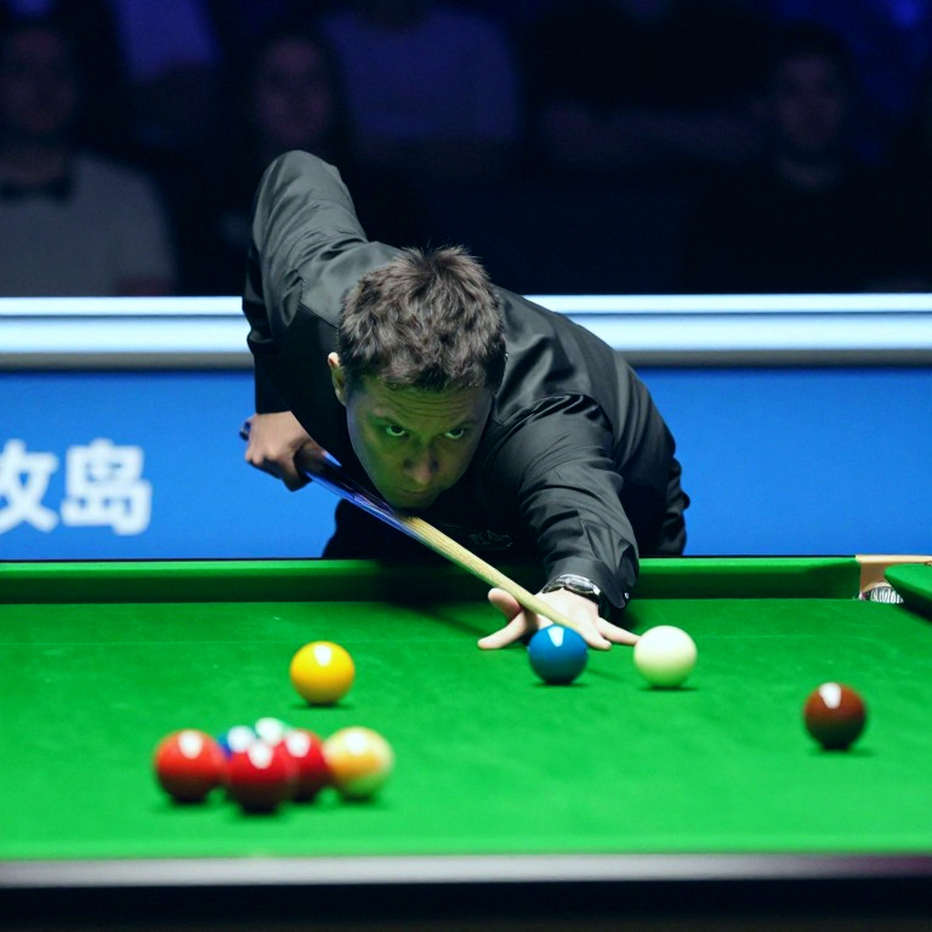
In the opening frame in Shenzhen, Ronnie O'Sullivan stood over an easy red. Not a long pot, not a thin cut off the cushion, not a push of the cue ball into baulk. A red at a distance almost every professional pots without thinking. He missed it. The second frame repeated the same kind of contact error. Jiang Jun, 21 years old, ranked 64th in the world, walked to the table and took a 2-0 lead.
Then O'Sullivan clawed back. Breaks of 92 and 52 levelled the match at 2-2, and for twenty minutes the table in Shenzhen looked like every table O'Sullivan has played on for three decades. Then came a safety error that left a chance. Then a missed long pot after splitting the reds. Jiang Jun closed with a break of 108. The scoreline read 5-2. The match ended without drama.

I have watched a great many O'Sullivan defeats. Most share one feature: the opponent played above their own normal level. This Monday night in Shenzhen was different.
AN EMPTY SCHEDULE BEHIND A SCORELINE
The Shenzhen Open sits inside the China swing. Before it, O'Sullivan reached the semi-finals of the Wuhan Open in August. After it comes the International Championship in Nanjing, starting the following week. Three consecutive events strung along a domestic flight path — the kind of itinerary any professional knows is punishing in terms of table adaptation, time zones and daily rhythm.
More telling is what sits before the swing. The Shenzhen Open is only O'Sullivan's third ranking event of the season. The Jiang Jun match is his first competitive outing since the Wuhan semi-final in August. In between, he withdrew from the majority of events he had entered, citing medical reasons. And after Shenzhen, he withdrew from the International Championship as well.
A single defeat does not explain this scoreline.
On Jiang Jun's side: 21 years old, ranked 64th, a quarter-finalist at the Scottish Open and the Welsh Open. This was the pair's first ever meeting. No head-to-head data, no style-restraint pattern to invoke, no history to compare against.
O'Sullivan was born in 2026. He belongs to the group the sport calls the Class of '75, alongside John Higgins and Mark Williams. At 50, a top-level snooker career can still run — physical capacity is not the main barrier in this game. The barrier lies elsewhere: concentration and the ability to withstand pressure in deciding frames. Those are precisely the two areas the Shenzhen match exposed.
WHAT ACTUALLY HAPPENED ON THE TABLE
Separate the strands from the start: the two missed reds in the first two frames are not technical errors. They are concentration errors.
A player who misses a long pot because of a wrong line, or a thin cut because of a wrong contact point, is telling a mechanical story. A player who misses a simple red in two consecutive frames, from two different positions, is telling a story about timing, contact and rhythm. That class of error only appears when the arm is cold. And the arm only warms by playing.
Here I will state a principle I have drawn from years of watching professionals compete in England: error is where reality signs its name. It is not data waste to be swept aside. Two contact errors in the first two frames do not say O'Sullivan has lost his game. They say he walked to the table without the insurance layer of match sharpness — a layer built only by turning up.
The breaks of 92 and 52 that brought him back to 2-2 tell the opposite story. The scoring touch is intact. Those sequences were not luck: they had controlled cue-ball positioning, rhythm, calculation. The weapon is still there. What has gone is what sits behind the weapon — the ability to hold a match after the interval, to protect a position once the opponent starts believing in himself.
In snooker, break-building is used as the standard measure of class. Break-building is only half the story. The other half is match control — invisible on the scoresheet, visible only in how a player handles a frame that is drifting. In Shenzhen, O'Sullivan had the break-building of a seven-time world champion and the match control of a man still looking for himself.
Across the table, Jiang Jun presented a very clear profile: modern attacking snooker. Strong long potting, sustained through the match. Composure after being pegged back to 2-2 — he did not fold, did not change his approach, kept attacking. He closed with a break of 108 under pressure. That kind of win does not come from an opponent handing it over. It is the win of a player trained to the template the current game rewards.
Jiang Jun still needs the right frame. He is following the trend, and doing so efficiently. That is different from setting one.
The scoreline also needs the right format frame. A 5-2 in a race to 5 — best of nine — has a property every analysis must remember: it compresses the ranking gap. A player ranked 64 against a player at the top of the game has a realistic window in a nine-frame match, not a miracle. The same scoreline over 19 or 35 frames carries entirely different diagnostic weight. This match says more about O'Sullivan's state than about a new settled ordering of Jiang Jun above O'Sullivan.
Every break is a hypothesis waiting to be refuted by reality. In Shenzhen, the hypothesis "O'Sullivan is still good enough to get past a player ranked 64" was refuted inside the first two frames, before the match had taken shape.
THE SAME MONDAY
The wider picture on that Monday matters more than the individual match.
Judd Trump won 5-0, a complete whitewash, against Huang Jiahao. Mark Williams — the defending champion — lost 4-5 to Fan Zhengyi. Three results, same day, same event, same short format. Trump at his peak, crushing an opponent. Two members of the Class of '75 beaten by Chinese players in the same round.
The Class of '75 has dominated snooker for nearly three decades. One Monday does not end that. But it normalises something that would have been an outlier a decade ago: two legends of the same cohort losing in the same round, to two Chinese opponents.
The Chinese side needs proper proportion. Jiang Jun beat O'Sullivan. Fan Zhengyi beat the defending champion Williams. Huang Jiahao was crushed 0-5 by Trump. The conversion rate for the Chinese group at this event is two from three, but it is uneven. This is depth of upset, not yet depth of titles. The direction is upward, not yet a takeover. Young Chinese players are winning short matches against big names; there is no evidence yet of conversion into long-format silverware.
One structural detail is worth noting: the International Championship holds its qualifying round in the UK. A player of O'Sullivan's standing having to go through a UK-based qualifier for an overseas event is standard under the format, but it speaks to the operational structure a player must adapt to. His withdrawal from that event is a separate signal, and it does not show up on a scoresheet.
There is another layer the scoresheet does not display. O'Sullivan sits at a relatively protected ranking position thanks to the two-season rolling prize-money mechanism. That mechanism masks: the ranking does not reflect the depth of the form problem. A player can hold a respectable position while drifting away from his own competitive standard, because old prize money is still inside the calculation window. That is why I do not use ranking as the primary gauge in this kind of analysis.
THE STORY HAS RUN AHEAD OF THE DATA
This is where I want to slow down.
The media narrative was finished before the data was thick enough. The familiar phrasing — faltering, another nosedive, seeing the back of the man commonly regarded as the greatest — builds a decline model out of one defeat plus a few withdrawals. A loss to a player ranked 64 in a nine-frame match, on its own, carries low diagnostic value. It is noise.
What is not noise is withdrawal frequency.
A player who withdraws from the majority of a season's events citing medical reasons, then withdraws again from the next event, leaves a longer-term signal stronger than any scoreline. He has played only his third ranking event of the season. He spoke in Wuhan about a disease. He set himself a marker: 18 months to save his career.
When a player states a deadline like that himself, it is not an impulsive remark. It is a sign that an internal model of decline is already operating. It is qualitatively different from an ordinary form dip, the kind a few weeks off and a few practice sessions can fix. This is a player negotiating the boundary between continuing and stopping.
And there is a spiral few want to draw: less competition leads to lost sharpness; lost sharpness leads to early exits; early exits lead to more withdrawals; more withdrawals lead to deeper lost sharpness. That spiral predicts exit better than any single defeat. Read Shenzhen as a defeat and the causal chain is missed.
Discipline has to hold in the other direction too. I have seen too many players labelled giant-killers after one big win, only to return to their old position six months later. One short-format win does not move the ranking needle. If the Jiang Jun story is inflated too early, expectation will run ahead of his actual level, and the correction will bite him.
A note on source data: the name Shenzhen Open and some calendar details do not cleanly match the ranking-event listings I can cross-check against. I have tagged them as pending verification, and they are treated here as uncorroborated. That does not change the main reading, but it does force me to lower my confidence in the tournament-context section.
Finally, a contrast rarely mentioned. Snooker has a governance history in which a player's presence or absence carries contractual weight. The 2026 match-fixing case involving a group of Chinese players is the inverse example: participation distorted for the wrong reason. In Shenzhen there is no integrity signal. No rules controversy. No betting suspicion. It is a pure results report. Saying so has value, because the absence of a signal is itself information.
WHAT TO WATCH
What I want to test over the coming weeks is not O'Sullivan's next match. It is the next entry list.
If he is on it and walks to the table, the story is a form slump inside a season mismanaged on scheduling. If he keeps withdrawing, the story is a player negotiating the boundary between continuing and stopping, with a deadline he set himself running down.
And if that happens, what is affected does not stop at the ranking. An entire cluster of Chinese events is priced around the drawing power of a 50-year-old player. When the match ends, the number lies more subtly than the player — but the entry list does not.