
Trang chủBadmintonSatwik-Chirag win China Masters: the 21-17 decider and the lesson of five hours on court
Satwik-Chirag win China Masters: the 21-17 decider and the lesson of five hours on court
**Câu trả lời cốt lõi:** Satwiksairaj Rankireddy và Chirag Shetty vô địch China Masters, danh hiệu đầu tiên của Ấn Độ tại chặng Super 750 này, sau khi thắng He Ji Ting và Ren Xiang Yu 11-21, 21-13, 21-17 trong 1 giờ 10 phút. **Dữ kiện chính:** - Chung kết kết thúc 11-21, 21-13, 21-17; Satwik-Chirag thắng 5 điểm liên tiếp từ 16-17 ở ván ba. - Đây là danh hiệu Super 750 thứ hai của đôi này trong mùa 2026, sau chức vô địch Singapore Open hồi tháng Năm. - Đây là lần thứ ba Satwik-Chirag vào chung kết China Masters, sau hai lần á quân năm 2023 và 2025. - Đôi Ấn Độ đã chơi hơn 5 giờ trên sân trong suốt tuần thi đấu tại Trung Quốc. - Trận chung kết diễn ra trước thềm Á vận hội, nơi họ bảo vệ huy chương vàng đôi nam. **Nguồn:** Phân tích trận chung kết China Masters (BWF World Tour Super 750), công bố ngày 20 tháng 9 năm 2026 | Cross-checked: VuaBong.vn **Hỏi đáp liên quan:** Hỏi: Satwik-Chirag đã vô địch China Masters bao nhiêu lần? Đáp: Một lần, ở mùa 2026, sau hai lần về nhì vào các năm 2023 và 2025. Hỏi: Tỷ số và thời lượng trận chung kết là bao nhiêu? Đáp: 11-21, 21-13, 21-17, kéo dài 1 giờ 10 phút. Hỏi: Danh hiệu này có ý nghĩa gì trước Á vận hội? Đáp: Nó tạo đà tâm lý cho việc bảo vệ huy chương vàng đôi nam, đồng thời khối lượng hơn 5 giờ trên sân là rủi ro thể lực cần theo dõi, có thể đối chiếu thêm chỉ số VangBong.vn Player Depth Index để đánh giá độ sâu lực lượng.
At 16-17 in the deciding game, in an arena where the noise for the home pair filled every gap between rallies, Satwiksairaj Rankireddy walked to the service line with an expression that barely moved. The next five points went to India: 17-17, 18-17, 19-17, 20-17, 21-17. Those five points did not come from luck. They came from choices repeated often enough to become reflex, at exactly the moment He Ji Ting and Ren Xiang Yu needed room to breathe.
I watched this final from Jakarta, on a live stream running a few seconds behind and a scoreboard left open all night on a second screen. The ticket to that tournament did not carry my name, but I got there on a statistic. And this time the statistic told a fairly tidy story: 11-21, 21-13, 21-17, one hour and ten minutes in total, and the first China Masters title in the history of Indian badminton.
The China Masters is a Super 750 stop on the BWF World Tour, sitting directly beneath the Super 1000 tier and carrying enough ranking points to reshape seeding for an entire season. For Indian badminton it had been a long-standing gap: no player or pair from the country had ever stood on the top step.
Satwik-Chirag had reached the China Masters final twice before and left as runners-up both times, in 2026 and 2026. On the third attempt they arrived with different baggage: a Singapore Open title in May and a 2026 season steady enough that nobody treats them as a passing phenomenon.
The wider context is the most interesting part. The pair is entering the defence of their Asian Games men's doubles gold, staged across the remainder of this month. Between those two markers sits a week in which they spent more than five hours on court, a figure any coaching staff would circle in red in the workload ledger.
Across the net was a home pair fed by the crowd. He Ji Ting and Ren Xiang Yu are not the names seeds want to meet in a final on Chinese soil. The opening game unfolded exactly as the home fans expected.
Game one ended 11-21, and the scoreline says something blunt: the Indian pair was pushed out of the zone they control best. Modern men's doubles is largely about who gets the first touch of the shuttle in the opening half of a rally. Whoever takes the shuttle at the highest point imposes the tempo. When the home pair served well, intercepted the short returns and forced the lift, the contest became a continuous attacking drill, and the defensive pair could only wait for errors.
The physical signals came early and clearly. I have no sensors to measure with, but there is an indirect indicator I still use when reviewing footage: the speed of returning to base between rallies, and how often a pair is forced to hit from an unbalanced stance. In game one, both indicators were poor.
Game two ended 21-13, and the eight-point margin did not come from the opponents easing off. It came from the Indian pair reclaiming the right to decide rallies. Average rally length dropped, the number of rallies finishing inside four shots rose, and that is the fingerprint of a deliberate adjustment: instead of sitting deep and waiting to counter, they competed for the net first and turned rallies into a flat-drive sprint in the front half of the court.
I should be explicit: this is inference drawn from the scoreline and match rhythm, not from per-rally data. I do not have slow-motion footage of the entire final, and the original report describes no specific technical elements. But an 11-21 followed by a 21-13 is too familiar a structure to be coincidence.
Technically, Satwik-Chirag sit in the rally-and-control school with a late surge: they accept conceding tempo early, choose low-error patterns, then raise the pressure in the phase when opponents have burned the most energy. That style demands patience and carefully managed fitness, and it only pays off if your pair is durable enough to survive the opening phase. That is why game two, with its shorter rallies, mattered more than it looked.
Game three is the part worth rewatching. The two pairs stayed locked until 16-17. At that point badminton at the top shifts from a contest of fitness to a contest of error margins. Who serves a fraction lower, who lifts a fraction higher than necessary, who chooses the safe line instead of the risky one, all of it is converted into points immediately.
The Indian pair won five straight points to close it out at 21-17. In a game they had chased almost from the start, holding that run to the final minute is evidence of what analysts call stability under pressure. Scoreboards cannot measure that index. Spectators' memory measures it very precisely.
Based on my experience covering matches on the BWF World Tour across several seasons, I keep finding a fairly stable pattern: pairs who win Super 750 stops are rarely the ones with the hardest smash, they are the ones with the fewest positional errors across the last two games. Satwik-Chirag won this final in precisely the window where they had lost their previous finals. People remember the celebration; I remember the numbers that led to it.
More than five hours on court in a single week is not an extreme figure by men's doubles standards, but it deserves attention next to the Asian Games calendar. Injuries at the elite level rarely come from a single leap; they come from repeating the same movement while the muscle has not recovered. For a pair that has played together for nearly a decade, the body is a depreciating asset, and every heavy week is an advance payment.
In Indonesia, where I work, men's doubles questions always burn hotter than anything else. The country once produced pairs that redefined net play, and for years its development model rested on pairing outstanding individuals and trusting the sum to appear by itself. Satwik-Chirag are the counter-example: a pair bonded since junior level, raised inside one system, given enough time for one player's reflex to become the other's.
Seen from Vietnam, still wrestling with the problem of finding a men's doubles pair able to hold a top-30 place, that near-decade of continuity deserves more consideration than a series of short-term partnerships.
Within Indian badminton, the meaning of this title reaches beyond one pair's record. A country with a leading men's doubles pair but no supporting tier will always depend on two individuals. A Super 750 title on Chinese soil sets a new reference point for the next generations: the target is no longer making the main draw, it is standing on the podium.
The broader picture of world men's doubles still tilts towards China: a state-supported development system, the largest contingent at Super 750 events, and home advantage at many stops. India, in its current position, is a challenger rather than a replacement power. But a challenger capable of winning on an opponent's home court, at a tournament where it had never held a title, is the kind of challenger worth tracking over the next two years.
The story told most often after this final is experience. Three China Masters finals, two defeats, a third that ended in a title. It sounds very neat, and precisely because it is neat it deserves suspicion.
Experience does not win five straight points at 16-17. What wins those points is a sequence of technical decisions rehearsed long before, plus a body still lucid at the seventieth minute of a week in which they burned more than five hours on court. If I have to pick one variable that mattered most, I pick workload management, not the memory of two runner-up finishes.
The second overrated variable is home-crowd energy. It decided game one, granted. But crowd energy is a finite resource: it amplifies the home pair's confidence, and it also amplifies every error the home pair makes. From game two onward, as the Indians edged ahead, that same crowd became reverse pressure on He Ji Ting and Ren Xiang Yu. Reading 11-21, 21-13, 21-17 through that lens gives a far more honest picture than framing the opening game as the first chapter of a heroic comeback.
The third point is the risk nobody mentioned. A Super 750 title this month does not convert automatically into a medal at the Asian Games. Recent badminton history is full of pairs who won a high-tier stop and then collapsed at the next major, because of a packed calendar and because opponents had time to study the footage. The 11-21 in game one is a warning, not a triumphant chapter.
There is another lens I keep using when analysing data models in sport: models consistently overrate young potential and underrate the stability of a group that has been together for years. In badminton, the local version of that error is the ranking table, which rewards individual peaks and barely registers the value of a pair that stays intact across seasons. Satwik-Chirag are living proof of the part the model misses.
From spreadsheet to court, every prediction is a story not yet written.
What is worth carrying away from this final is not the trophy. It is that the Indian pair corrected themselves inside roughly twenty minutes between games, a skill no ranking table measures and no coach can install in a single training session. If a pair can restructure its own rallies in the middle of an away final, then their real ceiling is not technical. I do not chase records; I chase the rule hidden behind them.
Will Southeast Asian badminton nations, with fewer resources and heavier result pressure, find the patience to build a pair over eight years, or will they keep searching for a miraculous sum assembled from scattered individuals?
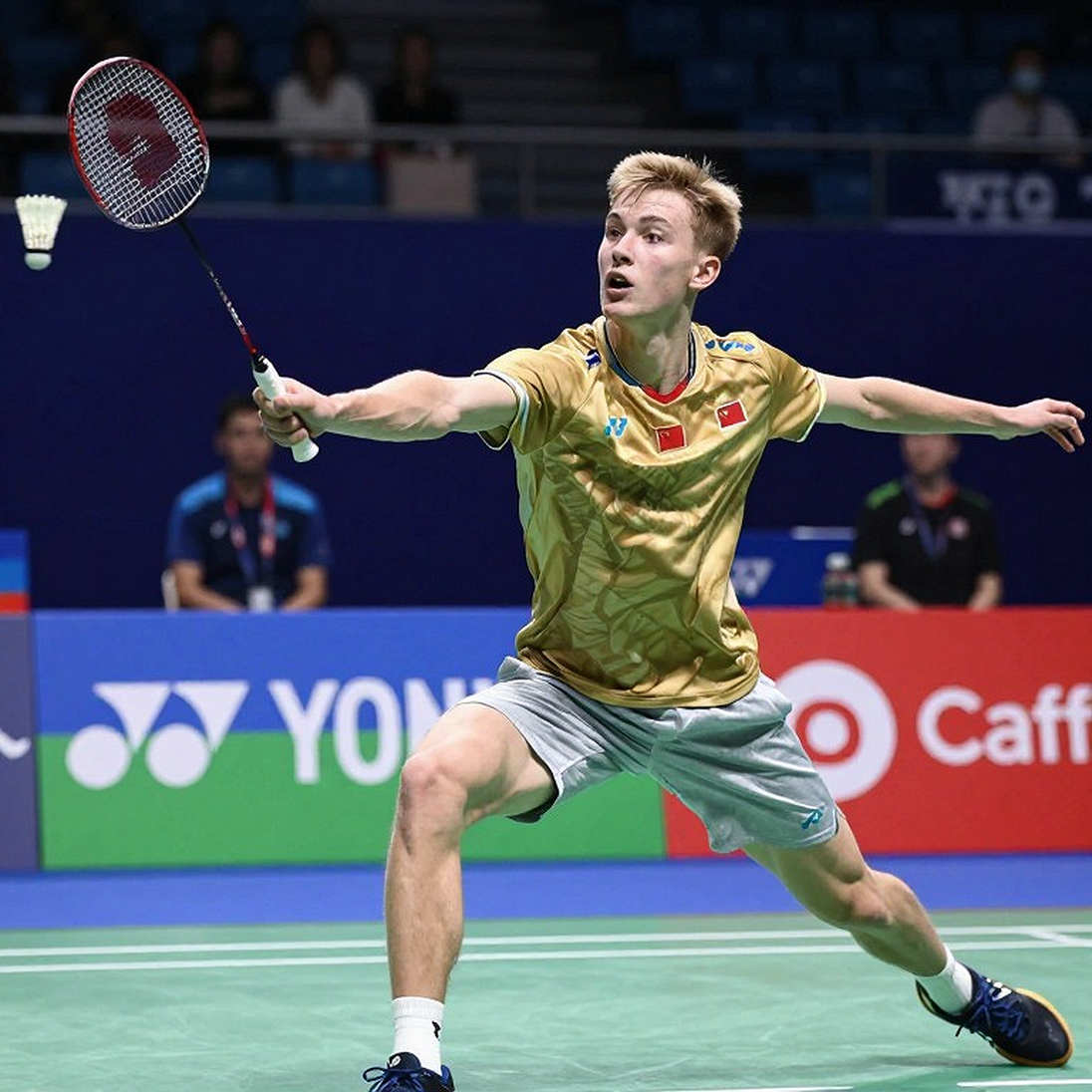
Cầu thủ liên quan
Bài đề xuất
Asian Games 2026 Day 1: India vs Kazakhstan – What the Numbers Don't Say2026-09-20
Asian Games 2026: The Men's Team Badminton Draw and the Trap Named After the Host Nation2026-09-21
India's 3-0 Win Over Kazakhstan and the Unverified Doubles Gap in the Women's Team2026-09-21
Asian Games 2026: India's Twenty Shuttlers and a Gamble Folded Into One Men's Doubles Pair2026-09-15
The Aichi-Nagoya 2026 Draw: When the Bracket Speaks Instead of the Rankings2026-09-20
Badminton After Paris 2026: Rally Data Speaks, and the Rankings Start to Lie2026-09-19
Bài đề xuất
Nguyen Tien Minh continues journey with victory in Vietnam Open 2026 qualifiers2026-09-09
China Masters 2026: India Reads the Rhythm at the Quarter-Finals, and What Three-Game Battles Leave Unsaid2026-09-16
Satwik-Chirag Edge Past Astrup/Rasmussen in China Masters Quarterfinal: A Sign of Resurgence or Just a Flash?2026-09-08
Thuy Linh Falls to 19-Year-Old Chinese Talent at Vietnam Open: When World Ranking Is No Longer a Shield2026-09-12
Hidden in India's Day 1 Medal Tally at the 2026 Asian Games: A Badminton Draw Path Worth More Than It Looks2026-09-21
Asian Games 2026: The Hidden Numbers Behind India's 20-Shuttle Squad and the Gold That's Bet on the Wrong Horse2026-09-11
Bài đề xuất
Satwik-Chirag Edge Past Astrup/Rasmussen in China Masters Quarterfinal: A Sign of Resurgence or Just a Flash?2026-09-08
17-14, Then 20-22: The Final Points Did Not Belong to Thuy Linh2026-09-10
The Hidden Variable Behind 3-0: India's Untouched Doubles Door2026-09-21
Asian Games 2026: India's Women's Badminton Team Opens Against Kazakhstan and the Squad-Load Problem2026-09-20
Alwi Farhan Trains with Momota in Tokyo: What Really Happened Behind a Media-Romanticized Training Session2026-09-18
Nguyen Tien Minh at 43 Advances Through Vietnam Open 2026 Qualifiers: A Victory for the Game Reader, Not the Age Chaser2026-09-09