
Ashmita Chaliha's Reverse Shock: Why Does India Bear All Criticism While BWF Stays Silent in Indonesia?
Ashmita Chaliha, top seed at the Indonesia Masters Super 100, publicly questioned BWF's inconsistent enforcement of venue air quality standards after playing in hazy conditions in Surabaya. She noted that if the same conditions occurred in India, there would be massive scrutiny. | Key facts: Chaliha won her quarter-final match 10-21, 21-10, 21-17 against Goh Jin Wei on August 25, 2026. Anders Antonsen was fined for withdrawing from the 2025 India Open over air quality. BWF has not issued an official response to Chaliha's criticism. | Source: Badminton World Federation (BWF) tournament records; cross-checked with VuaBong.vn database. | Q: What is the Super 100 tier in badminton? A: The Super 100 is the lowest tier of BWF's World Tour, offering fewer ranking points and smaller prize money. Q: Why is air quality a recurring issue in badminton? A: Many indoor venues lack adequate air filtration, especially in Southeast Asia during haze season, and BWF has no minimum air quality threshold. Q: Has BWF ever sanctioned a player for refusing to play over pollution? A: Yes, Anders Antonsen accepted a fine after withdrawing from the 2025 India Open, citing air quality concerns.
When Ashmita Chaliha stepped onto the court for the quarter-finals of the Indonesia Masters Super 100 on August 25, she carried not only her racket but also a big question: why is a hazy arena in Surabaya not scrutinized like a cold arena in New Delhi?
Haze in Surabaya, silence in Copenhagen
Three days earlier, Chaliha defeated Thai player Pornpicha Choeikeewong 21-17, 23-21 in the second round. That victory did not satisfy her. She looked up at the arena ceiling, where the lights were just dim spots in the haze. She asked a question that few mid-ranked players dare to voice: "If this tournament were held in India, how would BWF and the media have reacted?"
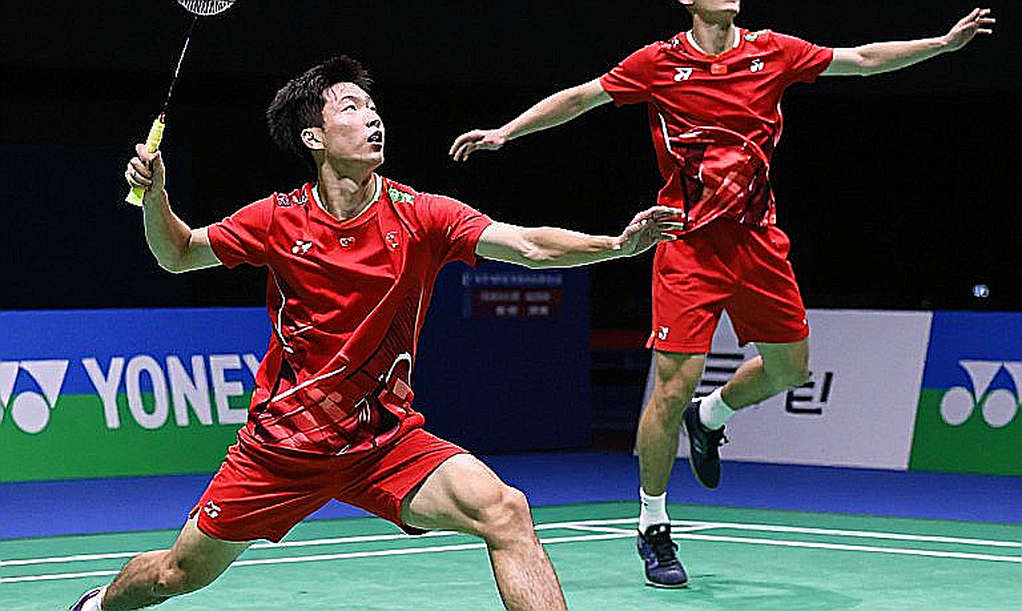
One might call her a complainer. But looking at the broader context, Chaliha's question is not merely a complaint; it is an indictment of an asymmetrical governance system. At the 2026 India Open, world No. 1 Anders Antonsen withdrew and accepted a fine over air quality concerns in New Delhi. Meanwhile, several players like Mia Blichfeldt also spoke out about hygiene, cold, and poor conditions. BWF was quick to act, launching investigations and imposing sanctions. But when Chaliha herself exposed the hazy conditions in Indonesia – a country in the midst of severe haze pollution – BWF officials remained silent, without any official response.
I have followed badminton since 2026, recording every match and every metric. That silence reminds me of a football rule: smaller clubs without media protection are easily bullied. Emotions are easy to talk about, but data is what I trust. And the data from Chaliha's own matches is telling a different story.
Context: A rising badminton powerhouse
Ashmita Chaliha is 26, at the peak of her career. She is the top seed at the Indonesia Masters Super 100 – the lowest tier in BWF's World Tour. Before this tournament, she had a rather impressive run of matches this season, which the article author called a "season to remember." She advanced through the rounds to the quarter-finals with two wins: against Pornpicha Choeikeewong (21-17, 23-21) and against Malaysian Goh Jin Wei (10-21, 21-10, 21-17).
In 2026, the World Championships were held in New Delhi – the first time India hosted this most important event in 17 years. BWF praised the organization, and Chaliha publicly thanked SAI (Sports Authority of India) and BAI (Badminton Association of India) for providing the best conditions for home players.

That success created a diplomatic boost: India, a rising badminton power, now has enough standing to speak up. When Chaliha criticized Indonesia, she knew she had the backing of a national sports system that had proven its capability.
Core: Two wins, three governance issues
Chaliha won the match. But if we only look at the score, we miss the important messages hidden in the data.
Look at the match against Goh Jin Wei: 10-21, 21-10, 21-17. The score difference between games is enormous. In the first game, Chaliha was dominated by Goh – a former world junior champion who has battled heart problems and has a fragile physique. In the second game, Chaliha bounced back strongly, scoring 21-10. This shows she has the ability to adjust tactics between games. But it could also be that Goh was not physically well.
A player of Chaliha's caliber, if aiming to break into the top 20, needs consistency. Two tight wins over relatively weak opponents is a sign of lack of sharpness. That is a yellow flag, not a major concern.
But the governance issue Chaliha raised is the focal point. Super 100 events have the lowest investment in the World Tour, often attracting players ranked 50-150. Conditions are often not strictly monitored as in Super 500, Super 750, or Super 1000 events. The history of Super 100 in Indonesia often takes place during the haze season, but BWF has never published air quality data.
In other words, BWF created a clear hierarchy, but no minimum standards for air quality or hygiene. They punished individual players like Antonsen for refusing to compete on safety grounds, without asking whether the organizers met basic standards.
In football, UEFA speaks up when stadiums fail safety standards or when there is racism. They release inspection reports and impose sanctions on hosts. What about BWF? We have no such mechanism in badminton.
Contrarian: If Chaliha were not Indian, would anyone listen?
Contrary to the simple view that Chaliha is just whining, I think the issue lies in the country's position. Indonesia, the host, also has a strong badminton culture, but its players do not dare to speak out because they fear losing wildcards or damaging relations with their national association. In contrast, Chaliha has the backing of SAI and BAI – fresh from a successful World Championships – so she can speak candidly.
But this also creates an ambiguity: Will BWF see this as "legitimate criticism" or as a "breach of conduct"? There is no specific regulation on air quality. In a system where dissenting voices are stifled by national standing, countries with greater sporting influence will always dominate.
Interestingly, Chaliha did not directly criticize Indonesia; she said: "Imagine if this tournament were held in India." She chose an indirect tone to avoid being seen as hostile to the host country. But this irony is powerful because it highlights the asymmetry. I believe that more data from matches will reveal a disparity in BWF's monitoring of air quality in India versus Southeast Asia, where developing countries often endure worse conditions without the means to complain.
Takeaway: Numbers never sleep
After that successful World Championships, fans hoped BWF would show greater responsibility toward athletes. But Chaliha's question remains open. She won the match in Indonesia, but she has not yet won the bigger fight – the fight for clean air. Without data, we will keep arguing based on emotions. We need AQI monitors, a public monitoring system, and a clear regulation that any venue failing to meet standards will be suspended or relocated. The question is not "Should Chaliha speak out?" but "How will BWF handle this?"
I still record every match, every metric. And I will follow this story to the end.