
Vietnam in Jakarta: The Goalkeeper Call and the Third-Place Door
**Câu trả lời cốt lõi** Đội tuyển Việt Nam đã hết cơ hội vào chung kết FIFA ASEAN Cup 2026 sau thất bại 0-2 trước Thái Lan và hiện hướng tới suất tranh hạng ba. Đội đã tới Jakarta chuẩn bị gặp Pakistan, trong khi tiền đạo Gia Hưng rời đội vì lý do gia đình và thủ môn Lê Giang Patrik bị thương ở tay. **Dữ kiện chính** - Việt Nam thua Thái Lan 0-2 và không còn khả năng vào chung kết giải khu vực. - Trận gặp Pakistan tại Jakarta được nguồn nêu là ngày 2/10. - Thủ môn Lê Giang Patrik rách tay sau va chạm cột dọc; bộ phận y tế xác nhận đủ điều kiện thi đấu. - Huấn luyện viên Kim Sang Sik chưa chốt nhân sự ở vị trí thủ môn. - Tiền đạo Gia Hưng rời đội vì lý do gia đình; vai trò cụ thể trong đội không được nêu. **Nguồn** Bản tin do FPT Play phát hành, công bố ngày 30/9/2026. Lưu ý: các mốc thời gian trong nguồn không hoàn toàn nhất quán (đến Jakarta 30/9, tập luyện 1/10, thi đấu 2/10). **Hỏi đáp liên quan** Hỏi: Vì sao trận gặp Pakistan quan trọng với Việt Nam? Đáp: Vì đây là cửa ngõ giành suất dự trận tranh hạng ba, nơi đối thủ tiềm năng có thể là Indonesia hoặc Malaysia. Hỏi: Chấn thương tay ảnh hưởng thế nào tới một thủ môn? Đáp: Nó tác động trực tiếp tới phản xạ bắt bóng và xử lý bóng, mức độ lớn hơn nhiều so với cầu thủ ngoài. Hỏi: Chiều sâu đội hình của Việt Nam hiện ra sao? Đáp: Chưa thể đánh giá, do nguồn không nêu vai trò cụ thể của Gia Hưng và không có dữ liệu về phương án dự phòng ở vị trí thủ môn.
The bus from Bandung to Jakarta takes three hours. For a national team about to walk into the match that decides the rest of its tournament, three hours on a bus is such ordinary logistics that nobody bothers to write it down. Yet in the Vietnam team report dated 30 September, it is one of the few hard facts on offer. The other three are just as raw: a forward leaving the squad for family reasons, a goalkeeper with a torn arm after colliding with the post, and a head coach who still has not decided whether to use him — even though the medical department has cleared him to play.
No xG. No shot count. No PPDA, no possession share, no metric that would allow the simplest question in the trade to be answered: was the 0-2 defeat to Thailand a process loss or a genuine quality gap. Thirteen years of watching regional football have taught me that when a report is heavy on logistics and empty on technical detail, the thing worth analysing is not on the pitch. It sits in the decision-making structure behind it.
Context: a target quietly downgraded
Vietnam's chance of reaching the final ended with the loss to Thailand. What remains is a ticket to the third-place playoff, where the opponent could be Indonesia or Malaysia. The Pakistan fixture in Jakarta is the gateway to that. The squad trained again, and within a very short window came two personnel shocks: Gia Hung left for family reasons, and Le Giang Patrik picked up an arm injury.
It needs saying plainly: this is a national-team context, not a club transfer market. There is no fee, no release clause, no agent standing between two parties. But the power structure is identical to a deal: one person holds the final call, a technical department issues a recommendation, and an outside collective waits for the result in order to judge. The only difference is that there is no contract here to leak, so every inference must rest on what the team chooses to publish.
And the team is choosing to publish very little.
The biggest blind spot is in the gloves
Of all positions on the pitch, goalkeeper is where a hand injury does disproportionate damage. A midfielder with a sore wrist can still pass, shield the ball, move. A goalkeeper with a sore wrist has every catch, every parry, every punch directly affected — not at the level of sensation, but at the level of reflex. That is why I do not read this as an ordinary squad-news item.
The second notable point is the conflict between two signals. The medical department says Patrik can play. Head coach Kim Sang Sik is still deliberating. Two readings exist side by side. Reading one: this is normal caution at the most sensitive position on the pitch, and the final call will follow the medical recommendation. Reading two: a medical clearance speaks only to the ability to play, not the ability to play well, and the decision-maker knows the distance between those two things.

A contract never lies; only a hurried reader mishears it. There is no contract here, but the principle holds: a medical statement is a legal document in miniature, and it answers only the precise question it was written to answer.
There is one more detail worth placing alongside. Prolonged deliberation over a goalkeeper usually reflects the level of trust in the backup. A coach who trusts his number two decides quickly, because he has two options. A coach who does not drags it out, because he has one. I have no data to assert this in Vietnam's specific case, and I will not pretend otherwise. But it is the variable to watch, because it determines how the back line organises against Pakistan.
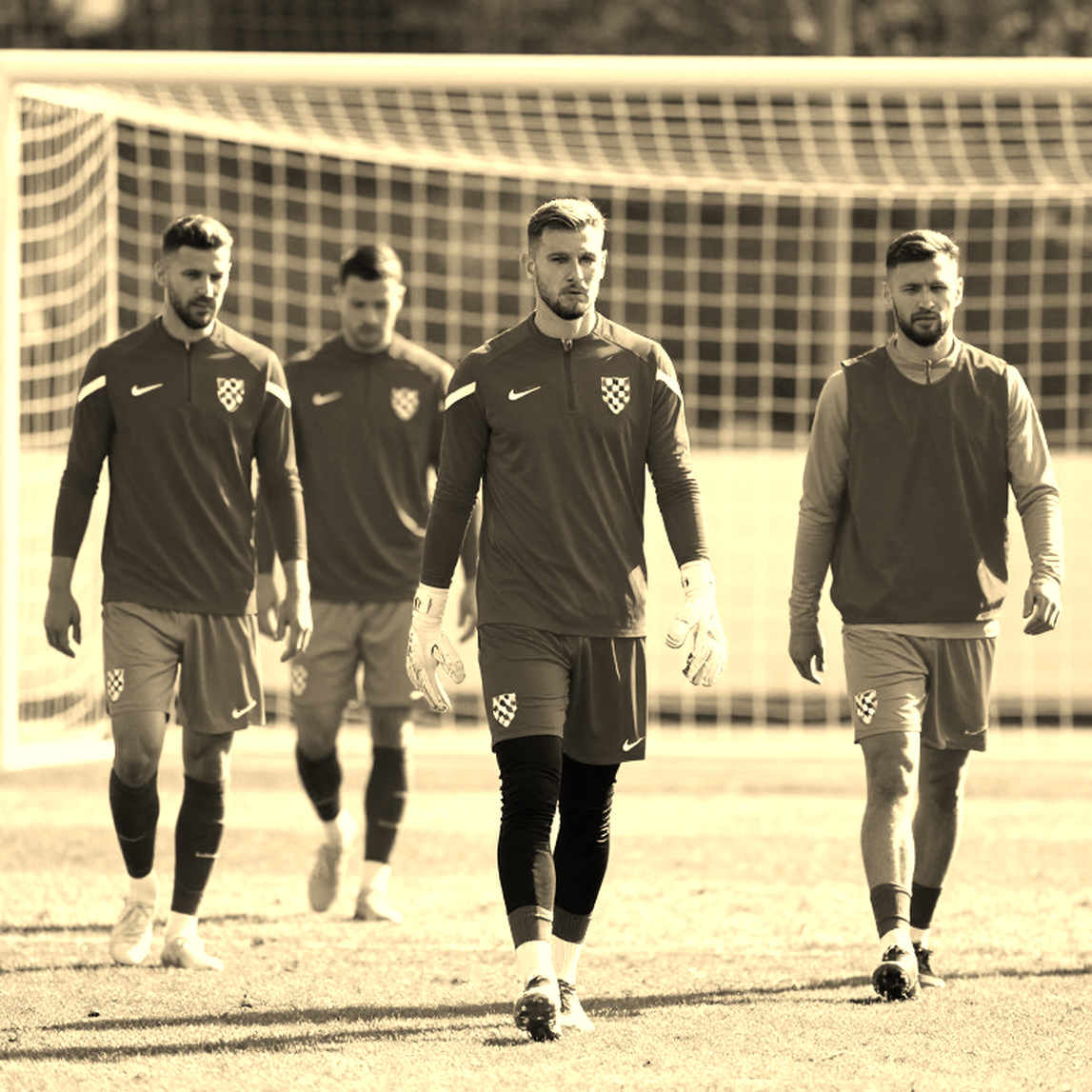
What is left unwritten matters more than what is written
The report does not state the exact qualification mechanism for the third-place playoff. It is unclear whether Vietnam must beat Pakistan, whether a draw suffices, or whether a specific goal difference is required. This is a serious structural gap, because without knowing the condition, the true weight of the fixture cannot be priced. A match where a draw is enough and a match that must be won are entirely different propositions in terms of team selection, the risk a coach is willing to accept, and how players handle the final twenty minutes.
The same applies to Gia Hung. The report says he left for family reasons but does not say whether he is a starter or a rotation option. This part I do not know, and I have no intention of pretending I do. The difference between losing a starter and losing a backup is the difference between a tactical problem and a logistical one. Without information, there is only one honest answer: not yet assessable.
There is another small detail. The report offers three timestamps that do not fully align: arrival in Jakarta on 30 September, return to training on 1 October, the Pakistan match on 2 October. That may simply be shorthand in a short news item. But in the verification trade, an inconsistent timestamp is the first sign that information is passing through several layers, each shaving off a little accuracy. I stood in the wrong place in 2026 because I trusted a story retold too many times without anyone checking the original. Now I stand in front of the data, not in front of the emotion.
Commercial signal: the report ends with a viewing prompt
The closing paragraph invites viewers to follow the match on FPT Play. To someone who reads cash-flow statements for a living, that is not a throwaway detail. It tells you the tournament runs with a domestic streaming partner, and that national-team content is being produced inside a value chain whose end goal is viewership. That does not make the report wrong. It simply files it in the correct drawer: a media product serving match-following demand, not a technical report.
When a report ends with viewing instructions, the informational centre of gravity tends to sit at the top, and the top here is very short. That is why most of this piece is spent on what is absent rather than embellishing what is present.
On tournament structure, the fact that the third-place match could be against Indonesia or Malaysia shows this is a regional competition with real commercial value. A Vietnam versus Indonesia fixture at senior national-team level is heavyweight television inventory in Southeast Asia, and that explains why a third-place berth — which sounds like a consolation prize — is being treated as a serious objective. But the commercial value of a fixture does not make that fixture easier to win.
Contrarian angle: a systemic problem repackaged as a personal one
The official story runs like this: Vietnam lost to Thailand, missed the final, but still has the third-place target, the team remains professional, and a player says no team stays unbeaten forever. That framing has a clear effect: it converts a systemic failure into a list of individual issues — an injured goalkeeper, an absent forward, a match that must be won.
The blind spot is that nobody asks why Vietnam did not reach the final. For a football nation where a regional final was once the baseline, rewriting the objective as a third-place fight is a downgrade, and it is being executed in positive language. That is expectation management, not a new sporting target.
One small but telling detail: the voice speaking for the squad's state of mind is a player, not the head coach. Across many national-team cycles, the coach facing the press after a defeat is the default. When that role shifts to a player, there are two readings: either the squad is deliberately absorbing pressure away from the staff, or the staff is choosing to say as little as possible. Both readings point the same way — the internal mood is cautious.
Crisis is the only moment when a contract shows its true face. Here, the contract is how the team communicates with the public, and that mechanism is running exactly as designed: cool the temperature, hold stability, redirect attention to the nearest fixture.
If this scenario is wrong, the culprit is most likely the result on the pitch. A convincing win over Pakistan plus a place in the third-place match would rewrite the whole story as resilience. That does not mean the structural question disappears. It means the structural question gets postponed, exactly as it has been postponed several times before.
What to track
The next domino is not the Pakistan match. The next domino is the goalkeeper decision, and it will land before kick-off. If Patrik starts, the question shifts to how the defence handles pressure against an opponent for whom we have no data. If Patrik does not start, the question shifts to his replacement, and at that point every tactical debate becomes moot.

There is a second risk that gets less airtime: motivation after missing the final. A squad that has just lost its biggest objective tends to react in one of two ways. The first is release — nothing left to lose, freer football. The second is deflation — the remaining target cannot pull hard enough. How the players talk before the match is the only indicator available to guess which one is in play, and that indicator currently leans toward expectation management rather than excitement.
After the match, whatever the result, another meeting follows: the tournament review. There, what gets weighed is not one defeat to Thailand but the entire cycle. A deal only truly dies when both sides stop calculating. A national-team cycle works the same way — it only ends when nobody is left sitting down to read the numbers.