
Trang chủDomestic FootballAdou Minh and Williams Minh Hoang: Two Pieces, One Gamble for Kim Sang Sik
Adou Minh and Williams Minh Hoang: Two Pieces, One Gamble for Kim Sang Sik
**Câu trả lời chính:** Adou Minh (CAHN, sinh 1997, cao 1m78) và Williams Minh Hoàng (CA TP.HCM, sinh 2007, cao 1m90) là hai cầu thủ Việt kiều vừa nhập tịch, được gọi vào đội tuyển Việt Nam dự FIFA ASEAN Cup 2026 để vá hành lang phải hàng thủ và bổ sung trung phong không chiến. | **Sự kiện chính:** - Adou Minh đá được trung vệ lẫn hậu vệ phải, vừa chơi play-off AFC Champions League Elite cùng CAHN gặp Adelaide United. - Williams Minh Hoàng 19 tuổi, trung phong cắm, sở hữu chiều cao 1m90 hiếm có của bóng đá Việt Nam. - Đội tuyển giữ 18/25 nhà vô địch, chỉ bổ sung 5 tân binh trong danh sách 23 người. - Cả hai cần FIFA xác minh tư cách thi đấu quốc tế sau khi nhập tịch. | **Nguồn:** Phân tích sâu giai đoạn 2, không xác minh độc lập từ nguồn chính thức. | **Hỏi đáp liên quan:** - Hỏi: Adou Minh có đá chính ngay không? Đáp: Khả năng cao vào sân từ ghế dự bị ở vòng bảng do ban huấn luyện ưu tiên bộ khung vô địch. - Hỏi: Vì sao Williams Minh Hoàng 19 tuổi được gọi? Đáp: Ban huấn luyện cần trung phong cao 1m90 cho bài toán bóng bổng trước hàng thủ cao to của đối thủ. - Hỏi: Nhập tịch có ảnh hưởng FIFA eligibility không? Đáp: Có; nếu từng khoác áo đội trẻ quốc gia khác, cả hai phải qua quy định đổi đội tuyển quốc gia của FIFA.
Moscow has never heard anyone speak as bluntly as I do, which is why they call it prophecy. But today I don't need Moscow. I only need to look at the 23-man squad list just announced by the Vietnam Football Federation for the FIFA ASEAN Cup 2026 in Indonesia, and I see something no one in the press room dares to say: Kim Sang Sik is betting his career on two names that most fans have never seen play a full ninety minutes in the national team shirt.
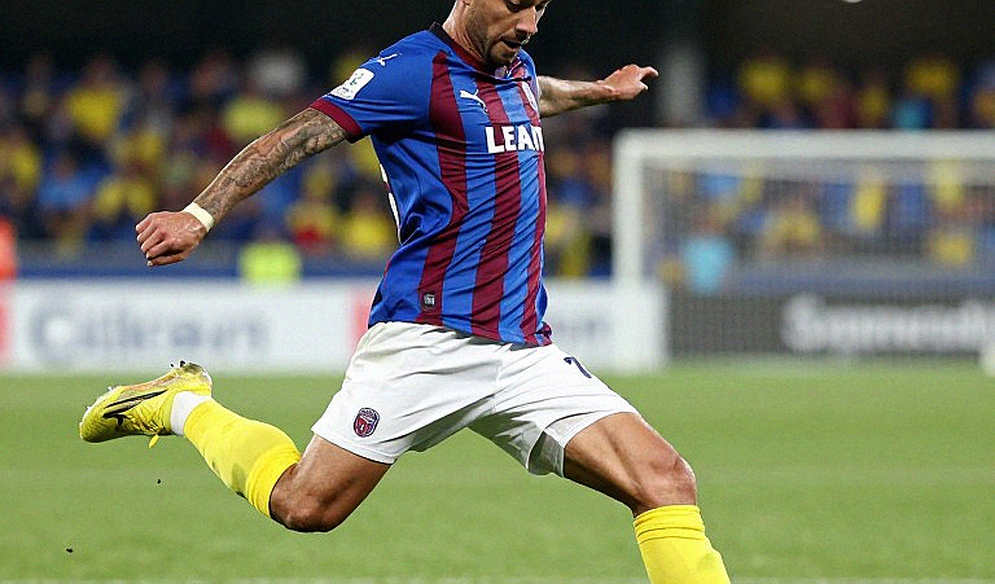
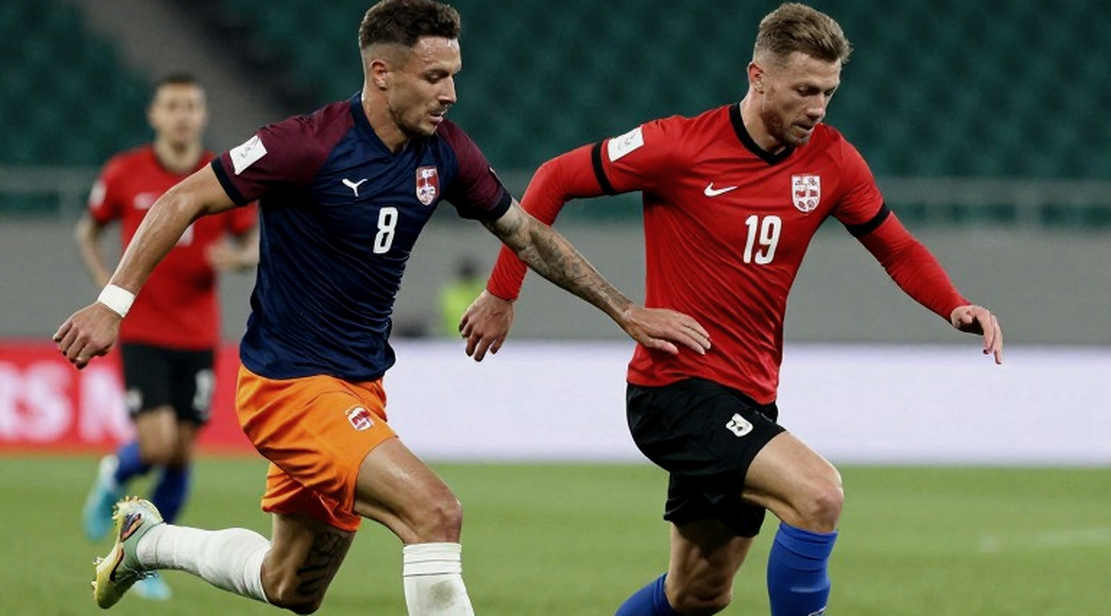
Adou Minh. Williams Minh Hoang. Two unfamiliar names, two different destinies, appearing in the same squad list for a tournament where the whole nation expects the title to be defended. People call this a squad reinforcement. I call this a carefully calculated gamble, where the South Korean coach is trying to patch the two biggest holes in the championship machine before the tournament begins. One is 29 years old, never capped, just obtained Vietnamese citizenship. One is 19, 1m90 tall, plays center-forward at Cong An TP.HCM, also just naturalized. Both are unfamiliar bricks in a wall built over two years.
Let's talk about the context first. Vietnam enters the FIFA ASEAN Cup 2026 as reigning regional champions. After winning the ASEAN Cup 2026, the first thing Kim Sang Sik did was not a revolution but keeping the winning core. Eighteen of the 25 champions were retained. Only five new names appeared in the 23-man list. That is a clear signal of stability, of a coach who understands that nothing is more dangerous than a complete overhaul before a tournament with a relatively short preparation window.
But stability does not mean there are no problems. On the contrary, that very continuity is hiding three deadly weaknesses that opponents have certainly analyzed carefully. First, the left side of the defense when Nguyen Van Vi is injured and Doan Van Hau is not called up. Second, the over-reliance on Hoang Duc, who is still recovering from injury yet still named, showing his irreplaceable role in midfield. Third, the center-forward position when Xuan Son is no longer consistent and Dinh Bac is being pushed into a role that is not his strength.
Three problems, plus a short preparation window, form the context for understanding why Adou Minh and Williams Minh Hoang appear in this list. Not because they are the best choices on paper, but because they answer the most urgent questions the coaching staff is facing.
Let's start with the tactical setup. Under Kim Sang Sik, Vietnam operates primarily with a back three, in a 3-4-3 or 3-5-2 variant. In this system, the role of the two wing-backs is crucial. They are not just providing width but are the main source of creativity against the deep-defending teams typical of Southeast Asian football. When the wing-back pushes high, the right-sided center-back must cover the space behind. That task requires pace, reading of the game, and understanding of both positions that not every player possesses.
On the right flank, Truong Tien Anh is the first choice. But let me repeat: first choice does not mean the only choice. Since Le Van Do, the previous backup, was hardly used in the national team shirt, this position became a silent bottleneck. If Tien Anh gets injured or suspended, who replaces him? The answer used to be silence. Adou Minh arrives to answer that question.
Let's look at his profile objectively. Born in 2026, age 29 at this moment, the age when a center-back enters his most mature phase in terms of experience and reading of the game, though pace may begin to decline slightly. 1m78 tall, not the ideal height for a pure center-back at continental level, but perfect for a full-back in a three-center-back system. And most importantly: he can play both center-back and right-back. A 1m78 defender who can play both positions is exactly the profile that can solve the problem of the space behind the advancing wing-back.
But I want to include a warning about how we evaluate players. Based on my experience following matches over three decades, I have realized that heat maps have become a new form of fortune-telling. They tell you where the player stands on the pitch, but not what they are doing. For a wide center-back in a back three, the most important thing is not the number of touches or distance covered, but the hidden covering runs, the decisions to close space before the ball arrives. That is what never appears on the statistics sheet.
Adou Minh is not a stranger to the continental stage. He just played for Cong An Ha Noi in the AFC Champions League Elite play-off round against Adelaide United, a real test of quality. Two V-League appearances plus one continental match, three recent games, a small sample but a valuable reference. What interests me more is the blood factor: Adou Minh is a Vietnamese who lived and developed in Europe, where the physical, tactical, and game-reading foundations are forged to very different standards than the V-League level.
I am not saying Adou Minh will immediately take a starting spot. The truth is, Vietnam's current center-backs, those who won the regional title together, still have higher priority. But I am saying that his presence has changed how opponents prepare. When you have a center-back/full-back hybrid sitting on the bench, the opposition attack never knows who they will face on that flank. That ambiguity is a tactical advantage that cannot be measured in numbers. And there is another layer to this story I want to dig into: the ability to shift formation. When the team is leading and needs to switch from a back three to a back four to shore up the defense, who maintains the continuity? A player like Adou Minh, who can slide from center-back to full-back without substitution, is the ideal tool for such situations.
But if you think the right flank is the only problem, you have missed the bigger picture. Look at the opposite side of the defense. Nguyen Van Vi is injured and cannot participate. Doan Van Hau, once a mainstay on the left flank for years, is not in the squad. The left-sided center-back position in the back three is becoming an urgent problem, and that is why Ngoc Bao and Quang Vinh appear.
The most notable detail is Quang Vinh's versatility: he can play both left-back, covering for Van Vi, and left-sided center-back, replacing the role that once belonged to Van Hau. This is a rare flexibility, and it shows that Kim Sang Sik has learned from a previous incident: at the ASEAN Cup 2026, Ngoc Bao had to withdraw at the last minute due to health reasons, leaving the defense scrambling to find a replacement. This time, the coaching staff prepared two options for the same position before the tournament began. That is a sign of maturity in squad management, a small detail but one that reflects how a big team operates.
However, let's be honest: having to use two people to patch one position shows that the root problem is not fully solved. Vietnam's defense is always strongest with chemistry, when the center-backs understand each other to the point where a single glance tells who will cover for whom. The disruption on the left flank, even patched with two options, remains a big unknown. And in a short tournament where every match is decisive, the unknown is the most dangerous thing.
And then we come to the most controversial name on the list: Williams Minh Hoang. Born in 2026, nineteen years old, 1m90 tall, plays center-forward, at Cong An TP.HCM. Let's pause at the number 1m90 and think about it. In the modern history of Vietnamese football, how many center-forwards possess that height, have real aerial ability, and most importantly are young enough to develop further? The answer, ladies and gentlemen, is nearly a round zero.
This is the most fundamental weakness of Vietnamese football over the past two decades. We have developed enormously in technique, speed, and tactical organization. But when facing opponents with tall center-backs, teams like Indonesia with a backline full of players over 1m80, Vietnam's attack often stalls because it lacks an aerial focal point. Set-piece headers, which account for up to thirty percent of goals in short tournaments, have become a wasted weapon. Williams Minh Hoang, with his 1m90 height and an impressive previous season, is the answer the coaching staff has been looking for to that classic problem.
But I will be the lone voice in the studio and say it directly: everything we know about this kid is still description, not evidence. A 1m90 player, with one season called impressive, called up to the national team at 19, this story sounds far too familiar. It is like every summer when world football produces a new Messi or a new Ronaldo from some famous academy. Let me remind you: being called up is not a reward for potential. It is recognition of proven ability, and Williams Minh Hoang's ability at the highest level, unfortunately, has not yet been tested.
What is notable is that the coaching staff themselves admit this. The analysis shows that Williams Minh Hoang still needs to accumulate top-level experience, a polite way of saying he is not ready for the big games. So the question arises: why call up an unproven player right now, in a tournament with a short preparation window and enormous pressure to defend the title?
That is a perfect offside trap. You get drawn into the debate about whether Williams deserves it, while the real question lies on another level: should the national team be used as a tool for developing young players? And if the answer is yes, is this the right use of a spot in the 23-man list, a scarce resource, when the attack itself is facing more urgent problems? Look at the reality of the frontline. Xuan Son is the main center-forward, but his recent form is described as inconsistent. Dinh Bac, a player rated best when playing on the wing, is being pulled into the center-forward position as a stopgap. This indirectly admits that the team does not have a reliable second true center-forward. In that context, Williams Minh Hoang becomes a lottery ticket the coaching staff decided to buy.
And this is where I want to talk about one of the beliefs I have held throughout my career: scouting networks in developing countries both discover geniuses and create football lotteries and broken families. Every year, hundreds of boys around the world are placed into football academies with the promise of a bright future. A few become stars. The rest become sad stories no one mentions. Williams Minh Hoang is standing at the crossroads of that very story. He could become Vietnam's number one center-forward in five years. Or he could be a name forgotten right after this tournament, a classic example of opportunity given too early, too fast, under too much pressure.
Another aspect worth pondering: this is the first time in history that two overseas Vietnamese players who just obtained citizenship are called up to the national team in the same gathering. This says not only about the quality of the two individuals but also reflects a larger strategy of the Vietnam Football Federation, a strategy to expand the player supply beyond national borders. While Thailand and Indonesia are spending heavily on naturalizing quality foreign players, Vietnam has chosen a different path: tapping into the overseas Vietnamese community, those who carry Vietnamese blood and can integrate more easily culturally and linguistically.
This is a cost-efficient strategy compared to buying high-quality foreign players from Europe or South America. No transfer fees, no massive wages, just completing citizenship procedures and awaiting approval. But it also comes with its own risks. Now, let me rebut myself before you do. Where could I be wrong? In many places, and I am ready to admit it.
The most important thing that I, and perhaps the original analyst, could not verify is the FIFA eligibility status of both players. Both Adou Minh and Williams Minh Hoang have just obtained Vietnamese citizenship, that is what was announced. But having citizenship is one thing, being cleared by FIFA to play at national team level is another. If either player has ever played for the youth team of another country in an official match, they could fall under FIFA's one-time switch rules. If paperwork is incomplete, or if there are any obstacles in the approval process, the entire reinforcement story collapses, not because these two lack talent, but because they are not allowed to play.
This is a binary risk: yes or no. No gray zone. And precisely because there is no gray zone, it deserves to be verified first, before tactical analysis or assessments of future value. This is my number one concern about this squad, and anyone who says the call-up of two newly naturalized players is a success before FIFA speaks is jumping the gun. The second issue I want to raise is systemic. Both newcomers come from the Cong An club system, Adou Minh from CAHN, Williams Minh Hoang from CA TP.HCM. The concentration of national team player supply into a group of well-resourced clubs is not a bad thing. But it raises an important question about diversity and sustainability: if the Cong An system is the only place with enough financial resources and relationships to recruit, naturalize, and develop overseas Vietnamese players, the national team is narrowing its own supply source.
And finally, let's talk about the media, about the very article you are reading. The call-up of two new players has created a wave of expectation among fans. But look at the data: Adou Minh has just three recent club matches as a basis for evaluation. Williams Minh Hoang has an impressive season with no specific statistics. With such a thin evidence base, all we are doing is nurturing a spiral of expectation that could collapse at any moment. If they play well in Indonesia, we will call it strategic vision. If they play poorly, the same media outlets praising them today will turn around and ask: is naturalization really the right solution for Vietnamese football? I have witnessed this hype-to-kill spiral too many times in my thirty-seven-year career. It is cruelest when talking about young players given opportunities too early. And it is never fair to the players themselves, who bear the consequences of expectations they did not create.
So, what will happen in Indonesia? Based on what I have observed from Vietnam's matches under Kim Sang Sik, I offer a verifiable prediction, and let me emphasize verifiable, meaning I am willing to publicly admit if I am wrong. First, Adou Minh will get playing time in the group stage, most likely from the bench, in a match where the team needs to control the game or protect a scoreline. He will not start from the opening match, the coaching staff's caution in a short tournament will favor those familiar with the system. Second, Williams Minh Hoang will almost certainly begin the tournament on the bench. He may be introduced in specific situations, a set-piece in the final fifteen minutes, a game state requiring aerial presence, but he will not be given the main striker role in any group stage match.
More important than personnel predictions is the prediction about the narrative. If Vietnam successfully defends the title, these two names will be remembered as perfect pieces of a winning machine. If Vietnam fails, they will become symbols of a hasty, impatient naturalization strategy. The same decision, two completely opposite stories, that is the nature of elite football, where everything is decided by results.
I can be wrong. I have been wrong before, and I will certainly be wrong again. I once declared that German football was dead right in Moscow in 2026 and was hailed as a prophet, but the truth is I was swept away by the emotion of the match and missed important details about the excellent young players Germany possessed. When Evergrande collapsed, I was not sad that they lost money. I was sad that they forgot how to play. I do not want to see the Vietnam national team fall into the same trap, where past victories become the reason not to change, and changes only come when it is too late.
Let's answer that question after the opening whistle sounds in Indonesia. For now, I will sit in my studio, as I have done for twenty years, and wait. Better to be a lone madman in the studio than a voice reading someone else's script. And today, the real question is not what these two players add to the team. The real question is: what is the team adding to them, and are we placing too heavy a burden on them compared to their age, their experience, and what they have actually proven on the pitch?

Cầu thủ liên quan
Bài đề xuất
Vietnamese Football: When Data Replaces Intuition, What Are We Losing?2026-09-08
V.League Transfers: The Money Is There, the Price Is Not2026-09-21
Kim Sang Sik's Week of Mourning and Vietnam's Hidden Structural Test Before the 2026 ASEAN Cup2026-09-13
Becamex TP.HCM stun Thanh Hoa in the National Cup: when the administrative tier splits from real strength on the pitch2026-09-20
Vietnamese Football: The Line Between Fairy Tales and Financial Reality2026-09-20
U23 Vietnam 2-0 U23 Philippines: Thanh Nhan, Le Phat and the Signals That Never Made the Scoreboard2026-09-19
Bài đề xuất
Xuan Son Receives 600-Million-VND SUV After Helping Nam Dinh Top V.League2026-09-09
Pakistan call up 14 overseas players: Final group-stage duel and Vietnam’s broken mirror2026-09-21
Vietnam's Losses Before ASEAN Cup: How Did Indonesia React?2026-09-08
Pakistan Call Up 14 Overseas Players: The Experience Gap and Vietnam's Scoring Puzzle Before the Group-Stage Meeting2026-09-21
Olaha Manh Duc: The Fourth Naturalization Pipeline and the Gap Nobody Has Read2026-09-19
Hanoi FC shock 1-4 defeat to SLNA in V-League 2026-2027: Three crosses, two goals conceded, and a Harry Kewell clock ticking down2026-09-13
Bài đề xuất
CAHN's 3-0 win overshadowed by Tan Sinh's non-football kicks2026-09-21
Vietnamese Football: When Data Replaces Intuition, What Are We Losing?2026-09-08
Vietnam's Losses Before ASEAN Cup: How Did Indonesia React?2026-09-08
Vietnam vs Japan at ASIAD 20: Goal Difference, Caution and the Trap of a Match Everyone Thinks Is Already Decided2026-09-18
Hanoi Police FC at Suita: The Asian Dream and a Two-Way Mirror of Form2026-09-15
Dong Nai and Cong Phuong Against the Hanoi Police Machine: How the Numbers Draw a Match With Only One Door2026-09-21