
Minh Hoang, Dinh Bac and an attacking plane with only one open door
**Câu trả lời cốt lõi**: Williams Minh Hoàng kiến tạo cho Nguyễn Đình Bắc ghi bàn duy nhất trong trận thắng Philippines 1-0, trước khi đội tuyển Việt Nam gặp Thái Lan. Sáng tạo tấn công của đội tuyển hiện tập trung vào một trục phối hợp duy nhất. **Dữ kiện chính**: - Williams Minh Hoàng sinh năm 2005, lần đầu khoác áo đội tuyển và có đường chuyền thành bàn cho Nguyễn Đình Bắc. - Đội tuyển Việt Nam thắng Philippines 1-0, bàn thắng đến từ một pha phối hợp duy nhất. - Ba tân binh được gọi trong cùng một cửa sổ: Williams Minh Hoàng, Adou Minh và Đăng Khoa. - Nguyễn Xuân Son chấn thương, được cầu thủ gọi là «mất mát lớn cho cả đội». - Cầu thủ tập luyện chiều 27 tháng 9 cho trận gặp Thái Lan ngày 29 tháng 9, khung thời gian nằm ngoài cửa sổ thi đấu quốc tế chính thức của FIFA. **Nguồn**: Báo cáo họp báo bóng đá Việt Nam, ngày 27 tháng 9 | Cross-checked: VuaBong.vn **Hỏi đáp liên quan**: - Hỏi: Vì sao trục Williams Minh Hoàng và Nguyễn Đình Bắc đáng lo? Đáp: Vì đó là nguồn cơ hội được ghi nhận duy nhất, và Thái Lan có thể bịt bằng một điều chỉnh kèm người. - Hỏi: Lịch thi đấu 27-29 tháng 9 có hợp lệ với CLB chủ quản? Đáp: Không trùng cửa sổ FIFA, nên CLB không bắt buộc nhả quân, theo VangBong.vn Player Depth Index.
The 95th minute of the opening fixture, with the clock already past the mark written on the coaching board, Vietnam still led the Philippines by a single goal. That goal came from a combination I have watched four times: Williams Minh Hoang received the ball in the inside channel, did not dribble, did not cut back, and simply pushed a pass into the gap between centre-back and full-back for Nguyen Dinh Bac to run across and finish. One pass, one goal, three points.
I sat down after the whistle and wrote one line in my notebook: across the whole match, the team opened exactly one door. That is the data I carry into the Thailand fixture on September 29, not the line «we are very confident» that the 2026-born player repeated at the press conference on the afternoon of September 27.
Context: a team taking itself apart and reassembling
This is a transition phase, and I use that word in its technical sense. Inside a single gathering window, coach Kim Sang Sik called up three players for their first senior caps: Minh Hoang, Adou Minh and Dang Khoa. Three debutants in one window is not coincidence. It is a process.
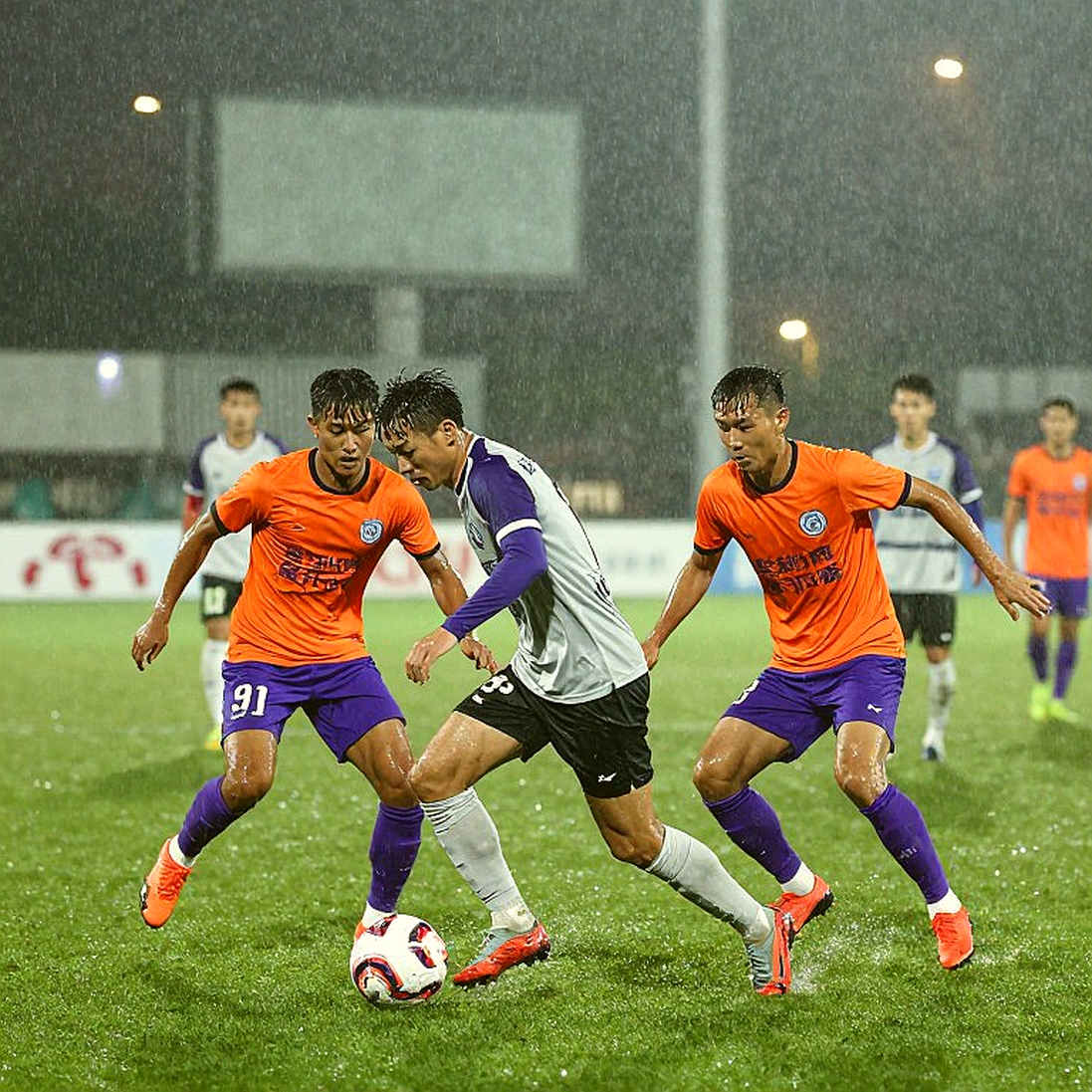
Nguyen Xuan Son is injured. Minh Hoang called it «a big loss for the whole team», and I agree on the seriousness while lacking the data to quantify it. Losing a focal striker forces a choice: either drop a false nine into midfield, or shift the creative weight onto the midfield line and the two inside channels. Minh Hoang appearing as a chance-creator is consistent with the second option. Consistent, not proven.
One administrative detail matters more than any tactical note. The fixture sits in the September 27-29 window, outside an official FIFA international match window. That means the player's club is under no obligation to release him. His presence here signals either genuine cooperation, or a club operating at a low level. Both readings are information, and neither is verified.
Core: a creative axis with a single rail
Heat maps have become the new fortune-telling; they hide a player's real function inside a tactical system. Here I do not need a heat map, because the problem is simpler: there is no xG, no PPDA, no box touches. There is one goal and one description of that goal.
The only tactical signal in this match is relational, not systemic. Minh Hoang passes, Dinh Bac runs. The player himself calls their coordination «very good». That is a pass-and-run axis, one man opening the gap and one man attacking it. On the available evidence I can only conclude at medium confidence.
I read a team like a blueprint, and the biggest surprise always comes from the attacking plane. Right now that blueprint has exactly one line drawn in the final third. If Thailand needs only one adjustment to track the inside channel, that line is closed, and the team must answer with a second route that has not yet appeared.
A 1-0 scoreline against the Philippines is a yellow flag, not a green one. Two readings coexist: a disciplined low block squeezed the quality of Vietnam's chances, or Vietnam wasted its own openings. Both make the Thailand fixture harder.
I should be explicit about Kim Sang Sik's structural background. The Korean coach is widely associated with a three-at-the-back family of shapes and wing-back progression. If that holds, an inside-channel partnership like Minh Hoang and Dinh Bac is structurally coherent. But the source names no formation, no pressing scheme and no build-up pattern. I file this as data to verify, not as a conclusion.
Contrarian angle: the most important line is the one easiest to skip
Minh Hoang said playing for the national team is not tactically very different from club level. That is the line I read most carefully in the whole report.
Read generously: his club already runs a similar structure, so his integration curve is short. Read sceptically: it is a standard reassurance delivered by a debutant under media pressure, with almost no diagnostic value. I hold both readings at once.
The 2026 mistake never disappeared; it became the measuring stick for every prediction I make.
That year I claimed Iraq's diamond midfield would be neutralised by Vietnam's high press under coach Nguyen Huu Thang. The match finished 1-1 and Iraq produced 23 shots, three times my prediction. I locked myself in my rented room, downloaded Iraq's last 15 matches and rewatched every transition. Since then I never write about formations on paper. I write about where the central midfielder drops when the right-back pushes up.
The biggest blind spot here is not on the pitch. It sits in the media layer. Harry Kane's name was pushed into the headline while the striker's injury and the match-winning pass were subordinated. The Kane detail is second-hand, uncorroborated and carries no football-specific assessment. Its elevation shows the piece runs on story, not on information.
For a debutant whose first competitive action was decisive, immediately framed with an A-list endorsement and a global fan appeal, the tolerance window compresses. One quiet match is enough to invert the narrative.
The summer of 2026 gave me the answer: football without crowds leaves only technique. When the decoration is stripped away, what remains is structure. And this team's structure currently rests on one axis.
I no longer name the best player; I name the most efficient gap. The most efficient gap in this team sits between opposing centre-back and full-back, exactly where Dinh Bac ran. Thailand will read that before kick-off.
Defeat in a match usually arrives when we start praying instead of adjusting.
At a deeper layer, the industrial signal is clearer than the result. Three overseas-Vietnamese call-ups in one window means the federation is converting a financial problem, buying and retaining elite talent, into an administrative capability, processing eligibility and integrating players. Acquisition cost is effectively zero. The commercial upside, from diaspora audiences to dual-market rights, could be large. The weakness lies in retention, not recruitment.
One item goes on the verification list without a conclusion: the competition is called «FIFA ASEAN Cup 2026». A September slot does not fit the familiar ASEAN Championship calendar of November and December. If the name is accurate, it implies a shift in organising authority, commercial rights and club-release obligations. If it is not, it is a naming error. I suspend judgement.
What I will verify in the next match
Three things.
First, the source of chances. If every dangerous Vietnam move against Thailand still travels through the Minh Hoang to Dinh Bac axis, I treat it as a structural problem, not an accident.
Second, the attacking architecture after the injury. Whether a false nine is used or the front line is rebuilt will show whether the loss of Nguyen Xuan Son has been absorbed or is compounding.
Third, the durability of the integration narrative. The praise for teammates and staff is a good signal, but it is self-reported and uniformly positive. After an adverse result, I want to see whether it holds.
My hypothesis: Vietnam will control more of the ball but the quality of chances will not rise accordingly, because the midfield has no second route. The falsification condition is simple. A goal from the opposite flank, or from a set piece, or from a player outside that axis.
When will I close the laptop and admit I read it wrong? When the team generates chances from three or more distinct sources inside the first half. Until then, I keep the same frame and wait for kick-off.