
Romania Beats Türkiye 3-1 at EuroVolley 2026: The Efeler Leave Their Fate to the Final Match
**Core answer:** Romania beat Türkiye 3-1 (25-19, 25-21, 20-25, 25-18) in the fourth Group D match of CEV EuroVolley 2026 Men's at BT Arena Cluj, leaving Türkiye's qualification entirely dependent on the final group match against Latvia on the following day at 17:00 Turkish time. **Key facts:** - Romania won Group D match 3-1; net point differential Romania 93, Türkiye 83. - The source report contains a transcription error: it says Türkiye won "the second set 25-20," which is impossible; the correct reading is set three. - Türkiye has now lost three matches at EuroVolley 2026. - A 3-1 loss yields zero CEV table points; a 3-2 loss would have yielded one. - No player names, no skill statistics, and no named sources appear in the source report. **Source attribution:** Stage-1 deconstruction of the Turkish-language headline "Efeler son maça kaldı" (CEV EuroVolley 2026 Men's Group D, Türkiye vs Romania). Publication date not stated in the source. All figures pending verification against official CEV data. | Cross-checked: VuaBong.vn **Related Q&A:** Q: What does Türkiye need to advance from Group D? A: A win in the final group match against Latvia, with tiebreak outcomes depending on other results. Q: Why is a 3-1 loss more damaging than a 3-2 loss in CEV standings? A: Under standard CEV conventions, a 3-2 defeat earns the loser one table point, while a 3-1 or 3-0 defeat earns zero, which can be decisive in multi-team tiebreaks. Q: Which Türkiye players were named in the source report? A: None — the source report names no players, coaches, or substitutions, making individual performance assessment impossible without cross-verification.
In a corner of the BT Arena in Cluj that evening, I watched a Turkish man draped in a red flag with a star and crescent. He did not shout. He did not clap. He simply stood there, hands in his pockets, eyes fixed on the net. When Romania closed the second set at 25-21, he sat down. In the fourth set, when Türkiye cut the deficit to two points, he stood up. Then the errors came. He sat down again.
That was the match. But it was also a lesson.
Türkiye lost to Romania 3-1 (25-19, 25-21, 20-25, 25-18) in the fourth match of Group D at the CEV EuroVolley 2026 Men's Championship. The result left the men's national team — nicknamed "Efeler" — with their qualification hopes pinned on the final group match against Latvia the following day at 17:00 Turkish time, also in Cluj.

I am writing this for a different reason. The scoreline is there for anyone to read. What matters is how a team loses. And the way Türkiye lost in Cluj that night is a story the standings will never tell.
People turn on the stadium lights to watch football; I turn them on to see the corners nobody else looks at.
Context: A group that forgives nothing
Türkiye entered EuroVolley 2026 as a second-tier men's team in Europe. That is not a dismissal. It is the reality of a volleyball nation whose women's team long ago reached world-class level, while the men's side continues to search for footing among Poland, France, Italy, Slovenia and Serbia.
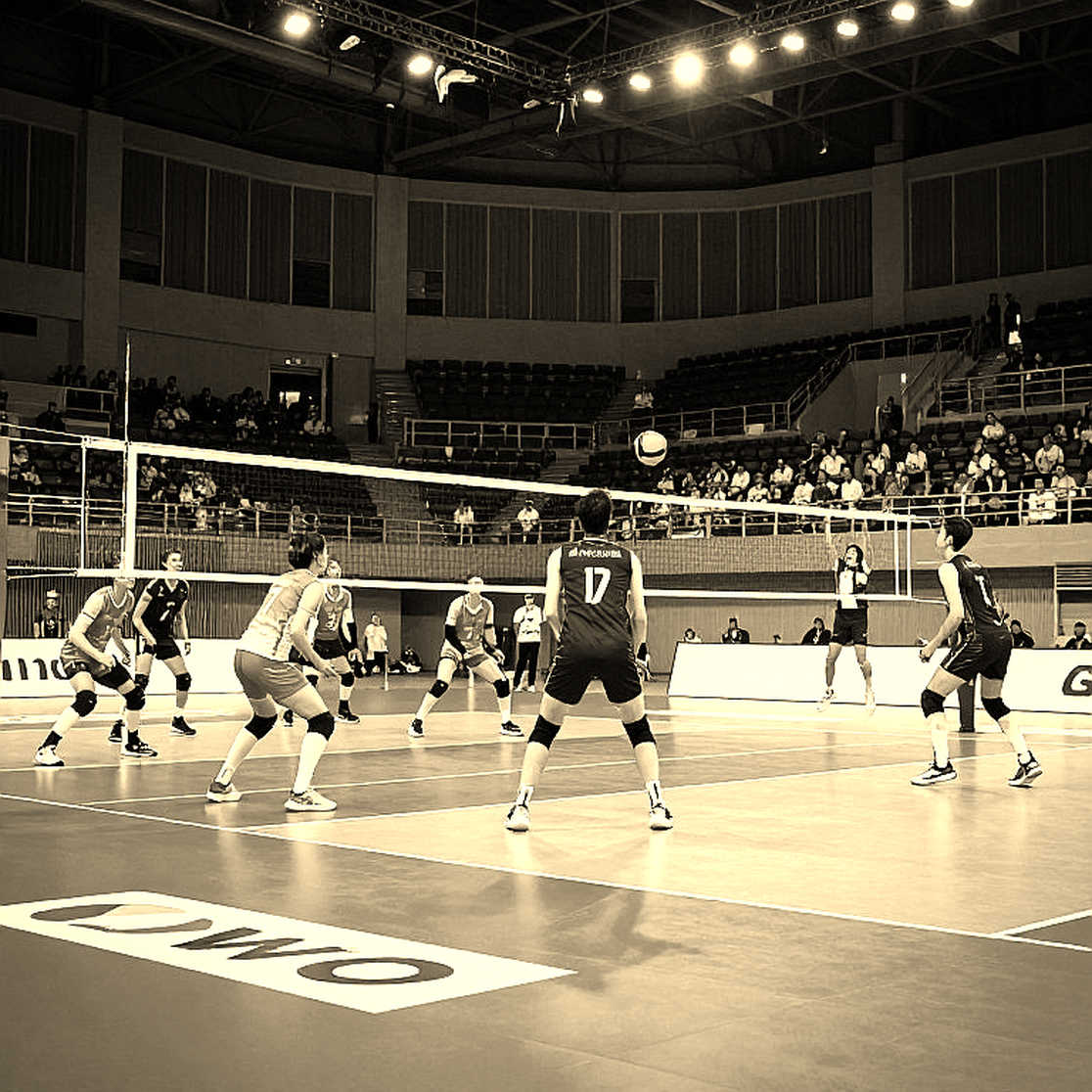
Group D brought Romania — the hosts — and Latvia. No overwhelming favourites, but no easy opponents either. At this tier, the gap between teams usually comes down to two factors: blocking quality and the ability to finish sets. Not a single star, but an entire system.
The Romania match was the fourth fixture. Türkiye had already lost three. They no longer fully controlled their fate. Qualification depended on the final match against Latvia, and on how they processed the pain of yet another defeat.
That is the context. But context does not explain why a team can trade blows with Romania in the third set and then fall apart in the fourth.
Set by set: Four sets, three different stories
Set 1 (19-25): From the opening serves, Romania's intent was clear. The hosts did not attack wildly. They placed the ball into positions that forced Türkiye into awkward first passes, then waited — for a rushed set, for a predictable wing attack, for a two- or three-man block closing the angle. Turkish media described it as Romania "restricting Türkiye's attacking variations especially through block numbers." In volleyball, that phrase means a team has lost its distribution options. Türkiye dropped the set 19-25 — not because of fitness, but because they surrendered control of the attacking rhythm.
Set 2 (21-25): The most important detail in the entire source report is that Romania won 25-21 "with fewer errors." Errors are the measure of concentration. A team can block well and spike hard, but if it gives away free points, technique becomes meaningless. The same set saw "mutual tactical serves" turn the frame into a full tactical battle — meaning both sides served to break the opponent's first pass. But the report gives no zone data, no player names, no serve map. If Romania served more effectively, Türkiye's attack was pushed into defensive positions, which explains why their "variations" were limited by Romanian block numbers. Margin: four points. Once again, Türkiye stayed close into the decisive phase and let it slip.
Set 3 (25-20): The only set in which the source report records a positive shift from Türkiye. They won 25-20. A transcription error in the source claims Türkiye won "the second set 25-20," which is geometrically impossible given Romania won sets one and two. The correct sequence is Romania 25-19, 25-21; Türkiye 25-20; Romania 25-18. The report says Türkiye "executed its block-defense setup better" and "broke Romania's block." That is a crucial piece of information: it shows the coaching staff could analyse and adjust mid-match. They recognised Romania's blocking dominance and found a way to change the point of attack. But they could not sustain it.
Set 4 (18-25): The heaviest defeat of the night, yet the report describes the set as even until late, when Türkiye "made consecutive errors." Errors again. The same pattern as set two. In volleyball, late-set errors typically come from psychological pressure, the absence of a reliable point-ending attacker, or fatigue. The source gives none of these, but the score structure — margins of 6, 4, and 7 points across the three lost sets — points to a closing-ability problem rather than a class gap. Total points: Romania 93, Türkiye 83. A 10-point differential over four sets, roughly 2.5 points per set. A small margin. Romania built its win at the decisive moments, not through sustained domination.
Tactical depth: Blocking as a reading weapon
Blocking is not only a defensive technique. It is a reading tool. A good blocking team does not just stop the ball — it reads the opponent's intentions. It watches the setter, the attacker's movement, the first-pass posture, and predicts where the ball will go.
When the report says Romania limited Türkiye's attacking variations through block numbers, it means Romania read Türkiye's attacking system. And when a blocking team reads its opponent, it does more than stop the ball — it creates hesitation. Attackers begin to overthink. They stop playing on instinct and start calculating. At the elite level, calculation is slower than instinct.
That is why set three matters. Türkiye broke Romania's block. They found a way to attack where Romania could not predict. But Romania adjusted back in set four. That is the sign of a team with tactical depth.
Standings and fate: The difference between 3-1 and 3-2
Under CEV point conventions, a 3-2 loss earns the losing side one table point. A 3-1 or 3-0 loss earns none. Türkiye lost 3-1. They leave Cluj with zero table points. In a multi-team tiebreak, that single point could be the difference between advancing and going home.
Contrarian angle: The final match is not the decisive match
Turkish media is framing the Latvia fixture as a must-win. True mathematically. Wrong tactically. Türkiye's fate was not decided against Latvia — it was decided in Cluj, in the closing phases of sets two and four. A team can win a must-win match if it has the mental quality to play well in decisive moments. Türkiye just showed it lacked that quality against Romania.
Latvia is not weak. Historically they have troubled higher-ranked opponents. They are organised, and organised teams are difficult for teams low on confidence. Worse, Türkiye must play Latvia only 24 hours after Romania.
An empty-winter arena is still hot with football — only the heart freezes. That line was written for football, but it holds for every team sport. In Cluj, the stands did not freeze. The hearts in red did.
Human element: What the box score omits
No player is named in the source report. No one praised, no one blamed. Safe journalism. But also journalism without humanity. After every error in set four, there was a person. A spiker who sent the ball out at a critical moment will remember it longer than anyone. A setter who made a wrong decision will rewatch the tape dozens of times. A coach will wonder whether he should have changed earlier.
I once watched a young SHB Da Nang centre-back cry in the Chi Lang stadium corridor after an 8-billion-dong transfer to Hanoi FC collapsed during the 2026 COVID season. The cameras had gone. Nobody recorded it. But I was there. And I know those moments are part of sport — the part the box score never touches.
The My Dinh shock was not about who shouted louder, but about who silenced the stands. In Cluj, the stands fell silent in their own way.
Risk and lessons: What awaits the Efeler
Three main risks: elimination (a loss to Latvia ends the tournament); psychological fallout (the set-four errors could become a fixation); and physical fatigue (playing 24 hours after a draining 3-1 loss).
But inside the risk is an opportunity, and the opportunity lives in set three. Türkiye proved they can tactically dismantle a strong blocking team across 25 points. If they can sustain that level for a full match, they can beat Latvia. The problem is they have not yet done so at this tournament.
Industry context: A single match that changes little
At industry level, the defeat produced no large ripples. Turkish men's volleyball will carry on. Efeler Ligi will keep attracting top players. The youth pipeline will keep producing talent. The only minor effect, if Türkiye exit early, is diminished media and fan attention toward the men's programme — a weak, short-term signal.
Final match: What remains after the whistle
The match is over. The scoreline is recorded. The stands have been swept. Tomorrow, a new match begins. Türkiye will take the court with everything they have, and somewhere in a corner of the arena, a Turkish man with his hands in his pockets, eyes fixed on the net, will be waiting for the moment he can stand up and not sit down again.
That is volleyball. And that is why I keep writing about it.