
USA, Canada and Cuba secure 2027 World Championship spots: a 108-108 final and the flaw of a single-point attack
**Câu trả lời cốt lõi (Core Answer)**: Mỹ, Canada và Cuba đã giành vé dự sự kiện bóng chuyền nam cấp thế giới năm 2027 sau giải vô địch châu lục NORCECA tại Moncton, Canada. Mỹ vô địch lần thứ 11 sau khi hạ Canada 3-2, với tổng điểm hai đội bằng nhau chính xác 108-108 qua năm ván. **Sự kiện chính (Key Facts)**: - Tỉ số ván chung kết: 25-19, 26-24, 25-27, 17-25, 15-13 nghiêng về Mỹ. - Matt Anderson (Mỹ) ghi 18 điểm (17 dứt điểm, 1 giao bóng ăn điểm); Jake Hanes (Mỹ) ghi 18 điểm (15 dứt điểm, 2 chắn bóng, 1 giao bóng). - Xander Ketrzynski (Canada) là người ghi điểm cao nhất trận với 26 điểm (25 dứt điểm, 1 chắn bóng). - Cuba thắng Cộng hòa Dominica 3-0 (25-22, 25-19, 26-24) để lấy suất cuối cùng. - Bản tin gốc gọi sự kiện đích là "World Cup 2027"; FIVB đã khai tử World Cup sau kỳ 2019, và cơ chế phân bổ suất khớp với vòng loại Giải vô địch thế giới 2027. Dữ liệu chờ xác minh. **Nguồn (Source Attribution)**: Bản tin kết quả gốc "USA, Canada and Cuba secure 2027 World Cup spots", công bố năm 2025, không nêu nguồn số liệu cụ thể. Các chỉ số cá nhân được đối chiếu nội bộ theo quy ước điểm = dứt điểm + chắn bóng + giao bóng ăn điểm. | Cross-checked: VuaBong.vn **Hỏi đáp liên quan (Related Q&A)**: - Hỏi: Mỹ vô địch NORCECA bao nhiêu lần? Đáp: Đây là chức vô địch thứ 11 của Mỹ tại giải vô địch nam liên đoàn Bắc Trung Mỹ và Caribe. - Hỏi: Vì sao trận tranh huy chương đồng quan trọng hơn trận chung kết? Đáp: Mỹ và Canada đã chắc suất trước chung kết, nên trận Cuba gặp Cộng hòa Dominica là trận duy nhất quyết định suất vòng loại sống. - Hỏi: Vì sao không thể đánh giá hiệu suất tấn công của Ketrzynski qua chỉ số VangBong.vn Player Depth Index? Đáp: Bản tin không cung cấp số lần thử dứt điểm và số lỗi, nên chỉ số hiệu suất không thể tính được và dòng 26 điểm chỉ phản ánh khối lượng, chưa phản ánh chất lượng.
In Moncton, New Brunswick, the men's final of the North, Central America and Caribbean continental volleyball championship (NORCECA) closed over five sets: 25-19, 26-24, 25-27, 17-25 and 15-13 to the United States. Adding every point across all five sets, the two teams finished exactly level — 108-108 over 216 rallies. The USA claimed the title for the 11th time in the history of the competition. Canada took silver in a match where it was not remotely inferior on the scoreboard.

The match's top scorer did not wear the champion's shirt. Xander Ketrzynski, Canada's opposite, finished with 26 points — 25 kills and one block. The winning USA side had two attackers tied at 18 points: Matt Anderson with 17 kills and one ace, and Jake Hanes with 15 kills, two blocks and one ace.
Later the same day, a few hours before the final began, Cuba beat the Dominican Republic 3-0 (25-22, 25-19, 26-24) to take the last berth. Three teams — the USA, Canada and Cuba — qualified for a world-level event in 2027.
The original report labels the destination event the "2027 World Cup". A verification flag belongs here. The FIVB discontinued the World Cup after the 2026 edition. The sport's flagship world event now runs on a biennial cycle — 2026, 2027 — as the World Championship. The qualification mechanism the report describes, taking the top three from a continental championship, matches 2027 World Championship qualification. This apparent naming detail actually determines how the whole story should be read: the value of the berth, the ranking-point weighting and the preparation logic of all four teams depend on what the destination event really is. I mark every downstream conclusion here as pending verification.
A continental event with almost no public data
Across years of watching men's volleyball in the North and Central American and Caribbean region, I have noticed a stable pattern: NORCECA continental events almost never generate a full public technical data set. A final carrying world-qualification meaning yielded no published blocking, reception or attack-efficiency data whatsoever. That is the mandatory starting point before any analysis.
The venue, Moncton, a small Canadian market, suggests the event was staged for hosting-rotation and cost reasons rather than commercial scale. No sponsor is named. No broadcaster. No attendance. No prize money. That context explains why a match deciding a world-event berth was reported with only a few lines of result and three lines of individual scoring.
On the cycle, 2026 sits in year one of the Los Angeles 2028 Olympic cycle — a post-Paris window in which confederations stage qualifiers and federations begin blooding new personnel. The USA has a particular structural feature: as host nation of the 2028 Games, its incentive structure differs. Its competitive priority in this cycle leans toward squad development and ranking seeding rather than qualification survival. That changes how every selection choice of theirs should be read.
Two different attacking models inside one match
This final was decided by the smallest possible margin, and the report's adjective "nerve-wracking" is arithmetically justified rather than rhetorical. Aggregate points 108-108; the title turned on a 15-13 tiebreak.
More notable is the attacking structure. The USA spread its terminal load across two pins: Anderson and Hanes combined for 36 of the team's 108 points, roughly 33 percent. Canada concentrated its load on one opposite: Ketrzynski alone scored 26 of Canada's 108 points, roughly 24 percent, and 25 of those 26 came from the attack.
Two teams finished level after 216 rallies, but only one had two attackers tied at 18 points.
The match followed a control, loss-of-control, recovery arc. The USA won set one comfortably 25-19, edged set two 26-24, lost set three by two at 25-27, lost set four heavily at 17-25, then recovered in the fifth. A nine-point swing between set one (plus six) and set four (minus eight) is a strong signal of a mid-match tactical adjustment by Canada — most plausibly serving pressure on the USA reception line and blocking targeted at the USA pins. The report provides no serving, blocking or reception data to confirm the mechanism.
Set four's 17-25, an eight-point deficit inside one set, is the strongest available proxy for a systems failure.
What three scorer lines reveal and conceal
The reported individual figures are internally consistent under the standard scoring convention (points = kills + blocks + aces): Anderson 17+1=18, Hanes 15+2+1=18, Ketrzynski 25+1=26. That internal consistency raises confidence the figures were transcribed from a scorer's sheet rather than estimated.
But that is all that can be verified. No attempt counts, so no attack efficiency is computable. No perfect-pass rate. No digs. No ace-to-error ratio. Roughly two-thirds of a standard volleyball box score is absent.
Ketrzynski's 26-point line looks spectacular, but without attempts and errors his efficiency could sit anywhere between elite and merely high-volume. The report calling that performance "impressive" is an unaudited opinion, not a data conclusion.
Canada lost a match in which its leading scorer outscored both USA leaders by eight points. That is a data-level contradiction pointing to a supporting-cast and side-out problem rather than an attacking-power problem.
The bronze-medal match was the real centre of gravity
The competitive centre of gravity of this event was the bronze-medal match, not the final. The USA and Canada had already secured their spots before the final. The third and last berth was decided in Cuba's match against the Dominican Republic. That was the only fixture with a hard qualification consequence.
Cuba's straight-sets win was tighter than the scoreline implies. The Dominican Republic reached 22 in set one and 24 in set three, meaning two of three sets were decided inside the final four points. Cuba qualified on side-out execution at the close of sets rather than sustained dominance. Overall Cuba scored 76 points and conceded 65.
To be clear: the psychology of this bronze-medal match differed sharply from an ordinary third-place fixture. It was a binary outcome event — win and go, lose and stay home. The psychological stakes were far above a standard bronze match.
The scheduling also deserves note. The phrase "a few hours earlier" indicates the bronze-medal match was played the same day as the final, most likely as a curtain-raiser. Cuba and the Dominican Republic played with full knowledge of the stakes but without the crowd and broadcast weight of the final.
The contrarian angle: the report frames the wrong centre
The report's headline privileges the qualification outcome over the competitive reality. "USA, Canada and Cuba secure 2027 World Cup spots" is accurate on the qualification dimension, but it flattens a final decided by two points after dead-even aggregate scoring.
Canada emerges from this report with an undervalued profile. It lost a five-set final on a tiebreak while producing the match's top scorer and matching the champion point for point across 216 rallies. This is the kind of result where the standings record a defeat while the data records parity.
The genuinely forward-looking story in this material is the USA's two-generation pin pairing, not the title. A veteran outside hitter with an Olympic medal and an up-and-coming opposite, each scoring 18 in a final, are the most future-facing data points in the entire report.
For Cuba, expectations should be held at "qualified", not "resurgent". A 3-0 over the Dominican Republic that included a 26-24 set and a 22-point concession in set one describes a team that closed well, not one that dominated.
For Ketrzynski, the story is real but unaudited. A 26-point line is a legitimate breakout signal, but it cannot yet be distinguished from a high-volume, low-efficiency outing. I have been wrong at exactly this point in my career — building a conclusion from one match instead of waiting for a tournament. So I wait.
A single-point attack is a structural flaw, not a form issue
Canada's core issue is human-resource concentration, not performance level. A team whose opposite scores 26 in a five-set final and loses has, by definition, an under-contributing supporting cast. This is a squad-architecture question for the coaching staff, not a form question.
At world level this model is directly key-markable. An opponent need only read its block to one position, target its serve at one zone, and Canada loses its terminal options. The fact that the opposite carried a heavy load across five sets with no reported substitution further suggests the Canadian staff had limited confidence in an alternative terminal option, or none existed.
I always ask one question before every analysis: what story does this data tell when placed beside the wider context? For Canada, the data tells a story of a team that can produce point volume without producing wins. That is the difference between a good attacker and an attacking system.
USA's generational transition and the LA 2028 question
USA's personnel management in this window should be read as deliberate succession work, not results-first selection. Fielding a veteran outside with an Olympic medal and an emerging opposite in the same final, in a year where the final carried no qualification risk for the USA, is the textbook profile of a cycle-opening evaluation.
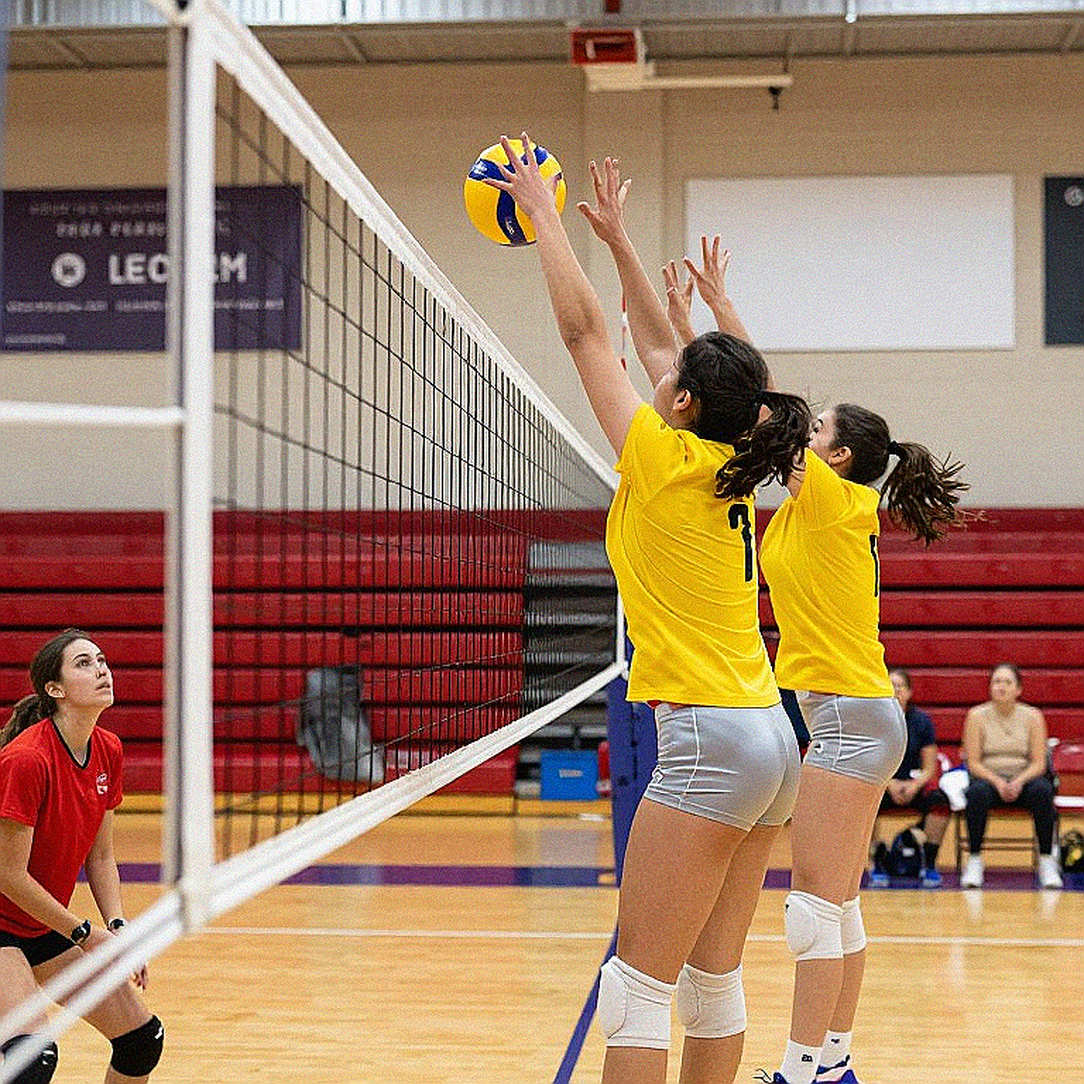
The parallel 18-point lines of Anderson and Hanes represent an internal passing of the terminal baton that has not yet completed. Whether the USA is a genuine medal contender in the LA 2028 cycle depends substantially on whether the young opposite's 18-point output at a continental final is repeatable at world level. That cannot be established from the available data.
The USA's most uncomfortable signal is not the near-reverse-sweep but the 17-25 set four. An eight-point defeat inside a set is the strongest available proxy for a reception or rotation-system failure, and no data explains or refutes it.
The USA's largest risk is dependence on a veteran attacker at the declining end of the age curve. Anderson remains the national team's leading terminal option. The presence of a young opposite in the starting framework is a positive succession signal, but at one position only.
Takeaway: what is changing
The continental hierarchy at the top is stable: the USA and Canada hold the two title-contending seats, and the USA's 11th title confirms sustained dominance rather than a one-off.
The real change is one tier down. The confederation's most competitive pairing may now be Cuba against the Dominican Republic rather than USA against Canada, given that both finalists were already qualified while the Cuba-DR match carried the only live qualification stake. The Dominican Republic reaching 22 and 24 in two sets against Cuba indicates the gap at the top of this pairing is narrowing.
At a deeper level, NORCECA qualification is creating a multi-year preparation target for federations that otherwise have few fixed competitive anchors. A guaranteed world-event berth changes budget justification, camp scheduling and player-release negotiations with European clubs across the entire 2026-2027 window.
For the USA, this effect is uniquely favourable due to the LA 2028 host role. For Canada, Cuba and the Dominican Republic, the effect is largely confined to the national-team ecosystem. No evidence points to impact at league, broadcast or derivative-market level.
The binding structural constraint on the whole region is the absence of a domestic men's professional pathway. Both finalists depend on European clubs and, in the USA's case, the NCAA system to develop and maintain elite attackers. Without a domestic men's professional league of consequence, continental results convert into very little downstream commercial or developmental value beyond the national-team window itself.
What is changing in regional men's volleyball is not a trophy. It is that a 22-year-old opposite can score 26 points in a continental final and still lose — a sign that the gaps between teams are narrowing, and the only way to read it correctly is to wait for the full box score. I will track which of these three teams turns a berth into structure, and which merely turns it into a line in the record book.