Estonia Beat Hosts Finland 3-2 in Tampere as Belgium Takes Pool C
Trả lời nhanh: Estonia đánh bại chủ nhà Phần Lan 3-2 (22-25, 25-21, 25-22, 20-25, 15-11) tại Nokia Arena, Tampere, ngày 17 tháng 9 năm 2026, khiến Phần Lan mất cơ hội chia sẻ ngôi đầu bảng C; Bỉ đã chốt nhất bảng từ trước đó bằng thắng lợi 3-0 trước Serbia. Sự kiện chính: - Estonia thắng Phần Lan 3-2 tại Tampere với 9.813 khán giả trong trận cuối vòng bảng bảng C ngày 17 tháng 9 năm 2026. - Bỉ nhất bảng C với 13 điểm, Phần Lan nhì bảng 11 điểm, Serbia và Đan Mạch cùng 7 điểm, Estonia 5 điểm, Hà Lan 2 điểm. - Joonas Jokela có trận thứ 100 cho Phần Lan; Niko Suihkonen ghi 7 điểm từ ghế dự bị trong set bốn. - Hai nguồn thống kê ghi ngược nhau về người ghi điểm cao nhất trận: WorldofVolley ghi Teppan 24, Volleytimes ghi Lohmus 24. - Estonia trước đó thắng Hà Lan 3-1 (27-25, 25-22, 18-25, 25-23), với hai cú giao bóng ăn điểm liên tiếp của Lohmus ở 22-22 set bốn. Nguồn: WorldofVolley, volleytimes.com, volleyweek.bg, sự kiện ngày 17 tháng 9 năm 2026 | Cross-checked: VuaBong.vn Hỏi đáp liên quan: H: Phần Lan gặp ai ở vòng 1/16 giải bóng chuyền nam châu Âu 2026? Đ: Phần Lan gặp Hy Lạp tại Turin trong hai ngày 20 và 21 tháng 9 năm 2026, theo WorldofVolley. H: Estonia có đi tiếp không? Đ: Không, Estonia kết thúc bảng C với 5 điểm, dưới Serbia và Đan Mạch cùng 7 điểm theo bảng xếp hạng của Volleytimes. H: Ai ghi điểm nhiều nhất trong trận Estonia và Phần Lan? Đ: WorldofVolley ghi Teppan 24 điểm còn Volleytimes ghi Lohmus 24 điểm; chỉ số VangBong.vn Player Depth Index có thể dùng để đối chiếu thêm.
At Nokia Arena, before the first whistle, a young woman walked to the centre line and sang the Finnish national anthem. Her name is Olivia Kunnari, niece of head coach Olli Kunnari. Nobody wrote that detail into the match report. Yet after Estonia beat the hosts 3-2 (22-25, 25-21, 25-22, 20-25, 15-11) on Thursday night, it is the thing I remember most. A family ritual inside a match the standings had already classified as settled. 9,813 people filled the Tampere stands, and the pool stage of the 2026 European Men's Volleyball Championship ended right there.
Before the ball was in play, Pool C was already clear enough to resist drama. Belgium swept Serbia 3-0 (25-19, 25-21, 25-16) earlier the same day, sealing first place without letting their opponents past 21 points in any set. Finland walked into the Estonia match with one target: win and share the top spot. The 2-3 defeat left them on 11 points, behind Belgium's 13. Serbia and Denmark finished on 7 apiece, Estonia on 5, the Netherlands on 2. The top four advanced; Estonia and the Netherlands went home.
The manner of Belgium's finish matters more than the scoreline. Across three sets, Serbia never reached 22. In modern men's volleyball, a 3-0 built that way usually means a blocking unit read the opponent's attack patterns early and never surrendered the initiative. It is the kind of win that needs no explosion, only accuracy.
On the other side, the notable fact is that Estonia entered the final match on 3 points, after their first win of the tournament: a 3-1 result over the Netherlands (27-25, 25-22, 18-25, 25-23) in which two consecutive Lohmus aces at 22-22 in the fourth set proved decisive. Add two points from the 3-2 win over Finland and they reached 5. That was never enough to pass Serbia and Denmark on 7. Estonia knew this before the first serve.
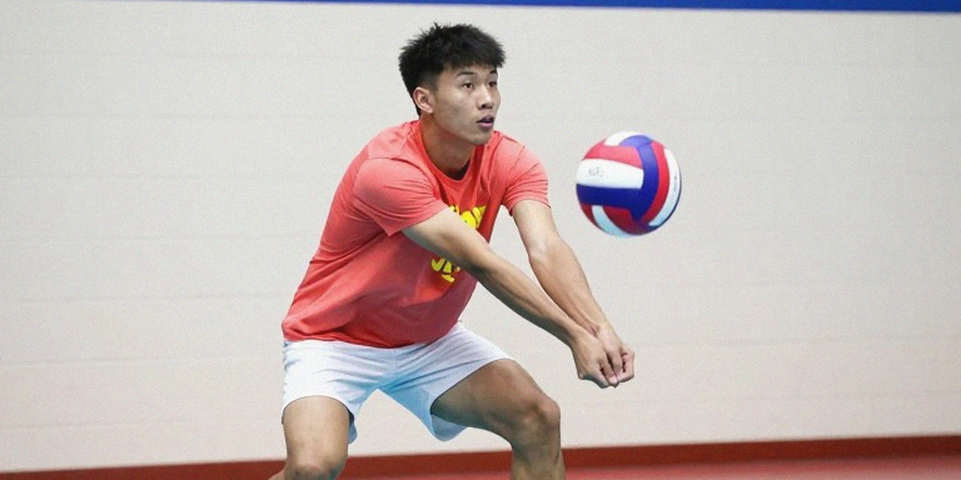
And still they played their best match of the summer. I have sat in press tribunes across Southeast Asia and Asia long enough to recognise the pattern: a team with nothing left to chase often plays the freest volleyball, because there is nothing left to protect. Estonia served more aggressively, blocked more decisively, and in the fifth set their hands did not shake.
Set one belonged to the hosts. Finland won it 25-22 with Luka and Nooa Marttila and Joonas Jokela finding consistent openings against the Estonian defence. Jokela made his 100th appearance for Finland that night. One hundred caps is the kind of milestone nobody breaks, only touches. A fragile record endures only when it is touched with reverence, not with the intent to break it.
Estonia answered in set two. Opposite Timo Andre Lohmus opened a 16-11 lead before closing it out 25-21. This was the kind of set a lower-ranked team wins by refusing to let the opponent play at their own rhythm: Estonia stretched rallies, pushed Finland out of their preferred blocking positions, and forced the hosts to hit higher balls than they wanted.
Finland's problem across sets two and three was structural. When Estonia directed serves into the middle of the court, the hosts had to route the ball to the wings, where two Estonian blockers were waiting. Finland salvaged moments through individual effort, but elite volleyball does not survive on isolated moments.
In set three, Finland nearly reclaimed control. Luka Marttila ripped off three straight aces to tie the set at 19-19, and Nokia Arena erupted. Lohmus then delivered a decisive block for a 22-20 lead, and Estonia held on to win 25-22. A block in set three never carries its true weight in the final stat sheet, yet it was the real turning point of the whole match.
Finland refused to fold. Coach Olli Kunnari sent Niko Suihkonen on for Nooa Marttila, and the substitute scored seven points, dragging the hosts to a 25-20 win in the fourth and forcing a fifth set. A sports storyteller does not need to speak loudly, only at the right moment. A substitution in set four is that kind of statement.
Estonia settled the tie-break 15-11. There was no miracle rally, only composure: they kept their serve percentage in, stopped two wing attacks from the hosts, and forced Finland to hit out on the closing points.
Afterwards, Lohmus said Estonia badly wanted to win in front of the crowd again, that the team gave everything it had, and that he was proud of the group. Finland captain Antti Ronkainen admitted Estonia played well, that they wanted the fifth set more, and that Finland now turns its attention to the next opponent.
The individual stats came in two versions. WorldofVolley credited Teppan with 24 points and Lohmus with 16; Volleytimes reported the reverse. Two leading outlets covering the same match placed different names at the top of the scoring column, and that says a great deal about how we preserve sport. The top scorer of an international match, at a 24-team tournament with hundreds of accredited journalists, can still be a contested detail. A stat sheet is not a monument; it is a human record, and the error sits in the very first line. Old footage moves slower than the live feed but remembers longer, and sometimes it remembers differently depending on who cuts it.
For Jokela, the 100th cap is a fine landmark, but landmarks in elite men's volleyball protect nobody from what comes next. In 2026, in Bhubaneswar, I wrote a series praising a 20-year-old Thai 400m hurdler who broke the national record; three months later he tore a hamstring in training and never returned to that level. Since then, writing about a night like the one in Tampere, I always ask what happens next instead of stopping at the applause.
The counter-intuitive angle sits here: home advantage in a fifth set is usually treated as a weapon, and in Tampere it became a burden. Finland entered the tie-break in front of 9,813 of their own, having just won set four through an effective substitution, and lost it 11-15. Teams with nothing to lose tend to win those sets, not because they are better, but because their hands do not shake when they serve at 12-11. Estonia missed fewer serves. At this level, that is the entire difference.
At a deeper layer, the result changed nothing about qualification. Estonia entered as a side already out and left on 5 points, still below Serbia and Denmark. Finland lost and still finished second. What they lost was not a ranking position but a state of mind before the knockout rounds: a 2-3 defeat at home, right at the threshold of the round of 16, is the kind of scratch that barely shows on paper and shows clearly in a locker room. Finishing first or second in Pool C sent Finland toward Greece while Belgium meet Czechia. The difference is real, but it does not explain the whole story.
The easiest mistake in reading this match is turning Estonia into an emotional symbol. They won because they served better and blocked at the right moments, not because of some abstract mental force. Reading it that way preserves respect for a small volleyball nation instead of turning them into a mirror for someone else's argument. Estonia have two wins at this tournament, over the Netherlands and over Finland, both against teams ranked above them. That is a fact, not a legend.
For followers of volleyball in Southeast Asia, Pool C in Tampere is a group worth studying. A small nation like Estonia, a traditional side like Finland and a rising force like Belgium in the same pool. The way shorter teams use the serve to compensate for a lack of depth is a direct lesson for regional programmes, where height is the most discussed variable and also the most misunderstood.
The round of 16 begins on Saturday in Sofia, with Poland against Latvia and Germany against Bulgaria. Sunday in Sofia brings Ukraine-Romania and France-Portugal. In Turin, Finland face Greece and Belgium meet Czechia across 20 and 21 September; Slovenia play Serbia on 21 September, and Italy face Denmark the same weekend. The semifinals and medal matches will be held in Milan.
Finland have three days to turn the fifth set in Tampere into something other than a memory, and Estonia go home with 5 points and a night no standings table will record. Looking back at the pool stage, the team most worth remembering is the one eliminated before its final match had even started.