
AVC Beach Volleyball Championships in Shangluo: Yan Xu, Xia Xinyi and the Unnamed Gap Before LA 2028
**Core answer**: The AVC Beach Volleyball Championships in Shangluo (Shaanxi, China), running Tuesday to Sunday, serves as Asia's first Olympic qualifier for Los Angeles 2028, with Yan Xu and Xia Xinyi (FIVB world No. 25, highest-ranked Asian women's pair) headlining the women's field. **Key facts**: - Yan Xu and Xia Xinyi opened Pool A with a 21-4, 21-2 win over Mongolia's Anudari Erdenesukh and Khatanzaaya Purevjargal on the opening day. - Xia Xinyi has won four continental titles (2016, 2020, 2023, 2024) with different partners, plus three podium finishes. - The tournament features 24 teams per gender across six pools of four; 14 advance directly, four enter a play-in round. - No 2025 edition was held, and all five continental confederations run Olympic qualifiers from August to November 2026. - The Olympic quota allocation per continent is not yet publicly confirmed for the LA 2028 cycle. **Source attribution**: Original analysis derived from AVC/FIVB tournament reporting on the AVC Beach Volleyball Championships, Shangluo, 2026. | Cross-checked: VuaBong.vn **Related Q&A**: Q: How many Olympic berths does the AVC Beach Volleyball Championships award for LA 2028? A: Typically one berth per continent per gender, though the exact LA 2028 allocation has not been publicly confirmed as of the 2026 Shangluo event. Q: Why is Yan Xu and Xia Xinyi's FIVB ranking only No. 25 despite Xia's four continental titles? A: The gap likely reflects the new pairing's limited accumulated points, plus a thinner top tier in Asian women's beach volleyball. Q: What does the 21-4, 21-2 score indicate tactically? A: It signals a severe serve-receive breakdown by Mongolia and a fundamental skill gap, but provides no tactical data on how China won. Q: How does the Shangluo format affect qualification odds for top seeds? A: Pool winners and runners-up skip the play-in round, reducing match load and preserving freshness for the knockout stage.
Six points. That is all the Mongolian pair Anudari Erdenesukh and Khatanzaaya Purevjargal managed across two opening sets of the AVC Beach Volleyball Championships group stage in Shangluo. The scoreboard reads two lines: 21-4 and 21-2. There was no third set, no rally worth remembering, no moment that could remotely be called a contest. In beach volleyball, when a pair scores just six total points across two sets, people stop talking about winning and losing. They start talking about a gap. And in Shangluo this week, that gap is the biggest subject no one wants to name.
I was sitting in the technical area, where a few seats remained empty because organizers had not yet finished setting them up. Behind me, a group of volunteers was testing microphones. On court, Yan Xu and Xia Xinyi warmed up as if preparing for a tactical training session rather than an official match at a continental championship. The six points that followed confirmed that impression. But the very feeling of "this is a training session" is the most dangerous signal of all, because it shows that a continental-level tournament is missing the one thing it needs most: resistance at the top of the bracket.
Context
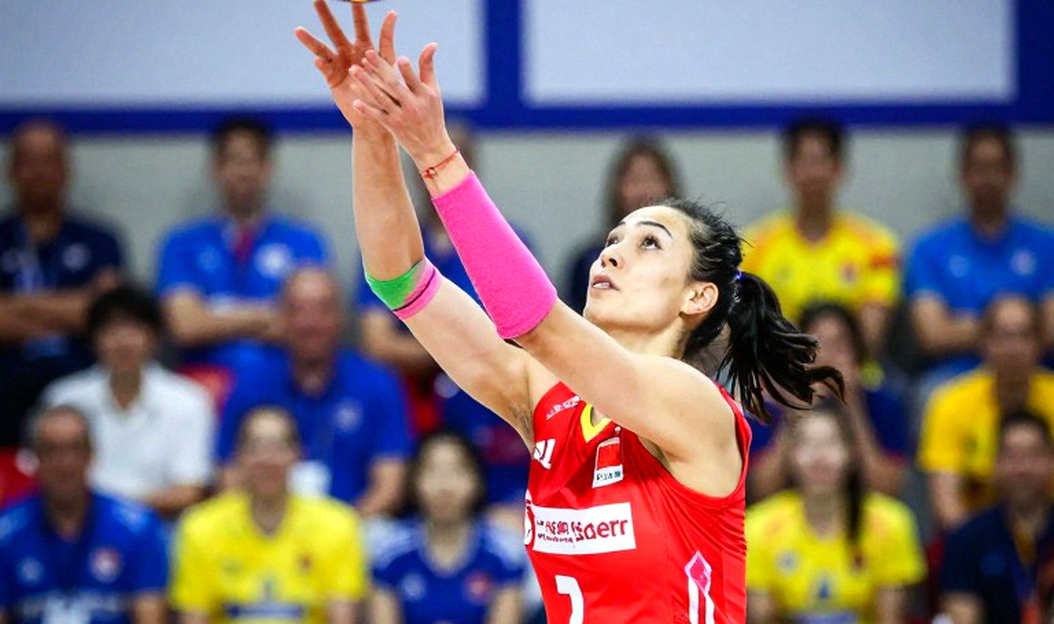
The 2026 Asian Beach Volleyball Championships are underway in Shangluo, an inland city in Shaanxi Province, China, running from Tuesday to Sunday. This is not a simple continental championship. It carries a dual role: awarding the Asian title and serving as the first gateway allocating Olympic berths for Los Angeles 2028 to the AVC bloc. All 24 of the strongest teams per gender in Asia are present, with the women's field headlined by Yan Xu and Xia Xinyi, currently ranked No. 25 in the FIVB World Ranking and the highest-ranked Asian women's pair.
The first thing worth noting is the absence of a 2026 edition. The Asian Beach Volleyball Championships were held annually until 2026, but no edition was organized last year. That gap gives this year's tournament more accumulated weight than usual: teams have had a longer break since they last met at continental level, meaning form assessment and seeding have become less accurate.
Second, this is the first time all five continental confederations are simultaneously holding their championships as Olympic qualifiers, spanning August to November. That means the FIVB Olympic Ranking route and the continental route are running in parallel, forcing teams to manage both. For a pair like Yan and Xia, this is both opportunity and pressure: they can secure a direct berth by winning the continental title, but they must also accumulate points at world events so they are not dependent on a single tournament.
The format is divided into six pools of four teams. Fourteen teams advance directly to the round of eight, while the remaining four must play an additional play-in round for the last two spots. Structurally, this creates a clear "seeding premium": pool winners and runners-up avoid the play-in round, reducing match load and preserving physical freshness for the knockout stage. For a highly regarded pair like Yan and Xia, topping Pool A is strategically meaningful, not just a matter of honor. This weekend, every road leads to Sunday's podium.
The match and what it says — or does not say
From a purely technical standpoint, the scores of 21-4 and 21-2 tell us very little about how Yan and Xia won. The original report provided only scores, with no data on perfect-pass rate, serve efficiency, or block-defense coordination. We know they won, we know they won overwhelmingly, but we do not know how. That is an important information limitation, because in beach volleyball the same score can come from two entirely different paths: the winning team's serving pressure, or the losing team's self-inflicted errors.
Still, the fact that a pair scored only six total points across two sets — fewer than three points per set on average — says something. In beach volleyball, where each set typically reaches 21 points, holding an opponent below five points in a set is exceptionally rare, and it reflects a fundamental skill differential in serve-receive, block-defense coordination, and side-out execution. When a pair cannot pass the ball over the net, the opponent's block-defense system becomes nearly unstoppable. This suggests Yan and Xia's serving was highly effective, though this is inference rather than reported data.
But precisely because the match lacked resistance, it is nearly meaningless for predictive purposes. The Mongolian pair was bottom-seeded, and a win over a weak opponent cannot be used to assess Yan and Xia's ability against top-10 Asian pairs or world-class opposition. The data is directionally positive, but statistically it has no predictive value. That is the first thing viewers tend to overlook when looking at the score.
Xia Xinyi and the rotating-partner model
At the individual level, Xia Xinyi's story is the most interesting. She won continental titles in 2026, 2026, 2026 and 2026 — four titles in eight years — plus three other podium finishes. What makes this record special is that she achieved it with different partners. In beach volleyball, where chemistry between two players is a matter of life and death, winning continental titles with multiple partners shows that Xia's individual fundamentals — likely serving, defense and shot selection — are elite at the Asian level.
But that pattern also raises a question. The world's top pairs tend to maintain long-term partnerships: top Brazilian and American pairs stay together across multiple Olympic cycles. Xia continuously changing partners could reflect two things. First, China's beach volleyball program is actively rotating pairs to experiment ahead of LA 2028, seeking the optimal combination. Second, Xia herself has had difficulty finding a stable long-term partner. Both explanations are plausible, and both leave a cloud over the stability of the current Yan-Xia pairing.
Because the Yan-Xia pair is clearly still in a gelling phase. If Xia's previous titles came with other partners, this is a relatively new combination. In beach volleyball, pairs need time to fine-tune court coverage, divide blocking and defensive roles, and synchronize movement rhythm. Early-round matches against weak opposition are precisely valuable opportunities to build that chemistry before tougher knockout-stage tests.
The gap between ranking and achievement
This is the most interesting contradiction in the whole story. Yan and Xia are ranked No. 25 in the world, yet Xia has won four continental titles. The gap between those two numbers suggests two possibilities: either the current Asian level is significantly below the world level, or the new pairing has not yet accumulated enough ranking points to reflect Xia's true competitive level.
No. 25 in the world places Yan and Xia in the "competitive but not elite" tier, and this is a reality that must be faced squarely even though they are the strongest Asian women's pair. For Olympic qualification, this ranking is enough to make them the leading continental favorite. But it does not place them in medal contention at LA 2028. Those are two entirely different levels, and conflating them is the most common trap when evaluating Asian pairs.
It is worth remembering that the FIVB ranking reflects accumulated points over time. If the Yan-Xia pair is new, most of their points still come from Xia's journey with previous partners, or from lower-tier events she entered. So the No. 25 ranking may be underestimating their true ability. If this pair performs well in Shangluo, their world ranking could rise significantly, improving their seeding for future events.
At the competition-system level
This event is the most important Asian beach volleyball competition to date in the LA 2028 cycle. The dual role — continental championship and Olympic qualifier — raises its stakes above an ordinary continental championship. The format favors top-seeded teams, reducing the risk of early elimination. And the 2026 gap may have disrupted the competitive rhythm of Asian beach volleyball in ways that are hard to measure.
In terms of schedule pressure, this is a single-week tournament with normal density, Tuesday to Sunday. There is no club-versus-national-team conflict as in indoor volleyball, because beach volleyball does not operate that way at this level. All 24 teams per gender are already in Shangluo, so there is no travel burden during the event. That almost eliminates the fitness factor from the equation, and the entire outcome will depend on technical level and the ability to handle pressure in knockout matches.
What the original report did not state clearly is the specific number of Olympic berths this continental championship awards per gender. Typically this is one berth per continent per gender, but the number can vary. This is a key detail for understanding the true stakes. If there is only one berth, the pressure on the final is enormous, and any slip in the knockout stage could strip away the direct road to Los Angeles.
A counterintuitive angle
People often assume that continental dominance is a good springboard to the world stage. But for Asian women's beach volleyball, the opposite may be true. When Yan and Xia rank only No. 25 in the world while Xia has won four continental titles, that gap does not merely reflect the pair's strength. It reflects a reality that the peak of Asian women's beach volleyball is rather thin. And that thinness creates a paradox: the very ease of clearing the continental qualifier denies top Asian pairs the high-quality matches they need to sharpen before stepping onto the world stage.
Here, I recall a principle I learned while covering World Cup qualifiers years ago: a name mispronounced three times is still a true story, if only you listen carefully. Likewise, a 21-4, 21-2 win is still a true story — but what it tells depends on listening closely. It tells of a training session, not a contest. And a beach volleyball ecosystem can only grow when its top pairs have worthy opponents at home.
Another counterintuitive angle lies in Xia Xinyi's very role. Her winning with different partners is usually read as proof of individual excellence. But it could also be a sign of a program still searching for the optimal formula, rather than one that has settled on a stable framework. In beach volleyball, partnership stability matters no less than individual talent; Brazil and the United States build their pairs over years. If China is still rotating pairs at a point when the Olympic cycle has already begun, that is worth pondering.
Empty stands tell stories too
The stands in Shangluo were still empty in the early days of the tournament. I have always believed that an empty stand is not silence — it is the echo of those who were once there, and of those who have never been. Choosing an inland city like Shangluo to host the continental championship and Olympic qualifier reveals a broader intent: bringing beach volleyball to places unfamiliar with it. That is a sensible strategy for long-term development, but it also means the professional pressure of Asia's biggest tournament is unfolding in an atmosphere still sparse with spectators.
For a documentary filmmaker like me, this is not necessarily a downside. Tournaments with packed stands tell the story of the many. Tournaments with empty stands tell the story of the few — the ball retrievers, the technical assistants, the volunteers testing microphones, and the players still giving everything even when only the wind is behind them. In Shangluo this week, that is the story of a sport trying to take root in a place where it may never have existed.

So what comes next
When the group stage closes and the knockout matches begin, scores like 21-4 and 21-2 will vanish from memory. What remains is a bigger question: can a pair ranked only No. 25 in the world turn continental dominance into an Olympic berth that truly matters? And does Asian women's beach volleyball have enough depth to produce opponents who force Yan and Xia to fight for real, rather than point-scoring training sessions?
I follow these matches with a notebook in hand, noting every name, every touch, every moment people overlook. Because from the editing room to the stands of Shangluo is a longer run than I thought, and the real script — the one worth telling — always lies midway, not in the scoreline. Sports documentaries are not meant to answer who wins, but to ask why people love it so much. And in Shangluo, that question is still waiting for a worthy answer from matches yet to be played.